- Google co-founder Sergey Brin reportedly purchased a $51 million mansion on Miami’s exclusive Allison Island.
- The off-market deal was structured through a Nevada-based LLC to ensure privacy and tax efficiency.
- Miami’s ultra-luxury market is outpacing New York and California in high-value residential real estate transactions.
(MIAMI, FLORIDA) — Sergey Brin has reportedly been linked to the $51 million purchase of a waterfront mansion on Miami’s Allison Island, adding the Google co-founder to a growing roster of tech billionaires buying into South Florida’s ultra-luxury real estate market.
Business Insider first reported the transaction, and other outlets later followed. Those reports said Brin’s name does not appear directly on the deed, but the purchasing entity appears tied to addresses and legal representatives previously associated with him.
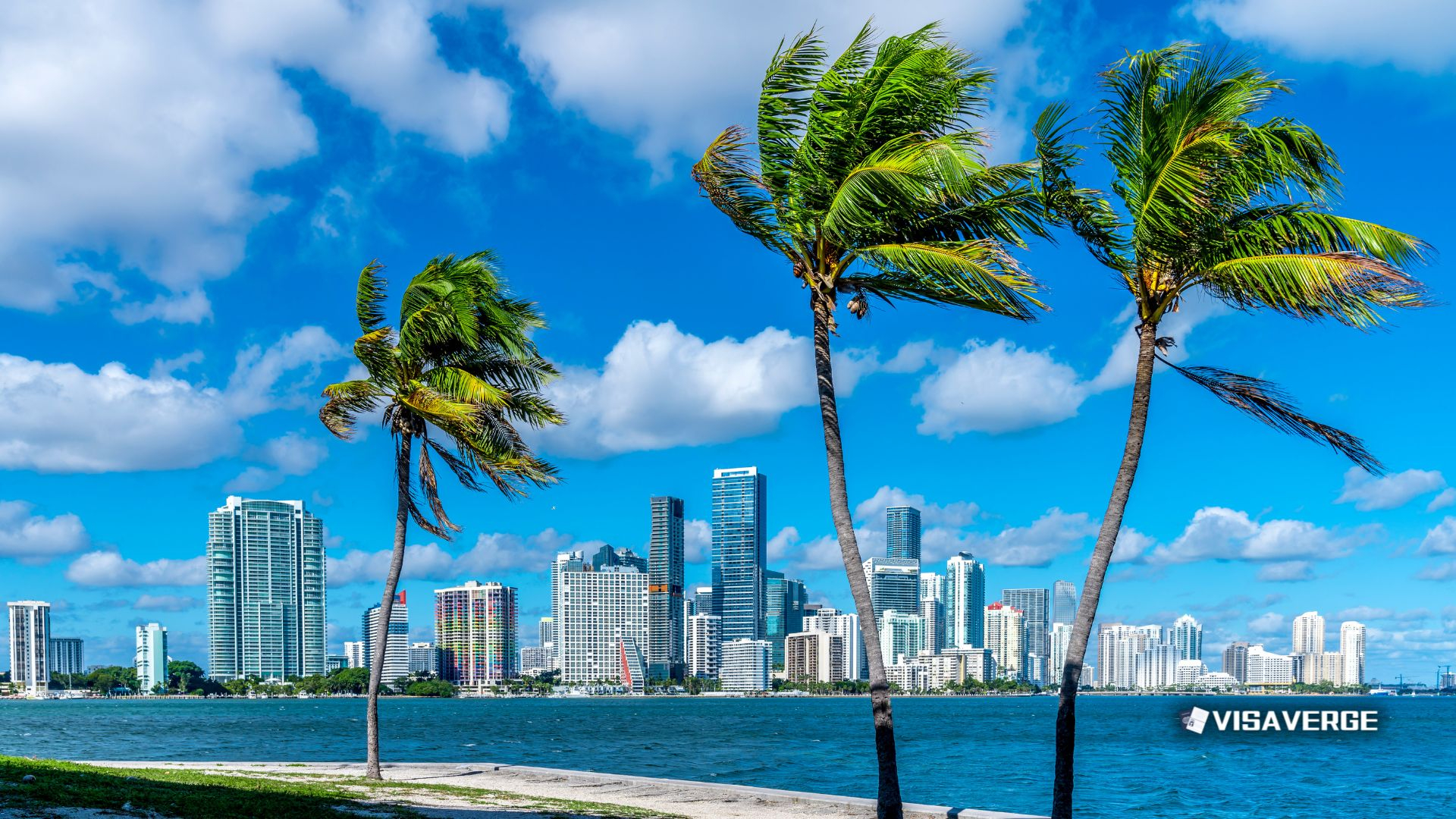
The off-market sale closed on Tuesday through a Nevada-based buyer entity, Lagoon LLC, in a deal that set a price record for Allison Island, the reports said.
Allison Island sits in Biscayne Bay near Miami Beach, in an exclusive gated enclave that has become a high-profile address for wealthy buyers seeking privacy and security. The Brin-linked purchase has drawn attention for its price tag, its location, and the broader pattern it appears to fit.
The property spans 9,700 square feet and includes seven bedrooms, eight full bathrooms and one half-bath, according to the reports. Listings described a luxury pool, hot tub, cabana, marble patio and a private dock.
Reports said the home sits at the island’s remote end, with views of La Gorce and Normandy Isle. The setting has helped make waterfront deals on Allison Island a visible marker of status in Miami’s luxury market.
The seller was LVMH CEO Michael Burke and his wife, Brigitte Burke, the reports said. They bought the 1-acre lot for $11.7 million in 2014 and built the home in 2019.
Coverage of the deal has focused not only on the mansion itself, but on how the ownership appears to be structured. Reports said Brin’s name does not appear on the deed, and tied the purchase to him through entity filings and links involving attorney Michaelle Rafferty.
The reported use of a Nevada LLC in the Miami purchase also fits a pattern described in recent coverage of other Brin-related acquisitions. Reports connected Nevada LLC registrations to a $42 million Lake Tahoe purchase in December and a $50 million Malibu coastal property in January.
Those transactions, alongside the reported Miami purchase on Allison Island, have been discussed in the context of tax policy and domicile planning among ultra-high earners. Reports said Brin has also been reducing his California ties by moving or terminating multiple California-based LLCs and shifting many of them to Nevada entities.
Florida’s lack of state income tax has repeatedly surfaced in coverage of billionaire moves to South Florida. At the same time, reports pointed to California’s tax burden for top earners as part of the backdrop to high-profile relocations.
Some reporting tied Brin’s broader restructuring to a proposed California wealth-tax ballot initiative. The proposal would impose a 5% one-time wealth tax on residents with over $1 billion net worth.
Brin is not the only tech leader linked to major South Florida purchases. Recent reporting said fellow Google co-founder Larry Page spent $173.4 million on two Coconut Grove estates in December and January.
One of Page’s Coconut Grove deals involved Bany Ridge at $101.5 million, with another at $71.9 million, the reports said. The buying spree in Coconut Grove has been cited as another example of tech wealth turning to Miami neighborhoods once seen as quieter alternatives to Miami Beach.
Mark Zuckerberg and Priscilla Chan also closed on a $170 million Indian Creek estate this week, according to the reports, in what was described as Miami-Dade’s priciest home sale. Indian Creek has become one of the most closely watched enclaves in South Florida, in part because of the concentration of ultra-wealth buyers.
Other headline purchases in the region have come from finance and tech figures who have publicly signaled long-term ties. Earlier moves cited in reporting included Larry Ellison’s $173 million Manalapan compound, with a primary residence declared, and Jeff Bezos’s $234 million Indian Creek acquisitions in 2023-2024.
The accumulation of these deals has helped transform Miami’s image beyond a finance and tourism base, the reports said, with South Florida increasingly positioned as a hub for tech capital, family offices and investment networks. In that context, residential real estate has become one of the most visible, and easiest to quantify, signals of elite mobility.
Brokers and large brokerage groups have played a prominent role in marketing and transacting the region’s priciest homes. Reports said Danny Hertzberg of Jills Zeder Group handled Brin, Page and Zuckerberg deals.
Coldwell Banker Realty’s Jills Zeder Group represented both sides of Brin’s sale, according to the reports. High-end transactions of this type often draw attention not only because of their size, but because the broker relationships can reveal how repeat buyers and their representatives move through the market.
Dina Goldentayer of Douglas Elliman also figured in recent reporting on South Florida’s luxury pipeline. Reports said Goldentayer pointed to weekly offers from California buyers who cite the wealth tax.
The top end of Miami’s market has also been tracked through the frequency of $50 million-plus deals, a benchmark used by brokers and analysts as a barometer of ultra-luxury demand. Miami logged 19 sales over $50 million in 2025, the reports said.
That total exceeded New York’s 12 and California’s 10 in 2025, according to the same figures cited in coverage. The comparison has been used to illustrate how South Florida has performed in the highest tier of the U.S. residential market, even as it competes with long-established luxury centers.
Within that market, the Allison Island transaction stood out for its record-setting nature for the enclave and its scale. The 9,700-square-foot footprint, seven-bedroom layout and Biscayne Bay waterfront features placed the home among a class of properties that buyers often treat as both residences and long-term assets.
The reported Brin link also highlighted the increasingly common use of LLCs in high-value home purchases. In this case, reports said the buyer vehicle was a Nevada-based entity, Lagoon LLC, and that the reported connection to Brin came through ties involving addresses and legal representatives.
Such structures can obscure the ultimate buyer in public records, a feature that has become part of the story in celebrity and billionaire real estate transactions. In the Brin-linked deal, coverage said reporters identified a connection through patterns seen in prior purchases and associated legal representation, including attorney Michaelle Rafferty.
The attention to structure and tax backdrop reflects the stakes involved when moves include high incomes and large asset holdings. Florida’s lack of state income tax has been repeatedly cited as a draw for high-net-worth individuals, while California’s policy debates have featured prominently in discussions of relocation planning.
More broadly, wealth migration can shape state and local tax bases and influence where founders and investors build networks. The clustering of buyers linked to technology and finance has also fed narratives about how capital and decision-makers move between U.S. regions, with Miami increasingly cast as a destination.
The shifts have also underscored the importance of residency rules and enforcement when wealthy individuals relocate or restructure holdings across states. As more billionaires and founders buy high-profile properties in South Florida, the paper trail—deeds, LLC registrations, and representative ties—has become part of how the market, and the public, interprets where wealth is planting roots.