Key Takeaways
- On February 6, 2025, Judge Coughenour issued a second preliminary injunction, blocking Trump’s executive order restricting birthright citizenship.
- The order aimed to deny citizenship to children of undocumented immigrants and temporary visa holders, contradicting 14th Amendment protections.
- The injunction ensures birthright citizenship continues during litigation, with future court rulings, including one on February 7, 2025, expected.
On February 6, 2025, U.S. District Judge John Coughenour, presiding in Seattle, issued a second preliminary injunction against a controversial executive order from former President Donald Trump. This order sought to restrict birthright citizenship by removing automatic citizenship for children born in the United States whose parents are either in the country illegally or on temporary lawful visas. This latest injunction, which follows similar actions by other courts, highlights the intense legal and constitutional debates surrounding this issue.
Background and Context
Birthright citizenship is deeply rooted in U.S. law through the 14th Amendment, which was ratified in 1868 shortly after the Civil War. The amendment declares, “All persons born or naturalized in the United States and subject to the jurisdiction thereof, are citizens of the United States and of the State wherein they reside.” This principle, also known as jus soli or “right of the soil,” grants citizenship to any child born on U.S. soil, regardless of their parents’ immigration status, unless specific exceptions apply. The United States is one of approximately 30 countries—most of them in the Americas, including Canada🇨🇦 and Mexico🇲🇽—that adopt this principle.

Judge Coughenour, appointed by President Ronald Reagan, had previously called Trump’s order “blatantly unconstitutional,” issuing an earlier temporary restraining order. His decision on February 6 came as the preceding order was about to expire. The ruling blocks the federal government from implementing the new policy, ensuring the continuation of automatic citizenship for children born to immigrant parents while legal battles proceed.
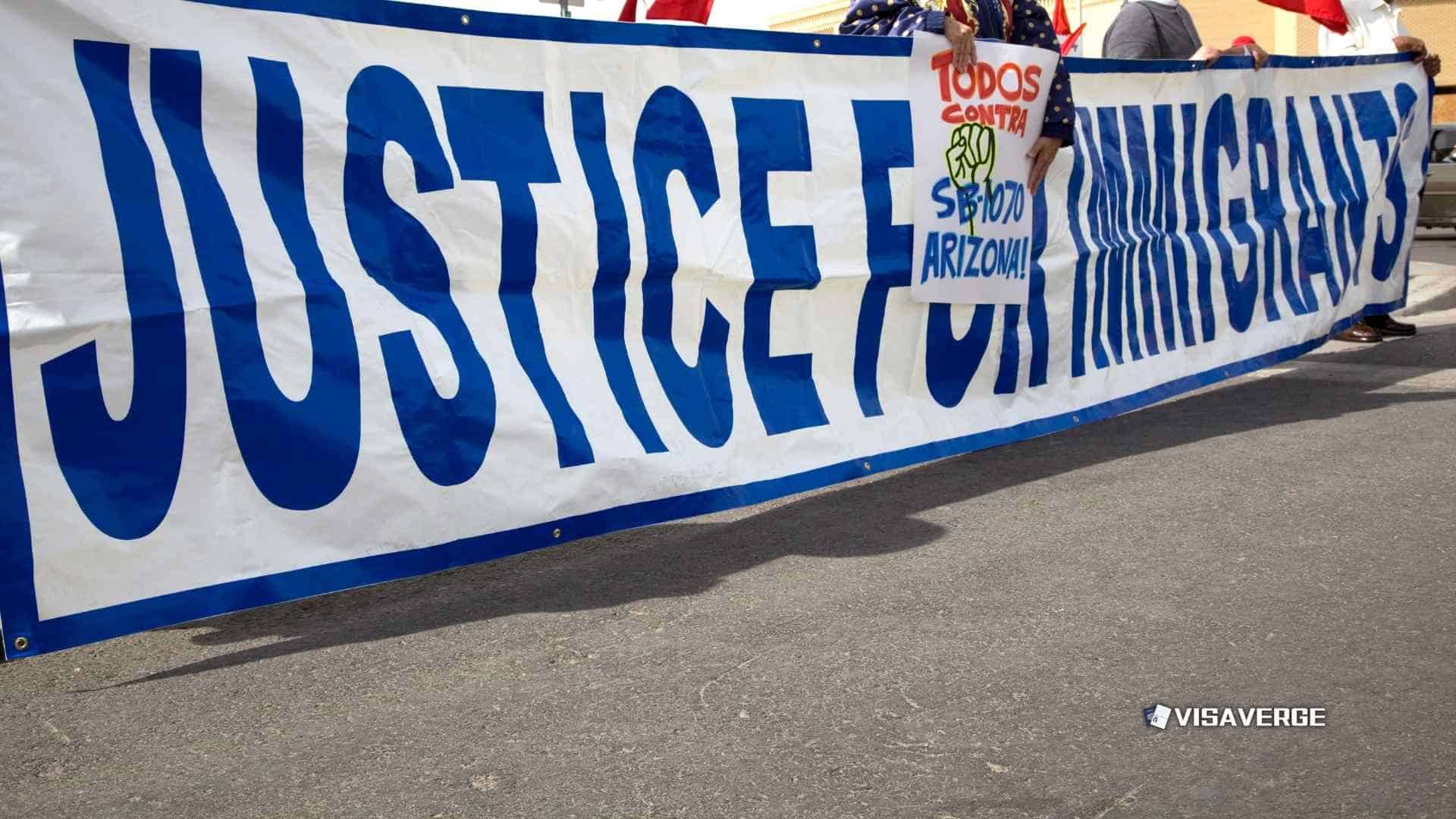
This case consolidates lawsuits from four states—Washington🇺🇸, Oregon🇺🇸, Arizona🇺🇸, and Illinois🇺🇸—alongside an immigrant rights organization. It reflects not just legal scrutiny but also significant public and state-level opposition. A total of 22 states and various advocacy organizations have sued to stop this executive order, claiming it contradicts both the 14th Amendment and established immigration law under the Immigration and Nationality Act.
The Legal Debate: Constitutionality in Focus
Central to this legal clash is the interpretation of the 14th Amendment. The Trump administration argues that the phrase “subject to the jurisdiction thereof” excludes children of undocumented immigrants and temporary visa holders from automatic citizenship. A legal brief from the administration stated that the Constitution “does not harbor a windfall clause granting American citizenship” to such children, positioning the order as a corrective to alleged abuses of U.S. immigration laws.
Opponents, however, strongly disagree, citing over a century of legal precedent. The plaintiffs emphasize the landmark 1898 Supreme Court ruling in United States v. Wong Kim Ark, which decisively upheld the principle that nearly all children born on U.S. soil—aside from specific exceptions related to diplomats, hostile foreign forces, or certain Native American tribes—are citizens at birth. By quoting this case, the plaintiffs argue that the Trump administration is attempting to evade established constitutional protections.
Washington State Attorney General Nick Brown has been vocal in his criticism of the executive order, stating, “Our argument is simple and true—birthright citizenship is enshrined in the U.S. Constitution.” Brown strongly condemned the executive move, citing it as both unconstitutional and damaging to the affected families.
Legal and Practical Implications
The potential impact of Trump’s order, if implemented, would be sweeping. Each year, countless children are born in the United States to immigrant parents. Without birthright citizenship, children could face significant barriers to fully participating in American society. They might be denied access to federal assistance programs, employment opportunities, voting rights, and even basic forms of identification, such as passports.
States like Washington have highlighted the broader harm that could result from this order. According to the lawsuit filed by Washington and other states, allowing federal agencies to carry out this directive would not just harm families but also disrupt state-run programs. Federal funding tied to citizenship status could be reduced, affecting healthcare, education, and welfare initiatives. These concerns underscore how immigration and citizenship policies can ripple across state and federal systems.
Washington is handling the case with a dedicated legal team, including attorneys from the Wing Luke Civil Rights Division. Meanwhile, the Northwest Immigrant Rights Project represents additional plaintiffs, including expectant parents and their future children. Together, these legal teams argue that the executive order far exceeds presidential authority and disregards decades of legal precedent.
The injunction issued by Judge Coughenour ensures that immigrant families retain birthright citizenship protections during the ongoing litigation. As reported by VisaVerge.com, these preliminary injunctions provide temporary relief but do not represent final rulings on the order’s legality. More court decisions, including one in Massachusetts scheduled for February 7, 2025, will contribute to the evolving legal landscape.
Broader National and International Implications
The conflicts over this executive order go beyond the immediate question of birthright citizenship. They highlight broader issues about executive power, constitutional limits, and American immigration policy. Critics view the order as an overreach that could set a dangerous precedent, undermining established legal rights through unilateral executive action.
The United States’ approach to jus soli stands in contrast to most of the world. Globally, citizenship policies vary considerably. While many nations offer birthright citizenship in some form, others tie citizenship more closely to parental nationality. Trump’s order challenges a longstanding American tradition that has shaped the country’s demographic and cultural composition for over a century.
The debate also touches broader societal concerns. Advocates for the Trump administration’s position suggest that birthright citizenship encourages people to circumvent immigration laws. In contrast, opponents argue that restricting this right would punish children for their parents’ immigration status, disrupting families and weakening social cohesion. The intersection of these arguments underscores the complexity of immigration debates in the U.S.
The Legal Process Moving Forward
The cases currently before courts in Seattle and Massachusetts represent only part of the broader litigation surrounding Trump’s executive order. With multiple states involved on both sides, the issue may ultimately reach the U.S. Supreme Court. Legal experts emphasize that the Court’s interpretation of the 14th Amendment could set a significant precedent.
Judge Coughenour’s decision to grant a second preliminary injunction not only maintains legal protections for now but also signals that courts may be reluctant to enforce drastic changes in established citizenship policies. Preliminary injunctions, by definition, are temporary. Still, they suggest that the plaintiffs’ arguments against the executive order hold merit, at least at this stage.
Conclusion
The Seattle ruling is a critical chapter in the ongoing struggle over birthright citizenship and the scope of executive authority. It underscores that interpretations of the 14th Amendment remain central to this legal battle. Judge Coughenour’s ruling not only affects the families immediately impacted but also serves as a reminder of the Constitution’s enduring influence in shaping immigration policy.
As legal proceedings continue, the ultimate outcome of this case could have far-reaching effects on citizenship rights and the future of immigration policy in the United States. For families, states, and stakeholders invested in the outcome, the stakes could not be higher. Readers seeking additional details on immigration policies and updates are encouraged to visit U.S. Citizenship and Immigration Services (USCIS), an authoritative source for information related to U.S. immigration and citizenship rules.
For now, the protection of birthright citizenship remains intact, thanks to rulings like those of Judge Coughenour. The broader constitutional questions will likely continue to captivate legal scholars, policymakers, and people nationwide—making this a pivotal moment in the history of American immigration law.
Learn Today
Birthright Citizenship → Automatic citizenship granted to individuals born in a country, regardless of their parents’ immigration status, unless exceptions apply.
Jus Soli → A principle meaning “right of the soil,” granting citizenship based on birth within the territory of a nation.
Preliminary Injunction → A temporary court order preventing certain actions until a final decision is made in a legal case.
14th Amendment → A U.S. Constitutional amendment establishing citizenship rights, including birthright citizenship, and guaranteeing equal protection under the law.
Immigration and Nationality Act → A U.S. law governing immigration, naturalization, visas, and citizenship eligibility and procedures.
This Article in a Nutshell
On February 6, 2025, Judge John Coughenour blocked Trump’s push to end birthright citizenship, citing the 14th Amendment. This ruling preserves automatic citizenship for children born on U.S. soil, regardless of parents’ status. Amid intense constitutional debates, the decision reinforces a critical pathway to inclusion, shaping America’s identity and immigration future.
— By VisaVerge.com
Read more:
• Judge Considers Releasing Prince Harry’s US Visa Records in Legal Shift
• Federal Judge Blocks Trump’s Order to End Birthright Citizenship in Key Ruling
• Federal Judge Blocks Donald Trump’s Spending Freeze as 22 States Sue
• Judge Blocks Trump Administration’s Federal Grants and Loans Freeze
• Judge Blocks Trump’s Push to End Birthright Citizenship—What’s Next?