- Riyadh Air launched full commercial service on July first, twenty twenty-six, with daily flights to London Heathrow.
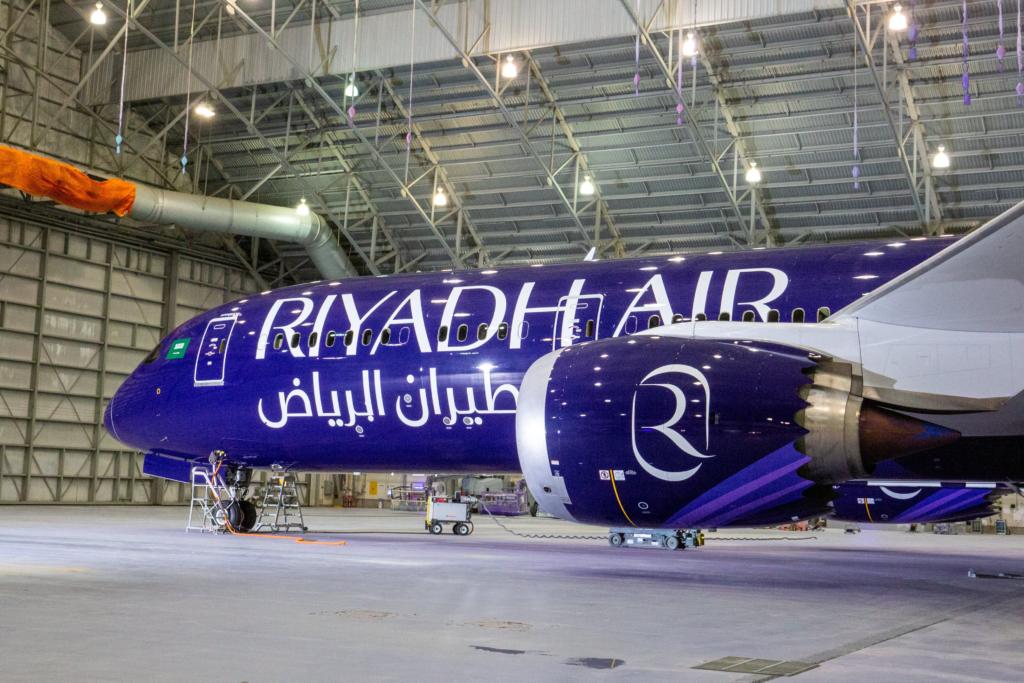
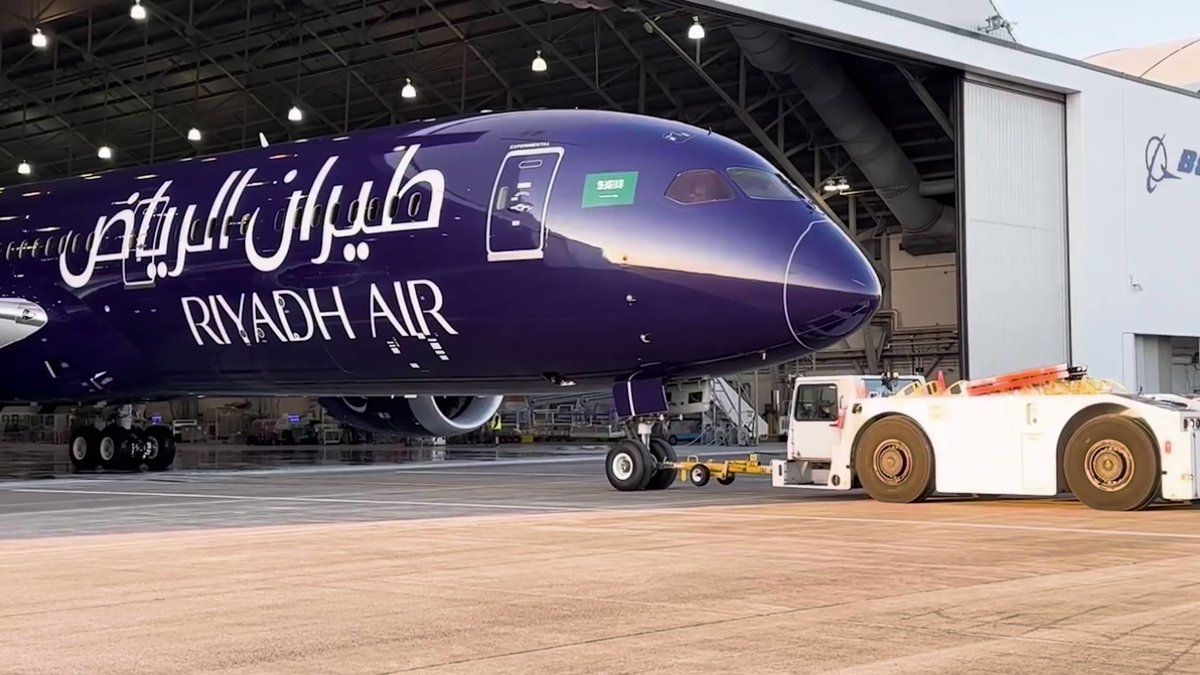
- The airline utilizes custom-built Boeing 787-9 Dreamliners featuring a premium-heavy two hundred ninety-seat configuration.
- Network expansion targets one hundred destinations by 2030, with Kuala Lumpur flights starting July thirtieth, twenty twenty-six.
(RIYADH, SAUDI ARABIA) — Riyadh Air began full commercial service with its Boeing 787-9 Dreamliner on July 1, 2026, operating daily flights between Riyadh and London Heathrow after delays linked to Boeing’s production challenges.
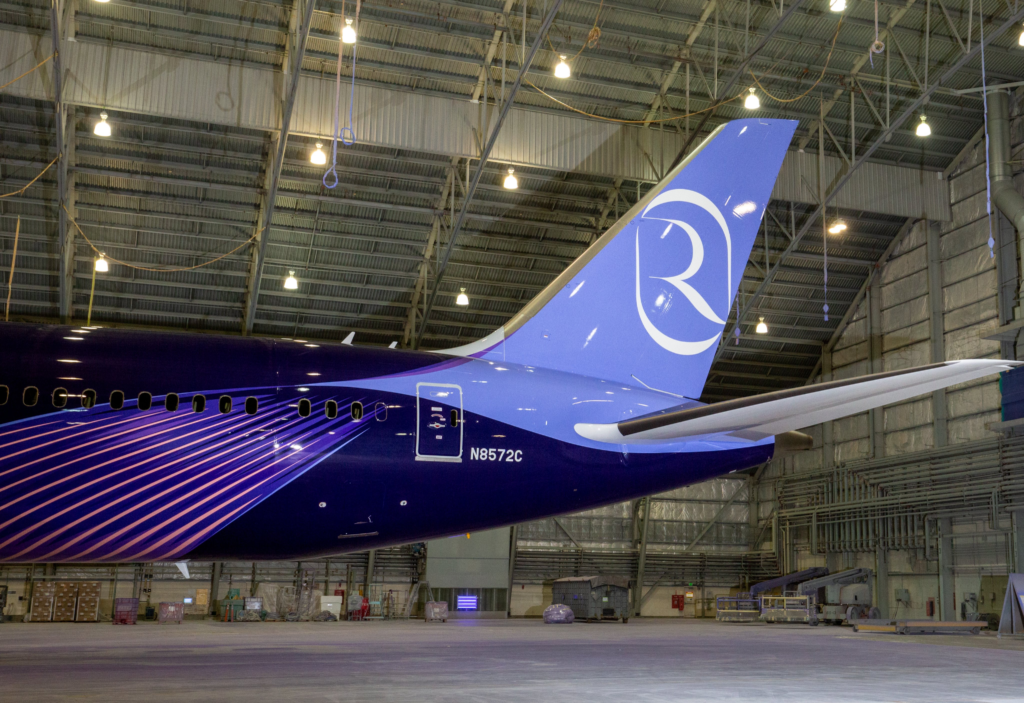
The airline had introduced the aircraft on the London route on June 10, replacing an operational readiness phase that used a leased technical spare. Ticket sales remained restricted until July 1, when bookings opened to the public for the configured 787-9 fleet.
Riyadh Air received its first two custom-built 787-9s on June 5. The aircraft, registered as HZ-RXAA and HZ-RXAB, arrived in Riyadh from Boeing facilities in South Carolina and near Seattle.
The new service runs between King Khalid International Airport and London Heathrow. Riyadh-bound flights depart Riyadh at 02:35 and arrive in London at 07:30, with a scheduled flight time of 6 hours 55 minutes.
Flights from London depart Heathrow at 09:35 and arrive in Riyadh at 18:05 local time. Riyadh Air uses Heathrow Terminal 4 and says published timings remain subject to change.
Daily flights had operated on the route since October 26, 2025, but those services formed part of the airline’s operational readiness program. The leased aircraft, named “Jamila,” was available through approved travel partners until June 30.
Boeing’s supply chain and labor problems pushed Riyadh Air’s planned spring 2025 launch back by more than a year. The airline received four 787-9s in 2025, below the eight aircraft it initially expected.
Fleet deliveries accelerated in 2026. A third aircraft arrived in Riyadh by June 7, and three more were inbound by the end of June, with two additional deliveries scheduled for July.
The first two Dreamliners represent the opening deliveries from an order of up to 72 Boeing 787 aircraft. That agreement includes 39 firm orders for the 787-9 variant, according to the airline’s fleet plans.
Riyadh Air has also placed firm orders for 60 Airbus A321neo aircraft for narrow-body operations and up to 50 Airbus A350s, with deliveries expected to begin in 2030. The carrier holds options for up to 72 more Boeing 787s.
Flight frequency is also increasing. The airline’s schedule began with two daily flights, rose to three on June 18 and reached four daily flights by July 2, 2026.
Riyadh Air’s 787-9 has 290 seats in a premium-heavy configuration. The cabin includes four Business Elite suites, 24 business-class seats, 39 premium-economy seats and 223 economy seats.
The Business Elite suites use Safran Unity Elite seats and include large 4K screens. Passengers throughout the aircraft have access to charging options and high-speed connectivity.
Free high-speed WiFi is available to passengers who join Riyadh Air’s frequent-flyer program. The carrier has positioned the digital service as part of a premium full-service offering for long-haul travel.
London is the first major international route in a network that Riyadh Air plans to expand to 100 destinations by 2030. The airline intends to add a new international destination every two months after its launch.
Service to Kuala Lumpur is scheduled to begin on July 30, 2026, with three flights a week using the Boeing 787-9. Paris, Madrid and Manchester are expected to follow in the coming months.
Additional routes across Asia and the Middle East are planned as more aircraft arrive. The expansion is designed to support traffic between Europe and Asia through Riyadh.
Riyadh Air is owned by Saudi Arabia’s Public Investment Fund, the sovereign wealth fund that backs the country’s Vision 2030 economic diversification plan. The airline forms part of the effort to expand tourism, increase private-sector activity and build Riyadh into an international aviation center.
Chief Executive Officer Tony Douglas, formerly of Etihad Airways, leads the carrier. Riyadh Air has secured partnerships with Delta Air Lines, Virgin Atlantic and Turkish Airlines, creating opportunities for wider connectivity and code-share operations.
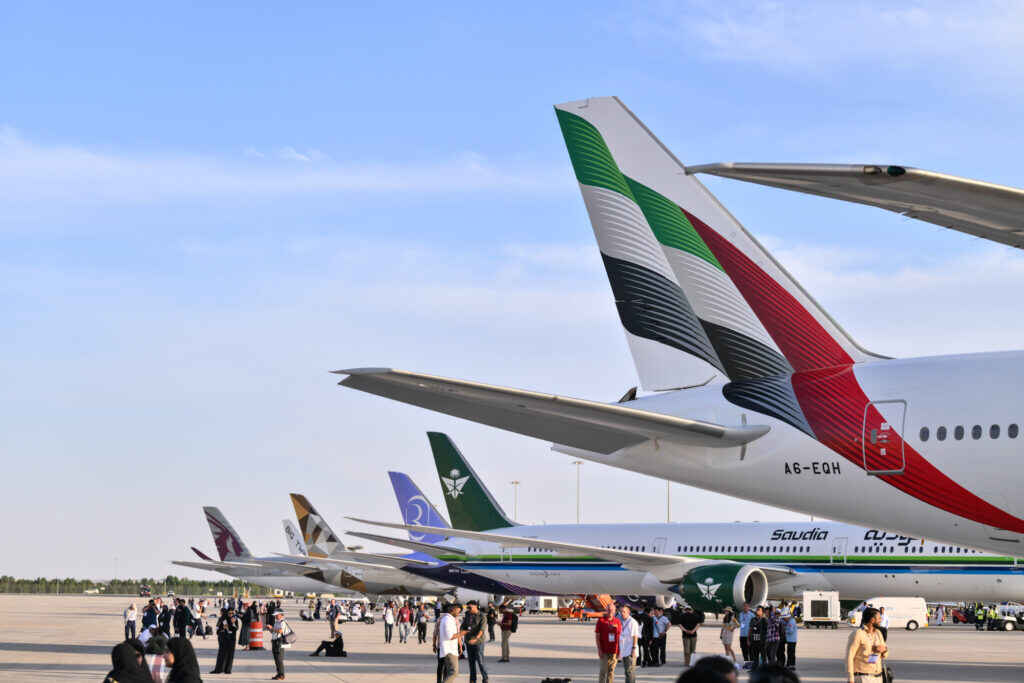
The airline is not expected to join a global alliance in the immediate future as it builds its own brand. Its launch comes alongside the expansion of Saudia, Saudi Arabia’s existing national carrier, which is receiving 12 new aircraft in 2026.
Saudia recorded a 92.3% departure punctuality rate in May 2026, ranking first globally for on-time performance that month. Riyadh Air’s arrival will add another full-service competitor to long-haul markets served by established Middle Eastern carriers.
Saudi Arabia’s National Aviation Strategy calls for annual passenger throughput to rise from approximately 100 million to 330 million by 2030. The plan also seeks to more than double the number of international destinations served from Saudi airports and increase aviation’s contribution to gross domestic product to SAR 75 billion.
Riyadh Air’s network growth is tied to those targets. Its planned 100 destinations by 2030 would give the new carrier a broad international footprint while its premium cabin is aimed at passengers who might otherwise connect through established regional hubs.
Travelers booking the London route can use Riyadh Air’s website or approved travel partners. The airline advises passengers to check the final booking record because schedules can change.
Connections require careful planning while the network expands. A single reservation is preferable when an onward journey depends on a new Riyadh Air route, allowing the itinerary to remain under one booking.
Passengers who join the frequent-flyer program can access the free high-speed WiFi benefit. The carrier has made digital services a central part of its cabin proposition, alongside the Business Elite suites and premium-economy seats.
The Kuala Lumpur launch will provide the next test of Riyadh Air’s ability to add international flying while continuing its London operation. Three weekly flights are scheduled from July 30, 2026, using the same 787-9 aircraft type.
Further deliveries will determine how quickly the airline can add routes and increase frequencies. Airbus A350 deliveries are expected to begin in 2030, while additional Boeing 787s will support the carrier’s long-haul plans before then.
Saudi Arabia expects its national airlines to operate more than 500 aircraft by 2030. The 2026 Future Aviation Forum will bring global aviation leaders together to discuss the country’s expansion plans.
The commercial launch closes a long preparation period that began with leased-aircraft operations and restricted bookings. Riyadh Air now has its own 787-9 fleet operating under its public brand, with London Heathrow serving as its first established European gateway.