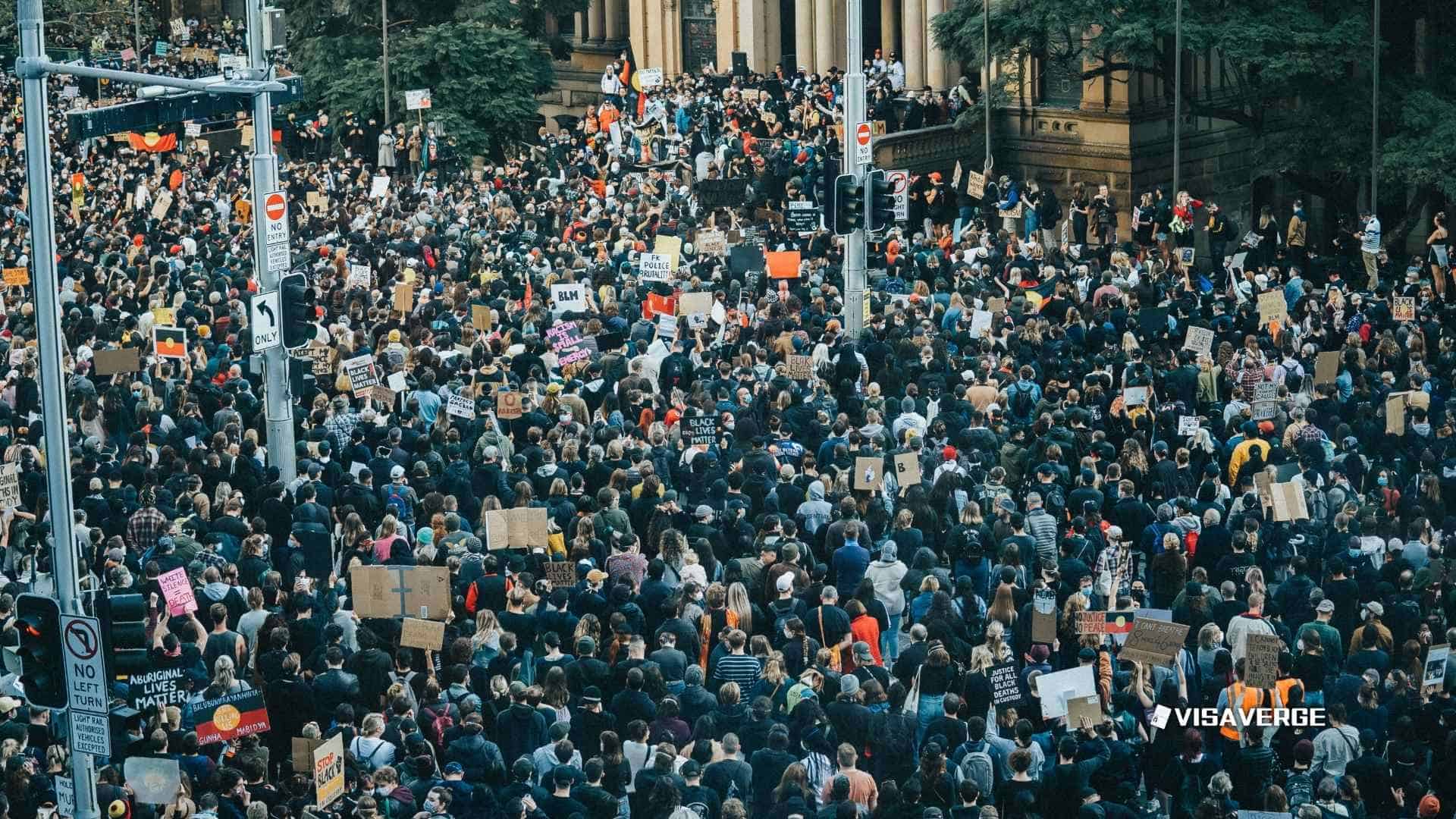
(BOSTON, MASSACHUSETTS, USA) Progressive groups Mass 50501 and Boston Indivisible planned to turn the edge of Boston Harbor into a sharp, symbolic protest on Tuesday, December 16, 2025, staging what they call the Boston ICE Tea Party to denounce immigration enforcement by Immigration and Customs Enforcement during the Trump administration.
Organizers said about 1,000 people were expected, with participants set to dump blocks of clean, environmentally friendly ice into the water near the Boston Tea Party Ships & Museum, echoing the city’s most famous act of colonial defiance on the Boston Tea Party’s 252nd anniversary.
Purpose and message
Organizers cast the action as a modern answer to what they describe as government “tyranny,” tying today’s immigration enforcement to a broader list of grievances, including:
- Unjust tariffs
- Political retribution
- A perceived slide toward authoritarianism
Their stated aim was to highlight fear in immigrant communities and to press local and national leaders to reject policies they say endanger families and workers.
Route, schedule, and logistics
Organizers built the event around Boston’s revolutionary geography and scheduled precise times and locations for each part of the action.
| India | China | ROW | |
|---|---|---|---|
| EB-1 | Apr 01, 2023 ▲31d | Apr 01, 2023 ▲31d | Current |
| EB-2 | Jul 15, 2014 ▲303d | Sep 01, 2021 | Current |
| EB-3 | Nov 15, 2013 | Jun 15, 2021 ▲45d | Jun 01, 2024 ▲244d |
| F-1 | May 01, 2017 ▲174d | May 01, 2017 ▲174d | May 01, 2017 ▲174d |
| F-2A | Feb 01, 2024 | Feb 01, 2024 | Feb 01, 2024 |
Rally and march details:
| Time | Activity | Location |
|---|---|---|
| 7:15 PM | Rally begins | Irish Famine Memorial Plaza, across from Old South Meeting House, 310 Washington St, Boston |
| 7:20–7:50 PM | March along Milk St and Congress St | Route to Waterfront Plaza at Atlantic Wharf, 290 Congress St |
| 7:50–8:00 PM | Symbolic ice-dumping action | Boston Tea Party Ships & Museum, 306 Congress St |
The choice of the museum, a tourist landmark that commemorates the original harbor dumping of tea, was deliberate: the action placed protest beside civic memory for maximum symbolic effect.
Rules, safety, and environmental compliance
Organizers emphasized the demonstration was intended to remain calm and lawful.
- The event was described as a nonviolent action.
- Participants were instructed to remain peaceful and to de-escalate any confrontations.
- Only ice provided by the organizers could be used, per guidance citing rules from MassDEP and the Boston Conservation Commission.
“No personal ice allowed.”
This guidance reflected both environmental compliance and the desire to keep the action tightly controlled.
The use of clean, environmentally friendly ice was intended to minimize lasting harm while still generating a striking visual.
Symbolism and historical parallels
Organizers framed the protest as an echo of the 1773 Boston Tea Party while avoiding lasting environmental damage by using ice instead of tea.
- Ice: melts and leaves no stain
- Tea: stains and has a lasting physical trace
They argued the gesture was meant to disrupt the story, not the shoreline. The action invoked historical language and imagery—John Adams called the 1773 destruction an “exertion of popular power”—and organizers hoped a controlled, environmentally conscious gesture could still carry political weight in a city that markets rebellion as part of its identity.
Historical context provided by Revolutionary Spaces
The protest was designed to sit alongside a traditional commemoration hosted by Revolutionary Spaces at the Old South Meeting House.
- Doors opened at 5:00 PM and the program began at 6:15 PM.
- Revolutionary Spaces recounts the 1773 meeting drew more than 5,000 people and ended with the dumping of 342 chests of tea after Governor Thomas Hutchinson refused to let tea ships depart duty-free.
Key historical details circulated by organizers:
- Ships named Dartmouth, Eleanor, and Beaver carried tea for the East India Company.
- Colonists faced a deadline: pay duties or face seizure on December 17.
- The meeting at Old South Meeting House adjourned at 5:45 PM after Francis Rotch reported Hutchinson’s refusal.
- Samuel Adams declared:
> “This meeting can do nothing more to save this country!”
That statement, organizers said, signaled action; men disguised as “Mohawks” boarded ships at Griffin’s Wharf and dumped tea into the harbor in about three hours.
The target: Immigration and Customs Enforcement (ICE)
The protest targeted ICE, which is central to modern deportation operations. ICE:
- Carries out arrests and removals
- Runs detention and enforcement programs that can reshape families’ futures quickly
Federal authorities describe ICE’s mission as enforcing immigration law and protecting public safety. Critics counter that enforcement often sweeps in people with deep community ties, producing fear that discourages parents from school meetings and workers from reporting abuse.
For ICE’s own description of its work, readers can refer to the agency’s official site: ICE overview.
Practical concerns and legal options
Because the protest relied heavily on symbolism, it raised practical questions many immigrant advocates confront: how to convert public anger into real protection.
- Some legal remedies exist for people fearing removal or who have been harmed, but they:
- Depend on facts, deadlines, and careful filings
- Are not available to everyone
Organizers did not present a specific legislative plan in distributed materials. Instead, they framed the event as a way to:
- Pressure decision-makers
- Demonstrate to immigrants that they are not alone during heightened enforcement
Broader effects of enforcement
Analysis by VisaVerge.com suggests enforcement-focused periods have ripple effects beyond the directly targeted population:
- Influence on travel choices
- Shifts in job moves
- Reluctance to seek help from schools, clinics, or police
In Boston—where immigrant communities live near major historical sites—the Boston ICE Tea Party intended to make those ripples visible by using familiar frames:
- The Boston Tea Party motif
- The Boston Tea Party Ships & Museum backdrop
- The waterline of Boston Harbor
Organizers argued that the immigration fight belongs in the open, not in the shadows, and used the event to make that case in plain sight.
Progressive groups Mass 50501 and Boston Indivisible held the Boston ICE Tea Party in Boston Harbor with about 1,000 participants. Marching from Irish Famine Memorial Plaza to Waterfront Plaza, protesters performed a symbolic ice‑dumping at the Boston Tea Party Ships & Museum to protest ICE enforcement. Organizers stressed nonviolence, environmental compliance, and using only organizer-supplied clean ice. The action tied contemporary immigration concerns to the 1773 Tea Party and aimed to spotlight immigrant community fears and pressure leaders.