- New York City launched the 22nd Annual Immigrant Heritage Week featuring the theme ‘Immigrants Power New York’ for 2026.
- The observance honors the record-breaking 11,000 arrivals at Ellis Island that occurred on April 17, 1907.
- A power grid visual symbolizes how three million immigrant residents serve as the city’s essential backbone.
(NEW YORK CITY, NEW YORK) — New York City launched the 22nd Annual Immigrant Heritage Week on April 13, 2026, with a campaign titled “Immigrants Power New York”, led by Mayor’s Office of Immigrant Affairs Commissioner Faiza N. Ali.
The kickoff opened a three-month run of immigrant heritage celebrations through June, which the city tied to National Immigrant Heritage Month. City officials framed the campaign around the role immigrant New Yorkers play in the workforce, the economy and daily life across the city.
A signature illustration for the campaign uses a power grid as its central image. The city said the design presents immigrants as the driving force and interconnected backbone of New York City.
The launch announcement included a formal statement from the city: “Today, Faiza N. Ali, Commissioner of the NYC Mayor’s Office of Immigrant Affairs (MOIA), kicked off the 22nd annual Immigrant Heritage Week (IHW) with the theme ‘Immigrants Power New York.'”
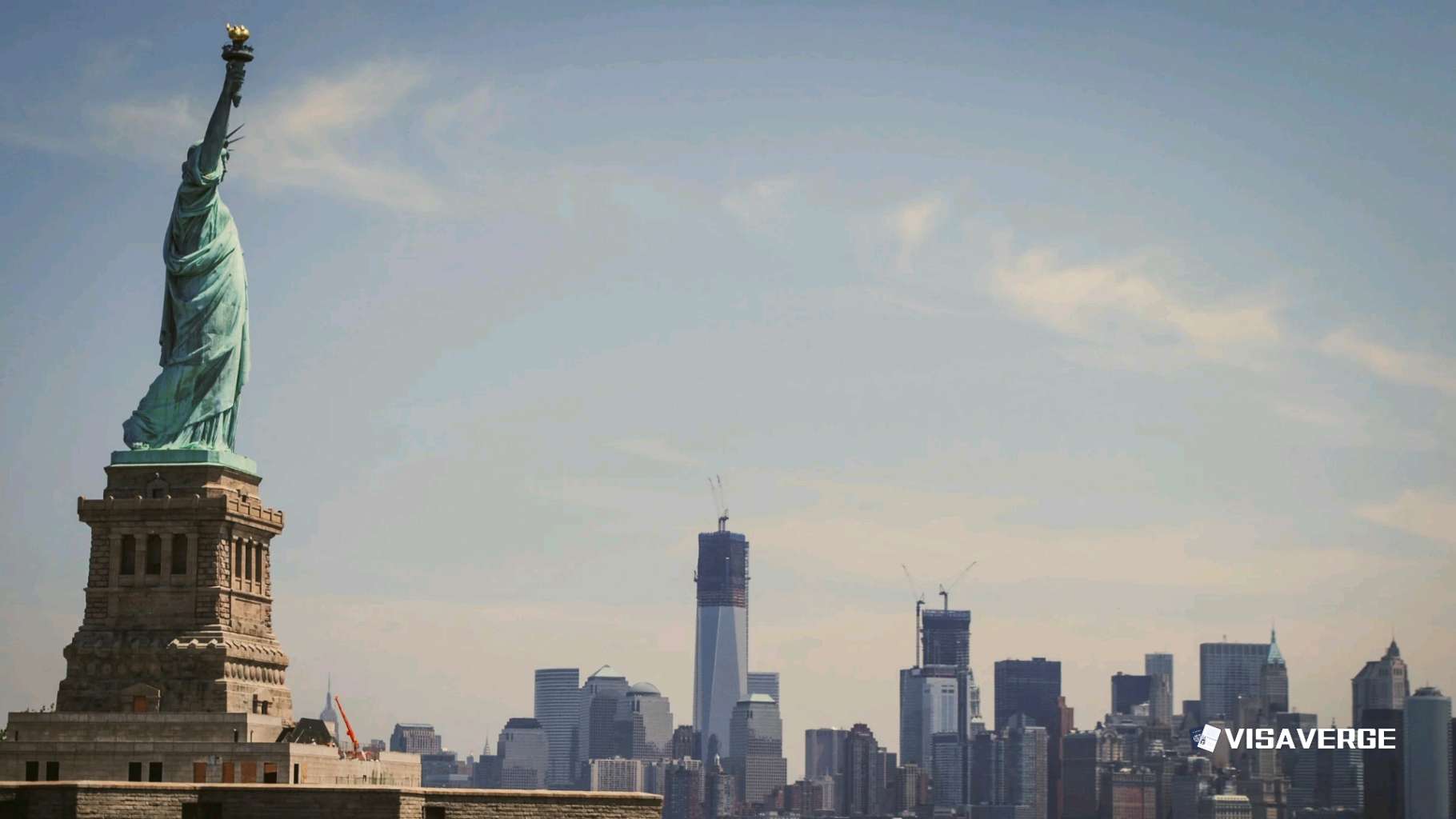
Immigrant Heritage Week traces its timing to April 17, 1907, when 11,000 immigrants entered the United States through Ellis Island in a single day, the largest one-day total at the time. New York City established the observance in 2004 to honor immigrant contributions.
More than three million immigrants now live in New York City, according to the campaign material, with residents spread across all five boroughs. That scale sits at the center of this year’s message, which casts immigration not as a narrow civic story but as part of how the city works every day.
Ali led the public kickoff as the administration opened this year’s observance. The city also identified Shaina Torres as the media contact for the launch.
The campaign arrives with language that leans heavily on infrastructure and motion. In the city’s telling, immigrants do not sit at the margins of New York; they power it, connect it and keep it running, much like the lines and nodes shown in the power grid image.
That visual choice reflects a broader emphasis in the city’s immigrant affairs messaging. The image links labor, commerce and neighborhood life into a single network, suggesting that the same people who staff workplaces and build businesses also anchor schools, families and street life.
Officials did not present Immigrant Heritage Week as a single-day event. They described it as the opening stage of a season of programming that runs through June and folds into the national designation of immigrant heritage month.
Outside City Hall, the 2026 calendar includes events tied to the same theme. The Museum of Jewish Heritage and the Statue of Liberty & Ellis Island Foundation planned an event focused on Jewish immigration’s role in New York City.
New York State’s Office of Language Access also marked the period with its own celebration. Listings placed that observance at either April 13-19 or April 14-20.
The city’s annual observance has long drawn meaning from Ellis Island, one of the most recognized sites in the history of immigration to the United States. By anchoring the week to the record set on April 17, 1907, officials link present-day immigrant life in the city to a date that still carries institutional and symbolic weight.
That historical thread also helps explain why the event is called Immigrant Heritage Week rather than a narrower policy campaign. The point is not limited to immigration services or city programs; it is also about public memory, civic identity and the way New York describes its own past.
In practice, the 2026 message folds those strands together. “Immigrants Power New York” functions both as a slogan and as a description of how the city wants to frame its population, with immigrants cast as workers, neighbors and an essential part of the urban system.
The wording also places immigrant labor at the center of the city’s public narrative. Rather than treat immigrant communities as a separate constituency, the campaign describes them as part of the city’s basic operating structure, visible in paychecks, storefronts, commutes and household routines.
That framing has circulated well beyond this week’s launch. Zohran Mamdani used similar language in election rhetoric, saying, “New York will remain a city of immigrants, a city built by immigrants, powered by immigrants, and as of tonight led by an immigrant.”
The line connects current politics to older milestones in the city’s history. In 1880, Irish-born William R. Grace became New York City’s first immigrant mayor.
Placed alongside the city’s new campaign, those references show how often New York returns to immigration as both a political argument and a civic shorthand. The language changes from one era to the next, but the basic claim remains familiar: immigrants are not apart from the city; they are part of its making.
This year’s imagery sharpens that idea by choosing a system everyone depends on. A power grid is functional, unseen in places and indispensable when it works, which gives the campaign an everyday vocabulary for describing immigrant presence in the city.
The choice also lets the city tie together sectors that often appear separately in public debate. Workforce participation, economic output and daily life become parts of one picture, connected by the same metaphor and carried by the same phrase, Immigrants Power New York.
New York’s immigrant affairs office has used the annual observance for more than two decades to make that argument in public. Since its start in 2004, Immigrant Heritage Week has served as a recurring city-sponsored acknowledgment that immigrant history is also city history.
That history has numbers attached to it. The city points to more than three million immigrant residents today, while the April 17, 1907 benchmark points back to the era when Ellis Island stood at the center of U.S. entry.
The two figures do different work in the city’s presentation. One anchors the campaign in a single, memorable day from the past; the other emphasizes the scale of immigrant life in the present.
Ali’s office used the launch to pull those timelines together. The event opened with a current policy-facing city agency, but the message rested on a longer arc that reaches from Ellis Island through the present-day neighborhoods of all five boroughs.
That mix of symbolism and arithmetic is common in civic commemorations, and New York used both here. The city cited the record of 11,000 arrivals on one day, the span of three months of celebrations, and the count of more than three million immigrant residents now living in the city.
Even the calendar matters to the way the city tells the story. Starting on April 13 places the launch just ahead of the April 17 anniversary that gives the week its historical basis.
The result is a campaign built around timing as much as message. It begins in mid-April, invokes an Ellis Island date from 1907, runs through June, and sits inside a national month of recognition.
That sequence gives New York several chances to restate the same public identity in different settings, from city announcements to museum programming to state language-access observances. Each uses different institutional language, but all sit inside the same larger affirmation of immigrant life in New York.
For a city that often describes itself through arrival, movement and reinvention, Immigrant Heritage Week remains one of the most direct official expressions of that idea. This year’s campaign distilled it into four words and one image: immigrants, power, New York, and the grid that holds a city together.