- International visitors face a $100 surcharge at 11 parks starting January 1, 2026.
- Travelers must present U.S. government-issued photo ID to avoid paying the additional fees.
- Park staff may question visitors about citizenship status under new internal agency directives.
The Department of the Interior announced that international visitors will pay new fees to enter 11 popular U.S. national parks starting January 1, 2026, adding a new layer of screening at park gates that is already drawing scrutiny amid separate reports of National Park Service staff asking visitors questions about citizenship.
Under the Interior Department’s plan, non-U.S. residents aged 16 and older visiting the affected parks will pay an additional $100 on top of normal entrance fees, a change the Trump administration has described as “America-first pricing.”
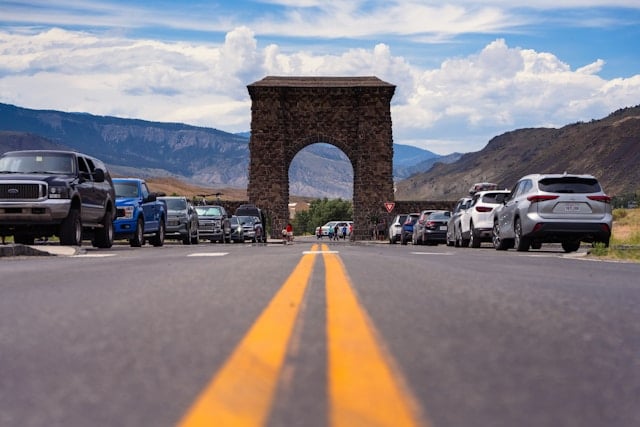
Visitors will be asked to present a U.S. government-issued photo ID at national park entrances, and those without one will need to pay the increased fees.
Outside Online has reported that an internal directive has ordered some National Park Service staff to ask visitors questions about their citizenship status, raising concerns for tourists and other travelers who see national parks as places to escape the country’s wider political fights.
The reported questioning has been described as internal guidance rather than a formally published policy change, and public details about how widely it is being used are not clear.
How the surcharge and ID check work in practice
Even without a broader citizenship-checking policy, the new surcharge and the ID check create a more formal resident-versus-nonresident distinction at entrance stations, with practical consequences for who pays what and how quickly vehicles can move through gates.
for travelers arriving with tight schedules, the most immediate effect may be uncertainty at the booth: what questions will be asked, what documents will be accepted, and how long it will take to settle any dispute before a family or tour bus is waved through.
The Interior Department’s announcement centers on pricing, but it lands in a wider immigration and travel climate in which document checks can feel more charged, particularly for visitors who are already navigating U.S. entry rules and airport inspections.
For many park visitors, the new fee structure will be most visible in the moment a car reaches a ranger or fee-collection window and the transaction begins with an ID request.
Policy specifics and gate decision point
The policy itself is straightforward on paper: an add-on surcharge for a defined group of visitors, triggered by non-U.S. residency and age, and collected at entry alongside the normal entrance fee.
In practice, that means a family or group traveling together could face a higher bill if some members are non-U.S. residents aged 16 and older, while children under 16 fall outside the surcharge threshold described in the announcement.
Because the surcharge is “on top of normal entrance fees,” it functions as an additional charge rather than a replacement, changing the calculation for visitors who previously planned only around the standard vehicle or per-person fees.
Travel planners who string together multiple parks on one trip will feel the compounding effect most clearly, since the charge applies at each park covered by the policy rather than as a one-time national fee.
At the same time, the plan’s reliance on gate checks creates an incentive for visitors to arrive prepared, especially at peak periods when entrance lines already stretch.
The Interior Department’s enforcement concept is tied directly to identity documents: visitors will be asked to present a U.S. government-issued photo ID, which is positioned as the practical way staff will distinguish between those who pay the standard fees and those who pay the increased amount.
That framing makes the resident determination less about nationality in the abstract and more about whether a visitor can present a U.S. government-issued photo ID at the moment of entry.
For visitors who do not have such an ID with them, the policy is explicit about the consequence: they will need to pay the increased fees.
That approach effectively turns the entrance gate into the decision point, rather than shifting the screening to an online purchase step or a later audit, and it may shape how visitors pack for a day trip.
Families traveling with passports or foreign identity cards may still be uncertain about how those documents will be treated under a system that is described specifically in terms of U.S. government-issued photo ID.
The details offered publicly do not answer every scenario a ranger might face, such as mixed-status groups, visitors who recently moved, or travelers who are lawful residents but do not carry the specific ID staff expect.
For travelers, the safest assumption under the announced rules is that the residency distinction will be made quickly at the gate, and that lacking the requested U.S. government-issued photo ID will push the transaction toward the higher charge.
That makes preparation less about debate at the window and more about avoiding delays, especially at parks where lines can grow long in popular seasons.
Drivers may want to anticipate a more involved conversation at the booth than in years when paying the standard fee was the primary interaction, particularly if staff are simultaneously applying internal guidance that includes questions about citizenship status.
Parks affected by the surcharge
The Interior Department has tied the new surcharge to a defined list of high-profile destinations, which matters because travelers often plan their routes and lodging around marquee parks rather than the wider National Park Service system.
- Acadia
- Bryce Canyon
- Everglades
- Glacier
- Grand Canyon
- Grand Teton
- Rocky Mountain
- Sequoia and Kings Canyon
- Yellowstone
- Yosemite
- Zion
For trip planning, that list reaches across the U.S., from the desert Southwest to the northern Rockies, and it captures several parks that anchor multi-park road trips, including common combinations such as Grand Canyon and Zion, or Yellowstone and Grand Teton.
Visitors mapping an itinerary will need to treat those destinations as higher-cost stops if they fall into the non-U.S. resident category and meet the age threshold, while parks outside the list would not be subject to this specific surcharge based on what has been announced.
Local implementation details may still vary by entrance and staffing, because every park has multiple access points and different patterns of crowding, and visitors often experience policies differently depending on which gate they use and what time they arrive.
New international visitor fee starting January 1, 2026
The Interior Department’s announcement makes the surcharge effective January 1, 2026, applying to non-U.S. residents aged 16 and older at the 11 named parks.
Because this section will have an interactive tool added separately, the description here focuses on clear explanatory prose about what travelers should expect at park entrances and how the gate interaction will operate under the announced framework.
Travelers should anticipate that the gate is the primary decision moment: a staff member will request a U.S. government-issued photo ID, determine whether the surcharge applies, and collect the add-on $100 fee in addition to the normal entrance charge if the visitor is a non-U.S. resident aged 16 or older.
The interactive tool to be added will visualize which gates and parks are affected and how the fee might accumulate across multi-park itineraries; this text leads into that tool by summarizing the practical steps visitors will face.
Fee-free days and resident eligibility
The Interior Department plans to prohibit international visitors from taking advantage of fee-free days, with 10 fee-free days designated for 2026.
That creates a sharper dividing line than before for tourists who build U.S. vacations around those dates, since the announcement describes free entry as a benefit reserved for U.S. residents rather than a universal waiver.
For non-U.S. residents, the announced framework means they should expect normal entrance fees plus the surcharge regardless of whether a particular day is designated as fee-free for U.S. residents, which could shift travel decisions toward less busy periods or different destinations.
Because this section will receive an interactive tool, the prose here prepares readers to use that tool to explore which dates are designated and how resident-only eligibility affects crowds and costs.
Practical effects for travelers and planners
For many visitors, an ID request at a park entrance could change how they handle documents on day trips, especially international tourists who may leave passports at a hotel.
The policy also raises immediate budgeting questions for tour operators and travel agents who sell multi-day packages built around major parks, since the add-on fee changes the per-person cost structure for many groups.
For independent travelers, the most direct effect will be on day-of decisions: whether to visit one of the 11 parks, whether to shift to another public-land destination, or whether to reduce the number of park entries on a trip to limit repeated charges.
The Interior Department’s announcement does not eliminate the standard ways visitors pay to enter parks, but it adds a new category of charge and a new documentation expectation at the point of entry.
What remains unsettled for travelers is how uniformly the rules will be applied across the system and how entrance staff will handle edge cases, particularly in high-traffic locations where speed and clarity matter.
The announced policy is clear that the distinction turns on non-U.S. residency and on a request for a U.S. government-issued photo ID, yet it does not lay out every document type or every decision pathway a visitor might face at a busy entrance.
For travelers trying to verify how the rules will work at a specific park, the most practical approach is to monitor official updates from the National Park Service and the Department of the Interior and to ask direct questions when contacting a park, focusing on what ID will be requested and how the surcharge will be handled at that entrance.
Until more on-the-ground detail is clear to the public, travelers looking to avoid surprises may choose to bring documentation they expect to be requested, keep a flexible budget that accounts for the new add-on charge, and plan itineraries with enough time to absorb slower gate processing at popular parks under the new America-first pricing system.
The U.S. Department of the Interior has announced a $100 surcharge for international visitors at 11 popular national parks, effective January 2026. This ‘America-first’ policy requires non-residents over 16 to pay extra fees and present U.S. government-issued ID at entry. The move coincides with reports of park rangers questioning citizenship status, raising concerns about travel delays and the politicization of natural landmarks for global tourists.