- A legal observer alleges federal agents used facial recognition technology to identify her during a community monitoring effort.
- The government revoked her Global Entry and TSA PreCheck privileges just three days after the encounter occurred.
- Civil liberties advocates warn of retaliatory use of surveillance tools to penalize citizens participating in First Amendment-protected activities.
RICHFIELD, MINNESOTA — Nicole Cleland filed a sworn declaration in a federal lawsuit against the Department of Homeland Security after she said a Customs and Border Protection agent used facial recognition to identify her while she observed immigration enforcement activity and her Global Entry and TSA PreCheck privileges were revoked days later.
Cleland, a 56-year-old retail worker and legal observer from Richfield, Minnesota, said a CBP agent approached her vehicle during an early-January encounter in suburban Minneapolis, addressed her by name and told her, “We have facial recognition, and we know who you are.”
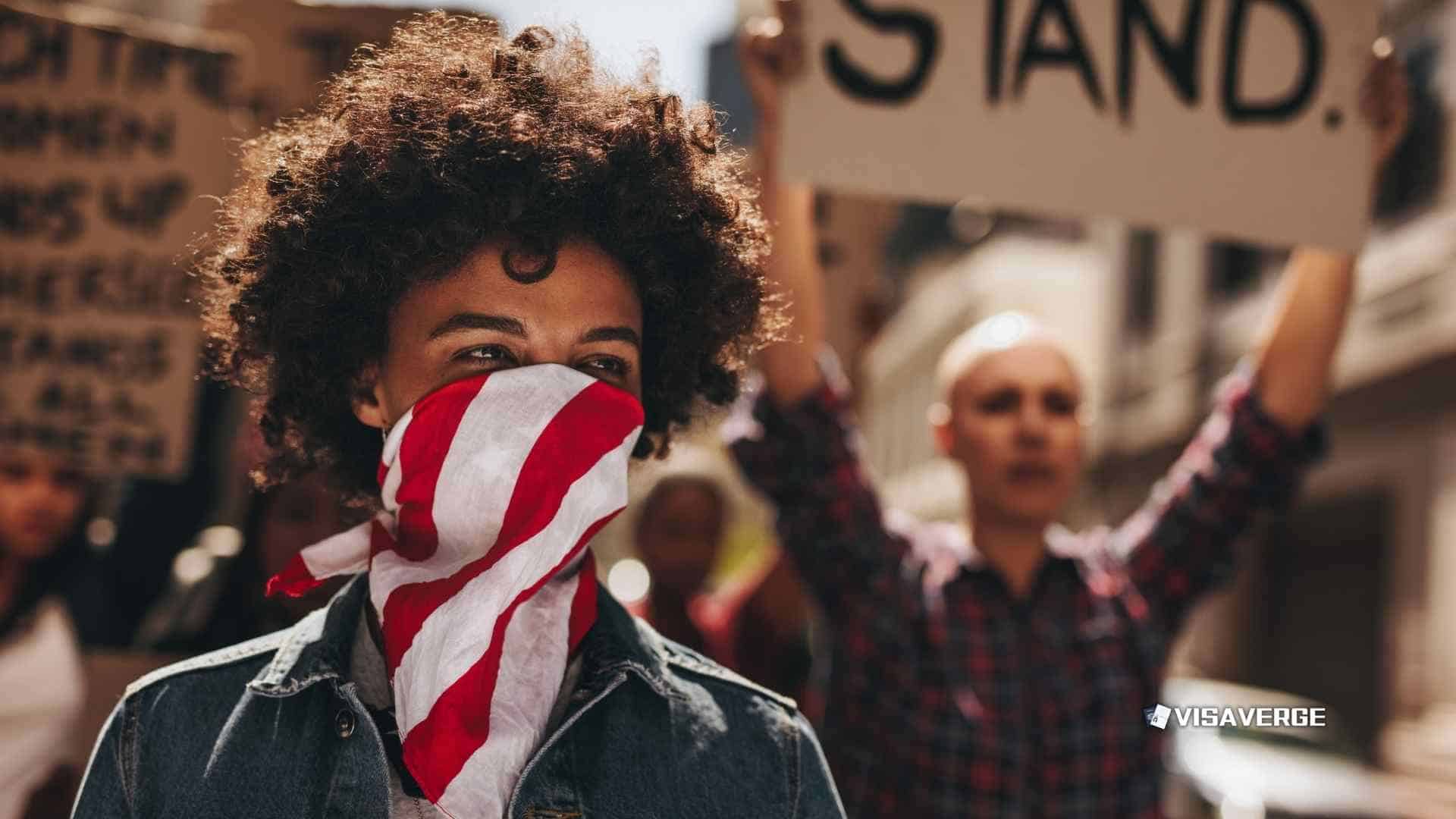
“We have facial recognition, and we know who you are.”
Three days after that encounter, Cleland received a Department of Homeland Security email revoking her Global Entry status “effective immediately,” a court filing says. The notice cited no specific reason beyond general ineligibility under customs, immigration, or agriculture rules, the filing says.
The sequence has drawn attention from civil liberties advocates and local activists because it links the government’s expanding surveillance and identification tools to participation in ICE Watch, a community monitoring effort that Cleland described as a legal observer role tied to documenting federal agents.
Cleland said she was acting as a legal observer for her town’s ICE Watch group when she drove several blocks behind a truck she believed belonged to ICE or CBP. She said she stayed in her car.
A CBP agent in full battle fatigues, combat boots, and armed approached her stationary vehicle, the filing says. The agent greeted her by name, saying, “Hi Nicole,” then said, “We have facial recognition, and we know who you are.”
The agent also warned Cleland she was “impeding” federal operations under 18 USC § 111 and could be arrested if it happened again, the filing says. Cleland was not detained, arrested, charged, or cited, the filing says.
Cleland said she had been a Global Entry member since 2014 and had no prior issues. She lost access to expedited entry and the screening benefits tied to TSA PreCheck when the programs were revoked, a consequence that can affect work travel and routine trips for people who rely on Trusted Traveler Programs.
In her declaration, Cleland attributed the timing to retaliation for her activism. She said she filed a Freedom of Information Act request for details, and CBP requested additional paperwork, the filing says.
Cleland’s account places facial recognition at the center of her complaint. The filing describes the agent’s identification as coming through facial recognition during the encounter, and it references a Department of Homeland Security mobile capability for contactless scans and database checks.
The agent likely used Mobile Fortify, a DHS smartphone app for contactless facial scans, fingerprints, and database queries, the filing says. The tool has been deployed by ICE and CBP during enforcement and protests without consent, it says.
Cleland said she never exited her vehicle or was near the agent during scanning, raising questions in her account about how the identification was carried out and whether other surveillance tools were involved. The filing links her concerns to a broader enforcement toolkit that includes license plate readers, social media monitoring and location data.
The episode unfolded amid “Operation Metro Surge” in Minneapolis, the filing says, a reference used to frame heightened monitoring and enforcement activity in the area. Cleland’s account ties her experience to a view among observers that identification and tracking capabilities have expanded beyond fixed checkpoints.
Federal agencies increasingly use facial recognition for identity confirmation in a range of settings, including border processing and travel programs such as Global Entry, which provides expedited entry for approved travelers. Cleland’s filing centers on the use of that capability outside a port of entry, during an encounter tied to ICE Watch activity.
The revocation also highlights the limited detail participants often receive when benefits are removed. Cleland’s notice cited general ineligibility under customs, immigration, or agriculture rules without laying out specific allegations, the filing says.
Global Entry and TSA PreCheck are voluntary programs with continuous vetting, and CBP can revoke benefits during investigations even without arrests or convictions, the filing says. The programs rely on information-sharing across DHS systems, and cross-system flags can affect eligibility, it says.
Revocation notices often omit detailed reasons, the filing says, a longstanding point of friction for travelers who say they cannot meaningfully respond without knowing the government’s concerns. Cleland’s filing frames her case as an example of how sparse notices can leave people uncertain about what conduct triggered the action.
Applicants and members can seek reconsideration through the Trusted Traveler Programs portal, the filing says. Appeals succeed in about 40% of cases, it says, a figure cited as part of the debate over how much practical recourse exists once a benefit is withdrawn.
Cleland’s declaration describes what she called a chilling effect in her community after the encounter and revocation. She said she stopped ICE patrols and fears aiding neighbors, the filing says.
“I didn’t do anything wrong. (CBP’s) ability to just go and fuck with you is unbelievable,”
She added, “I don’t care if I have to wait in a longer line. But I have no clarity on how deeply this has impacted me.”
Cleland’s declaration also describes fear tied to federal facilities. She wrote about concerns involving detention at B.H. Whipple federal building, the filing says, linking that fear to the anxiety some residents feel when they believe they have been identified and logged by federal agencies.
Local impacts in her account extend beyond her own travel status. Cleland cited community response to enforcement actions and said a raided taco shop closed, the filing says, reflecting how immigration operations can ripple into daily life for neighborhoods and small businesses.
The filing also places her experience against charged rhetoric about observers. It says CBP head Greg Bovino and DHS Secretary Kristi Noem oversee these operations and that Noem and Bovino have labeled observers as radicals.
Civil liberties advocates criticized the use of program revocations as indirect protest punishment, the filing says, arguing that removing benefits like Global Entry or TSA PreCheck can penalize people without a criminal charge. Cleland’s account ties that concern to ICE Watch activity that she described as documenting federal agents, which she characterized as First Amendment-protected.
Cleland said she had not found legal aid at the time, the filing says. It also referenced offers for assistance via [email protected].
The case was first detailed January 26, 2026, the filing says, and it has been watched locally because it links an on-the-street encounter with an immigration enforcement officer to the sudden loss of a federally administered travel benefit.
The filing also situates the dispute in a tense Minneapolis environment that included the death of protester Alex Pretti, 37, a VA nurse, on an unspecified Saturday. The reference underscored how quickly street-level encounters can escalate and how high the stakes feel for residents tracking enforcement.
For Cleland, the unanswered question remains the basis for DHS’s determination that she was ineligible. Her revocation notice cited general rules without a specific explanation, the filing says, leaving her to seek records and argue in court that the government used surveillance tools and administrative discretion in a way that chilled community monitoring.
The dispute adds to scrutiny of how Trusted Traveler Programs operate when participants come into contact with law enforcement activity outside airports and border crossings, and how tools such as facial recognition can intersect with political and community observation efforts like ICE Watch.