- A series of coordinated aviation strikes disrupted travel across Germany, Belgium, and Italy this week.
- Lufthansa pilots completed a 48-hour walkout impacting cargo and passenger services through Friday.
- Italian unions have scheduled 24-hour ground handling strikes for Milan airports on March 18.
(GERMANY, BRUSSELS, MILAN) — Airline workers and airport staff across Europe disrupted flights on Friday as a Lufthansa pilot strike ran into its final day, Belgian airports assessed the fallout from a one-day walkout that wiped out all departures, and Italy braced for new action at Milan airports next week.
Travelers faced cancellations, reroutes, longer queues and knock-on delays across connected airline networks on March 13, with carriers warning that disruptions can spread well beyond the country where staff are striking.
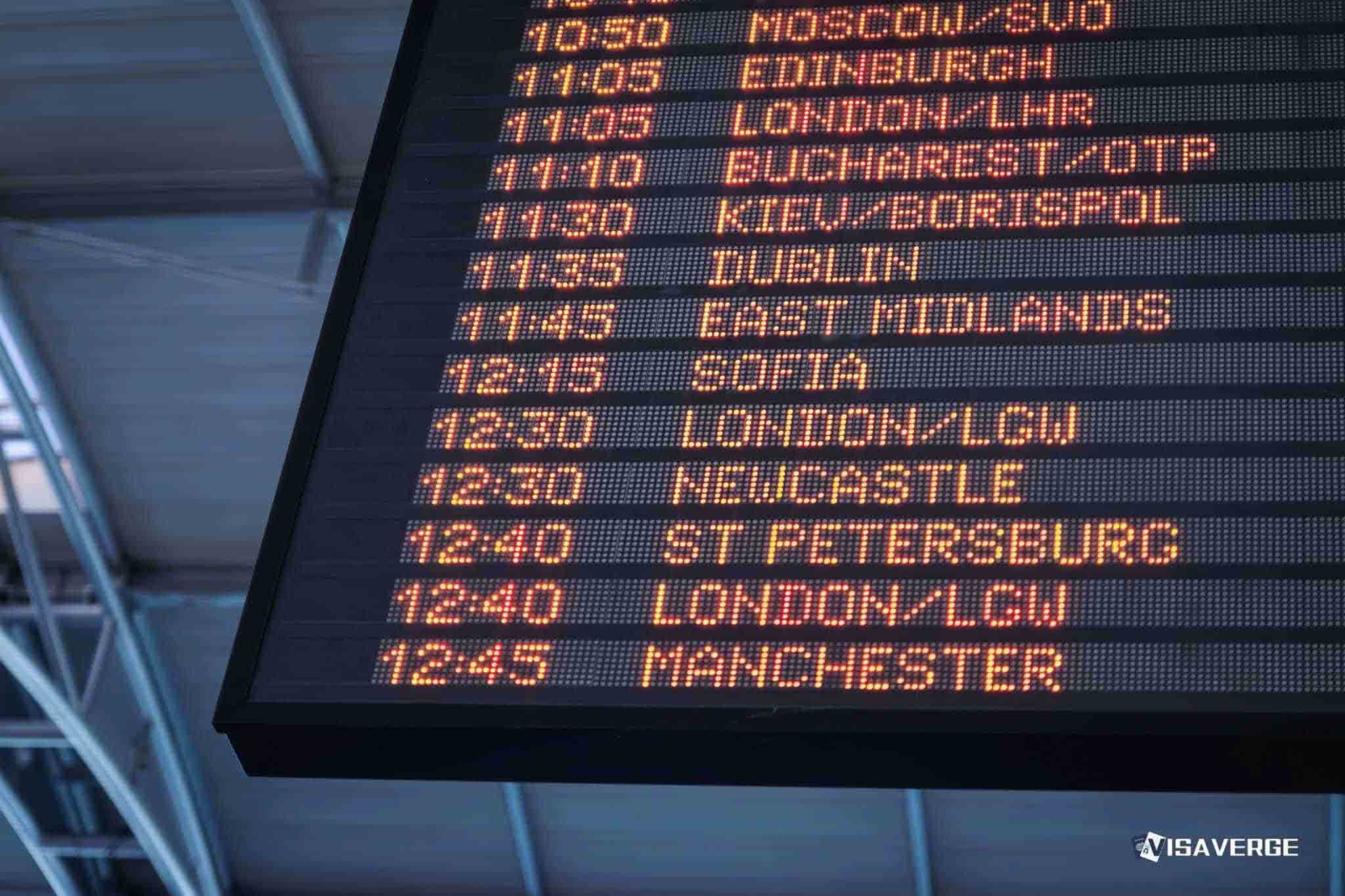
Germany’s flag carrier group remained under pressure from a Lufthansa pilot strike called by the Vereinigung Cockpit union, while Belgium’s nationwide action on March 12 left outbound passengers in Brussels and Charleroi scrambling to rebook. In Italy, unions scheduled a 24-hour ground handling strike on March 18 at Milan Malpensa and Milan Linate, alongside a shorter easyJet crew stoppage that could complicate aircraft rotations.
The overlapping industrial actions have strained hub operations and exposed how quickly bottlenecks move through European schedules, especially when aircraft and crews end up out of position after cancellations.
Pilots at Lufthansa began the strike at 12:01 a.m. March 12 and planned to keep it running until 11:59 p.m. March 13, hitting departures from German airports across Lufthansa Passage, Lufthansa Cargo and Lufthansa CityLine.
Lufthansa CityLine only faced the strike on March 12, but the wider window mattered for passengers connecting onto March 13 flights as the group worked to protect long-haul services and rebuild disrupted short-haul rotations.
Lufthansa said over half of its scheduled flights continued operating during the action, including 60% of long-haul routes, a figure the airline highlighted as it urged customers to check the status of specific flights before heading to the airport.
The dispute centered on pension terms at Lufthansa and Lufthansa Cargo and on pay at Lufthansa CityLine, placing different parts of the group’s operations under separate pressure points even as passengers experienced the disruption as a single network problem.
Belgium’s disruption on March 12 came from a nationwide demonstration backed by unions FGTB/ABVV, CSC/ACV, and CGSLB/ACLVB protesting unpaid labor and pension reforms, with participation spanning security, baggage handlers and air traffic controllers.
Brussels Airport (BRU) and Brussels South Charleroi (CRL) canceled all departures that day, wiping out outbound travel from Belgium’s two busiest commercial gateways and forcing airlines to manage rebooking at scale.
Brussels Airport normally handles 165-250 daily departures, a baseline that underscored the size of the hit to Belgium’s schedule and the potential for ripple effects in the days after the walkout as aircraft and crews cycle back into place.
Some arrivals were also canceled, adding risks for passengers trying to connect onward through Belgium even if their own country was not directly affected by the labor action.
In Italy, the next pressure point arrives on March 18, when a 24-hour ground handling strike will affect Milan Malpensa (MXP) and Milan Linate (LIN), disrupting the workers who help turn aircraft around between flights.
A separate easyJet crew strike in Italy is set for 1 p.m. to 5 p.m. on March 18, a window that can complicate flight sequences if crews or aircraft get delayed earlier in the day and cannot recover by the afternoon.
Another 24-hour handling staff strike is scheduled at Brescia Montichiari on March 18, which could create localized disruption for passengers and operators using that airport.
Across Europe on March 12, strikes delayed 2,082 flights and canceled 90, stranding thousands and turning disruptions in one location into system-wide problems.
Zurich, Athens and Amsterdam ranked among the hardest-hit airports, reflecting a mix of connection-heavy schedules, staffing constraints and air traffic flow management challenges when demand bunches up after cancellations.
Lufthansa, easyJet, Wizz Air, KLM and SWISS all appeared among the airlines most affected across the network, spanning countries that included Switzerland, France, Greece, Finland and Germany.
Zurich also saw ripple effects that pushed passport control queues beyond three hours, a chokepoint that can cause passengers to miss flights even when aircraft depart as planned.
For passengers caught up in the Lufthansa pilot strike, the carrier offered flexibility on certain tickets as it tried to reduce crowds at airports and call centers.
Lufthansa said tickets issued on/before March 10 for March 12-13 flights qualified for free rebooking through March 23 or a full refund, an option aimed at shifting passengers away from peak strike-day departures.
Airlines generally must offer rerouting or refunds when flights are canceled, but the details can vary by carrier and by how quickly seats are available on alternative services during large-scale disruption.
In Europe, passenger-rights rules under EU261 can also come into play when delays pass a three-hour threshold or when flights are canceled, though airlines often argue that strikes fall under “extraordinary circumstances,” which can affect compensation eligibility.
EU261 compensation can range up to €250-€600 per passenger in eligible cases, with outcomes depending on factors such as delay length and the circumstances that caused the disruption.
Travelers pursuing claims typically keep documentation including boarding passes, receipts and proof of delay or cancellation notices, particularly when airlines face processing backlogs after days with widespread cancellations.
Passengers also faced a practical reality beyond compensation: long lines, tight connections and last-minute gate changes that can turn even a confirmed itinerary into a day of airport waiting during multi-country strike periods.
Some travel advice during the March 12 disruption urged passengers to arrive 3+ hours early at affected hubs like Zurich through March 14, reflecting the way queues and rebookings can spill into subsequent days.
Rail can offer an alternative for intra-Europe travel when short-haul flight schedules thin out, though airlines and airports continued to stress that travelers should verify options directly with their carrier before making new arrangements.
Labor tensions risk extending the disruption into the coming weeks, with stalled wage talks raising the prospect that strikes may persist through Easter.
As flight plans change quickly during industrial action, airline apps, airport departure boards and carrier rebooking portals tend to update faster than third-party aggregators, especially when airlines consolidate flights or swap aircraft types to keep long-haul routes moving.
Connected networks can also generate secondary cancellations and misconnections outside the strike country, as inbound aircraft arrive late, crews time out, or aircraft end up overnighting at the wrong airport after a cancellation cascade.