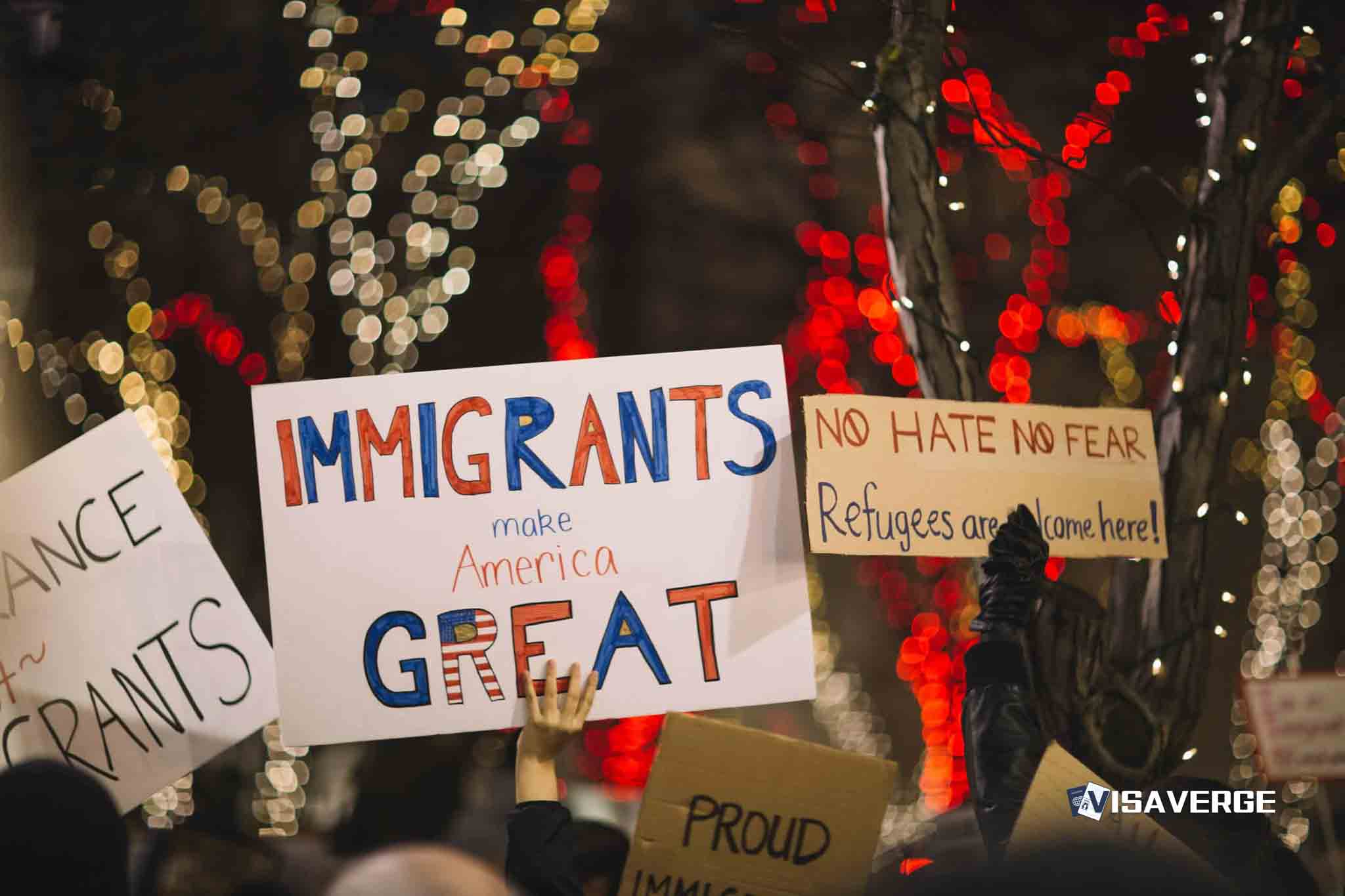
(BOSTON, MASSACHUSETTS) Boston City Council President Ruthzee Louijeune is preparing a push for new measures to give “further protections” to immigrant communities, building on the Boston Trust Act and the city’s long-standing sanctuary policies as federal pressure on such laws grows.
Louijeune’s background and priorities

Louijeune, now in her second term as an at-large member of the Boston City Council and chosen unanimously as Council President in January 2024, has made immigrant rights a central part of her political identity.
During her first term she led the Council’s Committee on Civil Rights and Immigrant Advancement, where she helped drive expanded financial assistance and legal support for new arrivals, asylum seekers, and long-time immigrant residents.
Free toolUSCIS Receipt Number DecoderReaffirming sanctuary status and the Trust Act
Her latest signals come after a year in which Boston leaders moved to defend the city’s sanctuary status. In 2024, the Council voted unanimously to reaffirm its backing for the Boston Trust Act — a local law that limits how much the Boston Police Department can take part in federal immigration enforcement.
Key points about the Trust Act:
– First adopted in 2014.
– Bars city officials from holding a person solely because of their immigration status.
– Prohibits honoring immigration detainer requests from federal authorities unless there is a judicial warrant.
Federal challenge and local response
That unanimous vote became more than symbolic when the federal government turned its attention to Boston. In August 2025, U.S. Attorney General Pam Bondi, acting under direction from President Trump, sent an official letter to Boston and 17 other sanctuary jurisdictions around the United States ??.
The federal letter:
– Demanded jurisdictions scrap laws such as the Boston Trust Act.
– Called for full cooperation with federal immigration enforcement.
– Threatened to cut federal funds and even pursue possible prosecution if demands were not met.
Boston Mayor Michelle Wu quickly pushed back. She publicly rejected the demands, accused the federal government of unlawful overreach, and insisted the city would remain, in her words, “a home for everyone.” That message targeted immigrant residents worried that losing sanctuary protections could pull local police and city agencies deeper into deportation efforts.
Under Louijeune’s leadership, the Boston City Council responded by passing a resolution supporting Mayor Wu’s stance and reaffirming their commitment to protect “immigrant Bostonians.” The Council’s move drew a clear line between local policy and federal demands.
“A home for everyone.” — Mayor Michelle Wu (paraphrased)
Louijeune’s broader vision for deeper protections
Since the letter fight, Louijeune has signaled she wants the Council not only to defend current protections but to deepen them. While she had not filed formal legislation as of late 2025, she has outlined a wide-ranging vision for the next stage of Boston’s sanctuary framework.
Core elements of her vision:
– Ensure city services, schools, and public spaces stay open to every resident — regardless of legal status — without fear that seeking help could lead to arrest or deportation.
– Expand legal support, including:
– More access to lawyers.
– Clear “know-your-rights” information in neighborhoods with many new arrivals.
– Strengthen help for asylum seekers and recently arrived migrants, focusing on trauma-informed care, emergency housing, and workforce programs.
Advocates note:
– When immigrants understand basic rights during police contact, housing disputes, or at work, they are less likely to be exploited or pushed into unsafe situations.
– Analysis by VisaVerge.com indicates local funding for legal aid can mean the difference between an immigrant winning the right to stay or being removed.
Possible policy changes and data protections
Louijeune has also suggested tightening restrictions on how city agencies interact with federal immigration authorities. Potential measures could include:
– Stricter limits on sharing data that might identify an undocumented immigrant.
– Clearer rules about federal agents’ access to city buildings and facilities.
She has not presented specific ordinance language yet, but her comments point toward a policy debate that could again test the city’s relationship with Washington.
Funding and administrative support
Money is a key part of the proposal. Louijeune has called for increased funding for the Office of Immigrant Advancement, which helps newcomers access services, learn English, and participate in civic life.
About the office:
– Based at City Hall.
– Runs programs and shares resources through Boston.gov.
– Louijeune and allies argue it will need higher and more stable budget support as Boston sees more arrivals from crisis zones.
Political framing and demographics
In her 2025 campaign materials and speeches, Louijeune has connected these proposals to Boston’s identity.
Relevant facts:
– About one in four Boston residents is foreign-born.
– Many more are children of immigrants.
For Louijeune, those demographics justify “doubling down” on sanctuary laws and expanding supports rather than yielding to federal pressure. She frames immigrant protections as both:
– A shield for individual families, and
– A core piece of the city’s identity and future.
Legislative path and practical limits
Louijeune has urged the Council to use its legislative and budget powers to “codify and expand” protections so immigrant families can:
– Go to school,
– Ride public transit,
– Visit clinics, and
– Participate fully in civic life, including school meetings and elections where eligible.
Her role as Council President gives her significant control over which proposals move first and the speed at which they reach a vote.
Challenges ahead:
1. Detailed debates over legal wording and funding levels.
2. Mapping the limits of local power in the face of federal enforcement.
3. Carefully drafting any restrictions on data sharing or new support programs to ensure they fit within existing law.
Conclusion: direction of travel
Inside City Hall, the direction is clear. After defending the Boston Trust Act from a direct federal challenge backed by President Trump, the Boston City Council and the mayor’s office are now openly discussing what more they can do to shield immigrant residents and new arrivals from the harshest effects of the national immigration system.
The ongoing action aims to make Boston’s promise of being “a home for everyone” feel real beyond council chambers — through expanded legal help, stronger data protections, increased funding, and broader social supports.
Ruthzee Louijeune, Boston City Council President, is preparing proposals to strengthen sanctuary protections after federal pressure to repeal the Boston Trust Act. The Council reaffirmed the Trust Act in 2024; in August 2025 federal officials demanded jurisdictions remove similar laws. Louijeune’s vision includes expanded legal aid, trauma-informed support for asylum seekers, stricter limits on data sharing with federal authorities, and increased funding for the Office of Immigrant Advancement. The proposals will require legislative drafting, budget decisions, and legal scrutiny.