- A federal judge ordered the government to justify the detention of Nashville journalist Estefany Maria Rodriguez Florez.
- Lawyers allege the arrest violates First Amendment rights by punishing her reporting on immigration enforcement operations.
- DHS maintains the detention is a routine immigration enforcement action based on alleged visa violations.
(NASHVILLE, TENNESSEE) — U.S. District Judge Eli Richardson ordered the Department of Homeland Security and U.S. Immigration and Customs Enforcement to justify the March 4 detention of Nashville journalist Estefany Maria Rodriguez Florez after her lawyers filed an emergency petition for a writ of habeas corpus challenging her arrest and continued custody.
Richardson set a hearing for March 17, 2026 after an amended petition filed March 10, 2026 escalated the dispute into claims of First and Fifth Amendment violations, including allegations the detention aimed to punish and deter protected reporting.
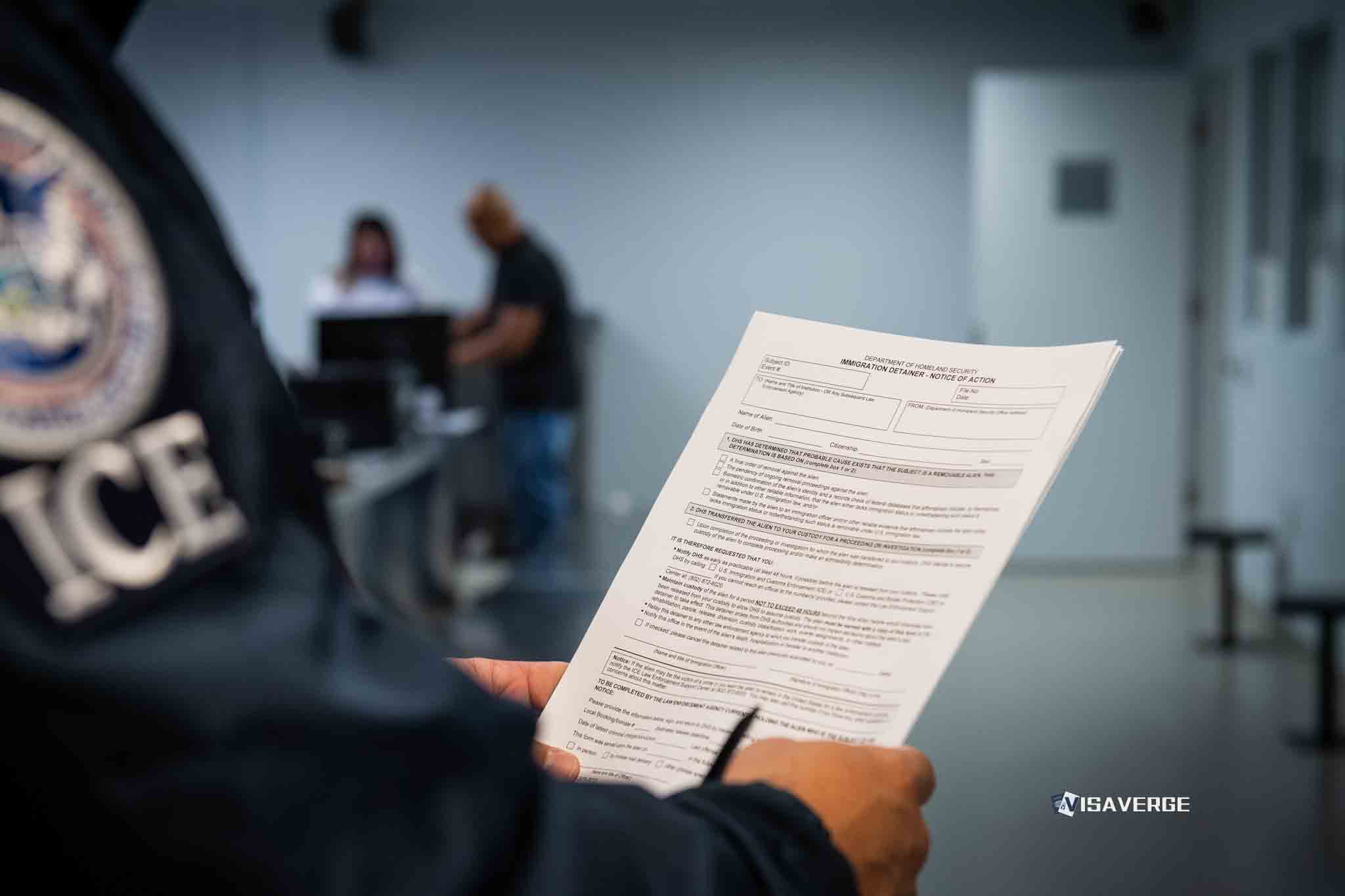
Rodriguez Florez, a reporter for Nashville Noticias and Univision 42 Nashville, was detained during a traffic stop while traveling in a marked news vehicle with her husband, a U.S. citizen, according to the case filings described by her attorneys and the government statements cited in news coverage.
Richardson had initially set a deadline of March 9 for ICE to submit a written justification for her detention, before the amended filing reset the court’s timetable and set the March 17 hearing.
The dispute has turned on competing accounts of why federal agents took Rodriguez Florez into custody and whether her immigration status and compliance history warranted detention, as well as what her lawyers call retaliation linked to her reporting.
DHS and ICE have publicly framed the arrest as routine immigration enforcement based on violations, not her work as a journalist, and said she will stay detained as her immigration case proceeds.
A DHS spokesperson said on March 6, 2026: “She will receive full due process and remains in ICE custody pending the outcome of her immigration proceedings.”
DHS issued a separate statement on March 7, 2026 describing her immigration history and current status. “Rodriguez-Florez entered the United States with a tourist visa March 10, 2021. She failed to depart the country and is in violation of the conditions of her visa and currently has no lawful immigration status.”
ICE addressed controversy over whether agents had authority to make the arrest, issuing a statement on March 8, 2026 that rejected claims circulated in public discussion about the absence of a warrant. “ICE arrested Estefany Rodriguez-Florez, an illegal alien from Colombia, March 4 during a targeted enforcement operation. Claims that ICE did not have a warrant are false.”
Rodriguez Florez’s legal team disputes the government’s characterization of her status and compliance. Her attorneys say she has lived in the United States lawfully for five years, holds a valid work permit through 2029, and has a pending asylum application and a pending green card application.
Her lawyers also say her asylum claim followed death threats for her reporting in Colombia, and they argue her work authorization and pending filings undercut the government’s rationale for detention.
ICE alleges she missed two immigration interviews and calls her a flight risk, while her attorneys say one meeting was canceled due to a winter storm and the second was a system error, with a follow-up already scheduled for March 17, 2026.
Those factual disputes now sit at the center of the habeas case, which asks a federal judge to examine whether the government had a lawful basis to arrest and keep her in custody, and whether constitutional violations occurred in the process.
The amended petition filed March 10 added allegations that include a claim the detention targeted her speech and reporting, placing the First Amendment at the center of a case that began as a challenge to an arrest during a traffic stop.
Supporters point to the timing of her coverage of immigration enforcement as part of their argument that the detention aimed to send a message to reporters. Rodriguez Florez had been reporting extensively on ICE raids in Nashville just 24 hours before her own arrest, press freedom advocates say.
Her attorneys argue the detention was intended to “chill her future speech” and punish her for critical coverage of the administration’s immigration crackdowns.
Press freedom advocates and rights groups have condemned the detention, framing it as part of broader concerns about immigration enforcement intersecting with journalism. Organizations including the Committee to Protect Journalists and Amnesty International have criticized the detention as part of an “alarming pattern” of using immigration authorities to silence the press.
Supporters have also drawn comparisons to the 2018 detention of Memphis journalist Manuel Duran, who was arrested while covering a protest and held for 465 days before eventually winning asylum. Advocates cite that case as a warning that immigration detention can pull journalists off the street for long periods, even when public attention is high.
DHS and ICE have not adopted that framing in their public statements, instead emphasizing immigration violations and the continuation of immigration proceedings. The agencies maintain that due process protections apply even when the person detained is a journalist, and they have disputed allegations that her job prompted enforcement action.
While the habeas litigation moves forward in federal court, the government statements have directed attention to immigration proceedings as the track that will determine her custody in the longer term.
Rodriguez Florez remains detained in an Alabama facility, Etowah County Jail, according to information described by supporters and her legal team, leaving her separated from her husband and her seven-year-old daughter.
That separation has become a focal point for local concern in Nashville’s immigrant communities and Spanish-language media, where journalists and community members worry that fear of detention will reduce coverage of federal enforcement actions and limit access to news.
Local news outlets have also expressed concern that targeting Spanish-language journalists will deter immigrant residents from contacting the press, or from appearing in public spaces where enforcement actions may occur, according to advocates following the case.
The case has drawn national attention because it sits at the intersection of immigration enforcement authority, detention practices, and claims that government action can burden newsgathering, even when agencies insist enforcement decisions rest solely on immigration violations.
The Department of Homeland Security has continued to communicate through its public channels, including the agency’s DHS Newsroom, while ICE has pointed to its own public information operation through the ICE Newsroom.
The federal court case is pending in the U.S. District Court for the Middle District of Tennessee, in a proceeding tied to the emergency habeas petition challenging the lawfulness of the arrest and continued detention.
At the March 17 hearing, Richardson is expected to press the government to lay out the justification for the March 4 arrest during the Nashville traffic stop and the reasons Rodriguez Florez remains in custody, with the amended petition shaping what the court addresses next.
The habeas posture requires the government to respond to the core challenge to detention, and it also creates a record that can include sworn declarations and written filings that clarify disputed facts, such as the circumstances of the stop, custody decisions, and the status of immigration appointments.
Further court action after the hearing could include changes in custody status, a transfer decision, a bond posture, or additional briefing, depending on how the judge handles the amended allegations and the government’s response.
For now, the case has pinned two narratives against each other: DHS and ICE insist the arrest followed standard enforcement practice for immigration violations, while Rodriguez Florez’s lawyers and supporters say the detention punished reporting and threatened future coverage by making an example of a journalist.