Key Takeaways:
- Eri and Hana sought refugee status in Canada due to severe discrimination faced as lesbians in Japan.
- Canada granted them refugee status after detailed interviews, underscoring Japan’s inadequate legal protection for sexual minorities.
- They publicized their case to highlight discrimination issues in Japan and advocate for LGBTQ rights globally.
Why Did a Japanese Lesbian Couple Seek Refugee Status in Canada?
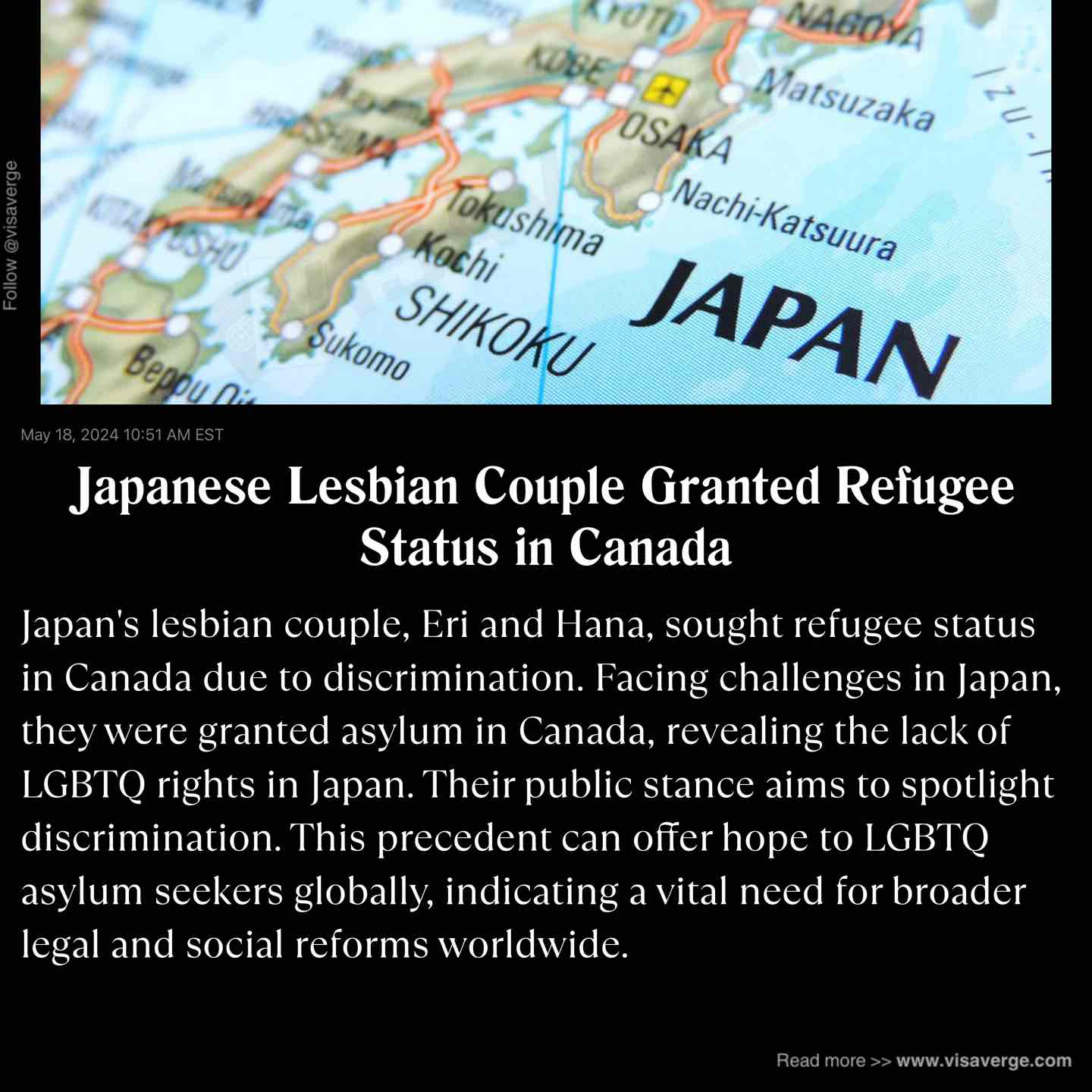
In a significant move last September, Canada granted refugee status to two Japanese women, Eri and Hana, due to the widespread discrimination they faced in Japan as lesbians and members of the weaker sex. This landmark decision underscores the lack of legal marriage rights for same-sex couples in Japan and the substantial benefits denied to these couples under Japanese law.
What Led Eri and Hana to Leave Japan?
Eri, in her 30s, and Hana, in her 50s, made the life-changing decision to move to Canada together in 2021. Their move followed experiences of significant discrimination in both their community and workplaces. The fear of facing persecution in Japan was not unfounded. The couple’s request for refugee status was substantiated with a detailed document, around 200 pages long, explaining their struggles and the current legal system surrounding same-sex marriage in Japan.
How Did Canadian Authorities Respond?
Canadian immigration authorities found sufficient grounds to declare Eri and Hana as refugees. They were subjected to thorough interviews and public hearings before their application was accepted. The official document notifying them of their refugee status echoed the sentiment of the U.N. Committee on the Elimination of Discrimination Against Women, which identified widespread discrimination in Japan. It stated that “the rights of women and sexual minorities are not sufficiently protected in Japan.”
Free toolCanada Express Entry Points CalculatorWhy Did They Make Their Refugee Status Public?
Eri and Hana chose to publicize their refugee status to raise awareness within the Japanese government and among the general public. They pointed out that many women and LGBTQ individuals in Japan continue to encounter the same difficulties they faced. Their story highlights a broader issue of the systemic lack of protection and recognition for sexual minorities in Japan.
What Does This Mean for Other LGBTQ Asylum Seekers?
The Office of the U.N. High Commissioner for Refugees notes that dozens of Japanese are granted refugee status in other nations each year, though specific reasons are often not detailed. Eri and Hana’s case is a poignant example of how international recognition of such issues can offer a lifeline to those experiencing discrimination.
Where Can I Find More Information?
For further authoritative details about refugee status and asylum procedures, you can visit the Government of Canada’s Immigration and Citizenship official page. This resource provides comprehensive guidelines and updates on the rights and processes for asylum seekers in Canada.
Conclusion: The Broader Implications
The case of Eri and Hana is more than a personal milestone; it is a clarion call for change and recognition of LGBTQ rights globally. Their journey to secure refugee status in Canada as Japanese lesbians is an important reminder of the ongoing fight for equality and protection for sexual minorities worldwide. It prompts larger discussions about the legal and social reforms necessary to safeguard the rights of every individual, regardless of their sexual orientation.
As awareness spreads, it is hoped that improved policies and greater acceptance will follow, not only in Japan but across the globe.
Learn Today:
Glossary of Terms
- Refugee Status:
A form of protection granted by a country to individuals who have fled their home country due to a well-founded fear of persecution based on factors such as race, religion, nationality, membership in a particular social group, or political opinion. -
Discrimination:
The unfair or prejudicial treatment of individuals based on characteristics such as race, gender, sexuality, or ethnicity. In the context provided, it refers to the biases faced by Eri and Hana as lesbians in Japan. -
Same-Sex Marriage:
A legally recognized marriage between two people of the same sex. The content highlights Japan’s lack of legal recognition for same-sex marriages and the associated denial of benefits to such couples. -
Persecution:
Hostile and unfair treatment, often persistent and systematic, directed at individuals because of their identity or beliefs. In this context, Eri and Hana fled Japan to escape potential persecution for their sexual orientation. -
Asylum Procedures:
The legal processes through which individuals seek protection and refugee status in a foreign country. This includes submitting applications, undergoing interviews, and public hearings to determine eligibility for refugee status.
This Article In A Nutshell:
In a groundbreaking move, Japanese lesbian couple, Eri and Hana, sought refugee status in Canada citing discrimination due to Japan’s lack of legal rights for same-sex couples. The couple’s publicized case sheds light on LGBTQ challenges in Japan. This milestone highlights the global need for equality and protection of sexual minorities.
— By VisaVerge.com
Disclaimer: If you use any information from this article, link back to the original article URL on VisaVerge.com. Thank you for respecting our content and giving proper credit.
Read More
- Understanding Japan’s Re-Entry Permit: Guidelines and Procedures
- Japanese Universities Compete for Chinese Students Amid Global Rivalry
- Biden’s “Xenophobic” Remark About Japan Sparks Controversy