- Secretary Kristi Noem ordered immediate body camera issuance for all DHS officers in Minneapolis.
- President Trump offered conditional backing for expansion provided that Congress approves the necessary funding.
- ICE currently faces a significant equipment shortage with only 4,400 cameras for 22,000 employees.
(MINNEAPOLIS, MINNESOTA) — Democratic lawmakers and immigrant-rights advocates are pressing the Trump administration to put body cameras on ICE officers more broadly, as DHS signals a shift toward wider use after fatal encounters in Minneapolis but stops short of promising a nationwide rollout.
Secretary Kristi Noem moved the debate on February 2, 2026, when she ordered immediate issuance in Minneapolis and tied any broader expansion to money from Congress. President Donald Trump offered conditional backing the same day, while ICE leadership has cast the cameras as part of a wider push for accountability and transparency.
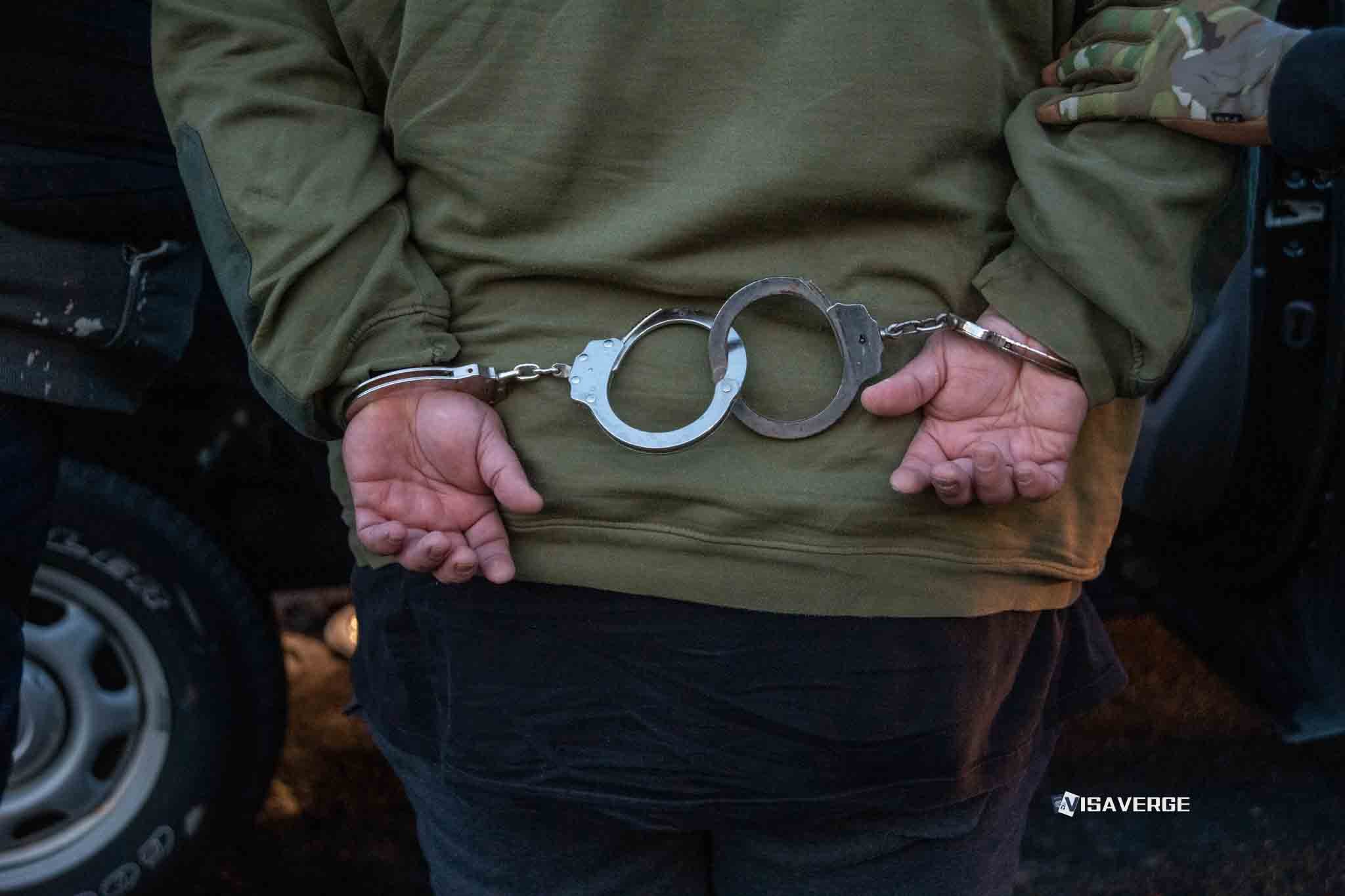
Taken together, the statements show momentum inside DHS. They do not amount to a fully funded national mandate.
Noem announced the Minneapolis move after the shooting deaths of two U.S. citizens drew intense scrutiny to federal enforcement operations in the city. “Every Homeland Security officer on the ground in Minneapolis, including those from Immigration and Customs Enforcement, will be immediately issued body-worn cameras. We will rapidly acquire and deploy body cameras to DHS law enforcement across the country as funding becomes available,” she said.
Trump endorsed the idea in qualified terms during an Oval Office appearance on February 2, 2026. “They [body cameras] generally tend to be good for law enforcement because people can’t lie about what’s happening. If [Secretary Noem] wants to do the camera thing, that’s OK with me.”
| India | China | ROW | |
|---|---|---|---|
| EB-1 | Apr 01, 2023 ▲31d | Apr 01, 2023 ▲31d | Current |
| EB-2 | Jul 15, 2014 ▲303d | Sep 01, 2021 | Current |
| EB-3 | Nov 15, 2013 | Jun 15, 2021 ▲45d | Jun 01, 2024 ▲244d |
| F-1 | May 01, 2017 ▲174d | May 01, 2017 ▲174d | May 01, 2017 ▲174d |
| F-2A | Feb 01, 2024 | Feb 01, 2024 | Feb 01, 2024 |
Those comments landed as Democrats increased pressure on DHS to expand body cameras beyond limited deployments and high-intensity operations. Their argument centers on transparency in immigration enforcement, especially during arrests, searches and removals, where disputed accounts can quickly become political flashpoints.
ICE had already been moving in that direction before Minneapolis. On August 6, 2025, ICE Deputy Director Patrick J. Lechleitner said the agency saw the cameras as part of a trust-building effort. “Our ability to uphold our global mission rests heavily on public trust, which is built through accountability, effectiveness, and transparency in our law enforcement tactics,” Lechleitner said.
That framing has now become part of a larger fight over money, staffing and oversight. Congressional Democrats have made mandatory use of body-worn cameras a condition for approving the broader DHS budget, turning the issue from an internal policy question into a budget battle.
The operational gap is large. As of June 2025, ICE reported having only 4,400 cameras for its 22,000 employees.
A comparison with Customs and Border Protection shows the scale of the shortage across federal immigration enforcement. CBP had 13,400 cameras for over 45,000 armed officers.
That mismatch matters because ICE directives already set a broad expectation for use. Current policy requires cameras to be activated during “all aspects of ICE enforcement activities,” including at-large arrests, searches incident to arrest, and the execution of removal orders.
Expanding from policy on paper to routine use in the field means more than buying devices. DHS and ICE still need software, training, supervision and storage systems capable of handling footage generated during daily enforcement work.
Minnesota offers the clearest example of that challenge. An ICE official in the St. Paul field office said on February 3, 2026, that fully equipping the approximately 2,000 agents involved in Minnesota’s “Operation Metro Surge” could take up to six months because of software and training requirements.
That timeline has sharpened the debate in Washington. A bipartisan proposal recently included $20 million specifically for body-worn camera acquisition, but the Trump administration initially proposed cutting the program’s staff from 22 to 3 employees.
The dispute leaves DHS and ICE in a middle ground. Officials have endorsed wider body camera use and begun deploying them in a city under intense scrutiny, but Congress still has to decide whether to fund expansion at the level needed for broad coverage.
Pressure intensified after the deaths of Renée Good on January 7 and Alex Pretti on January 24 in Minneapolis. Those incidents became a catalyst for renewed demands from Democrats for stronger oversight of federal immigration enforcement.
In Pretti’s case, administration officials initially said he was armed and attacked officers. Bystander video later appeared to show him holding only a mobile phone.
That discrepancy deepened mistrust and fueled calls for what Democratic leaders described as “dramatic reform” to federal enforcement operations. The deaths also pushed a long-running argument over transparency into the center of the immigration debate, with Minneapolis becoming the test case.
Democrats and advocacy groups say body cameras can help establish a clearer record when official accounts and witness video diverge. They argue that footage could make it harder for disputed arrests, searches or uses of force to go unresolved.
Still, some of the same supporters say cameras are not enough by themselves. Rep. Pramila Jayapal said on March 4, 2026, that requiring cameras alone will not stop agents from “violating people’s rights.”
That skepticism extends beyond Congress. Data privacy experts have warned that, without strict guardrails, body camera footage could become a surveillance tool used to track immigrants and protesters rather than an accountability measure focused on officer conduct.
Those concerns have created an unusual split in the debate. One side argues that more recording is needed because too much federal immigration enforcement happens without an independent record. The other warns that more recording, without firm limits, could widen the government’s reach into communities already under scrutiny.
Civil-liberties worries also rest on a practical point: cameras do not automatically change conduct. Disputed detentions and force allegations have left some people doubtful that wearing them would alter behavior in the field.
That distrust surfaced in Minneapolis after the detention of Navy veteran Wes Powers, who was held for nine hours without charges. Powers questioned whether cameras would deter misconduct, saying, “we’re filming them, and they’re still beating people up in the streets.”
His account reflects a broader argument now surrounding ICE and DHS. Supporters of body cameras see them as a way to document encounters that might otherwise depend on conflicting narratives. Critics say that unless rules on activation, review and access are tightly enforced, the cameras may collect more footage without delivering more accountability.
DHS officials have not presented the shift as a cure-all. Their public statements instead frame the cameras as one part of a wider effort to show how agents operate during enforcement actions and to preserve evidence from encounters that can carry legal and political consequences.
That leaves the next phase heavily dependent on appropriations. A wider rollout will require Congress and DHS to secure money not only for devices but also for software, training and personnel to run the program.
Implementation rules will matter as much as the hardware. ICE’s own directive materials, available through directive policies, point to questions that agencies must answer in practice: when officers must activate cameras, how long footage is stored, who can review it, and what happens when policy is not followed.
Agency communications also show that the discussion has already moved beyond whether some officers should wear cameras in high-intensity operations. Information posted through the ICE newsroom and DHS newsroom reflects a broader argument over how widely the technology should be used and what safeguards should come with it.
For now, Minneapolis stands at the center of that shift. Noem’s order made body cameras an immediate response to a local crisis, while Trump’s support signaled political room for the idea inside the administration.
But the gap between endorsement and execution remains wide. ICE still lacks enough cameras for broad coverage, staffing proposals have moved in the opposite direction, and Minnesota’s own deployment schedule shows that software and training can slow even a high-priority rollout.
Lawmakers pressing the issue say that is exactly why the cameras need to be mandatory and backed by real funding. Opponents of a broad rollout without tighter protections say the same facts prove that buying devices alone will not settle the deeper fight over federal immigration enforcement.
What happens next will turn on whether Congress pays for the expansion and whether DHS writes and enforces rules strong enough to satisfy both demands for accountability and warnings about surveillance. In Minneapolis, where two deaths transformed a policy debate into an urgent political test, that answer now carries weight far beyond one city.