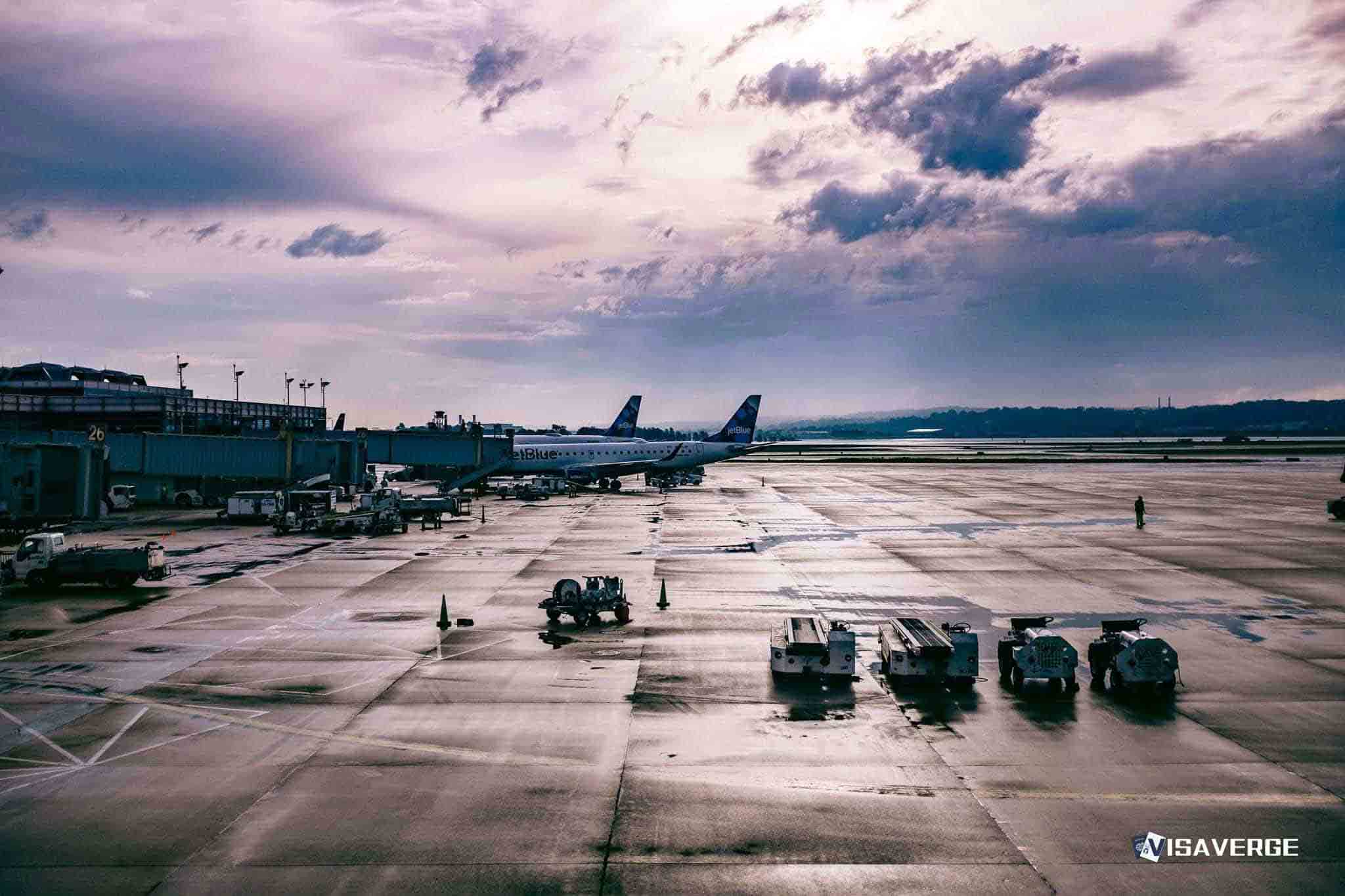
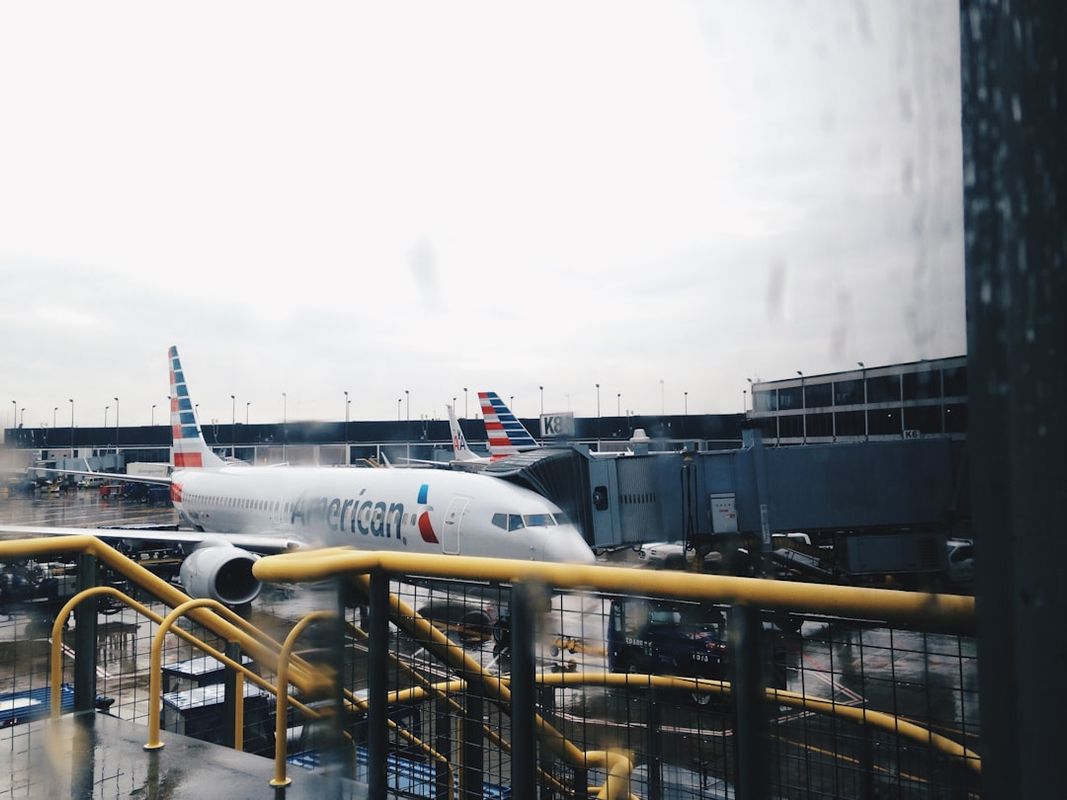
(NEW YORK, NY) Ground stops at John F. Kennedy International Airport (JFK) and Philadelphia International Airport (PHL) on Sunday morning, December 14, 2025, halted departures at the gate and rippled through the Northeast travel network as winter weather brought snow, ice, low ceilings and poor visibility, and gusty winds, federal aviation officials said.
Newark Liberty International Airport (EWR), meanwhile, operated under a Ground Delay Program (GDP) that stretched arrival times, leaving families, business travelers, and many immigrants trying to reach visa appointments or reunite with relatives stuck in terminals or rebooking from afar.
FAA advisories and scope of the disruptions
The FAA’s Air Traffic Control System Command Center issued the advisories as conditions deteriorated, warning that restrictions could extend or shift during the day as runway capacity changed.
- At JFK, the ground stop was listed in FAA updates around 8 a.m. EST, with more than 1,000 flights delayed. The agency signaled the program could continue, or transition to a GDP, through 2300Z (6 p.m. EST).
- At PHL, more than 700 flights were delayed under a ground stop, with FAA notes pointing to staffing “triggers” in the PHL Area C airspace until 1500Z (10 a.m. EST) and the likelihood of a GDP once the stop lifted.
- At EWR, arrivals were limited through a GDP, with earlier reports citing average arrival delays of 170 minutes and a maximum of 267 minutes, though some flight-tracking snapshots later in the morning showed lighter airborne delays of 15 minutes or less.
These mixed readings reflected a common winter pattern: planes can be held at their origin airports, or at the gate, rather than circling in the air. That eases airborne delay numbers while passengers still lose hours — a crucial difference for travelers racing to connect to international flights or meet immigration deadlines.
Airline and traveler guidance
Airlines urged passengers to check apps and alerts rather than rely solely on airport screens.
- JetBlue warned customers of “severe East Coast winter weather impacts” on Sunday, noting that aircraft and crews out of position can delay flights even when a route is not directly in a snow band.
- Travelers on tight timelines — students returning for term start, workers reentering on employment visas, or lawful permanent residents trying to avoid long trips that raise questions at the border — may find weather disruption becomes more than an inconvenience.
Immigration and itinerary risks
In immigration terms, missing a flight can mean missing a window.
- Many visa holders must enter the United States 🇺🇸 before a document expires.
- Some people travel for in-person interviews at U.S. consulates abroad or for legal proceedings and medical exams tied to family-based cases.
- Even a domestic leg delayed by Ground stops at JFK can break an international itinerary.
Lawyers warn rebookings sometimes reroute travelers through Canada 🇨🇦 or other countries, raising questions about whether a traveler needs a transit visa or meets entry rules for the connecting country.
A rebooking that routes you via Canada or another country may require a transit visa or extra entry rules—verify the transit country’s rules now to avoid last-minute visa problems or denied boarding.
Missing a connection can carry legal or procedural consequences beyond a missed meeting — and rebookings that route through third countries can introduce new visa and entry requirements.
Why the FAA used ground stops and GDPs
The FAA tied Sunday’s controls to a broad weather system affecting the Northeast, listing snow and ice, low ceilings and visibility, and wind in advisories covering PHL Area C — an area that can influence traffic flows for major air traffic facilities serving Boston and the New York–Philadelphia corridor.
- When visibility drops and runways need de-icing, arrival rates fall, and the FAA uses tools like a Ground Delay Program (GDP) to meter inbound traffic so airports do not accept more aircraft than they can safely handle.
- A ground stop is stricter: it freezes departures headed to the affected airport, often keeping planes at their origin gates.
Newark-specific constraints
Newark’s delays were also shaped by constraints unrelated to the storm itself.
- The FAA has imposed flight limits at EWR on construction weekends through December 31, 2025, capping operations at 28 arrivals and 28 departures per hour.
- On Sunday, runway 04L/22R was listed as closed until 1200Z (7 a.m. EST), reducing flexibility as crews worked through snow and ice.
- The airport’s AirTrain system was scheduled for a maintenance shutdown on December 13–14, complicating ground travel between terminals, parking, and rail links.
Passenger impacts beyond the tarmac
For immigrants and visiting relatives, secondary disruptions can be punishing.
- Travelers who have been awake since an overnight connection may need to move luggage onto crowded shuttles, reach hotels or friends’ homes, and manage calls to airlines and employers.
- Advocates report spikes in calls during weather shutdowns from people unsure whether rebooking changes required documents.
- According to analysis by VisaVerge.com, many travelers do not keep printed copies of key records, such as entry stamps or admission details — a vulnerability when phones die or Wi‑Fi fails in crowded terminals.
Tools, documentation, and what to save
The FAA’s public-facing status tools were a lifeline Sunday as passengers tried to separate rumor from confirmed restrictions. The agency posts airport programs and national airspace advisories on its official NAS Status site:
- Official FAA program listings and estimated end times: https://nasstatus.faa.gov
Airlines also push real-time notifications. Travelers should ask carriers whether they will be:
- Rebooked automatically
- Placed on standby
- Offered fee waivers for changes caused by weather
Attorneys advise saving documentation because proving a delay was beyond a traveler’s control can matter for employers, schools, or government agencies. Useful items to preserve:
- Written notices of cancellations
- Screenshots of alerts
- Receipts for expenses
- Boarding passes or rebooking confirmations
Keeping this record can also help when asking an airline to endorse a ticket for travel on another carrier.
International arrival complications
At the three airports, international arrivals added another layer of stress when operations slowed.
- Late landings can push passengers into longer lines for U.S. Customs and Border Protection inspections.
- Travelers with temporary visas may worry about missing onward domestic flights that lead to jobs, universities, or court dates.
- People in the middle of immigration cases often carry original documents that are hard to replace; a diversion to another city can create real risk if checked bags are separated from their owner.
Airport officials did not name specific passengers, but the scale of delays meant many families were caught in limbo. For some, the next available seat may not appear until Monday.
Policies, remedies, and practical advice
Airports and airlines generally treat winter disruptions as “force majeure,” meaning carriers may not be required to pay for hotels or meals, though many will offer help when delays become extreme.
- For people with immigration deadlines, the immediate risk is losing proof that a delay was beyond their control.
- Attorneys recommend saving documentation noted above to support later questions from employers, schools, or government agencies.
Practical traveler guidance:
- Expect disruptions through the afternoon and plan for missed connections.
- Check airline apps and official FAA notices frequently.
- Keep printed copies of critical travel and immigration documents.
- Save screenshots, alerts, and receipts to document the disruption.
The FAA cautioned that Sunday’s programs could be extended, shortened, or converted as airports recovered. At JFK, officials flagged the possibility the ground stops could continue or flip to a GDP through early evening. At PHL, the agency expected a shift to a GDP once the ground stop lifted, even if snow eased, because backlog and staffing triggers can keep capacity low.
In the New York region, EWR’s weekend caps added another squeeze: even small weather hits can cascade when an airport is already operating with a lower hourly rate. For travelers, the practical message was simple and unkind: expect disruptions through the afternoon, and plan for missed connections.
Severe winter weather prompted FAA ground stops at JFK and PHL and a Ground Delay Program at EWR on Dec. 14, 2025, causing thousands of delays. JFK saw over 1,000 delays and PHL more than 700; EWR arrivals averaged 170-minute delays with peaks of 267. The FAA cautioned programs could change as runway capacity and staffing evolved. Travelers should monitor airline apps and FAA notices and save documentation to prove weather-related disruptions for immigration or employer requirements.
Live Government Data
State Dept • CBPBusiest Border Crossings
- San Ysidro 175 min
- Calexico 150 min
- Calexico 120 min