- Germany outsourced student visa processing in Nigeria to a dedicated VFS Global center in Lekki, Lagos.
- Applicants must now complete online registration first before receiving a mandatory appointment for biometric capture.
- The German consulate retains all decision-making authority despite VFS Global handling the administrative and logistical tasks.
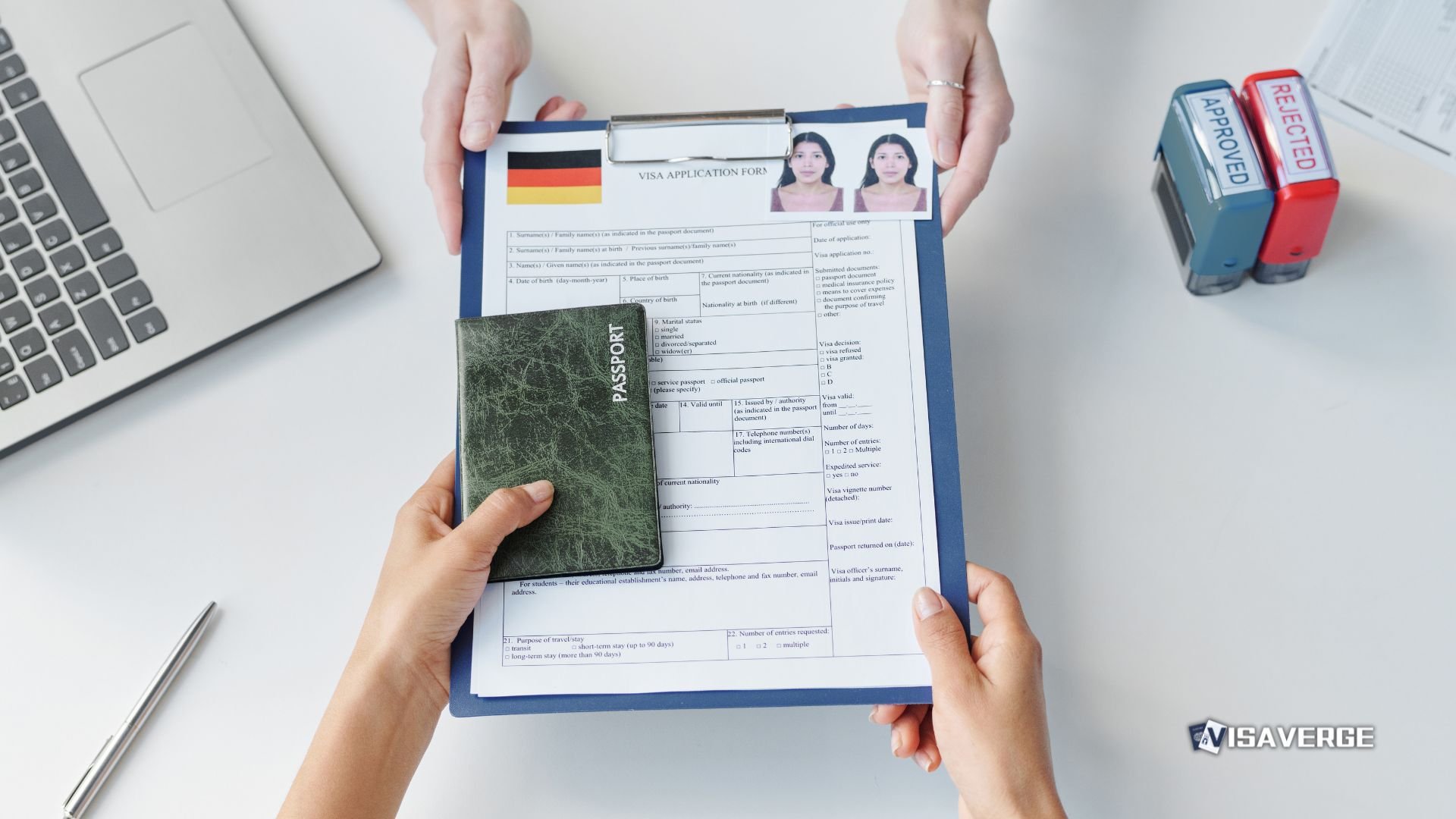
(LAGOS, NIGERIA) — Germany has shifted all student visa processing for Nigerian applicants to a dedicated VFS Global centre in Lekki, Lagos, effective March 25, 2026, ending direct submissions at the German consulate.
Applicants must now register online and wait for an appointment before going to the Lekki facility. Once an appointment is assigned, they must complete document submission, biometric capture and passport courier services there instead of at the consulate.

Visa decisions still rest with the German consulate. The new centre handles front-end processing on behalf of German missions in Nigeria, while the consulate keeps authority over approvals.
Officials formally inaugurated the arrangement on March 31, 2026. Deputy Consul General Gerald Wolf and VFS General Manager Operations Stephen Kubasu took part in the launch.
The change adds a new step for students seeking to travel to Germany from Nigeria. Before they can appear in person, they must first complete online registration and wait until the system assigns them an appointment.
After that, the process moves to VFS Global’s dedicated location in Lekki, a district in Lagos that has become the single point named for these student visa submissions. Applicants no longer submit directly at the German consulate under the revised setup.
At the centre, VFS Global handles the collection of application materials and biometric capture. It also manages passport courier services tied to the process.
The arrangement leaves a clear split in responsibilities. VFS Global receives documents and biometric data and provides logistics, while the consulate continues to decide whether a visa is granted.
That distinction matters for applicants tracking the new rules. The shift changes where and how they file, but not who decides the outcome.
Germany’s stated aim is to improve efficiency and reduce pressure on diplomatic offices. The dedicated centre is also meant to address appointment backlogs that previously exceeded 20 weeks.
Officials tied that goal to added interview booths and extended opening hours. Those operational changes sit at the centre of the move from direct consular submissions to a separate processing facility.
For Nigerian students planning to apply, the practical effect is immediate. Anyone entering the process under the new system must use the VFS Global route rather than attempt direct filing at the consulate.
That means the application journey now starts online. Registration comes first, and the in-person visit follows only after an appointment is issued.
The next step then takes place in Lekki. At the centre, applicants complete document submission and biometric capture, two parts of the process that are now concentrated in one location.
Passport courier services also form part of the offer at the facility. VFS Global provides those services on behalf of German missions in Nigeria under the new arrangement.
Fees add another layer to the change. VFS charges a service fee of NGN 17,500 (approximately €21) on top of the standard €75 visa fee.
Applicants may also choose premium services. Courier return and SMS alerts are optional.
Those charges mean students now face a structure that separates the visa fee from the service fee collected by VFS Global. The standard visa fee remains €75, while the centre’s service fee is NGN 17,500 (approximately €21).
Optional services can add further cost, depending on what an applicant selects. Courier return and SMS alerts are available, but they are not mandatory.
The formal launch on March 31, 2026 came days after the process took effect on March 25, 2026. That sequence placed the system into operation before officials publicly inaugurated it.
Gerald Wolf, the deputy consul general, and Stephen Kubasu, VFS general manager operations, were the named officials at that inauguration. Their involvement underscored the role of both the German mission and VFS Global in the rollout.
For the consulate, the shift is designed to ease the load on diplomatic offices. For applicants, it centralizes early-stage processing at a dedicated centre in Lagos.
Backlogs had become a central issue in the older arrangement. Appointment delays had previously exceeded 20 weeks, and the new setup is intended to cut pressure on that system.
Interview booths and extended opening hours are part of that response. Those additions are meant to expand capacity around appointment handling and applicant flow.
The change also places Lekki at the center of Germany’s student visa intake for Nigerians. Rather than divide that intake across direct consular submissions and outside processing, the new model channels applications through one dedicated VFS Global location.
That centralization may make the process more uniform from the applicant’s point of view. Every student applicant now follows the same sequence: online registration, appointment assignment, and then a visit to the Lagos centre for submission and biometric capture.
The consulate’s continuing role remains unchanged at the decision stage. Even with VFS Global handling intake and support services, visa approvals remain with the German consulate.
That division is likely to shape how applicants read the new process. Administrative handling has moved, but decision-making authority has not.
Students preparing applications now need to focus on two parts at once. They must be ready for the digital step of registration and appointment waiting, and they must also prepare for the in-person requirements at the Lekki centre.
Those in-person requirements include presenting documents and completing biometric capture. The centre also serves as the point for passport courier services linked to the application.
For applicants who want updates or added convenience, the optional premium services may appeal. SMS alerts can provide status messages, while courier return offers a delivery option once passport handling is complete.
Still, the basic structure remains straightforward. A standard €75 visa fee applies, and VFS Global adds a service fee of NGN 17,500 (approximately €21) for its role in the process.
Germany’s move in Nigeria reflects an effort to rework the front end of student visa processing without shifting final authority away from consular officers. The dedicated centre handles intake, but the consulate still decides.
That may ease confusion over the role of the new operator. VFS Global stands at the point of contact for applications in Lekki, Lagos, yet it does not determine approvals.
The timing also matters for students making plans around the academic calendar. Since the change took effect on March 25, 2026, those entering the process after that date must use the revised system.
By March 31, 2026, the arrangement had already received its formal inauguration. The launch marked the public start of a process that Germany says will improve efficiency and relieve diplomatic offices.
In practical terms, applicants now face a more structured path. They cannot walk documents into the German consulate for direct submission under the previous pattern; they must wait for an assigned appointment and then go to VFS Global in Lekki.
The centre’s role in biometric capture gives it a central place in that path. Students must appear there not only to hand over documents but also to complete the biometric step required in the process.
For Lagos, the move gives Lekki a new administrative role in Germany’s student visa channel for Nigerians. For applicants outside the city, it creates a single destination named for in-person processing under the updated system.
Germany has advised applicants to consult the VFS Global website for complete guidance on the updated procedure. For students now entering the system, that means preparing online registration materials first, then getting ready for document submission and biometric capture at the Lekki centre.