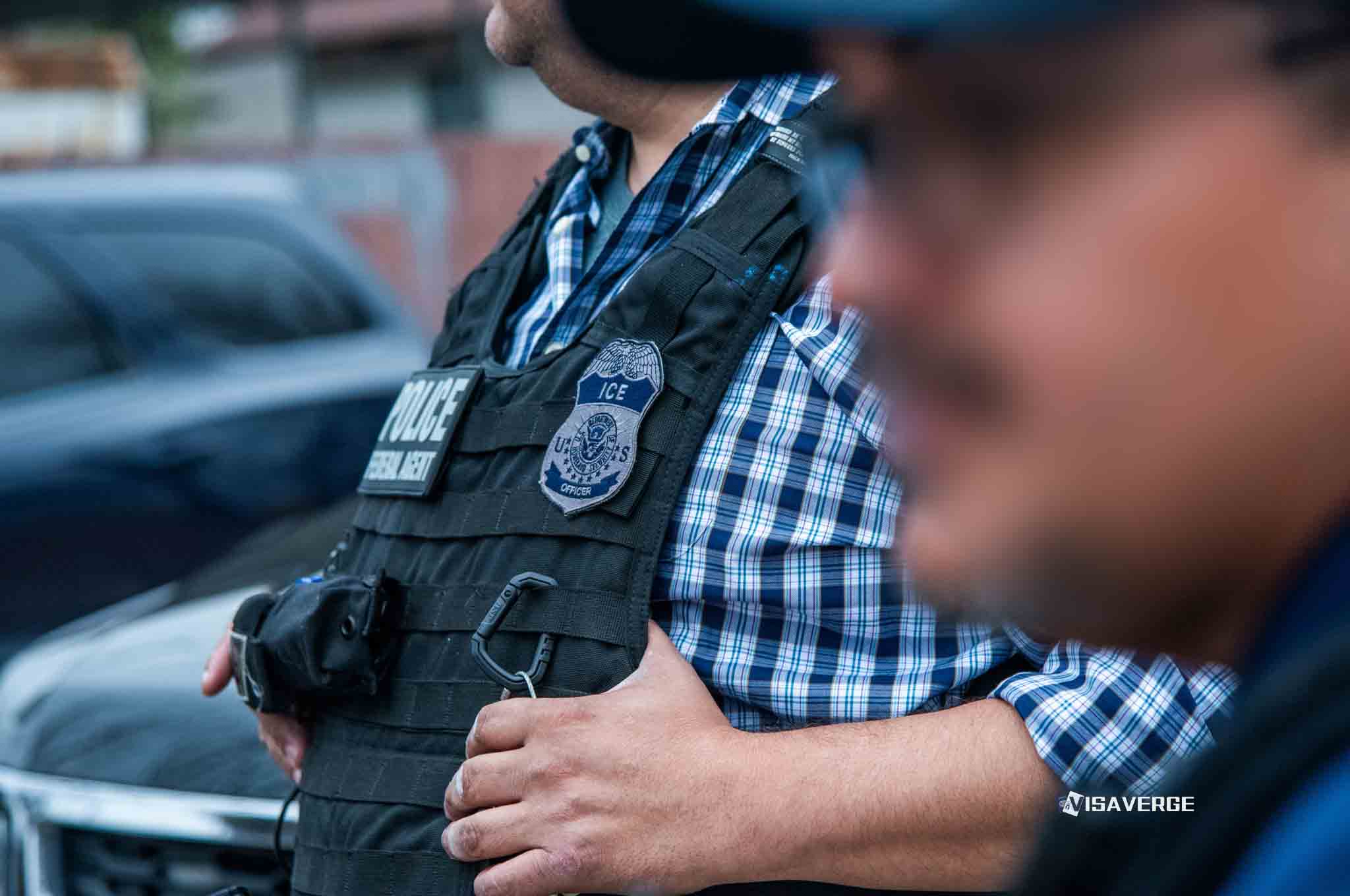
(FLORIDA) Florida officers are still citing people under a halted state immigration crime even though a federal court blocked it statewide. The law, SB 4‑C, created a new offense for “illegal entry into Florida,” but U.S. District Judge Kathleen Williams ordered a stop to enforcement earlier this year. The U.S. Supreme Court on July 9, 2025 left that order in place while the appeal moves forward, and the 11th Circuit set fast‑track arguments for the week of Oct. 6, 2025. According to analysis by VisaVerge.com, the injunction remains statewide.
Current legal status and what is frozen

- Blocked statewide: Florida cannot enforce SB 4‑C’s state crime that would make it a first‑degree misdemeanor for undocumented adults who “knowingly” enter or try to enter the state. Judge Williams’ preliminary injunction bars any Florida official, including local police, from using that statute while the case proceeds.
- The 11th Circuit refused to pause her order, and the Supreme Court declined Florida’s emergency request to revive the law during the appeal, as reported by SCOTUSblog.
- Appeal timeline: The appeal is on an expedited track at the 11th Circuit, with arguments in early October. A later ruling will decide whether the injunction stays, is narrowed, or is lifted before a full trial.
Reports of continued charges despite the injunction
Civil rights groups and defense lawyers report that some officers have still cited or arrested people for SB 4‑C’s “illegal entry into Florida” offense after the injunction.
- Advocates say those arrests cannot legally proceed and are being dismissed or converted once flagged in court.
- These reports point to gaps in training and compliance among officers.
- The pattern likely reflects confusion between barred state charges and federal actions taken under separate authority that Florida expanded this year.
Federal‑tasked actions that remain active
Even while SB 4‑C is frozen, Florida has expanded its role under the federal 287(g) program.
Free toolUSCIS Receipt Number Decoder- In July 2025, U.S. Immigration and Customs Enforcement (ICE) certified the Florida Department of Law Enforcement (FDLE) for statewide, task‑force style 287(g) authority.
- Under that program, FDLE agents can act as federal officers under ICE oversight, and may:
- Question and detain for federal immigration purposes
- Issue detainers
These are federal functions and do not allow officers to enforce the enjoined state crime.
- For official details on 287(g), see ICE’s program page: https://www.ice.gov/287g
State leaders also announced several 287(g) memoranda of agreement across agencies starting in February 2025. Those agreements let trained officers work under ICE direction. They are separate from SB 4‑C and remain in effect unless ICE or a court says otherwise.
Expanded state enforcement structure and funding
Florida’s 2025 package did more than create the new crime.
- Lawmakers created a state immigration enforcement office and council.
- They expanded authority to coordinate with ICE.
- The budget approved $298–$300 million for personnel, training, and bonuses.
Those structural elements generally remain active unless a court blocks them. However, the criminalization provisions that conflict with federal law are at the center of the current injunction.
Why confusion is happening in the field
- Overlapping authorities: The fast rollout of 287(g) and new state statutes makes it hard for officers to separate what is barred under SB 4‑C from what is allowed under ICE supervision.
- Funding and incentives: New money and bonuses tied to immigration work may push aggressive actions that outpace updated training on the injunction’s limits.
- State messaging: Public talk about leading on enforcement, building detention space, and expanding processing can blur the legal lines for officers who must follow the court order.
Practical steps for people who are impacted
If you or a client is charged with SB 4‑C’s state crime:
- Request immediate dismissal based on the federal injunction and the Supreme Court’s refusal to lift it.
- If detention is based only on the enjoined charge, request prompt release at first appearance.
- Keep copies of arrest reports and charging documents to show the court that the basis for detention is blocked by federal order.
If you are questioned by an officer working under 287(g):
- Understand the officer is acting under federal supervision and may question or detain for federal immigration reasons and issue detainers. That is different from the barred state offense.
- Ask for identification of the authority being used (287(g) versus SB 4‑C) and document the answer.
Potential remedies:
- Defense counsel can move to suppress evidence tied to an unlawful post‑injunction arrest under SB 4‑C.
- Counsel may also explore civil claims for wrongful detention.
Important: Arrests or charges relying solely on SB 4‑C while the injunction is in effect are subject to dismissal and possible civil claims.
Compliance guidance for agencies
Supervisors should take the following steps:
- Provide roll‑call training that clearly states: do not charge SB 4‑C offenses while the injunction stands.
- Route suspected immigration violations through 287(g) channels under ICE direction.
- Issue written guidance and audit arrest reports for compliance.
Key timeline and case posture
- February 2025: Florida enacted SB 4‑C and a wider package, including SB 2‑C.
- Spring 2025: Florida Immigrant Coalition and Farmworker Association of Florida sued. Judge Williams issued a statewide preliminary injunction.
- June 6, 2025: The 11th Circuit denied the state’s request to stay the injunction and fast‑tracked the appeal.
- July 9, 2025: The Supreme Court denied Florida’s emergency application; the injunction remained in place.
- July 2025: ICE certified FDLE under 287(g) statewide.
Stakeholders and public positions
- Governor Ron DeSantis: Promoted broader state participation in immigration enforcement, announced additional 287(g) agreements in February, and highlighted plans for detention capacity and processing in May.
- FDLE: Now certified under 287(g) with statewide reach, allowing agents to function as federal officers under ICE supervision.
- Plaintiffs: Florida Immigrant Coalition and Farmworker Association of Florida won the preliminary injunction that remains in effect pending appeal.
- Courts: Judge Williams issued the injunction; the 11th Circuit set October arguments; the Supreme Court kept the injunction in place.
What remains active versus halted today
- Halted: SB 4‑C’s state crime for “illegal entry into Florida.” No Florida officer may enforce it while the injunction stands.
- Active (unless later enjoined):
- 287(g) agreements across state agencies
- The new state enforcement office and council
- Funding and coordination authority
- The end of in‑state tuition for undocumented students effective July 1, 2025
- Other penalty changes outlined in the 2025 laws
This Article in a Nutshell
Florida’s SB 4‑C criminalization is blocked by a federal injunction, yet some officers still cite it. The Supreme Court left the injunction intact July 9, 2025. FDLE gained statewide 287(g) certification in July, allowing federal immigration actions distinct from the enjoined state offense, amid training and compliance gaps.