- Florida’s Board of Governors will vote on freezing new H-1B visas at public universities.
- The proposal targets new faculty and research hires while exempting existing visa holders.
- Governor DeSantis argues for prioritizing domestic graduates over foreign specialized labor.
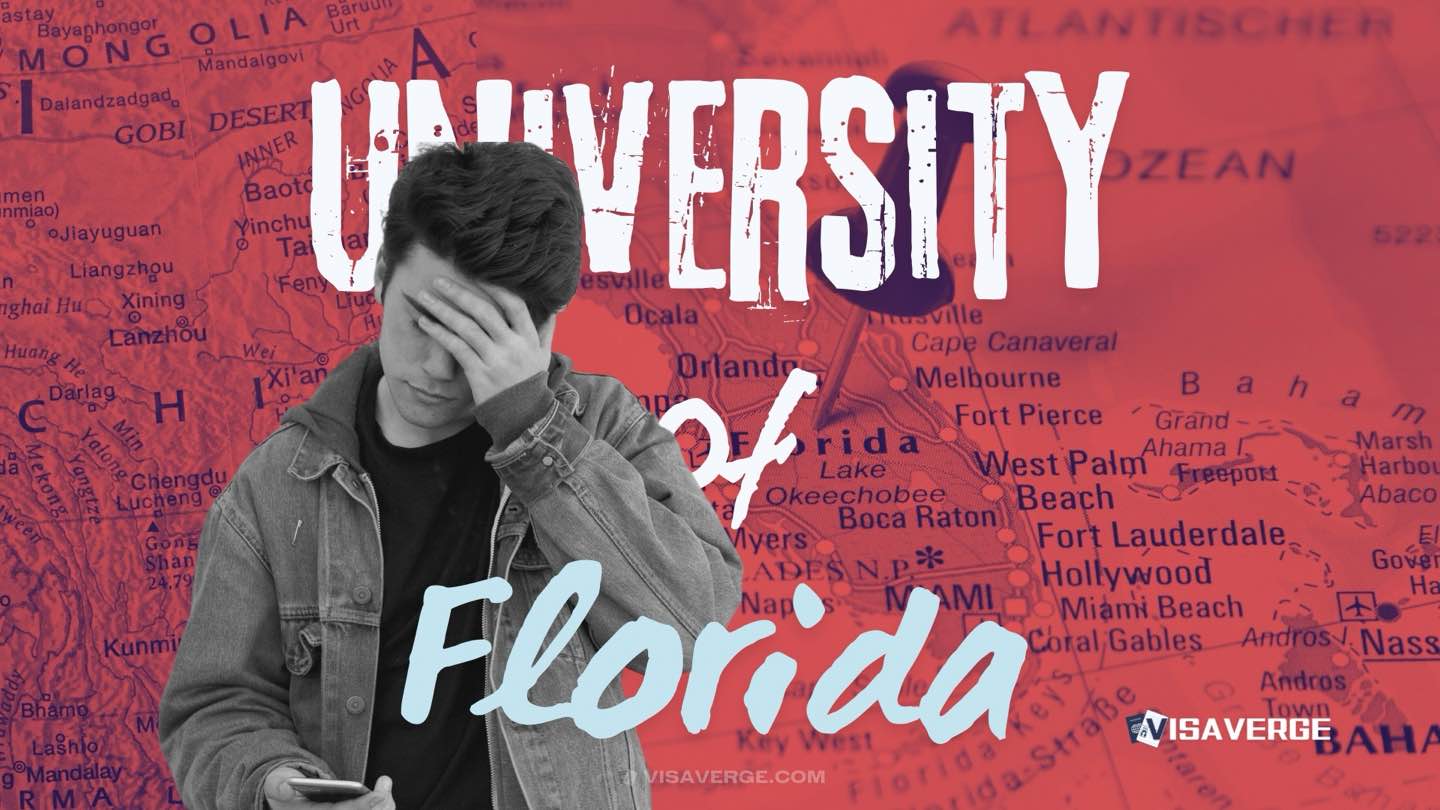
(FLORIDA) — Florida’s State University System Board of Governors scheduled a January 29, 2026 vote on a proposal to freeze new H-1B hiring across the state’s public universities for one-year, a step that would pause new visa sponsorship for faculty, researchers and professional staff.
Board members will consider a draft policy that would bar Florida’s 12 public universities from hiring any new employees through the H-1B program until January 5, 2027, while leaving current H-1B workers already on payroll unaffected.
Governor Ron DeSantis ordered the university system to pursue the freeze and urged officials to “pull the plug” on foreign work visas in public higher education, according to the proposal summary tied to the upcoming meeting.
“pull the plug”
Florida’s public university system framed the plan as a hiring pause rather than a blanket ban on foreign nationals, since it targets new H-1B sponsorship decisions and does not end existing employment for current visa holders.
The Board of Governors’ action would determine whether the proposal advances into a public comment period and potential enactment, with any effects expected to show up in subsequent hiring cycles rather than immediately.
DeSantis’ directive traces to an October 29, 2025 press conference at the University of South Florida, where he argued that “taxpayer-funded institutions should prioritize domestic hiring” and called H-1B use a “scam” that sidelines qualified American graduates.
“taxpayer-funded institutions should prioritize domestic hiring”
The move also followed an audit by Florida’s DOGE (Department of Government Efficiency) task force, which claimed universities were becoming “too reliant” on foreign hiring for roles that could be filled by Florida residents.
Under the draft policy, the freeze would cover new hires in categories that public universities routinely sponsor through H-1B, including faculty appointments, research roles and professional staff jobs connected to academic operations.
What remains central to day-to-day operations is how Florida defines “new hire” for this purpose, and how campuses handle cases where an offer has been made but employment has not yet started, or where projects rely on time-sensitive staffing.
Universities and affected departments will also look for final guidance on common H-1B scenarios that arise in higher education, including extensions, amendments, and transfers, since the proposal targets new sponsorship but does not seek to terminate current employment.
The proposal materials do not confirm specific exemptions beyond the baseline rule that current H-1B holders already employed at Florida institutions would not be affected and can continue their current terms.
Administrators will also seek clarity on whether grant-funded roles, joint appointments and lab staffing continuity receive any special handling, since research timelines can depend on start dates and specialized expertise.
Florida’s 12 public universities include the University of Florida, Florida State University and the University of South Florida, institutions that often recruit globally in engineering, computer science, medicine and STEM research where departments say qualified candidates can be difficult to find domestically.
The proposed freeze arrives as federal officials press changes to H-1B oversight and selection integrity, offering supporters of restrictions fresh language about protecting American workers and curbing abuse.
Matthew Tragesser, USCIS spokesperson, said on December 23, 2025 that “The existing random selection process of H-1B registrations was exploited and abused by U.S. employers who were primarily seeking to import foreign workers at lower wages than they would pay American workers. The new weighted selection will better serve Congress’ intent for the H-1B program and strengthen America’s competitiveness by incentivizing American employers to petition for higher-paid, higher-skilled foreign workers.”
“The existing random selection process of H-1B registrations was exploited and abused by U.S. employers who were primarily seeking to import foreign workers at lower wages than they would pay American workers. The new weighted selection will better serve Congress’ intent for the H-1B program and strengthen America’s competitiveness by incentivizing American employers to petition for higher-paid, higher-skilled foreign workers.”
Tragesser followed on January 14, 2026 with a warning on fraud enforcement, saying, “USCIS is committed to rooting out fraud by thoroughly screening and vetting all aliens seeking immigration benefits. Anyone submitting fake evidence or misrepresenting themselves will be found out and face the consequences.”
“USCIS is committed to rooting out fraud by thoroughly screening and vetting all aliens seeking immigration benefits. Anyone submitting fake evidence or misrepresenting themselves will be found out and face the consequences.”
Supporters of Florida’s proposal have framed the freeze as a way to prioritize U.S. citizens and resident workers for publicly funded jobs, arguing that foreign talent can displace domestic applicants or suppress wages in specialty occupations.
Critics have argued the state lacks authority to regulate a federal immigration program and that restricting H-1B hiring undermines institutional autonomy and academic competitiveness, with knock-on effects for recruiting and research capacity.
The H-1B visa category remains a federal program, but Florida’s proposal shows how state governance and funding choices can shape whether public employers participate in it, particularly when university systems centralize hiring policies.
Universities often sit differently in the H-1B debate than private-sector employers, because many higher education positions depend on specialized research hiring and year-round recruitment pipelines that do not always align with typical corporate hiring calendars.
Florida campuses frequently rely on H-1B “cap-exempt” status to hire scientific researchers and medical faculty throughout the year, a point highlighted by those concerned about disruption if the state pauses new sponsorship.
Administrators have warned that a hiring freeze may disrupt recruitment cycles for the fall 2026 academic term, along with ongoing research initiatives requiring specialized expertise and the capacity to attract grant funding tied to global collaborations.
Florida’s public universities currently employ more than 600 H-1B workers, illustrating that the proposal targets future intake rather than the existing workforce.
Within that system-wide figure, the University of Florida employs ~253 H-1B workers (FY 2025), Florida State University employs ~110 H-1B workers, and the University of South Florida employs ~107 H-1B workers, according to the proposal summary.
For departments planning for the Fall 2026 semester, a one-year pause could collide with search timelines and start-date planning, particularly in STEM and medicine where international hiring plays a regular role in staffing.
Research operations could also face planning constraints for lab staffing and continuity, especially when projects rely on key personnel with specialized training and when staffing changes affect project timelines and compliance commitments.
H-1B debates also carry economic and labor-market arguments that extend beyond campuses, since public universities play a role in regional innovation ecosystems, local workforce pipelines and research-linked activity.
Critics of H-1B programs often argue some employers use the visa to lower labor costs or to fill roles that could be staffed by domestic workers, while supporters contend it enables innovation by bringing in highly educated professionals when domestic supply is limited.
Florida’s proposal also intersects with the planning horizon of international students, including those who hope to move from student status into work authorization through employer sponsorship.
Many international graduates plan around F-1 Optional Practical Training (OPT) and STEM extensions, treating H-1B sponsorship as a pathway to longer-term U.S. work authorization and, for some, permanent residency.
A public-university sponsorship pause can change perceived opportunity even if it applies only to new university H-1B hires, because it can influence where graduates pursue academic and research career tracks and how they weigh offers in different states or sectors.
The proposal summary highlighted that international students, particularly those from India who receive a significant share of H-1B approvals nationally, could face added uncertainty about post-graduation employment prospects if Florida’s public universities stop sponsoring new H-1B hires.
Even with federal eligibility rules unchanged, shifting employer participation can alter mobility decisions, including whether workers seek opportunities in other U.S. states or private institutions not subject to the ban.
Because H-1B status often serves as a bridge to employer-sponsored green cards for skilled immigrants, a freeze in new hiring can also affect long-term planning for workers and families, including career continuity and movement between employers.
The proposal’s federal context includes a claim that Kristi Noem, Secretary of Homeland Security, has overseen implementation of a $100,000 fee per new H-1B application, a policy Florida universities have cited as a financial barrier requiring a rethink of hiring models.
The materials did not describe that figure as a standard USCIS filing fee, and the proposal summary did not spell out how it would apply across different types of H-1B filings that universities commonly handle.
Florida’s Board of Governors will decide on January 29, 2026 whether to move the draft policy into public comment and implementation planning, reject it, or defer action, as campuses watch for final text and any operational guidance to hiring units.
Stakeholders will also look for clarifications immediately after the meeting on implementation timing, HR instructions, and whether any exemptions emerge in final language, as Florida’s public universities plan recruitment for Fall 2026 with the proposed January 5, 2027 endpoint in view.
Readers can find more information about the university system through the Florida Board of Governors, and federal immigration context through the USCIS Newsroom, as Florida weighs whether to halt new H-1B sponsorship in its public universities for a one-year window.