- Finland extended residency requirements from four years to six years starting January 8, 2026.
- Applicants must now demonstrate satisfactory language proficiency in either Finnish or Swedish.
- Eligibility now requires a mandatory two-year work history and limited reliance on social benefits.
(FINLAND) — finland tightened its rules for foreigners seeking permanent residence on January 8, 2026, raising the standard residency period and adding stricter language, work-history and benefits-related conditions through amendments to the Aliens Act.
The changes took effect after approval by the President of the Republic on December 22, 2025, and were in force as of January 11, 2026, shifting who can qualify and when, based on the date an application is filed.
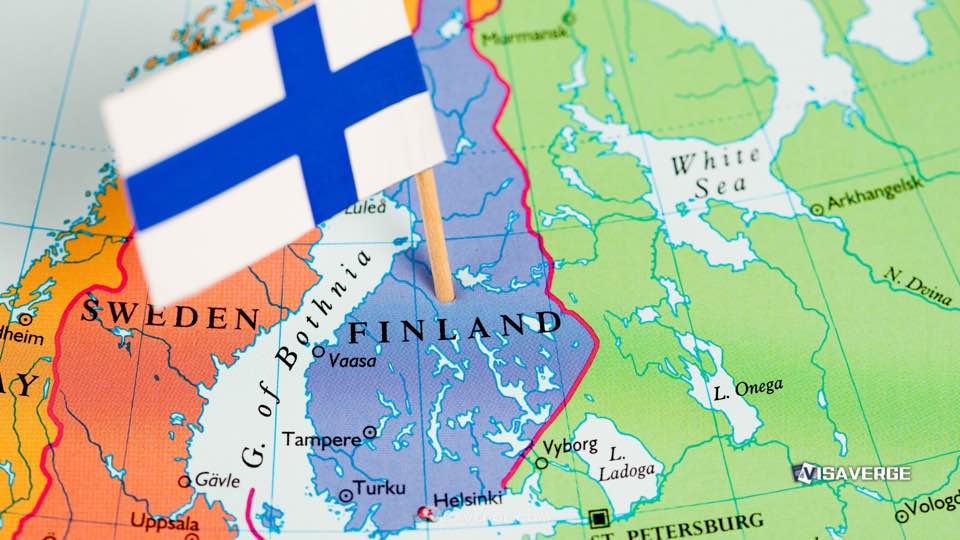
“In line with the Government Programme, applicants will be required to comply with the rules of society, and to work and to study the language. Successful integration would be a prerequisite for a permanent residence permit,” Minister of the Interior Mari Rantanen said on December 22, 2025.
Free toolUSCIS Receipt Number Decoder
“the legislative amendments will tighten the requirements of permanent residence permits. In the future, issuing a permanent residence permit will require, with certain exceptions, six years of continuous residence in Finland,” the Finnish Immigration Service (Migri) said in an announcement on January 8, 2026.
Overview of the reform
At the center of the reform is a longer baseline wait. The standard period of continuous residence required for a permanent residence permit, often referred to as a P-permit, increased from four years to six years.
The new framework also adds a language component. applicants must demonstrate “satisfactory” knowledge of either Finnish or Swedish, typically evidenced by reaching level B1 or equivalent in the National Certificate of Language Proficiency (YKI).
Work history is now a fixed part of the standard route. A mandatory two-year work history in Finland is required for most applicants, increasing the emphasis on documented attachment to the labor market.
Integrity and benefit use are treated as eligibility issues rather than secondary considerations. Applicants must have a clean criminal record, and unconditional imprisonment now resets the residency calculation, affecting when time can be counted toward permanent residence.
Limits on reliance on certain support are also built into the rules. Those meeting the work history requirement must not have relied on unemployment security or social assistance for more than three months during the qualifying period.
Core changes to permanent residence eligibility
The reform makes the concept of continuous residence more consequential within a six-year system. While residency is still measured over time, the extended baseline increases the importance of tracking eligibility and keeping records aligned with the applicable rules.
Language and employment evidence now sit alongside residence as core pillars of the application. In practice, applicants must keep clear proof of time in Finland, language achievement in Finnish or Swedish, and the ability to show two years of work history.
Integrity provisions now affect eligibility more directly: a clean criminal record is required, and unconditional imprisonment resets the residency calculation, which can delay the earliest possible application date.
Transition rules and filing dates
The changes place renewed focus on filing dates because Finland is applying transition rules based on when applications are submitted. Applications submitted before January 8, 2026, are processed under the old, less-stringent rules.
All applications filed on or after January 8, 2026 are subject to the new criteria. This cutover can be decisive: someone who filed before January 8, 2026 may be assessed under a four years standard rather than six years, even as the new law applies to later filings.
Fast-track routes and exceptions
Alongside the longer baseline, Finland retained shorter pathways in defined situations. It is still possible to obtain permanent residence after four years if an applicant meets one of the fast-track conditions set out with the reform.
- One fast-track route is based on earnings: applicants can qualify after four years with an annual gross income of at least EUR 40,000.
- Another route is tied to advanced education: possession of a Master’s degree (or higher) recognized in Finland, plus two years of work history, can support permanent residence after four years.
- A third route depends on high language skills and longer work record: applicants can qualify after four years with “particularly good” proficiency in Finnish or Swedish (level C1) plus three years of work history.
Even under these exceptions, eligibility remains evidence-heavy. Income-based applicants must show income meets the threshold, while degree- and language-based routes hinge on education recognition and documented work history in Finland.
International students
The reform has specific implications for international students who intend to remain after graduation. Graduates of Finnish universities can obtain permanent residence without a specific “years-of-residence” requirement, provided they have completed a Master’s or Bachelor’s degree in Finland and meet language standards.
That carve-out can simplify the pathway, but the reform still puts language at the center of the permanent residence assessment. Students may need to treat Finnish or Swedish study as part of a longer-term plan rather than an optional add-on.
U.S. citizens and the U.S. Embassy position
Nationality provides no exemption from the statutory requirements. The U.S. Embassy in Helsinki, as of January 2026, reminds American citizens that “the Embassy is not in a position to intercede with the Finnish authorities on behalf of Americans seeking visa exemptions and work permits.”
For U.S. citizens in Finland seeking permanent residence, the practical message is that the Finnish criteria apply as written. Americans must follow the new six-year residency and language rules if they wish to transition from temporary to permanent status.
Integration, integrity and benefit-use rules
The government framed the reform as an “integration-based” model, linking permanent residence to language skills and financial self-sufficiency. Rantanen’s statement on December 22, 2025, placed language study, work, and compliance with “the rules of society” at the center of the approach.
Self-sufficiency is embedded in the practical details, including the limit on reliance on unemployment security or social assistance for more than three months during the qualifying period for those meeting the work history requirement.
The integrity provisions also change how past events can affect eligibility. By resetting the residency calculation after unconditional imprisonment, the law can push back the earliest possible application date for permanent residence, depending on an individual’s history.
Practical steps for applicants
The practical steps are straightforward in principle but demanding in documentation. Applicants generally need to confirm which rule set applies by filing date, then gather proof that matches the pathway they are claiming.
Required documentation commonly includes residence history, language evidence in Finnish or Swedish, and work history, while ensuring integrity and benefit-use limits do not block eligibility.
Official sources and references
For applicants trying to understand what applies to them, Finnish authorities are the primary source for both statutory requirements and day-to-day interpretation. Migri publishes guidance connected to the legislative changes, while the Ministry of the Interior posts government communications about the policy shift and its objectives.
Migri’s information on the legislative amendments concerning permanent residence permits is available at its permanent residence permit page. The Ministry of the Interior also directs readers to its press releases for the government’s account of the stricter conditions taking effect on 8 January.
For broader government announcements, Finland’s government portal carries the notice of approval, including the Aliens Act amendments approved on December 22, 2025, through the Finnish Government front page. Travelers and residents looking for U.S. government travel guidance can consult the U.S. Department of State’s Finland International Travel Information.
Finland has implemented stricter permanent residency rules, increasing the required continuous stay to six years. The reform emphasizes integration through mandatory language skills and a solid work history. While standard requirements are tougher, accelerated four-year pathways exist for master’s degree holders, high earners, and those with advanced linguistic skills. Integrity checks and financial self-sufficiency are now core pillars for all applicants seeking long-term status.