- Dubai airports remain open and operational despite overnight drone strikes hitting residential areas on March 12.
- Airlines are expanding flight schedules while managing restricted airspace corridors and longer rerouted flight paths.
- Authorities advise all passengers to confirm flight status directly with airlines before traveling to the airport terminals.
(DUBAI, UAE) — Dubai Airports kept Dubai International Airport (DXB) and Al Maktoum International (DWC) open and operating on Thursday, March 12, 2026, with limited but expanding flight schedules despite overnight drone strikes that hit residential areas in Dubai.
Airport officials maintained partial operations that allow confirmed flights to depart and arrive, and airline schedules have grown compared with earlier days of disruption. Service levels continued to shift with intermittent adjustments, reflecting the changing security and airspace environment.
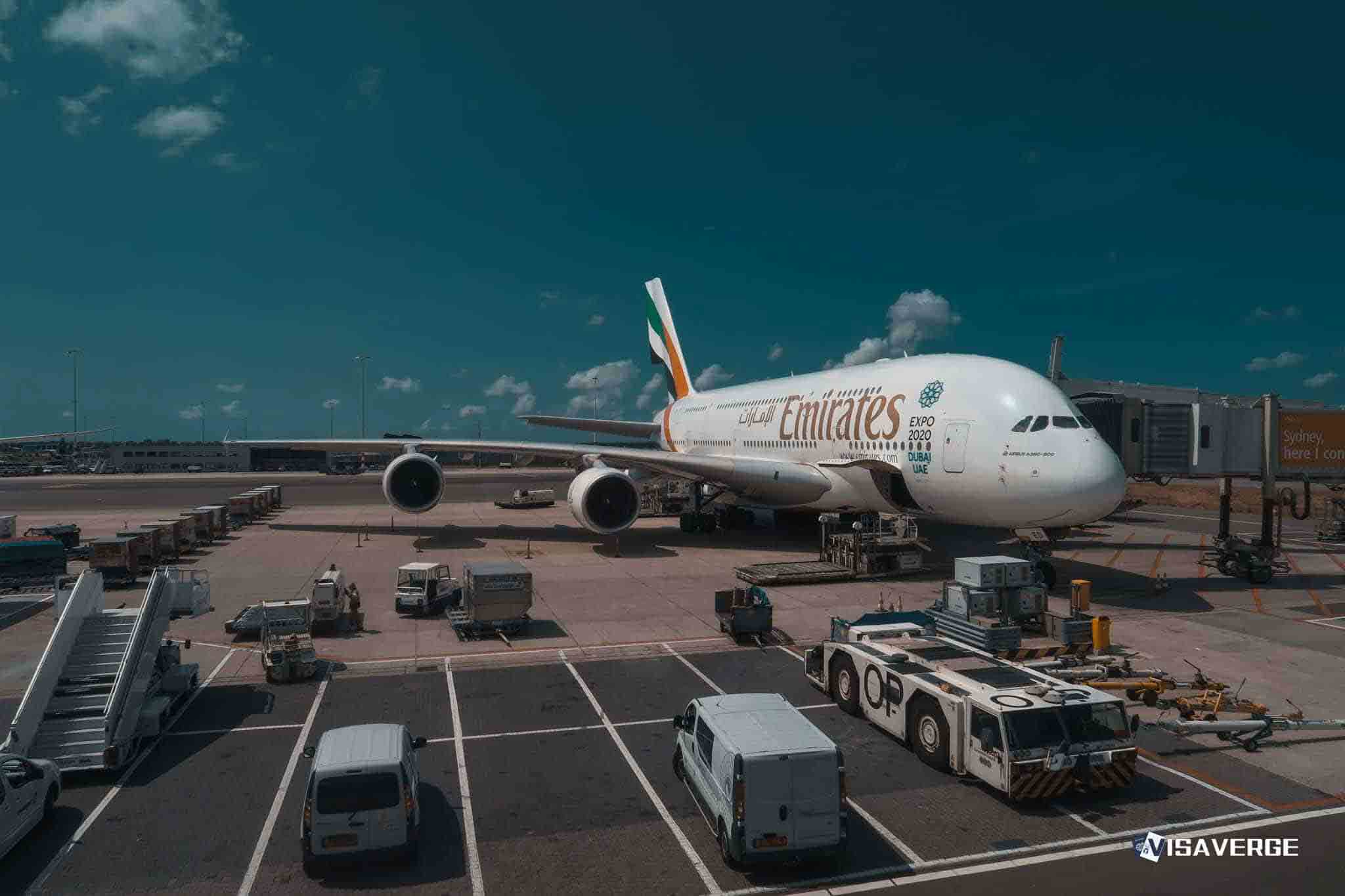
Dubai Airports has maintained partial operations since March 7, 2026, and travelers have continued to move through DXB and DWC even as airlines adjust routings and timings. Flight information boards and airline notifications have carried frequent updates, and passengers have faced moving departure times and last-minute gate changes.
Overnight, drone strikes hit residential locations in Dubai, triggering emergency response without shutting the airports. Civil Defence crews responded to a fire after one drone struck a residential tower, and authorities evacuated the building.
Additional drone crashes occurred near Dubai Creek Harbour and Al Bada’a, extending the incident footprint beyond a single site. Civil Defence reported no injuries, and airport operations continued without reported interruption.
The latest incidents came as airlines already operated under constrained conditions. UAE airspace remained partially open, with restricted corridors and ongoing air defense activity shaping the paths airlines can use.
Those constraints have pushed airlines to reroute aircraft on longer tracks, which can add time even when departures appear to run on schedule. In practice, travelers have seen later arrivals, longer connections, and occasional aircraft swaps when carriers try to keep rotations intact.
Emirates expanded service across its network and urged passengers to monitor updates close to departure. The carrier said it operated an expanding schedule to over 84 destinations, and it directed customers to check status using its online tools at Emirates flight status.
flydubai also continued operating from Dubai, but on a reduced schedule from Terminals 2 and 3. The airline warned of extended flight times due to rerouting and advised passengers to verify plans online at flydubai.
Etihad limited certain flights from Abu Dhabi for a defined period, an adjustment that has affected some UAE itineraries even for passengers not transiting Dubai. The carrier’s changes added pressure on remaining seats across the region as travelers sought alternative departures and routings.
Several international carriers ended temporary suspensions to Dubai, while others maintained cancellations over set date ranges. The picture remained uneven across the market, and passengers continued to see different policies depending on the airline, route, and aircraft availability.
Among the airlines that adjusted service, the Lufthansa Group ended its suspension and advised customers to contact the carrier directly. KLM also ended its suspension and directed passengers to check its website at KLM.
Other carriers continued to cancel flights for set periods, leaving some travelers with rebookings or refunds instead of confirmed seats. Cathay Pacific, Singapore Airlines, Finnair and Air France were among those with ongoing cancellations or temporary suspensions to Dubai over defined date ranges.
Norwegian also had cancellations over a set period, and it advised travelers to verify whether service had resumed. Across the mix of airlines, passengers have had to track shifting statuses that can change with airspace access and operational constraints.
Reduced schedules have translated into fewer daily frequencies and less flexibility when flights slip, which can crowd remaining departures and tighten rebooking options. Some travelers have also faced longer routings that keep them on the same flight number but add time in the air.
Airlines have also managed passenger flows to reduce congestion at terminals. When carriers cancel or retime flights close to departure, check-in counters can swing from quiet to packed within a short window, particularly when travelers arrive before receiving direct confirmation.
Dubai Airports and airlines have repeatedly told passengers to seek direct confirmation from their airline before heading to DXB or DWC. The warning aims to prevent travelers from arriving for flights that have been canceled, retimed, or moved to different operational windows under the partial-opening system.
Congestion has tended to build around check-in islands and customer service desks when a cluster of flights changes at once. Passengers with disrupted itineraries have also competed for assistance with rebooking, refunds, and onward connections, especially when multiple airlines share service areas.
Even with the airports open, the partially open airspace has continued to dictate what airlines can operate reliably. Restricted corridors can force carriers to sequence aircraft through narrower routes, creating rolling delays that spread through the day and into later rotations.
Ongoing air defense activity has remained part of the operational backdrop. Airlines have adapted by planning for alternate routings and additional fuel, and by building schedule buffers where possible, but travelers have still experienced late changes.
The disruptions that began in late February have also shaped airline customer policies. Major carriers have offered refunds or rebooking for disruptions since February 28, 2026, when operations suspended amid US-Israel strikes on Iran and retaliatory attacks.
That broader regional crisis has continued to drive sudden shifts in aviation conditions. Airlines have had to weigh crew duty limits, aircraft positioning, and airport slot timing against what routes remain workable under the airspace restrictions.
Security incidents have also created a pattern of brief operational tightening followed by rapid resumptions. Dubai Airports maintained partial operations through repeated disruptions, allowing flights to proceed when airlines could confirm routing and safety requirements.
UAE interception activity intensified on March 11, when the UAE intercepted 13 missiles and 39 drones from Iran. Authorities reported 9 injuries linked to that interception activity, adding to the sense of volatility that has shaped flight planning.
Earlier, a March 7 interception caused a brief DXB suspension and prompted reports of debris falling, though authorities reported no injuries. That episode contributed to the current posture of partial operations, with airports open but reliant on shifting airspace availability.
A separate March incident injured 4 near the airport, underscoring the proximity of some security events to critical infrastructure. Even so, operations resumed quickly after each incident, with airlines gradually rebuilding schedules as conditions allowed.
The ability to keep flights moving has depended heavily on airline-by-airline decision-making. Carriers have adjusted their own thresholds for resuming service, sometimes returning to Dubai quickly while keeping reduced frequencies or operating longer routings to manage risk and airspace constraints.
For passengers, that has meant the same airport can look nearly normal for one carrier and heavily disrupted for another. Travelers booked on different airlines for the same day have encountered sharply different experiences, from standard check-in to multiple rebookings.
Airlines have also differed in how they handle missed connections caused by reroutes and delays. Some travelers have been shifted onto later flights via different hubs, while others have faced overnight waits when seats fill quickly on the reduced schedules.
Dubai’s role as a global connecting point has added another layer of complexity. When long-haul arrivals land late, tight transfer windows shrink, and travelers can miss onward flights even when the onward segment operates normally.
For those heading to the airport, the immediate guidance has remained consistent: confirm directly with the airline before leaving home or a hotel. That step has been critical in a system where a flight can remain on the schedule but still change timing or routing on short notice.
Travelers have also needed to watch for changes that come after online check-in. Gate assignments, boarding times, and baggage cutoffs can shift when an inbound aircraft arrives late or when airport operations adjust to meet the partial-opening requirements.
Dubai Airports has offered a central point for updates while airline systems handle the most route-specific information. Passengers can contact Dubai Airports at +971 4 224 5555 or visit Dubai Airports for updates.
When direct Dubai flights remain disrupted, travelers have increasingly looked to nearby hubs for alternative routings. Muscat and Doha have served as options, including connections on Oman Air and Qatar Airways for onward travel.
Those alternatives can add travel time and may involve additional checks at transit points. Passengers have also had to account for the knock-on effects of delays elsewhere in the network, because reroutes and longer sectors can disrupt aircraft rotations beyond the Gulf.
With drone strikes, interceptions, and shifting airspace corridors still shaping operations, travelers have continued to face schedule volatility even while DXB and DWC remain open. The overnight incidents showed how Dubai’s emergency response can run alongside airport operations, leaving passengers to manage the uncertainty airline by airline.