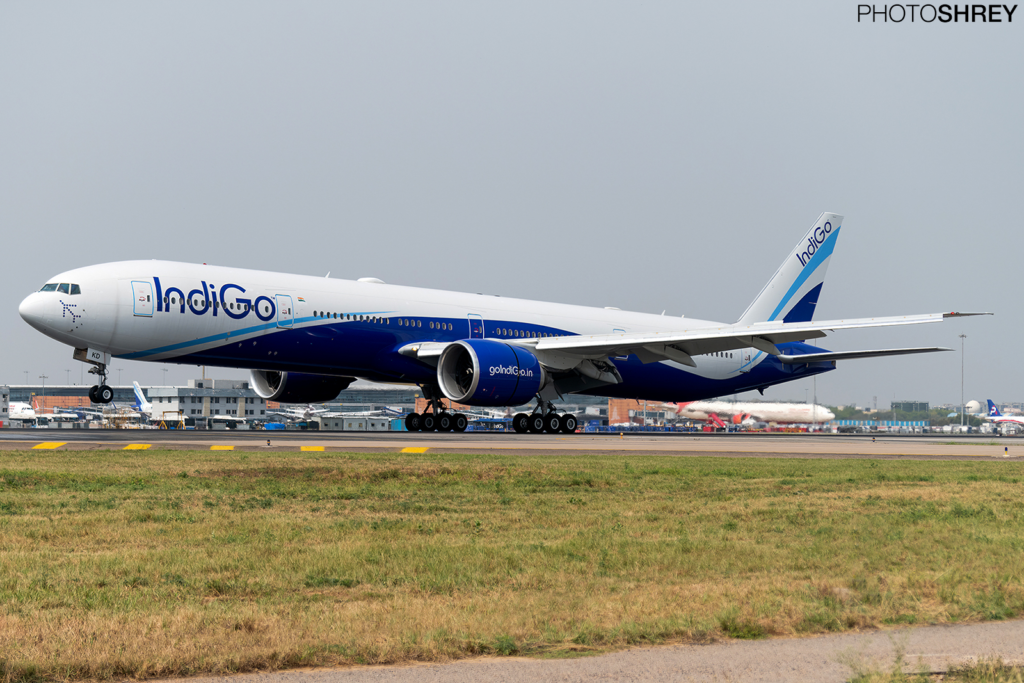
(GURGAON, INDIA) India’s aviation regulator has moved to place IndiGo under close daily watch, forming an eight-member oversight team after days of large-scale flight cancellations, delays, and refund complaints that have hit passengers across the country. The Directorate General of Civil Aviation (DGCA) set up the special unit as cancellations at IndiGo surged to 170–200 flights a day from late November 2025, the highest disruption rate among Indian carriers, according to an official order reviewed by reporters.
On-site oversight: who and what
The DGCA order shows that two members of the oversight team are now stationed every day at IndiGo’s corporate office at Emaar Capital Tower 2 in Gurgaon, just outside Delhi. Their brief is to monitor, in real time, the airline’s fleet deployment, crew utilization, network planning, and day-to-day compliance with safety and duty-time rules.
The rest of the team continues field and document checks aimed at stabilising flights and protecting passengers from further last-minute changes.
Oversight team members
| Role | Name |
|---|---|
| Senior flight operations inspectors (eight total) | Capt Vikram Sharma, Capt Kapil Mangalik, Capt VP Singh, Capt Apoorva Agarwal, Capt Swati Loomba, Capt Aman Suhag, Capt Nitya Jain, Capt NJ Singh |
By naming experienced inspectors and assigning them directly to IndiGo’s hub operations, the DGCA is signaling that the airline’s internal controls are no longer trusted on their own and that external supervision will remain in place until performance improves.
Why the DGCA intervened: FDTL transition problems
According to the order, the DGCA move follows IndiGo’s failure to properly adjust to revised Flight Duty Time Limitation (FDTL) norms that came into force in two phases on July 1, 2025 and November 1, 2025.
- FDTL rules set how long pilots and cabin crew can work and how much rest they must get between flights. Regulators worldwide treat such rules as safety-critical.
- Watchdog officials identified problems in:
- internal oversight,
- forecasting of crew availability,
- training under the new regime,
- realignment of rosters.
These issues together triggered a chain reaction of delays and cancellations across IndiGo’s network.
The regulator’s findings suggest the airline continued to operate a schedule it could not legally staff once the stricter FDTL limits took effect. Instead of scaling back flights or adding crew in advance, IndiGo appears to have tried to stretch existing resources — only to find that pilots were timed out under the new rules. That led to repeated last-minute cancellations, which flooded customer service lines and created refund backlogs.
Impact on passengers and the broader aviation system
Passengers, especially those traveling for work, medical needs, or to connect to international flights, have been left scrambling for alternatives.
- Direct passenger harms
- Missed connections and international flights
- Disrupted medical travel
- Lost work or study opportunities
- Refund delays and long customer service waits
- System-wide effects
- Airport congestion from stranded travellers
- Pressure on other airlines to add capacity
- Price increases on remaining seats
According to analysis by VisaVerge.com, last-minute domestic disruptions can have sharp knock-on effects for people with tight international connections, especially those flying out for work visas, study permits, or family reunification in countries like the United States and Canada. When a domestic leg fails, travellers may miss consular interviews or fixed-time entry deadlines, sometimes having to pay new visa fees and restart document checks.
DGCA actions, meeting and expected deliverables
In addition to the on-site oversight team, the DGCA has summoned IndiGo CEO Pieter Elbers to appear at its office on December 11, 2025, at 3 p.m.
The order requires Elbers to come with senior officials and a detailed report that must include:
- Flight restoration plans
- Steps for pilot and crew recruitment
- Updated cancellation statistics
- A full accounting of refund status for affected passengers
The meeting is expected to be tense, as officials seek firm timelines and proof that the airline can run its schedule within the FDTL framework.
This stronger action builds on an earlier four-member DGCA inquiry panel that had already been investigating IndiGo’s troubles. That panel was headed by Joint Director General Sanjay K Bramhane, with Deputy Director General Amit Gupta, Senior Flight Operations Inspector Capt Kapil Manglik, and Flight Operations Inspector Capt Lokesh Rampal. Their findings laid the groundwork for the new oversight team and the decision to station inspectors inside the airline’s corporate base.
Daily tasks of the station-based inspectors
Internally, the oversight team’s work covers several daily tasks that go well beyond paperwork. Inspectors stationed at Emaar Capital Tower 2 are expected to:
- examine actual rosters against FDTL limits and rest requirements
- track how many flights are being proactively trimmed from the schedule
- verify that cancellations are being communicated and refunds processed
Important: non-compliance with FDTL norms will carry real consequences.
Possible enforcement and consequences
While the DGCA order does not list specific penalties, officials made clear that failure to comply could lead to enforcement actions. Possible measures include:
- fines under India’s aviation rules
- tying future schedule approvals to proven crew strength
- other enforcement options available to the DGCA short of suspending flights or imposing direct capacity caps
If IndiGo fails to present a credible recovery plan on December 11 or cancellations continue at current levels, these options could be considered.
Consumer perspective and advocacy
For passengers, the oversight effort may offer reassurance but not an immediate cure. Those already affected still face refunds and rebooking headaches.
Consumer advocates argue:
- airlines should be required to offer automatic refunds within defined timeframes after cancellations
- airlines must provide clear alternate options during large-scale disruptions
- regulators must balance passenger rights with the core need to keep FDTL limits strict, since fatigued crew pose safety risks that refunds cannot resolve
What IndiGo now needs to do
IndiGo will have to balance restoring operations quickly with building sufficient slack in its system to avoid repeat failures. Key actions include:
- hiring and training more crew under the updated FDTL rules
- improving forecasting and rostering tools
- possibly trimming routes or frequencies that cannot be supported without breaching FDTL caps
The presence of a DGCA oversight team inside its Gurgaon office makes clear that IndiGo must do this under direct regulatory scrutiny and with little room for error.
Key takeaway
The DGCA’s move to station inspectors at IndiGo’s corporate hub signals a shift from routine checks to active, daily supervision — a strong step aimed at protecting safety and passengers’ travel reliability while the airline adjusts to stricter duty-time rules.
For further reference, the DGCA publishes its official rules and circulars, including those on FDTL, on the Directorate General of Civil Aviation website.
The DGCA placed IndiGo under close daily supervision, stationing two inspectors at its Gurgaon office and creating an eight-member oversight team after cancellations surged to 170–200 flights per day. The regulator found IndiGo failed to adapt to new FDTL rules, causing crew timing-outs, last-minute cancellations and refund backlogs. CEO Pieter Elbers must present restoration plans, recruitment steps and refund accounting on Dec. 11 as inspectors verify rosters, cancellations and communications to protect passenger safety and reliability.
Live Government Data
State Dept • CBPBusiest Border Crossings
- Nogales 150 min
- Nogales 120 min
- Calexico 100 min