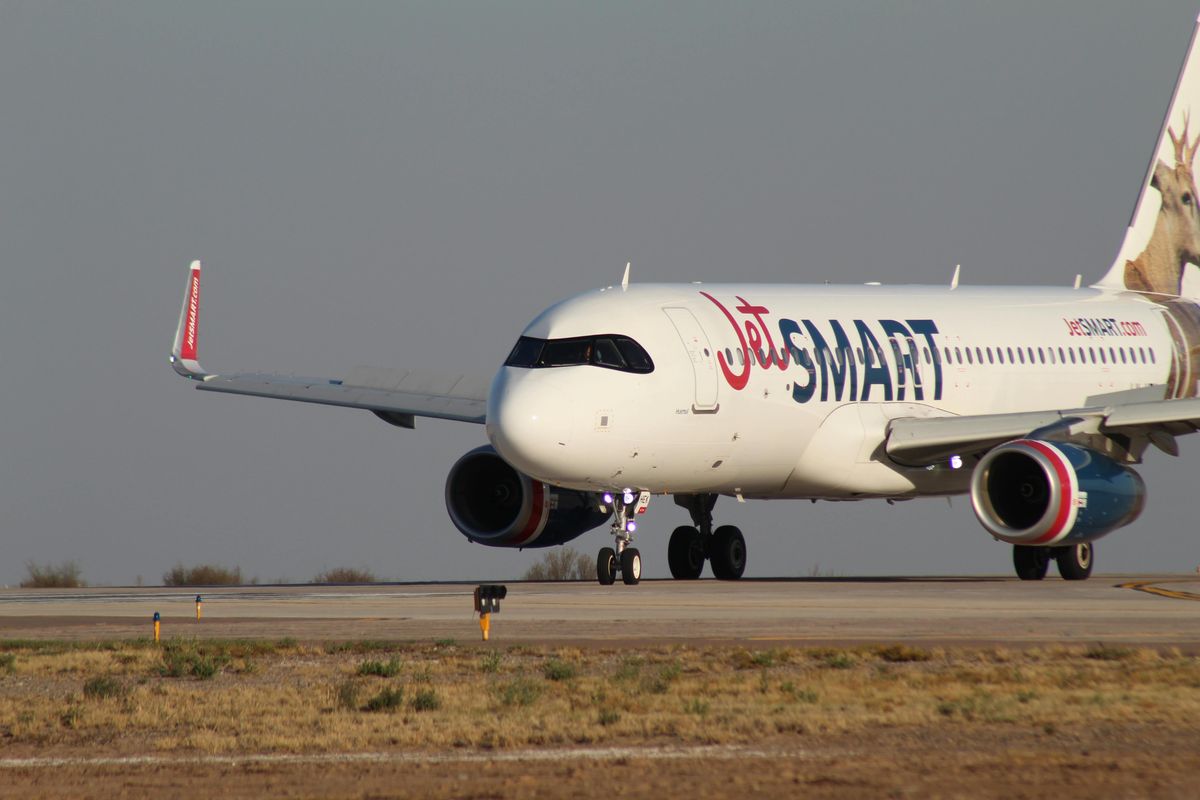
( SOUTH AMERICA ) BOC Aviation has agreed to purchase and lease three new Airbus aircraft to JetSMART Airlines, deepening a partnership that both sides say supports rapid growth across Latin America. Announced on September 1, 2025, the deal covers two Airbus A321neo and one A320neo, all powered by Pratt & Whitney GTF engines, with deliveries set for 2027 under long‑term leases. Executives at both companies framed the agreement as a practical answer to rising demand in key South American markets and a way to keep a young, fuel‑saving fleet at the center of JetSMART’s business model.
Steven Townend, CEO and Managing Director of BOC Aviation, underscored the lessor’s role in helping airlines add capacity at key growth stages. JetSMART’s CEO and Founder, Estuardo Ortiz, said the aircraft are central to the carrier’s long‑term plan, which targets a 120‑aircraft fleet by 2031 and 100 million passengers by 2028, while holding firm to a modern, lower‑emissions fleet strategy. This is the third transaction between the two companies, a sign of trust in a region where cost control and network flexibility decide who gains market share.
Deal structure and strategic rationale
BOC Aviation will buy the jets directly from Airbus and then place them with JetSMART on long‑term leases. The precise lease terms were not disclosed, but both parties emphasized stability and scale as guiding aims.
Key strategic points:
– The A321neo provides more seats and range for busy domestic trunk routes and cross‑border services.
– The A320neo is suited to thinner markets and new city pairs, allowing growth with lower immediate risk.
– All three aircraft are equipped with Pratt & Whitney GTF engines to improve fuel burn and reduce noise.
The aircraft types and engine choice align with JetSMART’s focus on a modern, fuel‑efficient fleet to support low fares and sustainability goals.
Delivery timing and fleet implications
The 2027 delivery schedule complements JetSMART’s fleet plan and current operating profile.
- As of 2025, JetSMART operates one of the youngest fleets in the region, with an average age of ~3.1 years.
- New aircraft arriving in 2027 will help meet forecast demand while avoiding near‑term overextension.
- The schedule also provides buffer time to address ongoing global supply‑chain strains that have delayed aircraft and components.
Analysts at VisaVerge.com note that lessors able to place new‑technology aircraft reliably in the mid‑to‑late decade gain an advantage in emerging markets where traffic growth outpaces local capital access. BOC Aviation’s ability to secure and sequence these Airbus jets for 2027 signals strong supplier relationships and a willingness to back disciplined growth plans.
Regional impact and traveler benefits
JetSMART’s expansion is reshaping parts of South America’s competitive map. The carrier is now the second‑largest airline in Argentina by domestic capacity and continues to add regional routes.
Potential effects for the region and travelers:
– More nonstop route options and increased frequencies on contested city pairs.
– Lower fares on routes where capacity increases competition.
– Better schedules and more point‑to‑point flying, reducing the need for connecting itineraries.
– Secondary airports may gain direct connections, supporting tourism and local business travel.
Operational benefits:
– Crew training and maintenance are simplified due to fleet commonality across the A320neo family.
– Efficient aircraft allow carriers to stretch daily utilization, creating more early‑morning and late‑evening options.
Policy environment and regulatory considerations
Deployment speed depends partly on evolving airport and slot policies across the region. Regulators in Argentina and elsewhere are refining slot rules and access to busy airports—factors that shape how quickly new aircraft can enter service.
- Clearer slot allocation and transparent scheduling rules help low‑cost carriers add service efficiently and keep fares down.
- For official guidance, see the National Civil Aviation Administration at the Administración Nacional de Aviación Civil (ANAC): https://www.anac.gob.ar.
GTF engines, sustainability, and operational risks
The selection of GTF engines is consistent with JetSMART’s sustainability and cost objectives.
- GTF‑powered neos are designed to burn less fuel than older models, reducing emissions per seat.
- Potential outcomes include lower operating costs and support for the carrier’s environmental targets.
However, risks persist:
– Ongoing supply‑chain challenges could shift timelines for components and aircraft deliveries.
– Currency volatility, airport access policy changes, and parts delays can impact deployment plans.
– Lessors balance these risks by diversifying suppliers and collaborating closely with manufacturers and airlines.
Practical effects on stakeholders
On the ground, the deal translates into tangible changes:
- Airlines: Ability to open new city pairs and add frequencies without immediate capital outlay.
- Airports: Secondary cities may receive more direct services, aiding local economies.
- Crews and maintenance teams: Simplified training and spare‑parts planning through fleet commonality.
- Passengers: More route options, potentially lower fares, and better schedule choices.
Company positions and next steps
Both companies stress disciplined growth and fleet youth as priorities.
- JetSMART continues regional investment, with over $750 million invested in Argentina as of 2025.
- The 2027 arrivals are intended to sustain expansion while keeping operating costs under control.
- BOC Aviation is focusing on tailored leasing solutions for high‑growth carriers and leveraging its pipeline to place aircraft where demand is resilient.
For direct company resources and technical references, see:
– BOC Aviation: https://www.bocaviation.com
– JetSMART Airlines: https://www.jetsmart.com
– Airbus: https://www.airbus.com
Key takeaways: three new Airbus aircraft (two A321neo, one A320neo), long‑term leases, 2027 deliveries, and a partnership reinforced through three transactions. These jets bolster JetSMART’s young fleet, support regional expansion, and highlight BOC Aviation’s role in a competitive leasing market where delivery certainty and relationships are critical.
If slot regulations become more transparent and supply chains stabilize, these aircraft should help deliver more direct flights and steadier fares for South American travelers.
This Article in a Nutshell
BOC Aviation will buy two A321neo and one A320neo from Airbus and place them on long‑term leases with JetSMART, with deliveries in 2027. Powered by Pratt & Whitney GTF engines, the jets support JetSMART’s low‑cost, low‑emissions strategy and its targets of 120 aircraft by 2031 and 100 million passengers by 2028. The A321neo expands capacity on dense trunk and cross‑border routes; the A320neo provides flexibility for thinner markets. The 2027 timeline balances growth needs with global supply‑chain risks and regional slot regulation uncertainties. Operational advantages include fuel savings, simplified crew training through fleet commonality, and more nonstop options for travelers. Key risks are component delays, currency volatility, and airport access rules, while BOC Aviation’s placement demonstrates strong supplier relationships and commitment to disciplined growth plans.