- Australia has elevated India to Assessment Level 3, the highest-risk tier for student visa applications.
- Applicants face stricter financial and academic verification, increasing the likelihood of processing delays and potential refusals.
- The policy change targets emerging integrity issues including fraudulent documentation and noncompliance after student arrival.
(AUSTRALIA) — Australia reclassified India to Assessment Level 3 for student visas on January 8, 2026, moving one of its biggest overseas student markets into the highest-risk category and tightening checks on applications under the Subclass 500 process.
The shift moves India from the previous Assessment Level 2 and brings stricter documentary requirements, deeper verification and a higher chance of delays or refusals for students seeking to study in Australia.
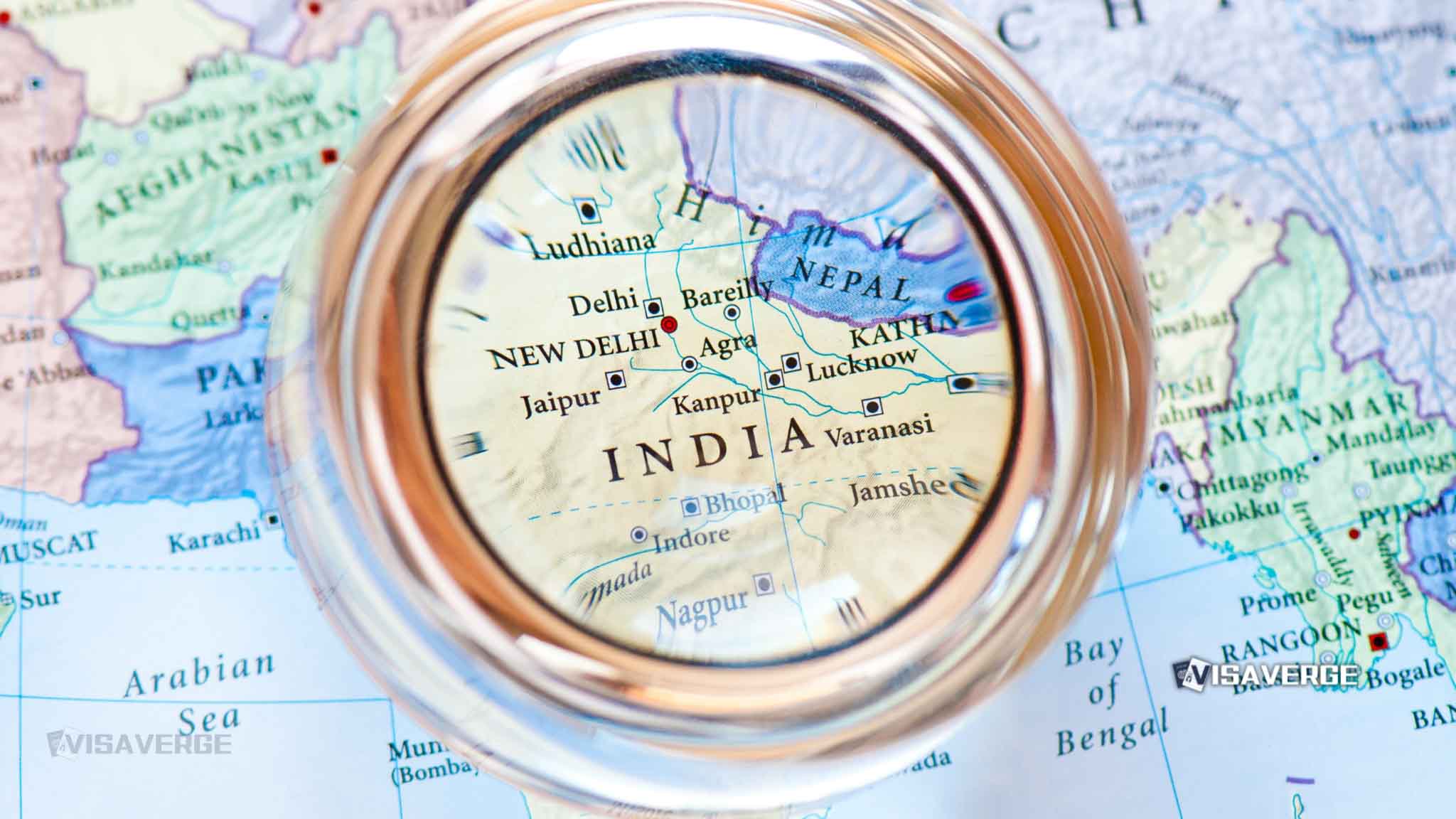
Indian applicants now face closer examination of their finances, academic records, English-language test results and stated reasons for study. Authorities can also conduct deeper checks, including contacting institutions to verify transcripts and contacting banks to verify financial statements.
The move places India in the same risk tier as Nepal, Bangladesh and Bhutan, which Australia also reclassified to AL3 at the same time. Pakistan remained in the highest-risk category.
Assessment Level 3 is the highest-risk category in Australia’s student visa evidence framework. For applicants, the practical effect is heavier scrutiny of paperwork and more pressure to present records that match across every part of an application.
That matters because India remains one of Australia’s largest sources of international students. Indian students account for nearly 140,000 of approximately 650,000 total enrolments, making any visa rule change for that cohort important for applicants, education agents and institutions.
The four South Asian countries shifted to AL3 — India, Nepal, Bangladesh and Bhutan — represent nearly one-third of 2025 enrolments. That gives the reclassification a wider regional effect beyond India alone.
Under the tougher approach, Indian students must provide stronger financial documentation. That includes detailed bank statements covering three to six months, clear proof of income sources, and pay stubs or tax returns if applicable.
Those requirements raise the standard for showing that tuition and living costs can be supported by genuine funds. Applications with gaps, mismatched figures or weak evidence face more pressure under the new setting.
Academic records also face closer inspection. Applicants must provide authentic academic documentation, proof of academic progress, justification for course selection and explanations for any study gaps.
That means course choice itself comes under sharper review. A student must not only submit certificates and transcripts, but also show a clear connection between past study and future plans where officers seek that explanation.
English-language evidence is also under closer examination. IELTS and PTE results are checked more closely as part of the stricter process.
The broader test is whether an applicant satisfies the Genuine Student requirement. Officials now conduct deeper verification of student intent, looking more closely at whether the information submitted fits the claimed purpose of study.
That scrutiny can extend beyond the file itself. Authorities may contact institutions to verify transcripts and contact banks to verify financial statements, adding another layer to how applications are assessed.
For applicants, that combination points to longer processing times and less predictable outcomes. Countries in AL3 face greater document checks and a higher rejection risk.
Australian authorities tied the reclassification to “emerging integrity issues“. The concerns they cited centre on the reliability of documents and on whether some applicants genuinely intend to study.
Among the issues flagged were forged documents and fake degrees in India. Authorities also cited increasing fraudulent financial and academic documentation, misrepresented student intentions and inconsistent information.
They also pointed to higher noncompliance rates after arrival. Together, those concerns drove the decision to move India into the highest-risk category.
Phil Honeywood, chief executive officer of the International Education Association of Australia, described the pressure in blunt terms, saying that “student applicants who couldn’t get into” the US, UK, and Canada “are increasingly applying to come to Australia, and in many cases we’ve seen an increase in fraudulent financial and academic documents.”
His comment links the policy change to wider shifts in global student demand. It also reflects concern inside Australia’s education sector that integrity problems in a share of applications can affect how an entire market is treated.
For Indian students with genuine applications, the immediate consequence is not a ban or a cap. It is a more demanding process in which every supporting document carries more weight.
That starts with money. A bank statement alone may not be enough if it does not align clearly with claimed income, family support or other evidence provided in the file.
It continues with academics. Transcripts, degrees and records of study progress must appear authentic and internally consistent, and any interruption in study must be explained rather than left for an officer to infer.
Course choice also becomes more sensitive under AL3. If a proposed program appears disconnected from prior education or personal circumstances, applicants may need to explain why that study path makes sense.
Language results face the same tighter lens. A valid test score remains part of the application, but closer checking means any inconsistency between the test result and the broader profile may attract more attention.
For institutions, the change can affect admissions and enrolment planning because India is such a large student source. A slower visa pipeline or a higher refusal rate can alter how many accepted students arrive on campus.
That effect may stretch across universities, vocational providers and other parts of the sector that recruit heavily from South Asia. Even where demand stays strong, timing becomes more uncertain when applications undergo extra checks.
Education agents and advisers working with Indian families also face a tougher environment. Files that once may have moved under Assessment Level 2 now have to withstand Assessment Level 3 review.
That raises the premium on complete and verifiable applications. Students who rely on borrowed paperwork, incomplete records or inconsistent explanations are more exposed under the revised standard.
The regional dimension also matters. Nepal, Bangladesh and Bhutan joined India in the move to AL3, showing that Australian authorities saw concerns across several South Asian markets rather than in one country alone.
Pakistan’s position did not change because it already remained in the highest-risk category. In practice, that means several of Australia’s large or closely watched South Asian source countries now sit in the toughest evidence tier.
For prospective students, the message is straightforward: prepare for heightened checks. The need for authentic academic and financial records becomes more pressing when officers can verify information directly with banks and institutions.
That preparation starts long before an application is lodged. Students need records that are detailed, consistent and easy to authenticate, especially where family finances, interrupted study or a changed course direction form part of the case.
The change also puts more importance on how every part of a Subclass 500 application fits together. Financial evidence, academic history, English proficiency and stated intent cannot pull in different directions without attracting attention.
Applicants with genuine plans may still succeed, but the margin for error narrows under AL3. An unexplained gap, a weak paper trail or inconsistent information can carry more weight when a country sits in the highest-risk bracket.
Australia’s decision therefore reaches beyond a technical visa classification. It reshapes the path for Indian students at a time when India remains central to the country’s international education system.
Nearly 140,000 Indian enrolments mean the policy touches a large student population, while the inclusion of India, Nepal, Bangladesh and Bhutan means nearly one-third of 2025 enrolments now come from countries placed in AL3. For many applicants, the new reality is a visa process defined by closer checks, heavier financial documentation demands and the harder standard that comes with Assessment Level 3.