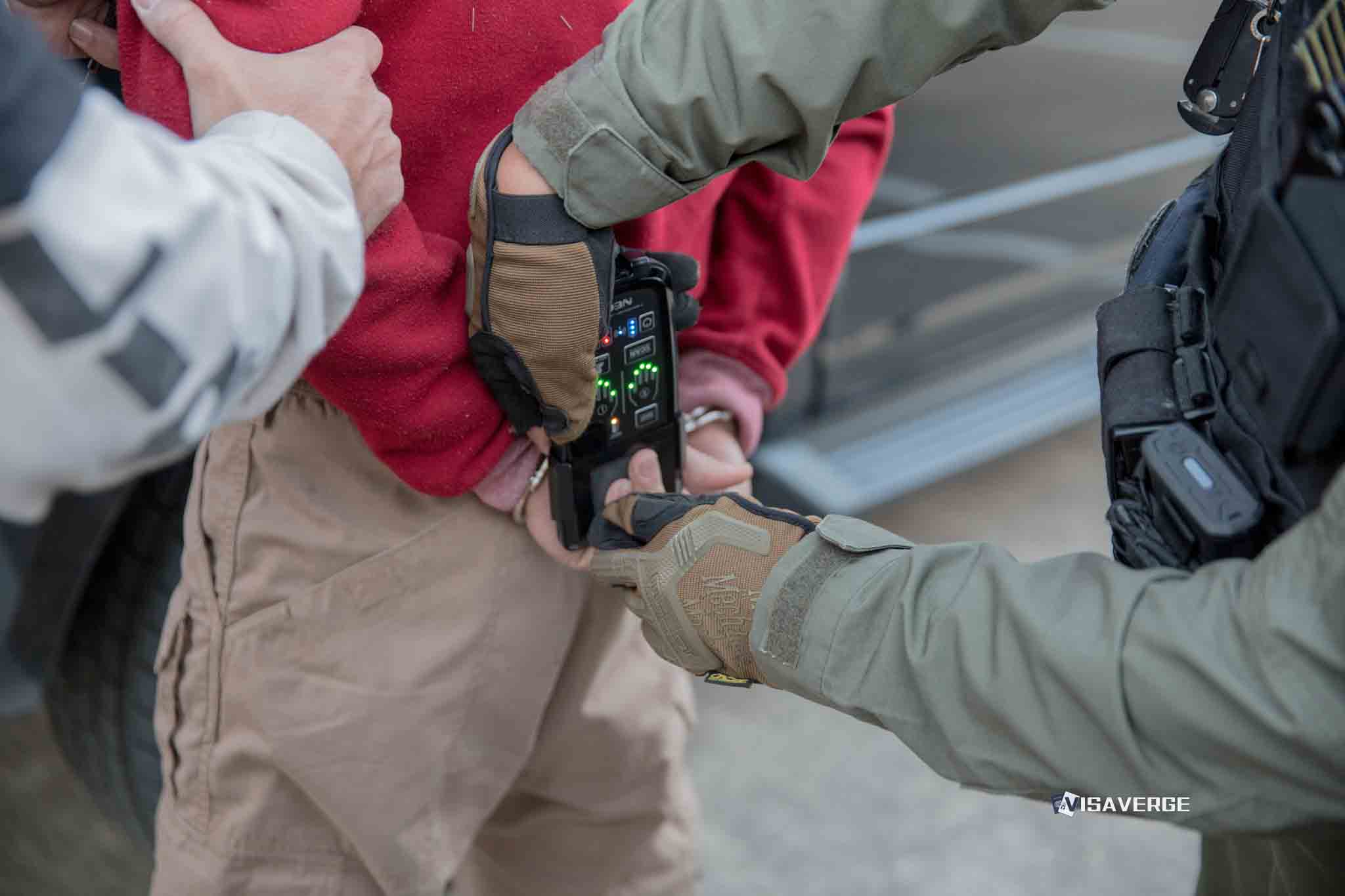
- Alabama’s HB 13 would allow state and local police to arrest people suspected of immigration violations.
- The bill sets probable cause as the threshold for arrests and detention by local law enforcement.
- Opponents warn the measure could lead to unconstitutional racial profiling based on ethnicity or language.
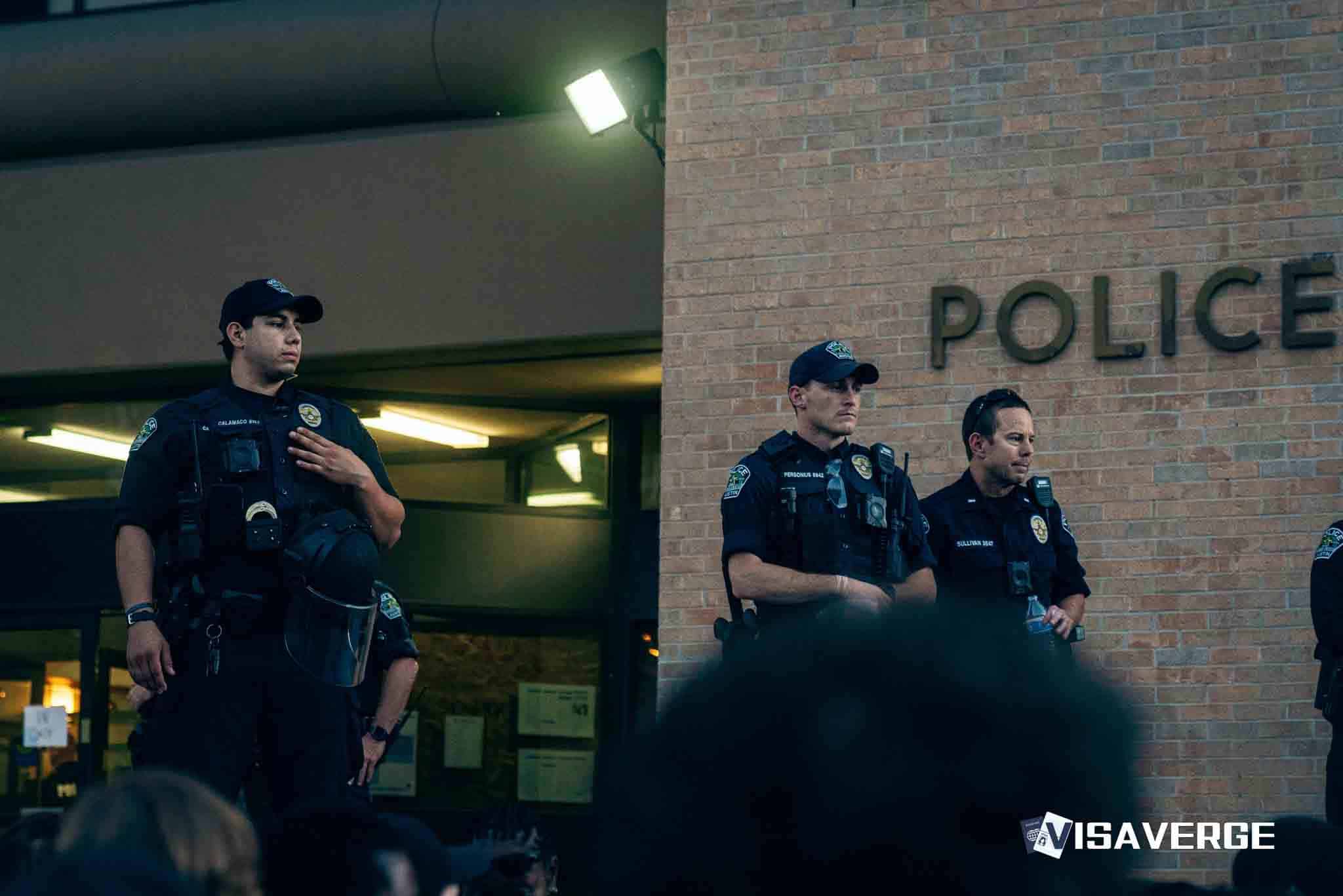
(ALABAMA) — Alabama lawmakers advanced HB 13 after the House Judiciary Committee approved the measure on January 29, 2026, moving a proposal to the full House that would let state and local police arrest people based on suspected immigration violations.
State Rep. Ernie Yarbrough, a Republican from Trinity, sponsored the bill, which was on the regular calendar for House consideration as of February 17, 2026. At that point, the proposal remained pending in the legislature and had not become law.

HB 13 would expand local law enforcement involvement in immigration enforcement by authorizing officers to arrest individuals they suspect are in the country unlawfully. The bill sets probable cause, rather than reasonable suspicion, as the threshold for an arrest.
That distinction sat at the center of the debate over the measure. Supporters presented it as a way to give local officers legal tools to work with federal agencies, while opponents said the bill would still invite stops driven by subjective judgments before an arrest ever occurs.
The proposal would also let state and local agencies enter into agreements with federal agencies including ICE and the Department of Homeland Security to enforce immigration law. If enacted, that would draw county and municipal law enforcement more directly into work that is usually associated with federal immigration authorities.
| India | China | ROW | |
|---|---|---|---|
| EB-1 | Apr 01, 2023 ▲31d | Apr 01, 2023 ▲31d | Current |
| EB-2 | Jul 15, 2014 ▲303d | Sep 01, 2021 | Current |
| EB-3 | Nov 15, 2013 | Jun 15, 2021 ▲45d | Jun 01, 2024 ▲244d |
| F-1 | May 01, 2017 ▲174d | May 01, 2017 ▲174d | May 01, 2017 ▲174d |
| F-2A | Feb 01, 2024 | Feb 01, 2024 | Feb 01, 2024 |
Backers tied the bill to a broader push on immigration enforcement in Alabama and beyond. This is the second year the bill has been considered in the Alabama legislature, and its path this year followed a familiar route: committee approval first, then movement to the House calendar.
A similarly named federal version, also named the Laken Riley Act, was sponsored by U.S. Senator Katie Britt. In Alabama, Yarbrough argued that local officials still need a clearer legal basis to cooperate with federal agencies.
“nothing’s changed between now and last year when the committee passed that bill,” Yarbrough said, according to the legislative debate described in the bill’s consideration. His argument framed HB 13 as a continuation of an effort already underway, not a new departure from the position he took in the previous session.
In practice, the bill sets out more than arrest authority. It establishes procedures for arrest and detention of individuals suspected of being undocumented, transportation of undocumented immigrants to federal facilities, standard intake and booking procedures in county and municipal jails, and reporting requirements to federal authorities.
Those provisions would shift a set of day-to-day duties onto local agencies if the bill becomes law. Officers would not only make arrests under the bill’s framework; county and municipal jails would also be drawn into detention, booking and transfer steps that connect local agencies to federal enforcement.
Transportation is one of the clearest examples. Under the bill, local agencies would have a role in moving undocumented immigrants to federal facilities, extending their responsibilities beyond an initial stop or arrest and into the handoff to federal custody.
Booking and intake procedures would also become part of that chain. By directing county and municipal jails to use standard intake and booking procedures in these cases, the proposal would place immigration-related detention inside local jail operations.
The reporting requirements push in the same direction. HB 13 would require communication with federal authorities, creating a formal reporting link between local detention or arrest decisions and federal immigration agencies.
That combination of arrest power, detention rules, transport provisions and reporting obligations explains why the bill has drawn intense attention. It would not create a federal immigration rule; it is a state legislative proposal that would enlarge the role Alabama’s local officers could play in enforcing immigration law.
Supporters have cast that shift as cooperation. Opponents have cast it as a risk.
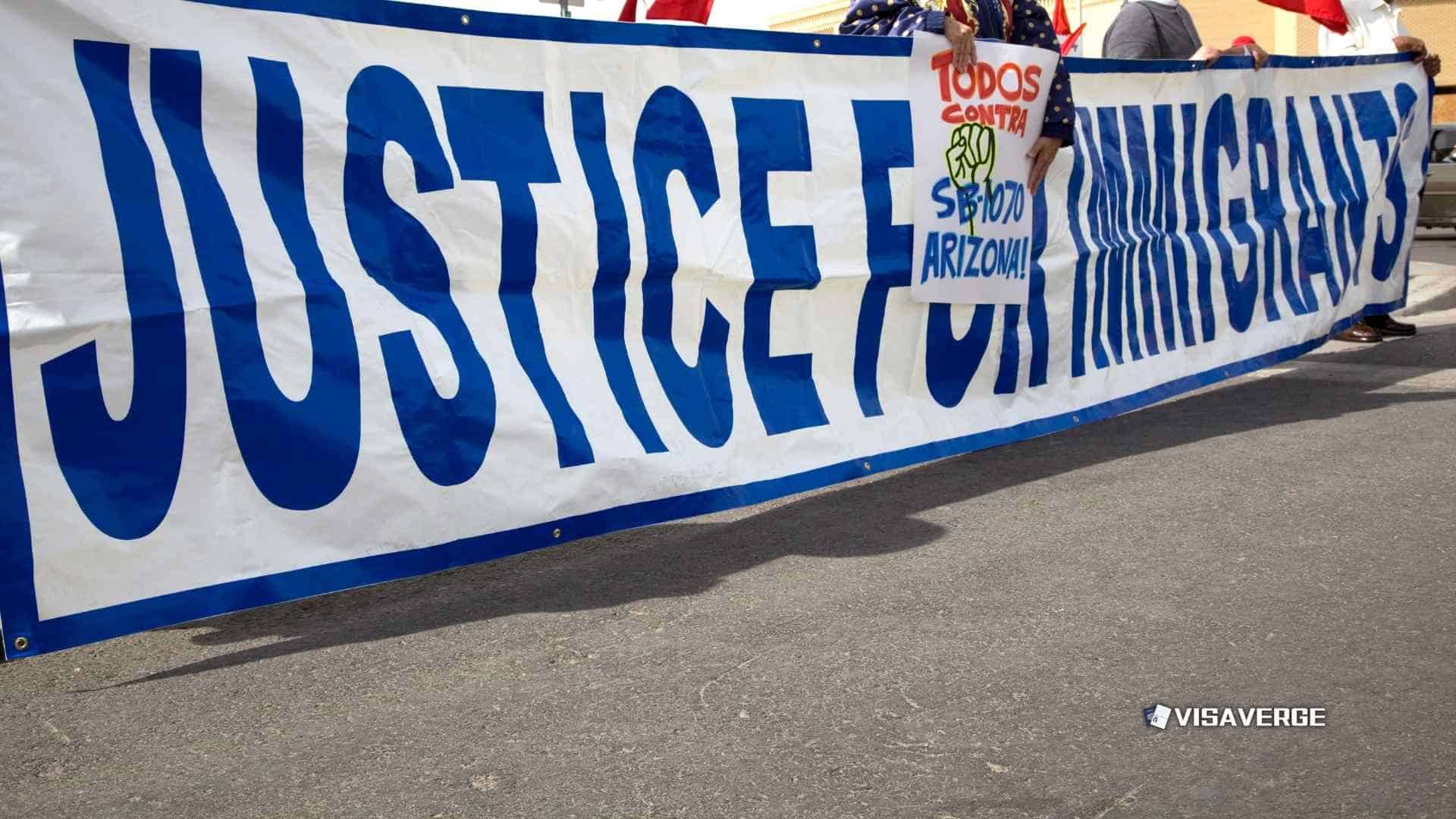
During a public hearing, immigrant-rights advocates and civil-rights groups criticized the measure and warned that it could lead to racial profiling. Their objections focused not only on who might be arrested under HB 13, but on who might be stopped, questioned or detained before an arrest decision is made.
State Rep. Chris England, a Democrat from Tuscaloosa, argued that the bill’s probable cause standard for arrest did not resolve those concerns because the stop that comes first could still rest on a lower threshold. He said officers would initiate stops based on reasonable suspicion, and he linked that concern to recent U.S. Supreme Court guidance from Justice Brett Kavanaugh.
England said that standard can include ethnicity and English proficiency as factors. He said the bill “encourages law enforcement officers.to engage in the sort of racial profiling that history has told us has generally been deemed unconstitutional.”
His criticism went to the bill’s mechanics as much as its purpose. Even if probable cause is the threshold for an arrest, England argued, the encounter that sets events in motion may begin on much less certainty, which opponents say raises the risk that people will be singled out because of how they look, where they come from or how they speak.
That concern widened the debate beyond undocumented immigrants alone. Critics said the measure could also affect citizens, lawful residents and people with valid work authorization if officers rely on suspicion tied to ethnicity, accent or English proficiency when deciding whom to stop.
Allison Hamilton, executive director of the Alabama Coalition for Immigrant Justice, made that point directly during the debate over the bill. She said “foreign-born” individuals do not necessarily lack authorization to be in the United States.
Hamilton pointed to employers in southeast Alabama as an example, noting that poultry plants in the Enterprise and Dothan areas employ migrants on valid work permits. Her warning was that a foreign-born person’s presence, appearance or language cannot by itself establish unlawful status.
That argument sharpened one of the core objections raised by immigrant-rights groups. In their view, a bill built around suspicion of immigration violations risks sweeping in people who are lawfully present or authorized to work, especially when those judgments are made in roadside stops or other routine encounters with local police.
For supporters, the same framework represents an effort to align state and local enforcement with federal immigration priorities. The bill explicitly permits agreements with ICE and the Department of Homeland Security, signaling that Alabama lawmakers backing HB 13 want local agencies to take a more active role in support of federal enforcement.
For critics, that cooperation is exactly what makes the proposal consequential. They say it would pull local police and jails deeper into immigration work and increase the chance that ordinary policing becomes entangled with immigration status checks.
The legislation’s timing also matters in Montgomery. Because HB 13 is in its second year of consideration, lawmakers and advocates are returning to arguments that were already familiar in the statehouse: one side saying local officers need more authority to cooperate with federal agencies, the other warning that expanded authority will fall unevenly on immigrant communities and anyone perceived to be part of them.
By February 17, 2026, the bill had cleared the House Judiciary Committee and landed on the House calendar. That marked a decisive step forward for the proposal, even as resistance continued from Democratic lawmakers, immigrant-rights advocates and civil-rights groups.
Political observers expected passage, though not without continued resistance. That left HB 13 at a pivotal point in the Alabama House, with supporters pressing a bill they say gives local law enforcement tools to work with ICE and other federal agencies, and opponents warning that the same powers could begin with suspicion tied to ethnicity or English proficiency.
The fight over HB 13, then, turned on a narrow legal phrase with broad consequences: probable cause. Supporters held it up as a safeguard written into the bill. Opponents argued that the people most affected may feel the force of the law much earlier, at the moment an officer decides whom to stop.