(NEW YORK, USA) Air Canada has secured a rare FAA waiver that protects its valuable LaGuardia slots after engine maintenance problems forced the carrier to cut flights, the U.S. Federal Aviation Administration said on December 9, 2025. The decision allows Air Canada to keep four historic slots at New York’s LaGuardia Airport for the period March 31 to April 30, 2025, even though the airline failed to meet the FAA’s usual rule that airlines use their slots at least 80% of the time. Without the waiver, the carrier risked losing hard‑won access to the congested airport.
Why the waiver was requested
The waiver centers on Air Canada’s Airbus A220-300 aircraft, which use Pratt & Whitney PW1500G engines that have been stuck in prolonged maintenance.
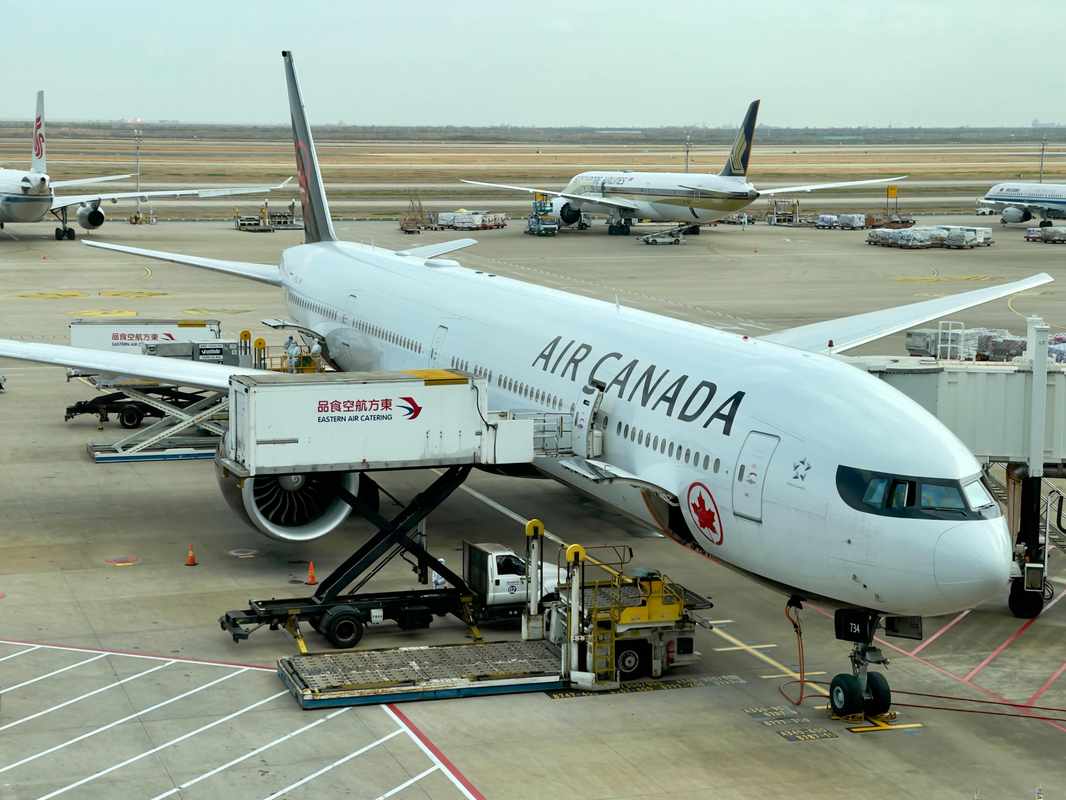
- The FAA said about 5% of Air Canada’s A220 fleet was grounded in early 2025 because engines spent far longer than expected in the shop.
- Those unexpected delays, combined with a shortage of pilots at the airline’s regional partner Jazz, meant the carrier could not operate enough flights to satisfy the 80% usage requirement tied to its LaGuardia slots.
- Demand for cross‑border travel between Canada and the United States remained strong despite the operational problems.
How the slot rules normally work
Under normal FAA rules, airlines that fail to use at least 80% of their allocated slots during a season can lose them, clearing the way for competitors at busy airports like LaGuardia.
- Regulators treat those slots as a “use it or lose it” right, designed to stop carriers from hoarding access and to keep traffic flowing.
- For Air Canada, the combination of engine problems and staffing gaps threatened to trigger that penalty, even though the underlying cause was linked to manufacturer‑related maintenance bottlenecks beyond the airline’s direct control.
Scope and conditions of the FAA waiver
The FAA waiver was granted on December 9, 2025 and applies only to the March 31 to April 30, 2025 portion of the Summer 2025 scheduling season.
The FAA granted a narrow, time-limited waiver (Mar 31–Apr 30, 2025) protecting four LaGuardia slots for Air Canada; slots cannot be transferred if the airline leaves the airport.
- It spares Air Canada from slot forfeiture for that single month by treating the missed flights as if they had operated for the purpose of calculating usage.
- Officials described the relief as a narrow, time‑limited response to unusual technical problems rather than a broad policy shift.
- The agency attached a key condition: Air Canada may not transfer the protected LaGuardia slots to another carrier if it later ends its own operations at the airport.
Waiver summary table
| Item | Details |
|---|---|
| Waiver granted | December 9, 2025 |
| Applies to | March 31 – April 30, 2025 (portion of Summer 2025 season) |
| Slots protected | Four LaGuardia slots |
| Condition | No transfer of slots to another carrier if Air Canada exits airport |
Why this exception is notable
Exceptions of this kind are uncommon in the tightly managed world of LaGuardia slots, where every landing and takeoff window carries high commercial value.
- By granting the waiver, the FAA effectively acknowledged that manufacturer‑related delays can ripple through airline schedules in ways carriers cannot fully offset.
- The agency noted that the PW1500G maintenance issues, compounded by broader supply‑chain strains, contributed to the bottlenecks.
- Officials signaled that these engine‑related constraints are expected to ease later in 2025 as parts availability improves and overhaul facilities work through backlogs.
The FAA framed the relief as limited and technical — not a rewriting of slot policy — recognizing that external maintenance bottlenecks can create exceptional operational impacts.
Impact for travelers and the market
For travelers, the decision means Air Canada retains flexibility to rebuild its U.S.–Canada schedule at LaGuardia rather than ceding ground to rivals.
- According to analysis by VisaVerge.com, slot losses at key U.S. gateways can quickly reduce options for foreign nationals who rely on specific routes for consulates, family visits, or work assignments.
- The FAA waiver is a technical regulatory move, but it carries real‑world consequences for business travelers, international students, and newcomers who need reliable cross‑border flights for visa interviews, school calendars, or job start dates.
Context on slot control and LaGuardia
LaGuardia is one of a handful of slot‑controlled airports in the United States, meaning airlines must hold specific permissions for each takeoff and landing instead of simply scheduling flights at will.
- The system, overseen by the Federal Aviation Administration, aims to manage congestion and limit delays at airports where demand would otherwise overwhelm runway capacity.
- Losing even a small set of LaGuardia slots can hurt an airline’s ability to offer convenient schedules, connect passengers to wider networks, and maintain a visible presence in the competitive New York market.
Air Canada’s operational explanation
Air Canada told regulators that it had reduced its schedule after about 5% of its A220 fleet was grounded for extended engine servicing, directly affecting the four LaGuardia slots at issue.
- The airline’s regional partner Jazz also faced a pilot shortage, further limiting capacity to keep planned flights in the air.
- Those combined factors pushed slot usage below the 80% mark and triggered the request for relief.
- Air Canada first sought help in March 2025, and the eventual waiver means it will not be punished for cancellations tied to that one‑month window in Summer 2025.
Limits of the relief and regulatory message
Even so, the relief is strictly limited.
Reminder: slot rules are still strict outside the waiver window. The ‘use it or lose it’ principle can trigger reallocation, so explore alternative routes and keep plans flexible during peak periods.
- It applies only to March–April 2025 and does not cover other periods when Air Canada may also have fallen short because of the same engine issues.
- By drawing such a sharp boundary, the FAA sought to protect the integrity of its slot rules while recognizing the disruptive effects of the Pratt & Whitney maintenance delays.
- The message to airlines: they can seek tailored help when forces outside their control strike, but they should not expect broad blanket waivers when schedules go wrong.
Looking ahead
The FAA has indicated that engine‑related bottlenecks should ease later in 2025 as supply chains recover, which could allow Air Canada and other carriers using similar technology to restore more normal operations.
- For now, the LaGuardia decision underscores how mechanical problems in a single aircraft type can affect market access, competition, and travel options between countries.
- By granting a focused FAA waiver while holding firm to its broader 80% rule, regulators preserved Air Canada’s foothold in New York without rewriting the system that governs LaGuardia slots.
- For passengers whose immigration plans, family visits, or business trips depend on predictable cross‑border flights, that balance between flexibility and discipline may matter as much as any policy change.
The FAA’s approach signals that technical crises will be judged carefully and that relief will be targeted rather than categorical.
The FAA granted Air Canada a limited waiver on December 9, 2025, protecting four LaGuardia slots for March 31–April 30, 2025. The move addresses prolonged PW1500G engine maintenance that grounded about 5% of the A220-300 fleet and pilot shortages at Jazz, which pushed slot usage below the 80% requirement. The waiver treats missed flights as if operated for that month, bars slot transfers if Air Canada leaves LaGuardia, and is framed as a narrow, technical relief rather than a policy change.
Live Government Data
State Dept • CBPBusiest Border Crossings
- Nogales 120 min
- San Ysidro 100 min
- Nogales 90 min