- Governor Mike Braun signed Senate Bill 76 mandating public institutions cooperate with federal immigration enforcement agencies.
- The Indiana Fairness Act prohibits sanctuary policies in universities, hospitals, and local governments throughout the state.
- Noncompliant institutions face civil fines of $10,000 and the potential loss of state funding under the law.
(INDIANA) — Governor Mike Braun signed Senate Bill 76 into law on March 5, 2026, ordering Indiana public institutions to tighten cooperation with federal immigration enforcement and setting off an immediate backlash from student and faculty advocates who warned it will deepen a “culture of fear” on campus.
Braun’s signature turned SB 76, branded as the Indiana Fairness Act and enacted as Public Law 106, into a statewide mandate that reaches public universities, hospitals and local governments, and also sets compliance expectations for employers. The law prohibits “sanctuary” policies and pushes institutions to align their practices with federal enforcement activity.
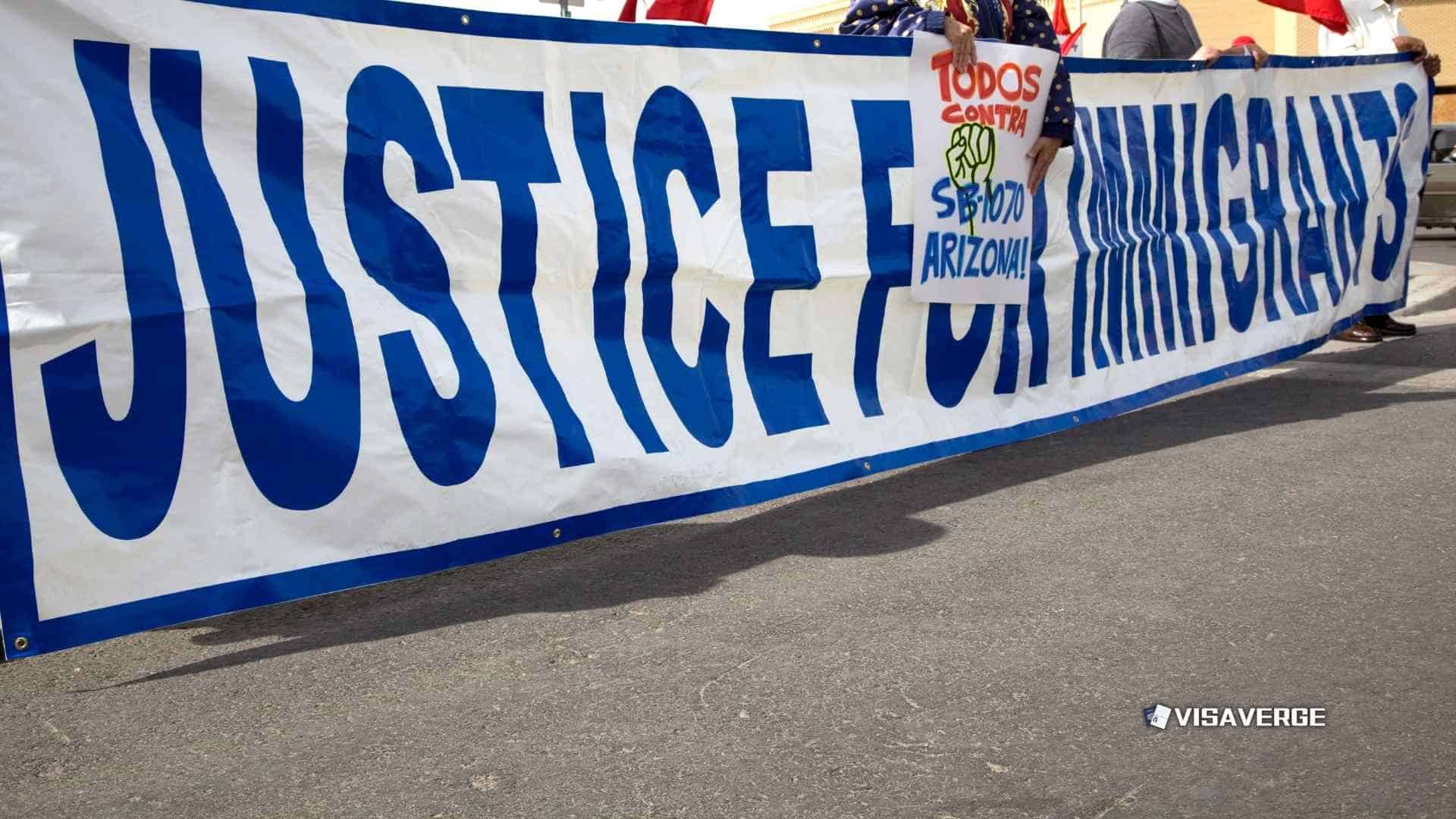
Indiana University, one of the most visible public institutions affected, quickly became a focal point for debate as student groups weighed what state-mandated compliance will mean for day-to-day campus life, interactions with police and administrators, and the willingness of international students to report problems or seek help.
Federal officials and agencies aligned their messaging with the law’s enforcement premise as Braun signed it. In an official update dated March 5, 2026, USCIS said it is “restoring integrity to our nation’s immigration policies” and has “once again empowered law enforcement officers to enforce immigration laws. in historic numbers.”
Secretary of Homeland Security Noem, also on March 5, 2026, framed immigration policy around benefits to Americans, saying the department’s goal is to ensure that “any form of legal immigration will benefit the U.S. citizen and does not pose harm to our well-being and way of life.”
Tom Homan, described as border czar, praised the approach during a visit to Indiana, calling the legislation the “gold standard” for state-federal cooperation. Homan described it that way on October 15, 2025/February 2026, after the proposal moved from HB 1039 and later became incorporated into SB 76.
SB 76’s central operational requirement bars public universities, hospitals and local governments from enacting “sanctuary” policies and directs them to fully comply with U.S. Immigration and Customs Enforcement detainer requests. Detainers typically ask local jails to hold individuals for an additional 48 hours.
The law also gives Indiana Attorney General Todd Rokita authority to impose civil fines of up to $10,000 per violation against any university or governmental body found to be in noncompliance. SB 76 additionally allows the state to withhold funding from schools that do not cooperate with ICE, a provision campus groups pointed to as a direct compliance lever.
Employers face new obligations under the law’s employment provisions. SB 76 makes it illegal for Indiana universities to knowingly hire or employ undocumented immigrants, and it requires businesses and institutions to use E-Verify.
Beyond specific mandates, SB 76 expands its reach to both “written and unwritten” policies that might restrict cooperation with federal officials. It removes the “mens rea” (intent) standard, meaning institutions can face penalties even for unintentional noncompliance, a shift that critics said will pressure administrators and employees to err on the side of cooperation.
Advocates at Indiana University argued that the law alters what they saw as a campus posture that once leaned toward student protection. They said a compliance-first approach will change how students relate to campus authorities and could reduce trust, particularly among international students who fear routine interactions might carry immigration consequences.
Margaret McConville, treasurer for IU’s Young Democratic Socialists of America (YDSA), criticized the law in comments dated March 14, 2026. McConville said SB 76 promotes a “culture of fear” by making international students worry that any interaction with campus authorities could lead to deportation.
Advocacy groups also described behavior changes they said they were hearing from students as the law took effect. They reported students were “preparing for the worst-case scenario,” with some reportedly carrying legal papers at all times in case they are confronted by ICE agents.
Student organizing around immigration policy also shifted after enactment. Groups such as the Indiana Graduate Workers Coalition abandoned pushes for “sanctuary campus” status, citing SB 76’s explicit prohibition on “sanctuary” policies and the state’s ability to withhold funding from schools that do not cooperate with ICE.
Concerns extended beyond students to employees who may be asked to respond to federal officials. Matthew Jackson, an IU Graduate and Professional Student Government representative, raised worries on March 3, 2026, that the law is “very vague” and could lead to retaliation against university employees who ask for identification from federal agents before allowing them into classrooms.
The stakes on campus are heightened by the size of Indiana University’s international student population. As of Fall 2025, international students made up 27% of IU’s graduate and professional student enrollment, with over 5,600 total international students across the university system.
Supporters of the Indiana Fairness Act argued that the law sets clear expectations for institutions that receive public money and strengthens enforcement coordination. Braun, speaking upon signing the bill on March 5, 2026, said the law is intended to remove “criminal illegal aliens from our communities” and align Indiana with federal enforcement agendas.
Rokita, in a statement dated March 6, 2026, described the law as an enforcement tool for local agencies. “This new law makes it easier for local law enforcement to do the right thing. together, these reforms help advance our mission of combating illegal immigration in Indiana and protecting Hoosiers,” Rokita said.
State Senator Liz Brown, in comments dated March 14, 2026, cast SB 76 in terms of border authority and compliance demands for institutions. “At the end of the day, we are a sovereign nation only if we have secure borders. Universities, cities, and employers: obey the law or face repercussions,” Brown said.
The Indiana Fairness Act’s broad language and penalties also sharpened compliance pressure for hospitals and local governments, which now must consider how everyday interactions, records policies and staff training intersect with detainer requests and cooperation expectations. Universities, meanwhile, face overlapping obligations tied to employment practices, E-Verify use, and the risk of state financial consequences.
Readers seeking to review SB 76 directly can consult the bill text posted by the Indiana General Assembly at the Indiana General Assembly SB 76 text. Federal messaging tied to the March 5, 2026 enforcement framing appears in the DHS newsroom at DHS Newsroom, and the state’s enforcement posture appears in statements from the attorney general’s office at the Indiana Attorney General’s Office, as campuses and local agencies weigh what compliance will look like under Senate Bill 76.