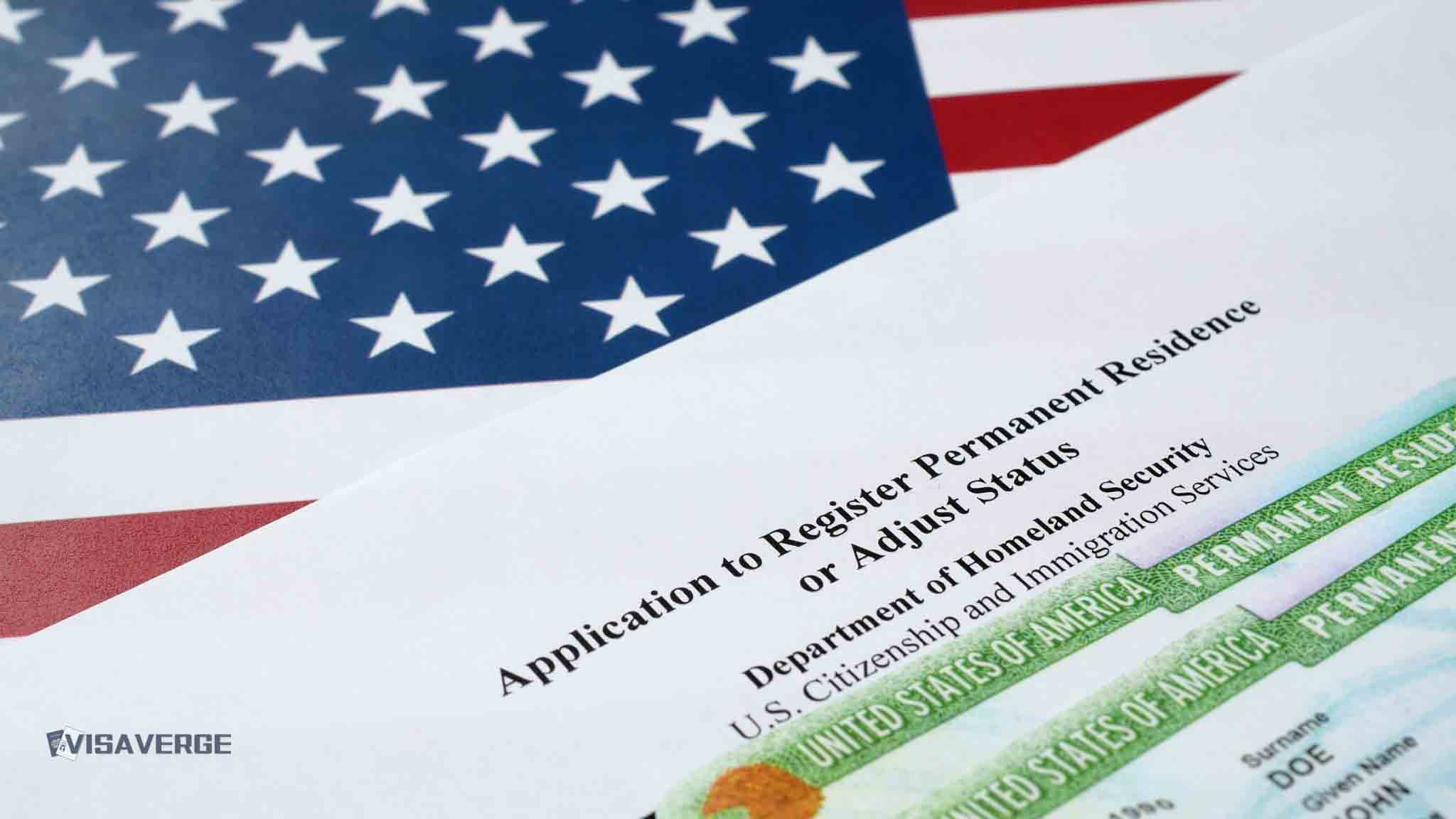
- The Senate blocked the SAVE Act on Monday as a Democratic filibuster stalled the citizen-voting bill.
- Republican states are tightening voter-registration checks using Department of Homeland Security databases for verification.
- Critics warn that millions of eligible citizens lack the required documents, risking potential disenfranchisement during purges.
(UNITED STATES) — The SAVE Act stalled in the U.S. Senate on Monday as a Democratic filibuster blocked action on the citizen-voting bill, while Republican-led states pushed ahead with their own citizenship-verification rules that rely in part on Department of Homeland Security databases.
State officials and lawmakers have moved to tighten voter-registration checks, expand list-maintenance efforts and add documentary requirements even without a federal mandate, sharpening a long-running fight over election administration that pits state-run systems against a push for national standards.
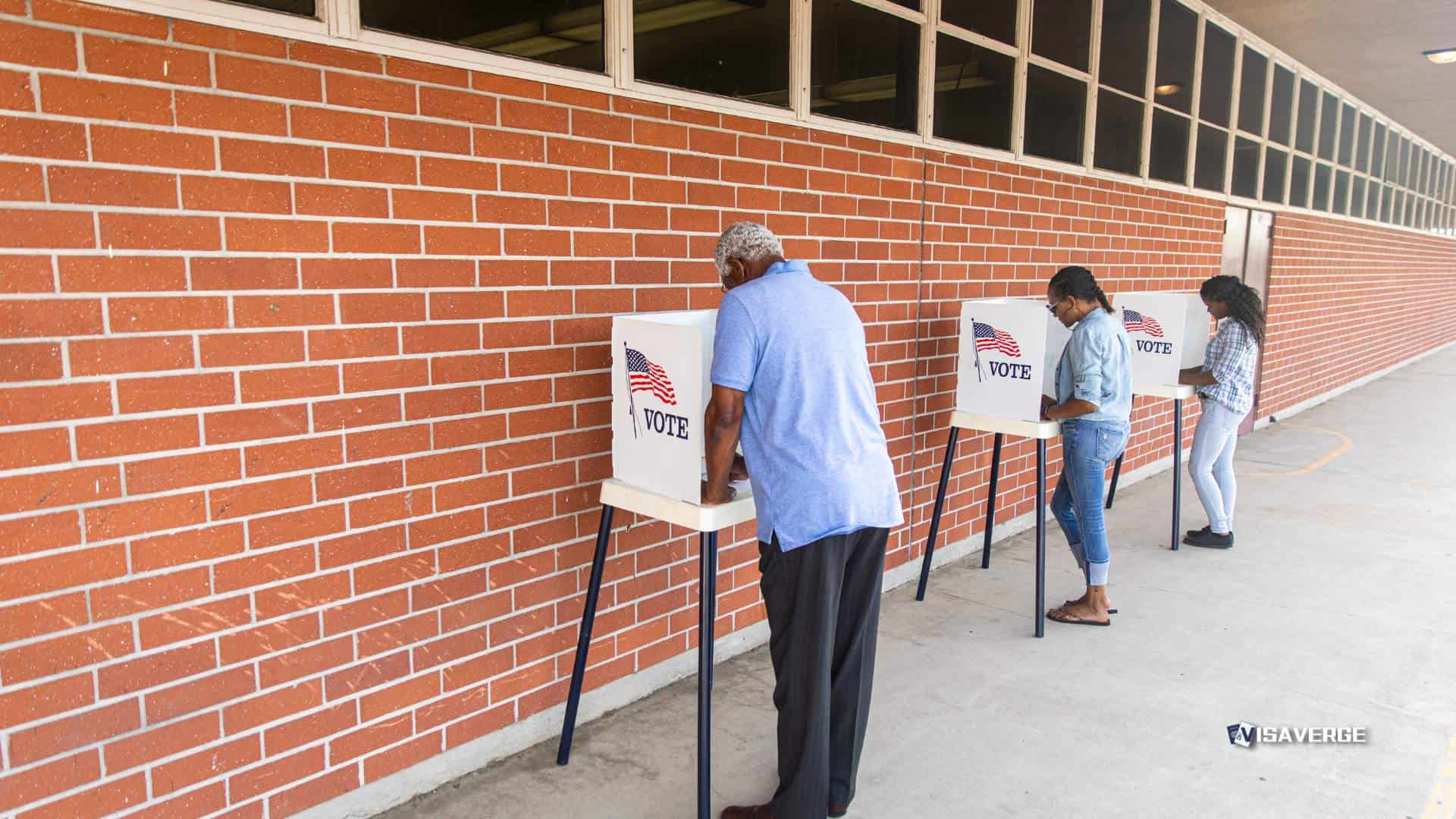
The Safeguard American Voter Eligibility (SAVE) Act, known as H.R. 2189, passed the House in February 2026 but has not advanced in the Senate, where Democrats have used the filibuster to prevent a final vote.
Pressure to act has increased as states adopt measures modeled on the bill, raising questions about access for eligible voters, the accuracy of database matching, and how far federal agencies can or should be pulled into state election operations.
Acting Secretary Benjamine Huffman, who took over after the departure of Secretary Kristi Noem on March 6, 2026, has emphasized the department’s commitment to “securing the integrity of federal, state, and local elections.”
Alongside that message, DHS officials have sought to tamp down fears about immigration enforcement at polling places. Deputy Assistant Secretary Heather Honey said on Feb. 26, 2026: “Any suggestion that ICE is going to be present at polling places is simply disinformation. There will be no ICE presence at polling locations for this election.” Votebeat reported the statement on its Votebeat site.
Noem, who promoted the SAVE Act before leaving office, pitched it at a Feb. 13, 2026 news conference in Phoenix as a way to “show that we’re serious about securing our elections” and to prevent non-citizens from “deciding elections,” PBS reported on its PBS site.
Operationally, a central tool in the new wave of state activity is a revamped version of the Systematic Alien Verification for Entitlements program. USCIS announced on Nov. 3, 2025 that it expanded SAVE so states can verify voter citizenship using only the last four digits of a Social Security number, according to a USCIS press release posted on USCIS.
The SAVE Act would make documentary requirements a national baseline for federal elections, even as states continue to set most registration and voting rules. The bill requires Documentary Proof of Citizenship, such as a passport or birth certificate, to register for federal elections, and it requires a photo ID to vote.
States already experimenting with verification have generally followed a sequence familiar to election administrators: collect registration data, compare it against other government records, and follow up when matching tools flag discrepancies. Those discrepancies can be caused by errors, outdated records or name changes, and they can trigger requests for documents or reviews that determine whether a voter stays on the rolls.
Supporters of the SAVE Act have framed it as a response to concerns about citizenship eligibility and confidence in election systems. The White House Office of Communications released a poll on March 5, 2026 claiming 71% support for the bill, including 69% of independents, on the White House Office of Communications website.
At the same time, early reports from states using the revamped SAVE tool have highlighted the risk of mismatches at scale. Texas and Missouri have reported that the system misidentified hundreds of citizens as non-citizens, and in Travis County, TX, roughly 25% of those flagged had already provided proof of citizenship.
As of March 2026, 26 states have entered into agreements with USCIS to use the revamped SAVE database for mass-verification of their voter rolls. Election officials using the tool must still decide how to handle a match that comes back as uncertain or negative, including whether to contact the voter, request documents or refer a case for further review.
The consequences of those decisions vary by state, because some measures apply only to new registrants while others order broad checks of existing voter files. That difference, election administrators have said in past debates over list maintenance, can shape the volume of notices, the number of cases requiring manual review and the potential for eligible voters to face delays.
Several states moved in early March 2026 to build two-track systems that separate federal elections from state and local contests based on whether a person provides documentary proof of citizenship. South Dakota and Utah signed laws creating two-tier voting systems; those without DPOC can only vote in federal contests, modeled after Arizona’s bifurcated system.
Florida lawmakers have advanced a broader approach aimed at existing voters as well as new registrants. The Florida House passed a measure requiring election officials to verify the citizenship of all 14 million registered voters using driver’s license databases, an effort that would require large-scale matching across agencies and repeated updates.
In Michigan, supporters turned to the ballot after federal action stalled. Backers submitted 750,000 petition signatures on March 7, 2026 to place a proof-of-citizenship requirement on the November ballot, a step that would shift the issue from the legislature to a statewide campaign and a vote by the public.
North Carolina proposals would reach further into federal-state coordination by giving DHS direct access to the state’s entire voter registration list for automated scrubbing. Automation can speed up checks and flag large numbers of records quickly, but it also increases the importance of how matching rules handle partial data, typos and outdated information.
The national political stakes rose on March 8, 2026 when President Trump declared on social media that he would “sign no further legislation” until the SAVE Act reaches his desk, tying progress on other measures — including Department of Homeland Security funding — to the bill’s passage.
That leverage threat intersects with Senate procedure. Because the bill faces a Democratic filibuster, it would need a path to overcome it before reaching a final vote, and the standoff over the SAVE Act has become entangled with wider fights over budgets and legislative calendars.
For state officials, the mix of federal messaging and state experimentation has produced both new tools and new pressure. The USCIS expansion that permits verification using only the last four digits of a Social Security number lowers the amount of information needed to run checks, potentially expanding the number of records that can be processed quickly.
For voters and front-line election workers, documentary requirements can shift the burden of proof onto individuals who may not have ready access to specific papers. The Brennan Center for Justice estimates that 21.3 million eligible U.S. citizens do not have ready access to the documents, passports or birth certificates, required by these laws.
Access issues can be particularly acute for students living away from home, older voters who never needed a passport, and people whose legal names do not match older records because of marriage or other changes. When a record mismatch happens, eligible voters may need time to locate documents, request replacements, or resolve conflicting entries across databases.
Naturalized citizens face another set of challenges because status changes may not appear immediately in the databases used for verification. Advocates warn that naturalized citizens are disproportionately flagged by federal databases that may not reflect their updated status immediately, leading to “voter purges.”
Those error claims have surfaced in county-level reviews as states scale up database checks. Texas and Missouri have reported misidentifications affecting citizens, and officials in Travis County, TX found that roughly 25% of those flagged had already provided proof of citizenship, a sign that prior documentation may not always be captured in the specific data field being checked.
Several proposals, including the SAVE Act and the Michigan measure, also raise the stakes for election staff by adding potential penalties tied to mistakes in processing registrations. The SAVE Act and several state counterparts include provisions that would criminalize election workers who “mistakenly” register an individual who has not provided DPOC, a design that could increase caution in high-volume periods close to registration deadlines.
Supporters of tighter rules argue that documentary requirements and database checks deter improper registration and help maintain accurate rolls. Critics have focused on the risk that large-scale matching can sweep up eligible citizens, especially when a system flags records with incomplete information or when government files lag behind real-life changes.
DHS has publicly separated election-integrity messaging from immigration enforcement at polling places, with Honey’s Feb. 26, 2026 statement aimed at countering rumors of ICE involvement. Election officials in several states have also stressed in past disputes that polling sites are managed locally and that voting procedures are typically set by state law and administered by counties.
Even so, the reliance on federal databases adds a layer of intergovernmental dependency. When states use SAVE for mass verification, they depend on the accuracy and timeliness of federal data, and they must also design follow-up procedures — notices, cure periods and appeals — that can determine whether a flagged voter is removed, moved to inactive status, or restored.
Huffman’s comments about “securing the integrity of federal, state, and local elections” have come as the department plays multiple roles at once: providing verification infrastructure, responding to political claims about the conduct of elections, and trying to assure voters that immigration enforcement will not appear at polling sites.
For readers trying to sort political claims from operational rules, official channels can offer the clearest record of what agencies have announced and what programs are designed to do. DHS posts announcements and senior-official statements on its DHS Newsroom page.
USCIS also maintains an official description of the verification system and its intended uses on the USCIS SAVE Program Official Page, a resource states reference when deciding whether and how to use the database.
Registration requirements, proof rules, and any cure process generally come from state election offices and, in practice, local county clerks who manage records and communicate with voters. For a broader view of how laws differ across states, the National Conference of State Legislatures compiles voting law information on its NCSL voting laws resource.