- A federal court approved an $11.5 million settlement for 614 Mexican workers involved in a visa fraud scheme.
- Attorneys were awarded $3.45 million in fees for representing workers in the Kia and Hyundai labor dispute.
- The case involved misuse of TN visas where professional engineers were allegedly forced into manual assembly labor.
(ALABAMA) — A federal court awarded attorneys $3.45 million on June 1, 2026, approving the fee as part of an $11.5 million settlement for a class of about 614 Mexican workers who sued over an alleged visa fraud and labor exploitation scheme tied to Kia and Hyundai facilities.
The lawsuit, Aquino Martinez v. Mobis Alabama LLC et al., 3:22-cv-00145, covers workers who held TN (Trade NAFTA) visas between August 11, 2018, and the present. The settlement created a gross fund of $11,500,000, with the $3.45 million fee representing 30% of that total.
Free toolDS-160 Form Filling Online Helper Tool
Class members worked at facilities in West Point, Georgia, and Montgomery, Alabama. They alleged that recruiters and contractors brought professional Mexican engineers and technicians to the United States for one set of jobs, then placed them in another.
At the center of the case was an alleged international RICO scheme built on a bait-and-switch. Workers said employers and staffing intermediaries used TN visas, a category intended for professionals, to bring them in for engineering and technical roles, then pushed them into manual assembly line work with discriminatory pay and excessive hours.
The claims gave the case weight beyond a wage dispute. RICO, short for the Racketeer Influenced and Corrupt Organizations Act, is more commonly associated with broader fraud patterns than with workplace visa cases, and the workers argued that the recruitment, placement and labor practices formed that kind of pattern.
Those allegations focused attention on a visa category that has drawn less scrutiny than H-2A or H-2B programs. TN visas, created for certain professional occupations, became the mechanism that workers said recruiters used to move them into jobs they had not agreed to take.
Under the settlement terms, class members receive $30 for every week worked at the facilities under Fair Labor Standards Act relief. Eligible members of the racketeering class can also receive up to $16,800 each in fraud and RICO damages tied to relocation for what the complaint described as nonexistent professional jobs.
That compensation addresses several categories of loss identified in the case: unpaid wages, recruitment fees and relocation costs. The financial terms also mark one of the clearest monetary outcomes yet in a visa bait-and-switch case involving automotive supply chains in the Southeast.
Federal immigration agencies have framed misuse of professional visa categories in harder language over the past year. Department of Homeland Security and U.S. Citizenship and Immigration Services statements tied to separate enforcement actions show a zero-tolerance approach to visa fraud and unauthorized employment arrangements.
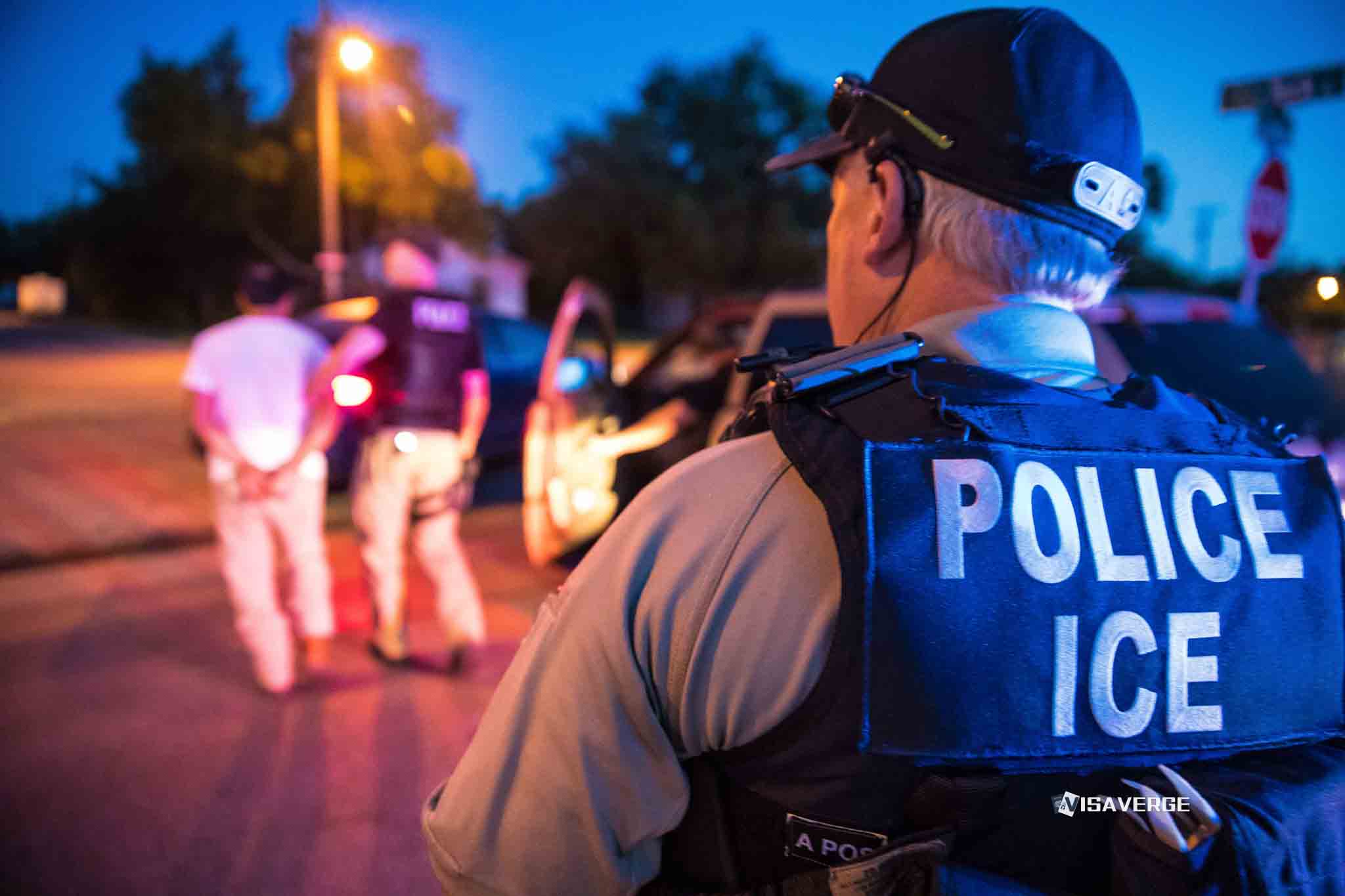
DHS Secretary Kristi Noem said on September 8, 2025, after a related raid at a Hyundai Metaplant, “This is a great opportunity for us to make sure that all companies are reassured that when you come to the United States, you’ll know what the rules of the game are. we encourage them to employ U.S. citizens and to bring people to our country that want to follow our laws and work here the right way.” DHS posted that statement through its news page.
Days earlier, on September 5, 2025, HSI Special Agent in Charge Steven Schrank said the enforcement action “.sends a clear message that those who exploit the system and undermine our workforce will be held accountable.” His statement linked the labor case to a broader federal push against visa misuse at Hyundai-linked sites.
USCIS also issued an announcement on June 1, 2026, the same day as the attorney fee award, highlighting what it called strong screening in a separate visa fraud case. In that release, posted in the USCIS Newsroom, the agency said, “USCIS’ robust screening and vetting uncovered an immigration fraud scheme. USCIS revoked all 66 work permits and began processes to deport the aliens involved.”
That USCIS statement concerned Venerando Aquino Martin, identified in the agency release as having been sentenced in a separate 242-application visa fraud scheme. The overlap in surname did not change the underlying point of the announcement: USCIS used the moment to reinforce that professional visa abuse now sits inside a more aggressive enforcement climate.
The class action settlement itself is a civil resolution, not a criminal judgment. Still, it lands after what DHS described as the largest single-site enforcement operation in the department’s history at a Georgia Hyundai plant in late 2025, where authorities detained 475 workers as part of broader enforcement actions.
That sequence matters to the workers because visa-status questions often shadow labor lawsuits of this kind. Many class members performed manual labor that did not match the professional roles attached to their TN (Trade NAFTA) visas, and the litigation helped frame them as alleged victims of fraud rather than as the architects of the mismatch.
Immigration records carry real consequences in that setting. A worker admitted on a professional visa can face future questions if government records show employment outside the authorized role, even when the employer or recruiter controlled the assignment from the start.
The settlement also puts multinational staffing practices under sharper review. Companies linked to large manufacturing operations now face more scrutiny over subcontractor risk, especially where outside recruiters or labor vendors handle foreign hiring, visa paperwork and on-site placement.
Kia and Hyundai were the industrial backdrop, but the complaint reached through layers of contractors and staffing agencies, including Allswell and SPJ Connect. That structure, common in large supply chains, can blur responsibility on paper while leaving workers to deal with recruitment debt, relocation costs and job terms that do not match what they were promised.
Worker advocates have pointed to that gap for years. This case gave them a large settlement, a court-approved $3.45 million fee for counsel, and a record that treated the allegations as more than isolated pay disputes at a single plant.
The payment structure gives class members a fixed formula on wage claims and a capped amount on fraud claims. Workers who qualify for both recoveries could receive weekly wage relief plus up to $16,800 for RICO-related damages, depending on eligibility within the settlement class.
Those figures also show how the court valued two distinct harms. One was labor performed under allegedly unlawful conditions; the other was the cost of being recruited across borders for professional jobs that, according to the complaint, did not exist in the form promised.
June 1 brought those strands together. On the same day the court approved the attorneys’ share of the $11.5 million settlement, USCIS publicized another visa fraud prosecution, reinforcing the government’s message that screening, revocations and enforcement now move alongside private civil litigation.
Federal agencies maintain public updates through the DHS news site, the USCIS Newsroom and the Justice Department’s Civil Division. In Alabama and Georgia, the workers’ case leaves a clear paper trail: a class of roughly 614 Mexican nationals, a court-approved $11.5 million settlement, and a $3.45 million fee award in a suit that put TN (Trade NAFTA) visas, labor recruitment and auto-sector staffing under the same legal lens.