- Lufthansa pilots have launched a 48-hour strike causing massive flight cancellations across Germany through Friday.
- Belgium’s nationwide walkout has halted all departures at Brussels Airport and grounded Charleroi Airport operations.
- Lufthansa is maintaining essential long-haul flights and protecting thirteen Middle East destinations due to geopolitical concerns.
(GERMANY) — Vereinigung Cockpit launched a 48-hour strike by Lufthansa pilots on Thursday that the carrier said would trigger widespread flight cancellations from German airports, while a separate nationwide walkout in Belgium shut down departures there for the day.
Travel disruptions on March 12 stem from two date-limited labor actions, not a coordinated “rolling” multi-country airport strike, with different effects for passengers depending on which airline and airport they use.
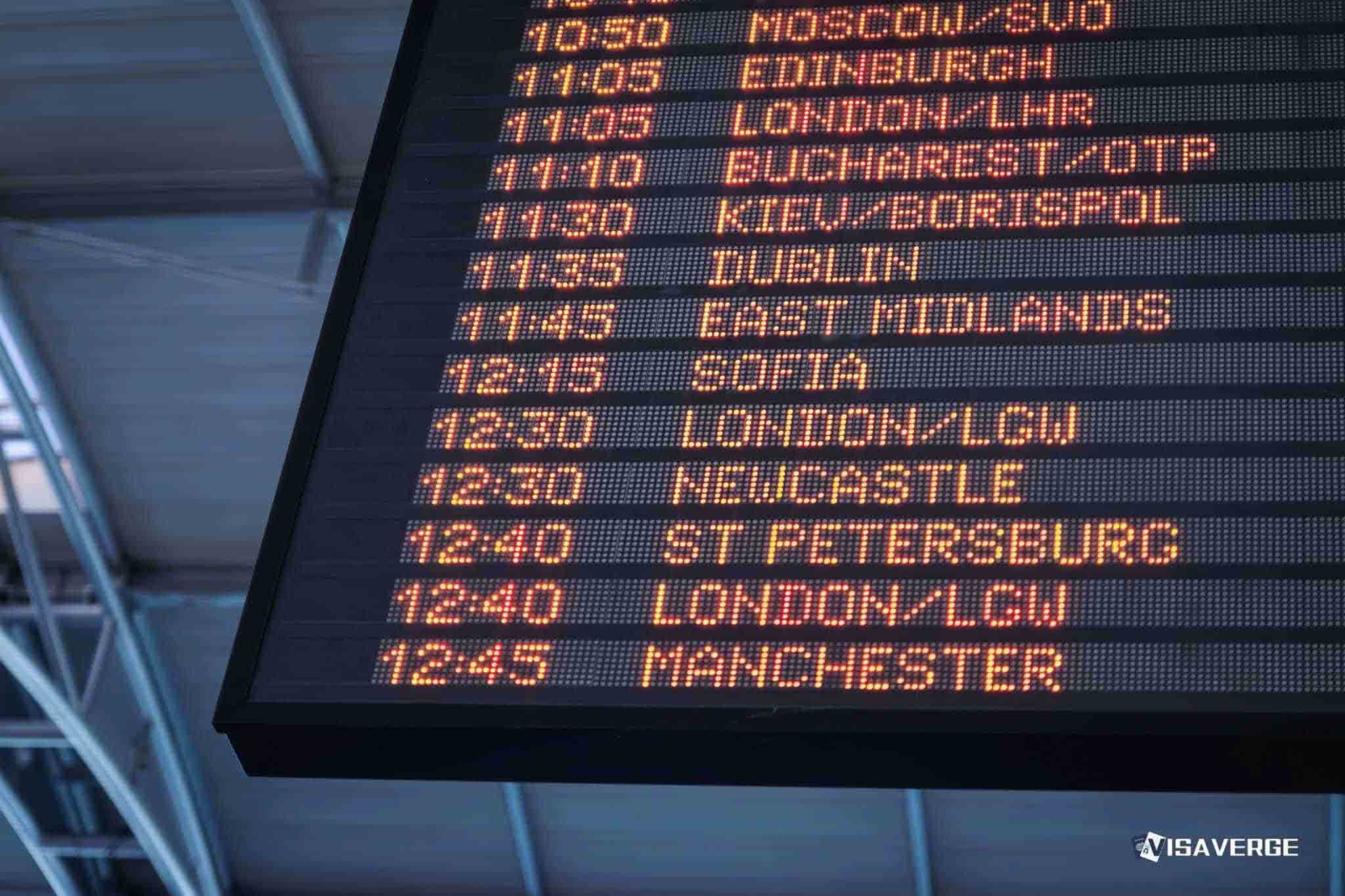
Lufthansa’s action runs from March 12–13 and targets the German airline group’s departures from Germany, while Belgium’s nationwide strike applies on March 12 only and can halt airport operations across sectors beyond airlines.
Vereinigung Cockpit (VC), which represents over 5,000 pilots, began the strike at 00:01 on Thursday, March 12, and set it to run until 23:59 on Friday, March 13, after pension negotiations failed.
VC President Andreas Pinheiro said Lufthansa failed to provide a concrete proposal as inflation eroded retirement security.
The Lufthansa pilots’ strike covers Lufthansa Passenger Airlines flights departing Germany on both days, along with Lufthansa Cargo departures from Germany across both days.
Lufthansa CityLine faces a different timetable, with disruption listed for March 12 only.
Lufthansa expects 80-90% cancellations overall during the strike, while also planning to keep a substantial share of operations running by shifting capacity and staffing.
The carrier said over 50% of flights, 60% of long-haul, and 80% of cargo would operate using larger aircraft, partner airlines, and volunteers, warning that schedules could still change at short notice.
Lufthansa’s operational plan means passengers may see cancellations concentrated on departures from Germany even if inbound flights still reach the country, with knock-on effects as aircraft and crews rotate through multiple legs.
Missed connections can spread beyond Germany when delayed or canceled segments disrupt later flights, even when those later flights do not depart from German airports.
Lufthansa treated certain destinations differently, exempting 13 Middle East destinations—Egypt, Azerbaijan, Bahrain, Iraq, Israel, Yemen, Jordan, Qatar, Kuwait, Lebanon, Oman, Saudi Arabia, UAE—because of geopolitical issues.
Carriers often aim to protect specific routes during industrial action when security or geopolitical considerations complicate rapid rescheduling.
Lufthansa directed customers to check status at lufthansa.com and said normal operations would resume March 14.
Francesco Sciortino, Lufthansa’s Francesco Sciortino, thanked volunteer pilots for helping sustain parts of the schedule.
Lufthansa CEO Carsten Spohr called the strike incomprehensible amid geopolitical tensions.
For passengers facing cancellations or long delays, European rules generally provide a framework for rerouting or refunds, plus duty-of-care obligations such as meals, hotel accommodation, and transport where applicable.
Compensation under EU rules depends on the cause and timing, and strike-related disruptions can be treated differently depending on who is striking and the circumstances.
Lufthansa also laid out carrier-specific flexibility separate from legal rights, offering free rebooking (March 10-23) or refunds via the Lufthansa Help Center for tickets issued ≤March 10.
For some German domestic itineraries, Lufthansa said passengers could exchange flights for Deutsche Bahn trains.
A prior February 12 strike cancelled 800 flights and stranded 130,000 passengers, a scale that highlights how a 48-hour action can ripple through tightly scheduled fleets.
In Belgium, major unions FGTB/ABVV, CSC/ACV, CGSLB/ACLVB called a 24-hour nationwide strike for March 12, protesting unpaid labor and pensions, a mix that can affect airport security, baggage handling, ground services, and transport links.
Even when airlines want to operate, airports can grind to a halt if staffing falls short in safety-critical functions, pushing disruption toward outright cancellations rather than manageable delays.
Brussels Airport (BRU) cancelled all departures for the strike day and said some arrivals could still occur, though passengers should expect delays and reduced services for baggage, immigration, and ground handling.
Airlines were expected to contact passengers with options, including rebooking or refunds, as the airport warned of operational constraints.
Belgian disruption also hit Brussels South Charleroi Airport (CRL), where all departures and arrivals were grounded due to staff shortages.
That kind of full stoppage can be especially hard on low-cost schedules built around same-day aircraft turns, limiting alternatives when planes and crews cannot position normally.
For travelers affected by Belgium’s strike, airlines may offer rebooking, refunds, or credits depending on each carrier’s policy and fare rules, with some operators advertising flexibility such as fee-free changes or credits.
EU duty-of-care expectations can still apply even when compensation is limited, and passengers may face added strain on the ground as transport disruptions reduce rail options, stretch metro intervals to every 20 minutes, and drive a taxi surge.
Authorities and airlines urged passengers to rely on real-time updates from airlines and airports because schedules can change quickly as carriers reposition aircraft and crews.
The disruptions remained confined to the verified actions and dates—Lufthansa flights from German airports on March 12-13 and Belgian airports on March 12 only—with no evidence of a third rolling strike or week-long cancellations beyond those windows.