- Health officials are investigating widespread illness at the Aurora ICE detention facility.
- The facility confirmed multiple influenza cases in early January 2026 amid rising concerns.
- Medical staffing and for-profit oversight issues are complicating the response to the outbreak.
(AURORA, COLORADO) — Health officials in Colorado are investigating reports of widespread gastrointestinal and respiratory illness at the Denver Contract Detention Facility, a privately operated ICE detention center, after early-January 2026 confirmations of influenza cases raised renewed legal questions about medical access, isolation protocols, and oversight inside immigration detention.
Overview: reported illness at the Denver Contract Detention Facility in Aurora
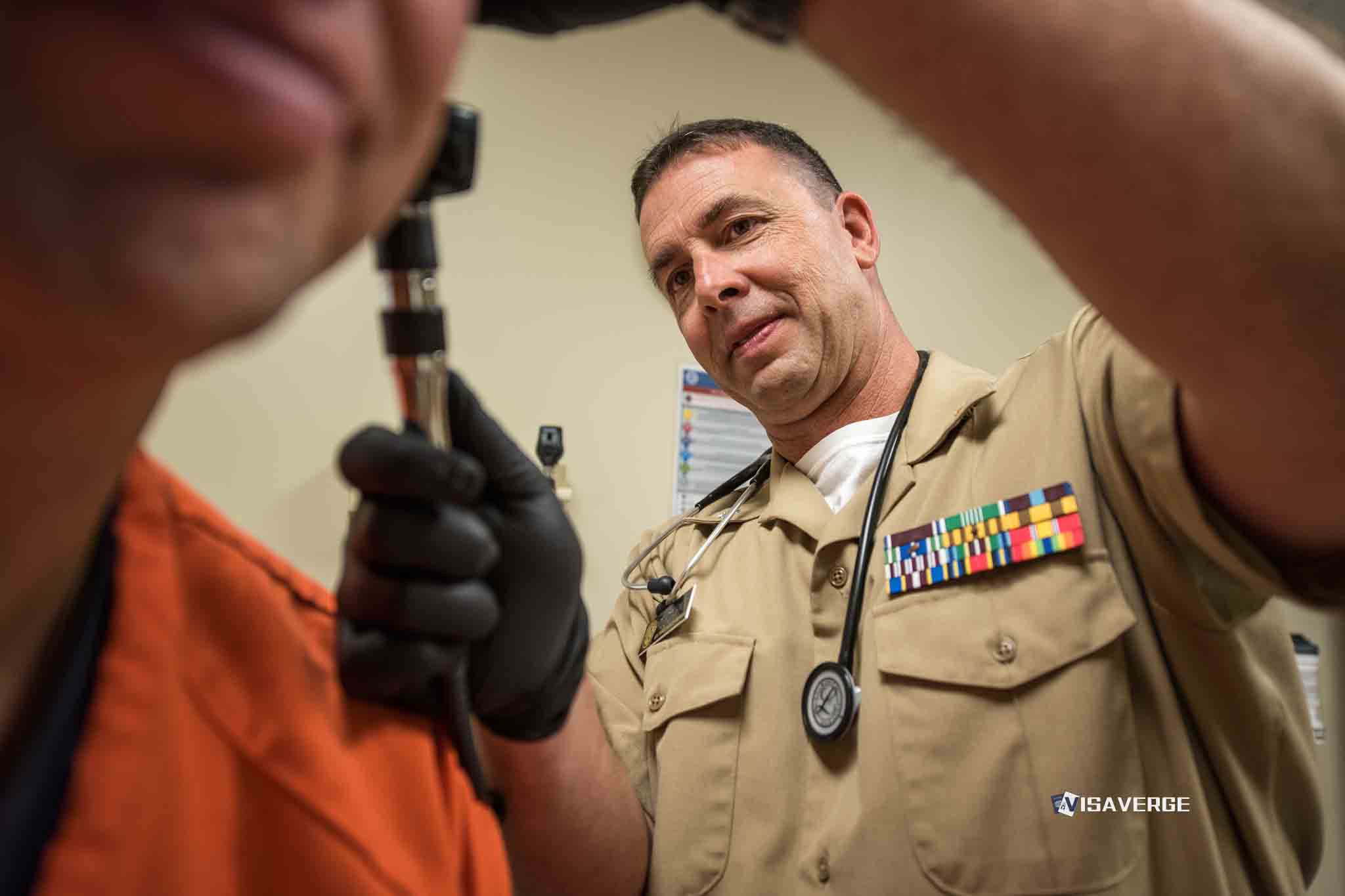
The Denver Contract Detention Facility in Aurora, Colorado is an ICE detention center operated by the GEO Group. Local health authorities say they have received multiple reports of possible GI and respiratory illness among people detained there.
Public officials have not released detailed case counts, and ICE has not publicly provided a facility-wide tally. From a legal standpoint, limited public data matters because it affects oversight and accountability.
In detention-health situations, “under investigation” typically means health authorities are still determining the scope of illness, confirming diagnoses, and assessing whether transmission is occurring inside housing units. It can also mean the information available is preliminary or incomplete, especially when testing and reporting are still underway.
Responsibility is split. Local health departments may receive and assess disease reports, advise on testing and isolation, and track outbreaks. ICE, however, controls facility operations, including movement restrictions, medical staffing, and transport for outside care.
The facility’s large bed capacity underscores that even a modest outbreak rate can translate into significant numbers, although precise counts have not been publicly disclosed.
Warning: If you or a loved one is detained and experiencing serious symptoms, request medical care in writing and keep copies. Written requests often become key evidence later.
Recent outbreaks and investigations: what’s confirmed versus what’s still unclear
According to an Adams County Health Department spokesperson, officials received multiple reports of possible gastrointestinal and respiratory illness at the Aurora facility. The county declined to disclose how many people were sick or the current conditions inside the housing units.
Separately, U.S. Rep. Jason Crow’s office confirmed multiple influenza cases at the facility early in January 2026. That confirmation suggests at least some testing occurred, but it does not resolve how widespread illness may be, whether cases are clustered, or whether other pathogens are involved.
In detention settings, investigations are commonly initiated through symptom reports from detainees, staff, advocates, or medical units. Readers should look for specific public indicators in later updates, such as case definitions, test positivity, cohorting decisions, changes in intake procedures, or whether transfers are paused.
It is also important not to conflate incidents at different facilities. For context, another ICE facility—the Northwest ICE Processing Center in Tacoma—reported suspected tuberculosis cases in July 2025, including a hospitalization after a transfer from Alaska.
That reporting illustrates how transfers and population movement can affect infectious-disease risk, even when the diseases and circumstances differ.
Deadline: For detained individuals facing removal, illness does not automatically pause court deadlines. Ask counsel about motions for continuance and how to document medical issues before hearings.
Facility and systemic issues surrounding ICE detention
Nationwide, ICE increasingly relies on for-profit detention contracts. That contracting structure can affect healthcare delivery through staffing models, subcontracting, and reimbursement processes. It can also complicate accountability because medical services may involve multiple entities: ICE, the facility operator, and third-party clinical vendors.
Public reporting and watchdog accounts have repeatedly raised concerns in detention healthcare, including delayed referrals, gaps in chronic-care management, and inadequate mental-health services. In Aurora, prior outbreaks and inspection findings have been cited in public materials as warning signs of recurring infection-control vulnerabilities.
These issues can intersect with legal advocacy in removal proceedings. Although immigration judges do not directly supervise detention conditions, conditions can affect a person’s ability to prepare a case. This can implicate due process interests in certain circumstances, especially when illness interferes with attorney access, evidence collection, or court attendance.
Inspections, payments, and financial/operational pressures
Oversight often turns on inspections and documentation. A reduction in inspection activity can make it harder to detect systemic health problems early, particularly when an outbreak is developing. Fewer inspections may also reduce external pressure to correct recurring problems.
Another operational concern is continuity of medical care when vendor payments are disrupted. If third-party medical providers are not timely paid, facilities may struggle to schedule specialty appointments, maintain outside referral networks, or ensure transportation to offsite care.
In practice, that may show up as longer wait times, fewer specialist consults, or cancelled follow-ups. In disputes and litigation, these issues are often assessed through records such as sick-call slips, medical visit logs, isolation orders, pharmacy records, referral and transport documentation, and billing or invoice histories.
Those records can be central to complaints to DHS oversight offices, civil-rights investigations, or individual legal claims.
Warning: Do not rely on verbal assurances. Ask for the name and title of the staff member receiving a medical request, and note dates and times.
Broader context: what studies suggest, and what they cannot prove
Study-based findings can help explain risk factors, but they rarely prove that a particular facility caused a particular outbreak. A multi-facility study from the COVID-19 period reported that outbreaks were common in ICE detention and were associated with factors like facility size, population churn, and private operation.
Two basic concepts matter. “Outbreak thresholds” are rules used to decide when a cluster becomes an outbreak. “Cumulative incidence” is a way to measure how many new cases occur over a set time period. In detention, frequent transfers and new admissions can raise cumulative incidence and undermine cohorting, especially for respiratory and GI illnesses.
Correlation is not causation. Still, these findings are operationally important. They support closer attention to crowding, intake screening, testing access, and transfer practices during active disease transmission.
2025–2026 trajectory: custody deaths, staffing, and expanding detention capacity
Reports of “custody deaths” draw heightened scrutiny because cause-of-death timelines can be slow to confirm. Reviews may involve ICE custody death reporting processes, medical record audits, and external examinations.
Public reporting has cited a January 3, 2026 death as part of a broader pattern of concern about detention medical care. Allegations often surface quickly, while verified medical findings may take longer.
At the same time, detention capacity has expanded across more facilities, and advocates have raised concerns about shortages of qualified health staff. Staffing limitations can increase outbreak risk by slowing triage, reducing monitoring, and delaying escalation to outside care.
Practical impact: who is affected and what to do next
This developing situation may affect (1) detained individuals at the Aurora facility, (2) families seeking information, and (3) attorneys preparing bond, custody, or removal-defense filings.
Legally, detention authority generally arises under INA § 236 (pre-order detention) and INA § 241 (post-order detention). While ICE detention standards are often policy-based rather than statutory, medical access problems can still be raised through administrative complaints, federal litigation, or case-specific motions where illness interferes with due process.
There is no publicly announced “grandfather” rule for healthcare investigations. Operational changes, if any, may be implemented during an investigation, then modified when results are released.
Recommended actions (next 7–30 days)
- Detainees: submit written medical requests; ask for testing when symptomatic; request copies of medical records where possible.
- Families: document symptoms, dates, unit information, and any calls reporting quarantine or isolation.
- Attorneys: consider records requests, preservation letters, and targeted motions if illness affects hearing readiness or attorney access; evaluate habeas or conditions litigation in the relevant federal district when warranted.
Official government resources: ICE detention and EOIR court information can be found through justice.gov/eoir and uscis.gov (for case tools and general immigration information, where applicable).
⚖️ Legal Disclaimer: This article provides general information about immigration law and is not legal advice. Consult a qualified immigration attorney for advice about your specific situation.
⚖️ Legal Disclaimer: This article provides general information about immigration law and is not legal advice. Immigration cases are highly fact-specific, and laws vary by jurisdiction. Consult a qualified immigration attorney for advice about your specific situation.