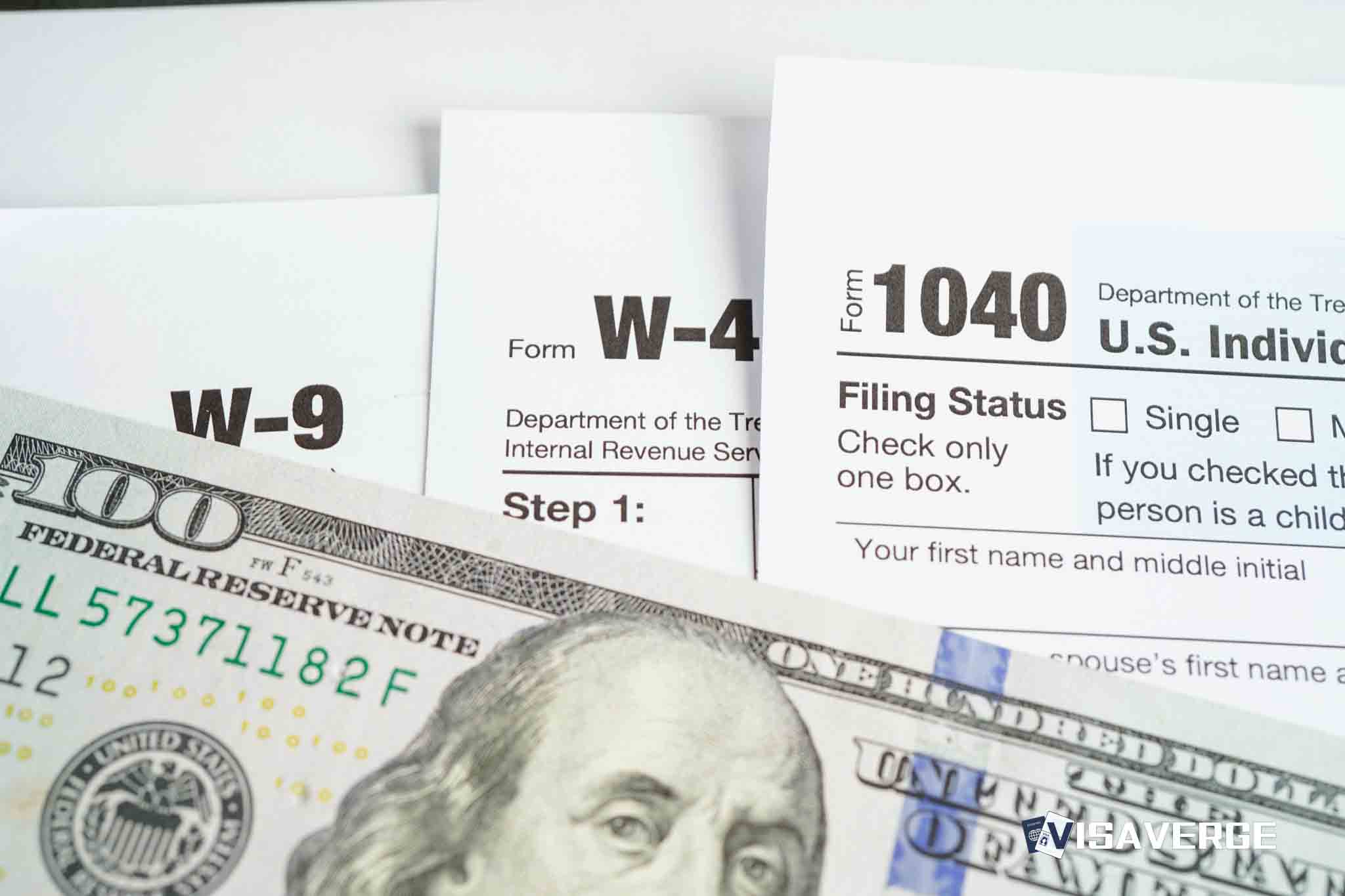
U.S. Taxation of Indian Crypto: Cross-Border Implications and Reports
U.S. tax rules classify crypto as property, requiring U.S. citizens in India to report disposals and rewards in USD. Short-term gains taxed as ordinary income; long-term gains get capital gains rates. Maintain precise records, convert INR to USD consistently, and use Form 8949 and Schedule D; seek professional advice to manage cross-border compliance.
IRS treats cryptocurrency as property, so U.S. citizens abroad must convert every crypto transaction to USD for reporting.
Short-term crypto gains (<12 months) taxed as ordinary income (about 10%–37%); long-term gains taxed at 0%, 15%, or 20%.
Mining, staking, and airdrops are taxed as ordinary income on receipt and can trigger additional taxable events upon sale.
Indian-origin taxpayers with ties to the United States 🇺🇸 are facing fresh attention on their crypto activity as filing season approaches and authorities on both sides push for tighter reporting. At the center is a simple but far-reaching rule: the Internal Revenue Service treats cryptocurrency as property, not currency, which means U.S. taxation can apply even when trades happen on Indian platforms, in rupees, and while living in India.
For anyone who is a U.S. citizen, Green Card holder, or otherwise a U.S. tax resident, crypto disposals—selling, swapping, or spending—can trigger tax. That includes coins bought on an Indian exchange and held for months or years before being sold. Gains held less than a year are taxed at ordinary income rates; gains held longer than a year can qualify for long-term capital gains rates, which are generally lower. The tax bite depends on income level, but the duty to report applies across the board.
U.S. Taxation of Indian Crypto: Cross-Border Implications and Reports
How the U.S. property rule affects cross-border crypto activity
Tax advisors say this rule catches many people by surprise because crypto platforms make their markets in different currencies and report in different ways. Yet the U.S. rule is clear: all amounts must be converted to U.S. dollars for reporting, and each transaction must be tracked.
In practice:
– Many Indian-origin professionals hold wallets in more than one country, move tokens between exchanges, and sometimes stake assets or accept airdrops.
– Each step can lead to a U.S. tax event if it results in income or a disposal.
– Mining income, staking rewards, and airdrop allocations are taxable when received and taxed as ordinary income, not capital gains. That means these rewards can raise a filer’s tax bracket even if the tokens are not sold the same year.
Tax rates, holding periods, and cost basis
The basic brackets matter:
– Short-term (held less than 12 months): taxed at regular income rates (roughly 10% to 37% for many filers).
– Long-term (held more than 12 months): taxed at 0%, 15%, or 20% depending on overall income.
Because the IRS treats crypto as property:
– Holding period and cost basis (original purchase value, adjusted for certain costs) drive the final tax bill.
– In active years, taxpayers may need to report dozens or hundreds of separate transactions.
– VisaVerge.com analysis finds most compliance errors come from:
– Missing cost-basis records
– Mismatched dates when moving coins between wallets
– Failing to convert rupee amounts to U.S. dollars using acceptable exchange rates
Example: Arjun’s transactions illustrate how reporting works
Arjun, a U.S. citizen living in India, bought 1 ETH for $1,000 in July 2023 and sold it for $3,000 in November 2024.
Holding period ≈ 16 months → qualifies as a long-term disposal.
Taxable gain = $2,000. If he falls in the 15% long-term gains bracket, tax due = $300.
If Arjun also earned $500 in staking rewards that year, that $500 is ordinary income and taxed at his regular rate.
He must report each disposal on Form 8949, carry totals to Schedule D, and include staking income on his individual return.
The IRS’s guidance for virtual assets remains the backbone of how crypto is taxed in the U.S. For general rules on digital assets and tax, the IRS maintains a dedicated page for international taxpayers and virtual currency.
Common filing pitfalls for U.S. persons in India
Trades may occur entirely in India (priced in rupees) and still be subject to U.S. tax if the person is a U.S. tax resident.
Cost basis set in rupees must be translated into U.S. dollars using an acceptable exchange rate on the date of each transaction.
When records are incomplete, taxpayers often struggle to reconstruct older trades, particularly after shifting tokens between wallets.
⚠️ Important
Do not rely on rupee values alone—convert every transaction to USD using an acceptable rate on the exact date to avoid miscalculated cost basis and penalties.
Key points:
– Each swap of one token for another counts as a sale of the first token and a purchase of the second.
– Even without cashing out to fiat, tax can still apply—reinvesting profits does not avoid tax.
– Complex steps (e.g., adding/removing liquidity, moving to a decentralized wallet) can each create income or disposal events.
Recordkeeping, reconstruction, and remediation
Filers with mixed holdings (INR and USD) often need a professional who understands both systems to avoid mismatches that trigger red flags.
Many who lack records resort to software to rebuild histories or engage specialists to reconcile blockchain records with exchange exports.
A simple, low-effort habit that helps: save CSV exports after each tax year and keep a personal log of transfers.
VisaVerge.com reports better early awareness would prevent many costly cleanups later.
Income vs. capital event: the two-step tax path
Income (mining, staking, airdrops) is taxable when received, measured in U.S. dollars on the day received.
When those tokens are later sold, a second taxable event may occur: capital gain or loss measured from the value when received to the sale price.
This two-step path can confuse filers who assume tax only applies when converting to fiat.
Required forms and reporting thresholds
Compliance hinges on the correct forms:
– Disposals: Form 8949 → summarized on Schedule D → included on Form 1040.
– Foreign assets: Form 8938 (FATCA) may apply if thresholds are exceeded.
– Foreign bank account reporting: FBAR (FinCEN online report) if foreign account balances exceed $10,000 at any time during the year.
Important:
– The Form 1040 includes an annual digital asset question asking whether you received, sold, or disposed of digital assets. Answering incorrectly increases audit risk.
– When both Indian and U.S. taxes apply, a foreign tax credit may be available but won’t necessarily eliminate the U.S. tax liability and requires proper documentation.
Indian tax treatment and cross-border implications
India now expects more complete reporting for virtual digital assets.
Indian platforms may apply tax withheld at source (TDS) on some transactions.
India taxes transfer of digital assets at fixed rates under Indian law.
For U.S. persons in India: pay Indian tax when due, and still report to the U.S.
Differences between systems can leave gaps—long-term capital gains in the U.S. vs. India’s different rates/concepts can result in different outcomes.
Practical compliance checklist
Gather a full transaction history: each buy, sale, swap, reward — dates and amounts.
Convert rupee amounts to U.S. dollars for each event using a consistent exchange-rate source.
List every disposal, even if coins never hit a bank account.
Report disposals on Form 8949 and totals on Schedule D.
Include ordinary income from mining, staking, airdrops on Form 1040.
Answer the digital asset question on Form 1040 truthfully.
Add Form 8938 if foreign asset thresholds apply.
File FBAR through FinCEN if foreign account balances exceeded $10,000.
If Indian tax was paid, explore the foreign tax credit on the U.S. return with proof of tax paid.
Practical tips on exchange rates, fees, and timing
💡 Tip
Set up a dedicated crypto log: after every trade, transfer, staking reward, or airdrop, record the date, asset, amount, and FX rate to USD to ease Form 8949 reporting.
Use a single, consistent, reasonable source for converting INR → USD across the year.
Mixing exchange-rate sources can create cumulative rounding differences.
Trading fees paid in tokens adjust cost basis and proceeds—track them carefully.
Staking and airdrops often arrive in small amounts; each one is income on receipt and must be summed in USD.
Losses, audits, and enforcement risk
Selling at a loss can offset other capital gains and, up to limits, reduce ordinary income—but losses still require full reporting on Form 8949 and Schedule D.
India’s improved reporting and U.S. digital asset questions increase the chance of matches and audits across systems.
Skipping forms or providing incomplete records can lead to penalties, interest, or follow-up notices.
When to get help
If you have many old wallets, missing records, or numerous cross-wallet transfers, consider a specialist who can reconcile blockchain history with exchange exports.
Use software tools to rebuild histories when needed, but validate results with a tax professional familiar with U.S.–India issues.
Early organization (ledgers, CSV exports, transfer logs) significantly reduces future stress and cost.
Final takeaway
The situation is not about sudden new laws but about steady enforcement of established rules: the IRS treats cryptocurrency as property, which creates a clear split between short-term ordinary income and long-term capital gains and makes detailed records essential. Indian rules create parallel duties inside India. Together, they form a cross-border compliance landscape where the best outcomes come from early organization, consistent recordkeeping, and professional advice when needed.
Readers who want the IRS’s plain-language outline on digital assets can review the agency’s digital asset guidance for international taxpayers. For disposal reporting, consult the official pages for Form 8949, Schedule D, Form 1040, Form 8938, and the FBAR filing portal to understand the thresholds and line-by-line rules. In a year when both the United States and India expect more complete records, those who act early, keep clean logs, and match each disposal to a clear dollar value will have a calmer filing season and a stronger grip on their cross-border tax life.
VisaVerge.com
Learn Today
Cryptocurrency as Property → IRS classification treating digital tokens as property for tax, not currency, so disposals create capital gains or losses.
Cost Basis → The original purchase price (adjusted for fees) used to compute gain or loss when a crypto asset is disposed.
Form 8949 → IRS form used to report sales and other dispositions of capital assets, including cryptocurrency transactions.
FBAR → FinCEN report for foreign bank accounts exceeding $10,000 in aggregate during the year; relevant for foreign exchange accounts.
This Article in a Nutshell
The IRS treats cryptocurrency as property, so U.S. citizens and tax residents in India must report each crypto disposal, reward, and transfer in U.S. dollars. Short-term gains are taxed as ordinary income; long-term gains may qualify for lower capital gains rates. Mining, staking, and airdrops are taxed as ordinary income when received, and later sales may trigger capital gains. Accurate INR→USD conversions, detailed records, Form 8949/Schedule D reporting, and professional help reduce audit and double-taxation risks.
Sai Sankar is a law postgraduate with over 30 years of extensive experience in various domains of taxation, including direct and indirect taxes. With a rich background spanning consultancy, litigation, and policy interpretation, he brings depth and clarity to complex legal matters. Now a contributing writer for Visa Verge, Sai Sankar leverages his legal acumen to simplify immigration and tax-related issues for a global audience.