Can Non-Citizens Be Deported for Participating in War in Gaza Protests?
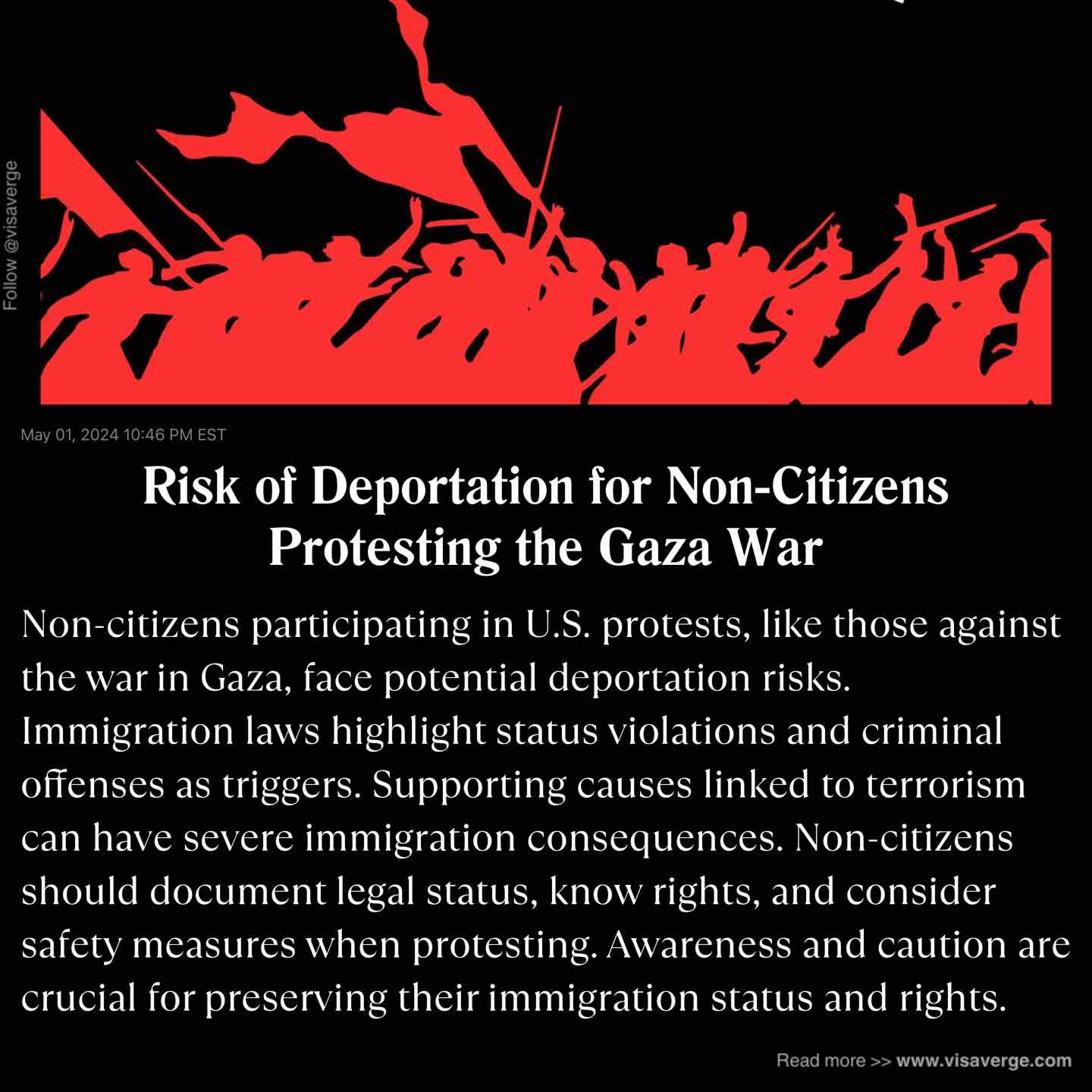
In recent times, as protests against the war in Gaza multiply throughout the United States, specific concerns have arisen regarding the potential deportation of non-citizens engaged in these demonstrations. This raises the question: Can non-citizens such as foreign students, asylum seekers, or Green Card holders be deported if they participate in protests related to international conflicts like the war in Gaza?

What Does the Law Say About Deportation?
Deportation, as governed by U.S. immigration laws, can be a complicated process with various triggers and conditions. Here’s an essential overview:
- Status Violations: Individuals in the U.S. without a legal status—due to expired visas or no visas at all—are vulnerable to deportation. Yet, the deportation process isn’t instant; it involves a court procedure where the individual can contend their right to stay, sometimes taking years to resolve.
- Criminal Offenses: Among non-citizens, whether on temporary visas or holding green cards, those convicted of crimes can face deportation. This underscores the advice often given by legal experts: avoid activities that could jeopardize your legal status.
How Does Participation in Protests Fit In?
Protesting is generally seen as a right under the banner of free speech, which extends to non-citizens residing in the U.S. legally. However, this doesn’t remove the risks associated with arrest during protests, especially for those whose immigration status could be complicated by legal entanglements. For non-citizens, the stakes are invariably higher.
Could Supporting Certain Causes Affect Your Immigration Status?
There’s a noteworthy point of concern for non-citizens involved in protests specific to international conflicts like that in Gaza. Allegations—even unsubstantiated—of supporting terrorist organizations during these protests could lead to severe immigration consequences. According to the Terrorism-Related Inadmissibility Grounds (TRIG), any perceived support or endorsement of terrorist activities could significantly imperil one’s legal standing in the U.S.
What Should Non-Citizens Do If They Choose to Protest?
For those non-citizens keen on asserting their voices in protests, taking certain precautions is advisable. Here are a few practical steps:
- Documentation: Always have accessible proof of your legal status in the U.S.
- Legal Preparedness: Understand your rights and the local laws concerning demonstrations and police interaction. The ACLU provides a valuable “know your rights” guide, which is an excellent resource for anyone unfamiliar with these nuances.
- Safety Measures: Stay aware of your surroundings at protests and have an exit strategy planned. Having contact information for legal assistance readily available can also give an added layer of security.
Understanding the Risks and Rights
Law enforcement interactions can lead to complications in the immigration processes for non-citizens. It’s crucial to remain informed about the potential outcomes and weigh the risks of participating in protests, especially those relating to sensitive geopolitical issues. While everyone has the right to free speech, non-citizens need to consider additional layers of consequence that might not affect citizens similarly.
Final Thoughts on Advocacy and Empathy
The discourse around the war in Gaza and related protests can often seem polarized—pitting one side against the other without room for middle ground. While advocating for human rights and political views is vital, fostering an atmosphere of empathy and understanding towards all parties involved might pave the way for more constructive dialogues and peaceful resolutions.
It is essential for non-citizens to navigate these complexities carefully, balancing the right to protest with an awareness of the possible impact on their immigration status. To gain more information on your specific rights and recommendations for non-citizens, visiting the U.S. Citizenship and Immigration Services could provide additional guidance and legal perspectives.
In conclusion, while participating in protests like those against the war in Gaza, non-citizens must tread cautiously, equipped with the right information and prepared for any possible legal repercussions. This awareness and preparation can help safeguard their rights and their future in the United States.
Learn Today:
Glossary or Definitions
- Deportation: The formal removal of a non-citizen from a country, based on violations of immigration laws, criminal activities, or other grounds. Deportation can be a complex legal process involving court hearings and appeals.
- Status Violations: Refers to the situation where individuals are residing in a country without a legal status, such as expired visas or remaining in the country without proper authorization. Non-citizens with status violations are at risk of deportation.
-
Terrorism-Related Inadmissibility Grounds (TRIG): This refers to a set of legal grounds that can render an individual inadmissible or deportable from a country based on suspected ties to or support of terrorist activities or organizations. Allegations of supporting terrorism can have severe immigration consequences.
-
Free Speech Rights: The freedom to express opinions and ideas without government interference or censorship. In the context of immigration, free speech rights protect non-citizens’ participation in protests as a form of expression, while also highlighting the potential legal implications of such activities.
-
Know Your Rights Guide: A resource, often provided by organizations like the American Civil Liberties Union (ACLU), which educates individuals about their rights in various contexts, including during protests, interactions with law enforcement, and legal proceedings. Non-citizens are advised to familiarize themselves with these guides to understand their rights and responsibilities.
This Article In A Nutshell:
Non-citizens at U.S. protests risk deportation, especially when linked to conflicts like Gaza. Demonstrating free speech rights is allowed, yet arrests can complicate immigration status. Avoid legal issues; prep with documentation and rights knowledge. Advocate considerately, knowing implications. Find more at USCIS for guidance. Stay informed, protest responsibly.
— By VisaVerge.com