- A viral video of federal agents detaining a naturalized U.S. citizen has sparked legal challenges in Minnesota.
- Suppression of evidence in immigration court requires a strong specific showing per Matter of Barcenas.
- Lawsuits allege Operation Metro Surge involves warrantless and discriminatory enforcement and racial profiling.
(MINNEAPOLIS, MINNESOTA) — A viral stop during Operation Metro Surge is putting renewed legal focus on an old but decisive immigration-law rule: even when a public stop appears improper, a noncitizen in removal proceedings typically must make a strong, specific showing before an immigration judge will suppress evidence. In Matter of Barcenas, 19 I&N Dec. 609 (BIA 1988), the Board of Immigration Appeals held that a respondent seeking suppression generally bears the initial burden to present evidence establishing a prima facie case that the evidence was unlawfully obtained.
That standard—alongside differing federal court approaches to “egregious” Fourth Amendment violations—may shape how future challenges to surge-era stops play out in immigration court and in federal civil-rights litigation.
Incident overview: What happened with Ramon Menera and why it matters
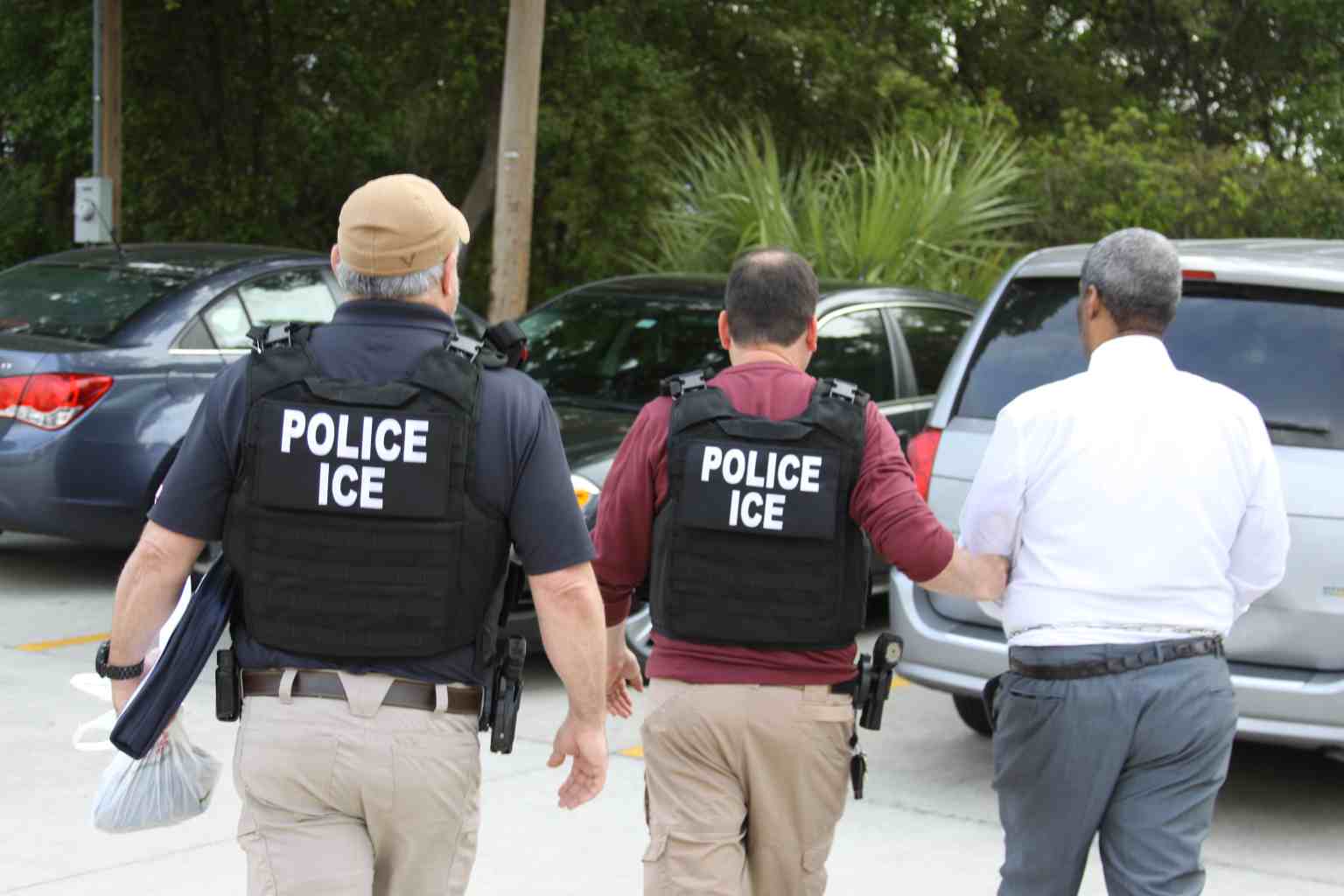
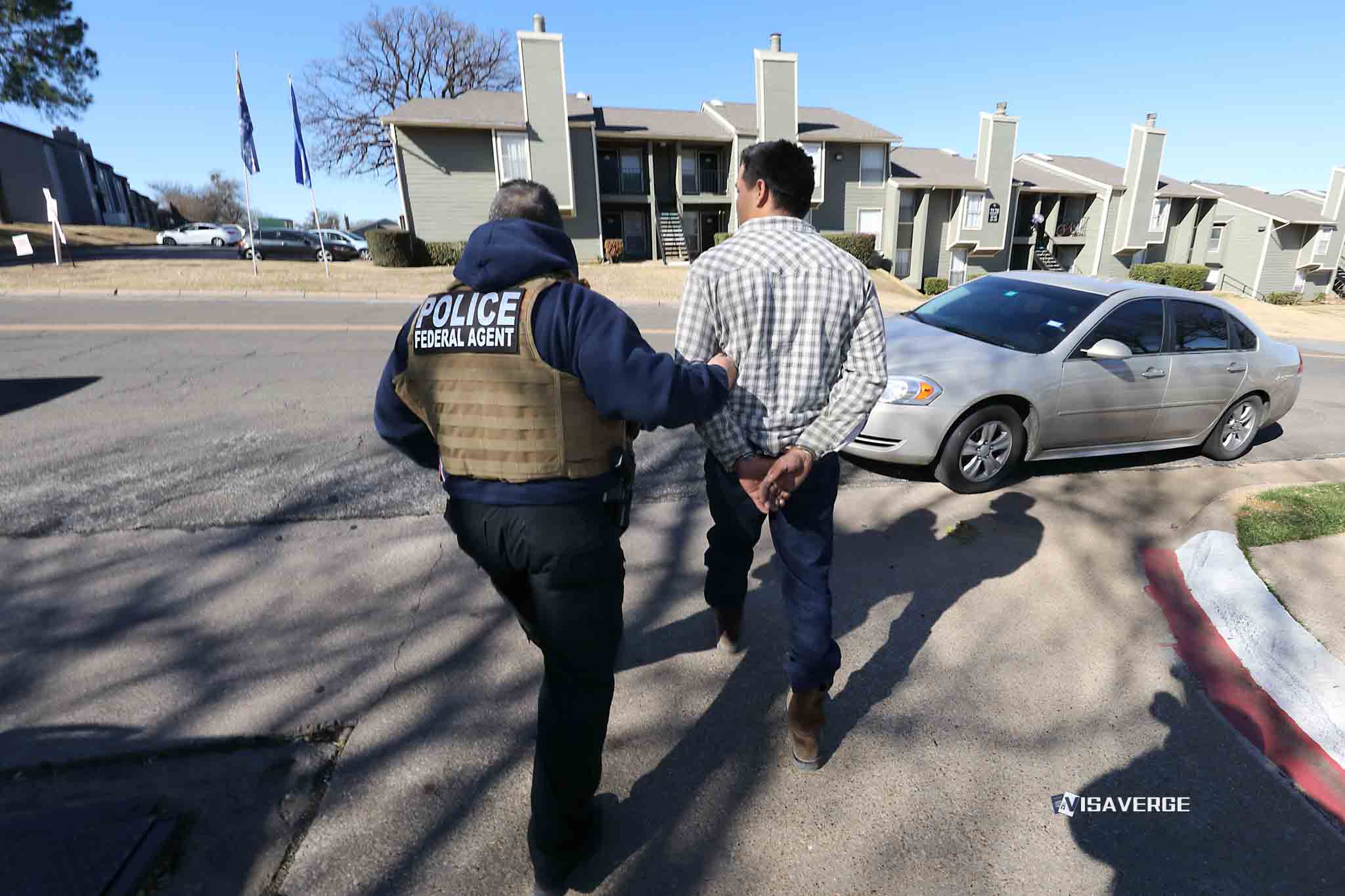
On January 14, 2026, Ramon Menera, a Minnesota resident born in Mexico and naturalized in 2019, was briefly detained by federal agents in a Minneapolis-area suburb while walking near his home with his five-year-old daughter. Video shows an agent answering Menera’s question about why he was being questioned with the remark, “because of your accent.”
Agents handcuffed Menera, moved him toward a federal vehicle, and released him after verifying his U.S. citizenship through federal records. The encounter matters for a simple reason: large, high-visibility immigration operations often increase incidental contacts with U.S. citizens and lawful residents.
That includes mixed-status families, where a stop of one person can quickly affect everyone present. Similar tensions have surfaced in other surge-related encounters, including immigration raids that triggered public confrontations.
A naturalized citizen can still be stopped or questioned in public. Citizenship protects against removal, not against being approached or temporarily detained in every circumstance.
The legal constraints are constitutional. They turn on what agents knew at the time and how the encounter unfolded.
Official statements and framing from DHS/ICE
DHS and ICE have publicly defended the operation and the agents’ conduct in the Menera stop. In an online statement dated January 18, 2026, DHS asserted that media coverage was “selectively edited,” and said the brief detention was based on “inconsistent answers” and refusal to provide documents.
DHS described that as enough for “reasonable suspicion” under the Fourth Amendment. DHS also rejected allegations of racial profiling.
Separately, DHS spokesperson Tricia McLaughlin stated on January 12, 2026 that law enforcement uses “reasonable suspicion” consistent with the Fourth Amendment, and framed the surge as a public-safety effort. Acting ICE Director Todd M. Lyons stated on January 14, 2026 that ICE had arrested over 2,500 “criminal illegal aliens” in Minnesota since the operation began.
How to read these statements critically, without dismissing them outright:
- What they claim: a lawful basis (reasonable suspicion) and a public-safety rationale.
- What they often do not address: the precise, articulable facts that justified the stop at its start, and whether protected traits were treated as proxies for immigration status.
“Reasonable suspicion” is a lower standard than probable cause. It requires specific, articulable facts suggesting criminal activity may be afoot. It is not a blank check. Nor is it satisfied by generalized hunches.
In immigration contexts, agencies sometimes invoke reasonable suspicion to justify brief detentions for questioning, particularly near the border. But constitutional limits still apply, including the Fourth Amendment’s protection against unreasonable seizures.
For practical guidance on what documents people may choose to carry, and what agents may ask for, readers often look to explainer-style coverage like your papers—with the important caveat that rights and obligations can differ by situation and location.
Warning: Do not physically resist an officer, even if you believe the stop is unlawful. Resistance can escalate risk and may trigger criminal charges. Ask if you are free to leave, and document details afterward if safe.
Key facts and incident details: Verification, time delays, and family safety
Two practical points from the Menera incident are likely to recur during surge operations. First, status verification is rarely instantaneous.
In many street encounters, “verification” can involve radio calls, database checks, and document review. The process can take time, especially when names are common, records are incomplete, or systems are offline.
A U.S. passport is strong proof of citizenship, but possession of a passport does not guarantee an officer will immediately accept it in a fast-moving encounter.
Second, large deployments predictably increase screening encounters, including mistaken stops. Even when an initiative is framed as targeted, broadened presence on streets and at residences can lead to more contacts with bystanders, neighbors, and family members.
In that environment, families—especially mixed-status households—benefit from advance planning. If a stop occurs while a child is present, safety and documentation issues become immediate.
Parents often later need a clear timeline, the names or badge numbers of officers (if obtainable), and any medical or childcare impacts. For readers focused on verification steps, guidance on agent identity can be useful, particularly when multiple agencies operate together.
Tip-style takeaway: If it is safe, write down the time, location, agency markings, vehicle plates, and the names of witnesses immediately after the encounter. Small details can matter later.
Legal significance and ongoing litigation: Why this episode may shape the next wave of cases
The Menera video has become a focal point in broader challenges to Operation Metro Surge.
Minnesota v. DHS and the ACLU class action
On January 12, 2026, Minnesota Attorney General Keith Ellison and the cities of Minneapolis and St. Paul filed a federal lawsuit commonly described as Minnesota v. DHS. The complaint alleges “unprecedented” racial profiling and “warrantless and discriminatory enforcement.”
On January 15, 2026, the ACLU of Minnesota filed a class action on behalf of residents. The class complaint includes allegations that masked agents detained a 20-year-old U.S. citizen and refused to consider his passport card.
These cases matter even for people who are never charged with a crime and never placed in removal proceedings. Class actions frequently seek forward-looking relief such as injunctions, policy changes, training, and oversight. Depending on claims and immunities, they may also seek damages.
The immigration-court angle: suppression is real, but hard
While the Menera matter itself centers on a citizen, surge-era stops can have downstream effects for noncitizens who later face removal. In that posture, suppression fights can become decisive.
Under Matter of Barcenas, 19 I&N Dec. 609 (BIA 1988), respondents generally must come forward with evidence supporting suppression before the government is required to justify how it obtained evidence. In practice, that means attorneys often develop the record with declarations, witness testimony, video, dispatch logs, and medical records.
Two other BIA precedents frequently cited in suppression disputes are:
- Matter of Toro, 17 I&N Dec. 340 (BIA 1980) (addressing when unlawfully obtained evidence may be excluded in immigration proceedings, often discussed alongside later “egregious violation” case law in federal courts).
- Matter of Garcia-Flores, 17 I&N Dec. 325 (BIA 1980) (holding that violations of agency regulations can warrant suppression or termination when prejudice is shown, depending on the regulation and harm).
Although removal proceedings are civil, not criminal, the Fourth Amendment still plays a role. The key question becomes whether the violation was sufficiently severe—often described in federal case law as “egregious”—to justify exclusion.
Circuit differences to watch
Federal circuits do not apply suppression standards identically in immigration cases. Some circuits have been more receptive where stops appear to rely heavily on race or ethnicity, or where coercion is extreme. Others apply a narrower view of when exclusion is available in civil removal proceedings.
This matters in Minnesota, which sits in the Eighth Circuit, because Eighth Circuit precedent will heavily influence how suppression arguments are received on petition for review.
Why escalation context matters
The broader Minnesota climate has also been shaped by a separate enforcement action: the January 7, 2026 fatal shooting of Renee Macklin Good, a U.S. citizen, by an ICE agent. That incident is not legally equivalent to the Menera stop, and its facts will be litigated on their own record.
Still, it heightens the public-safety stakes of clear rules, de-escalation training, and transparent accountability when operations expand rapidly.
Warning: If you may face immigration consequences from an encounter, avoid making statements about your status without counsel. What feels like “clearing things up” can later be used in removal proceedings.
Practical takeaways for citizens, immigrants, and mixed-status families
- Citizenship is a status, not a shield from stops. A citizen can be questioned, and sometimes briefly detained, depending on the facts. The constitutional inquiry is fact-specific.
- Video can help, but it is not the full record. Courts will look for complete context: what agents said first, what questions were asked, and what the person did in response.
- Suppression in immigration court requires groundwork. Under Matter of Barcenas, the person seeking suppression generally must present concrete evidence. That often requires an attorney’s help quickly.
- Plan for family logistics. If children are present, identify a backup caregiver and keep key documents accessible. Mixed-status families should consider a written emergency plan.
- Verify updates through primary sources. Track official agency statements and court filings separately. Press releases are not evidence, and allegations are not findings.
Deadline note: Civil-rights and tort claims can have strict notice and filing rules. If you are considering a lawsuit, speak to counsel promptly to preserve deadlines.
Official sources and where to find updates
For operation-related statements and enforcement press releases, start with DHS and ICE newsroom pages. For the state’s litigation posture, filings, and press releases, monitor the Minnesota Attorney General’s site.
Save or print copies of pages you rely on, since newsroom pages can be updated. And when assessing whether someone is legitimately a federal officer in a benefits context, articles about USCIS identity can help readers build safer habits.
Bottom line
The Menera stop—and the “because of your accent” remark captured on video—has become a high-profile flashpoint in the legal fight over Operation Metro Surge. For immigration practitioners, the lasting impact may be less about viral clips and more about evidentiary standards: how suppression is litigated, what qualifies as an egregious constitutional violation, and what courts require to prove a pattern or policy.
Anyone touched by these operations, especially noncitizens who may face removal exposure, should seek individualized legal advice early.
This article provides general information about immigration law and is not legal advice. Immigration cases are highly fact-specific, and laws vary by jurisdiction. Consult a qualified immigration attorney for advice about your specific situation.