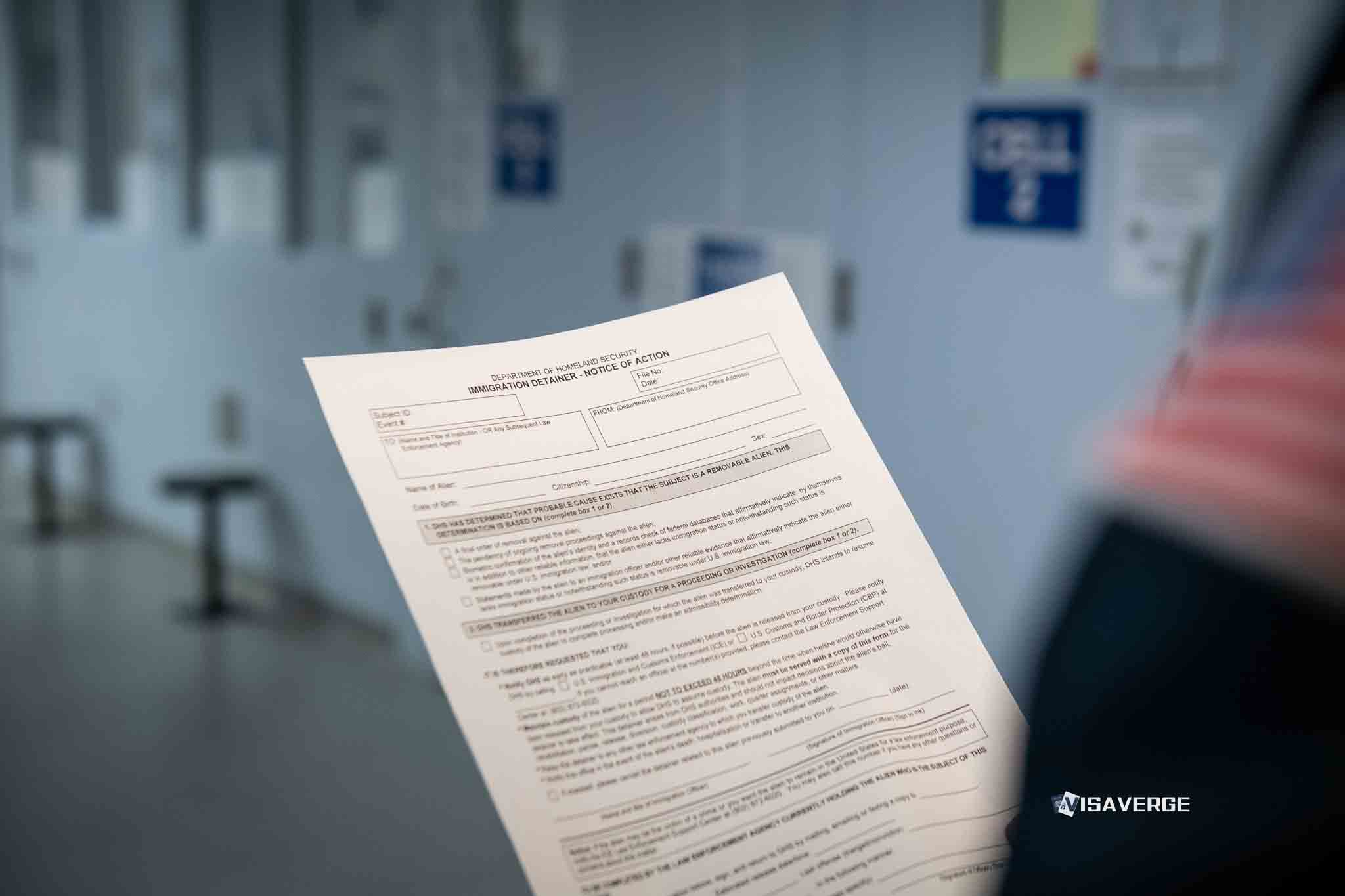
- Iranian nationals are using emergency stays of removal as a front-line defense against imminent deportation.
- A scheduled charter flight from Arizona will carry 40 Iranians to Tehran via Kuwait or Qatar.
- Protection claims under the Convention Against Torture (CAT) require showing a high likelihood of state-sponsored harm.
An emergency stay of removal—paired with a rapid motion to reopen and protection claims under the Convention Against Torture (CAT)—has become a front-line defense strategy for some Iranian nationals facing imminent deportation amid intensified enforcement messaging from President Trump’s administration.
As of Friday, Jan. 23, 2026, reports of near-term deportation activity involving Iranians have raised urgent legal and humanitarian questions. For people already in ICE custody or on final orders, the practical issue is not only whether they fear return, but whether they can get a court or DHS to pause deportation long enough to present updated evidence of danger.

This article explains the legal standards, evidence, and common pitfalls for emergency stays and related filings. It is general information, not case-specific advice.
1) Overview and current context
The present moment matters because U.S. deportation enforcement can accelerate quickly once removal flights are scheduled. That speed collides with rapidly shifting conditions in Iran and heightened political rhetoric from Trump administration officials about pressure on the Iranian regime.
Readers will see several terms used repeatedly:
- Removal/deportation flight: Transportation arranged by ICE, often with limited public detail for security reasons.
- ICE detention: Civil custody while ICE prepares removal or while litigation is pending.
- Asylum pending vs. final order: A pending asylum case generally means there is no final removal order yet. A final order triggers immediate enforcement risk.
- Travel advisory: A State Department warning for U.S. citizens. It can also support arguments about country conditions.
Legally, deteriorating human-rights conditions, diplomatic escalation, or conflict rhetoric do not automatically stop removals. But they can materially change risk analysis for asylum (INA § 208), withholding of removal (INA § 241(b)(3)), and CAT protection (8 C.F.R. §§ 1208.16–1208.18)—and can support emergency requests to stop removal while those claims are presented.
2) Official statements and policy updates
Several official actions shape the environment for Iranian nationals, including people with old orders, people reporting to ICE, and people with pending asylum filings.
Treasury sanctions (Jan. 23, 2026). The Department of the Treasury announced sanctions targeting Iran’s “shadow fleet.” Sanctions generally restrict transactions and signal foreign-policy posture. They do not grant immigration status. But they can be cited as part of an evidentiary record that U.S. agencies view the Iranian government as engaged in serious misconduct.
White House enforcement messaging (Jan. 20, 2026). The White House released a “Secure the Border” progress report describing large-scale removals and “self-deporting.” Public messaging like this can correlate with stricter field enforcement, including more ICE check-in detentions and fewer discretionary pauses. It does not change statutory eligibility rules by itself.
State Department travel advisory (Jan. 14, 2026). State urged U.S. citizens to “Leave Iran now,” citing arbitrary detention risks and limited consular assistance. Travel advisories are written for U.S. citizens, including dual nationals. They can still help document general danger and state capacity issues relevant to CAT.
USCIS asylum decision pause (Nov. 28, 2025, ongoing). USCIS has reportedly continued interviewing some asylum applicants while pausing final grants or denials. A pause can create legal limbo. It may increase exposure for applicants whose work authorization or lawful status depends on pending filings. It can also delay the creation of an appealable decision. Check the USCIS Newsroom at https://www.uscis.gov/newsroom.
Warning: If you have a final removal order, a pending asylum application may not stop ICE from executing the order. Immediate legal review is often critical.
3) Key facts and statistics (and why they matter legally)
Reports describe a charter removal flight departing Arizona on Sunday, Jan. 25, 2026, carrying at least 40 Iranian nationals to Tehran via a stop in Kuwait or Qatar. Routing matters in practice. Transfers can affect access to counsel, phone calls, and time to file an emergency stay.
Reports also referenced a prior removal flight on Sept. 30, 2025, involving a larger group. If accurate, that suggests a trend toward operational removals to Iran, which historically occurred less often due to diplomatic barriers.
Advocates and media reporting also describe severe repression tied to protests starting in late December 2025, including large casualty estimates and internet restrictions. In removal defense, these facts are not enough on their own. The legal question is whether this person faces a legally cognizable risk, and whether the risk meets the standard:
- Asylum requires a “well-founded fear” of persecution on account of a protected ground. See INA § 208; Matter of Mogharrabi, 19 I&N Dec. 439 (BIA 1987).
- Withholding requires a higher likelihood standard (“more likely than not”). See INA § 241(b)(3).
- CAT requires showing it is “more likely than not” the person will be tortured by, or with the acquiescence of, a public official. See 8 C.F.R. § 1208.18; Matter of J-F-F-, 23 I&N Dec. 912 (A.G. 2006).
Heightened military signaling can also change the narrative for some returnees. Some people argue they will be imputed as U.S. collaborators. That can be relevant, but it must be supported with credible, individualized proof.
4) Impact on affected individuals: who is most at risk, and what defenses fit
Reported examples include LGBTQ individuals, parents of U.S.-citizen children, and people detained during routine ICE check-ins. These details can matter because they help define a claim and the evidence needed.
LGBTQ claims. If a person is gay or transgender, they may argue they face severe harm due to identity and perceived “morality” enforcement. Such claims can fit asylum, withholding, and CAT frameworks. Evidence often includes identity documentation, relationship history, community attestations, past threats, and country-condition proof about state targeting.
Parents of U.S. citizens. Having U.S.-citizen children does not automatically block removal. It can matter for certain forms of relief like cancellation of removal for nonpermanent residents (INA § 240A(b)), but eligibility is narrow and depends on continuous presence, good moral character, and “exceptional and extremely unusual hardship.” Many people in fast-track removal posture are not eligible, or are barred by prior orders.
People detained at check-ins. This pattern often triggers “emergency posture.” Counsel may seek:
- Administrative stay from ICE (commonly requested on Form I-246) under 8 C.F.R. § 241.6.
- Motion to reopen with the Immigration Court (8 C.F.R. § 1003.23) or the BIA (8 C.F.R. § 1003.2), often paired with a stay request.
- CAT/withholding-only proceedings if removal is based on reinstatement of a prior order. See INA § 241(a)(5); 8 C.F.R. § 1208.31.
Advocates have also warned about risks upon arrival, including detention, torture, or worse. Legally, the strongest filings usually connect those general risks to individualized factors: political activity, social media, family ties, prior arrests, prior asylum testimony, or perceived cooperation with the United States.
TPS reality check. Temporary Protected Status is created by DHS designation, not by courts. See INA § 244. If there is no TPS designation for Iran, a person cannot apply for TPS. Calls for TPS can inform advocacy, but they are not an immediate legal defense.
Deadline: Motions to reopen often have strict time limits, commonly 90 days from a final order. Exceptions may exist for changed country conditions. See 8 C.F.R. § 1003.2(c).
5) Policy context and near-term implications for case strategy
Many observers see a tension between condemning repression in Iran while removing people to Iran. In court, that tension is not dispositive. But it can matter evidentially, because official statements, sanctions, and advisories can corroborate claims about state violence and impunity.
A mass-removal posture can change risk in three practical ways:
- Higher detention risk at ICE check-ins. People who previously reported and were released may now be detained.
- Less time to prepare filings. Emergency stays require fast, organized evidence.
- More scrutiny of credibility and bars. Prior immigration violations, criminal history, or prior misstatements can derail relief.
Disqualifying issues and bars commonly include:
- Particularly serious crime bars asylum and withholding in many situations. See INA §§ 208(b)(2), 241(b)(3)(B).
- Aggravated felony convictions can be catastrophic for relief options.
- Firm resettlement may bar asylum if the person firmly resettled in another country before the U.S. See INA § 208(b)(2)(A)(vi).
- One-year filing deadline for asylum, subject to exceptions. See INA § 208(a)(2)(B).
- Prior removal orders can force claims into withholding-only posture.
Canada is part of the conversation for some families, but it is not a simple safety valve. Entry rules, visa requirements, and U.S.-Canada border processes can be complex. The Safe Third Country Agreement can also affect eligibility depending on how and where a claim is made. Anyone considering Canada-related options should consult qualified counsel on both sides of the border.
Warning: Do not assume you can “buy time” by traveling. CBP can detain, refuse entry, or place a person into proceedings based on status and records.
Outcome expectations are case-specific. Emergency stays may be granted when filings are timely and supported, but they are discretionary and often denied when evidence is thin or deadlines were missed. The best predictor is usually preparation: a coherent legal theory, documented identity, and well-supported country-condition proof tied to the individual.
6) Sources and official references (how to verify quickly)
Because policies and advisories can change fast, readers should confirm the date, agency, and document type before relying on a summary.
Key official categories to check:
- USCIS (benefits and policy updates): https://www.uscis.gov/newsroom
When reviewing a memo or advisory, verify you have the latest version and note any effective dates. If removal is imminent, request records through counsel and act quickly, because court and ICE timelines can move in hours, not weeks.
Deadline: If you learn of a scheduled removal flight, speak with an attorney immediately. Same-day stay filings are common in emergency cases.
This article provides general information about immigration law and is not legal advice. Immigration cases are highly fact-specific, and laws vary by jurisdiction. Consult a qualified immigration attorney for advice about your specific situation.
Resources:
- AILA Lawyer Referral
- EOIR Immigration Court information: EOIR (DOJ)
- USCIS official site: USCIS