- The letter must be written by the qualifying relative, a U.S. citizen or LPR spouse or parent; children and siblings do not qualify.
- Form I-601A costs $795 and Form I-601 costs $1,050, with decisions now taking 28 to 32 months.
- USCIS applies a totality of the circumstances standard across five factors and demands an exhibit behind every claim.
A hardship letter is the document that decides most extreme hardship waiver cases, and the person who writes it is not the immigrant. It is the U.S. citizen or lawful permanent resident spouse or parent who would suffer if the immigrant is barred from the country. Immigration officers read this letter to answer one question: would a qualifying relative face hardship well beyond the normal pain of family separation if the waiver is denied?
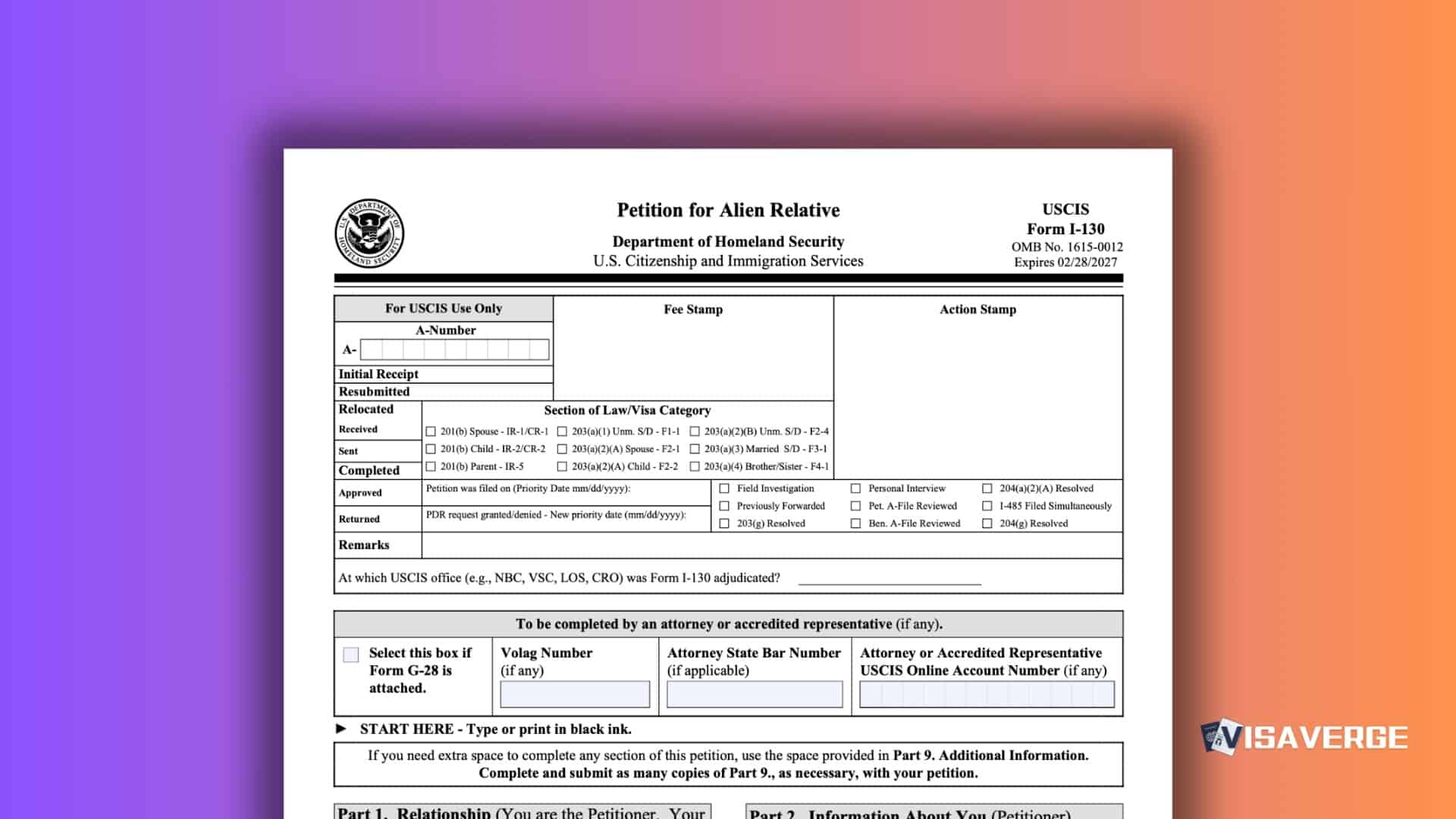
The letter anchors Form I-601 (Application for Waiver of Grounds of Inadmissibility), which carries a $1,050 filing fee as of 2026, and Form I-601A (Provisional Unlawful Presence Waiver), which costs $795. A weak letter sinks an otherwise strong case. A specific, evidence-backed letter can carry a borderline one.
Free toolCSPA Age-Out Calculator OnlineStakes are high because the wait is long. Most I-601A applications now take 28 to 32 months for a decision, and USCIS has been re-reviewing approved cases, issuing more Requests for Evidence, and applying tighter standards through 2026. A letter that reads like a template gets a Request for Evidence at best and a denial at worst.

This guide explains who writes the letter, what “extreme hardship” means to an adjudicator, and how to structure the document. It includes three complete sample letters covering different qualifying relatives, plus factor-by-factor excerpts and the evidence that must sit behind every sentence you write.
What a hardship letter is, and what it is not
A hardship letter is a sworn personal statement that documents the suffering a qualifying relative would endure under two outcomes: relocating abroad to stay with the immigrant, or remaining in the United States separated from them. USCIS weighs both scenarios. A letter that only describes one leaves half the case unproven.
It is not a plea for sympathy, and it is not the immigrant’s story. Officers do not grant waivers because a family loves each other or because deportation feels unfair. They grant them when the qualifying relative would face concrete, documented hardship that the law treats as extreme. The letter is also distinct from a third-party reference. If you are vouching for someone else’s character, that is closer to a letter of support for a family member, which serves a different purpose.
Who counts as a qualifying relative
This is where many cases fail before they start. For the I-601A provisional waiver and most I-601 unlawful presence waivers, the only people who can be qualifying relatives are a U.S. citizen or lawful permanent resident spouse or parent of the immigrant.
Children do not count. A U.S. citizen son or daughter cannot be the qualifying relative for an unlawful presence waiver, no matter how much they depend on the parent. Siblings, fiances, and unmarried partners do not count either. The hardship you document must fall on the spouse or parent. Hardship to a child only matters insofar as it flows back to the qualifying parent, for example when a citizen spouse must raise a disabled child alone.
What “extreme hardship” means to USCIS
Separation from a family member is always painful. The law assumes that. To win, you must show hardship that goes beyond what any family faces when a member is removed. USCIS calls this the totality of the circumstances standard: officers add up every hardship factor together rather than scoring each one alone. Three moderate hardships that combine into an unbearable situation can outweigh one severe factor standing by itself.
The burden is on you to prove it. As of 2026, adjudicators demand specifics: a diagnosis instead of “poor health,” IRS tax transcripts instead of “we cannot afford it,” and named country conditions instead of “it is dangerous there.” Vague claims now draw Requests for Evidence that add months to an already multi-year wait.
The five hardship factors USCIS weighs
USCIS groups hardship into recognized categories. Strong letters work through each one that applies and tie it to evidence. The table below maps the factors officers look for and the proof that supports each.
You do not need every factor. You need the ones that are true for your family, each documented hard enough to survive scrutiny.
How to structure the letter
The letter should run two to four pages, written by the qualifying relative in the first person and signed and dated. The format below moves an officer from who you are to exactly why a denial breaks your life. The same plain, factual tone applies to most government correspondence, a point covered in this guide to writing a letter to USCIS.
Sample hardship letter excerpts
The excerpts below show the level of specificity that works. Notice that each names a condition, a number, or a place, and each points to evidence. Do not copy them word for word. Officers recognize recycled language. Use them as a model for how to write about your own facts.
These read differently from a generic letter because they name the illness, the dollar figure, the advisory level, and the exhibit. For comparison, the structure of a sworn personal statement here mirrors what works in a marriage affidavit letter, where specific shared details beat broad declarations of love.
Three complete sample hardship letters
The three full letters below cover the most common qualifying-relative situations: a U.S. citizen spouse on an I-601A case, a U.S. citizen parent writing for an adult child, and a lawful permanent resident spouse on an I-601 case. All names, figures, and exhibits are fictional. Use them to see how the pieces fit together, then replace every detail with your own documented facts. Never submit any of them as written.
The second letter shows a different qualifying relative. Here a U.S. citizen parent, not a spouse, is the one who would suffer. A parent qualifies just as a spouse does, and elderly parents who depend on an adult child for care often present some of the strongest medical hardship.
The third letter is for an I-601 waiver rather than I-601A, written by a lawful permanent resident spouse. A green card holder qualifies as a qualifying relative just as a citizen does, and this letter leans on financial collapse and country conditions rather than medical hardship.
Across all three letters, the same structure holds: each names the qualifying relative, covers both relocation and separation, keeps the focus off the immigrant, and attaches an exhibit to every medical, financial, and safety claim. That structure, not the emotion, is what an officer is trained to credit.
Documents that must back up every claim
A hardship letter without evidence is just an assertion. Each hardship you raise needs a paper trail attached as a labeled exhibit. Build the evidence file before you write, then reference it line by line.
- Medical: diagnosis letters, treatment plans, prescription records, and a prognosis statement from the treating physician
- Financial: IRS tax transcripts, recent pay stubs, mortgage or lease statements, and a written monthly budget
- Psychological: an evaluation from a licensed psychologist or therapist, not a note from a general doctor
- Country conditions: current State Department travel advisories, named news reports, and data on medical or school access
- Relationship: marriage certificate, joint accounts, shared lease, and photos with dates
Fee increases that took effect in January 2026 raised filing costs across the board, so a Request for Evidence caused by thin documentation is expensive in both time and money. Assemble the file once, completely.
Common mistakes that get letters rejected
Most denials trace back to a handful of avoidable errors. Each one signals to an officer that the letter was written without understanding the standard.
- Writing about the immigrant’s hardship. The waiver turns on the qualifying relative’s hardship, not the applicant’s. Keep the focus on the citizen or green card holder.
- Addressing only one scenario. Cover both relocation abroad and staying separated. Skipping one leaves the case half-proven.
- Using template language. Phrases lifted from sample letters online are easy to spot and undercut credibility.
- Claiming hardship with no exhibit. Every medical, financial, or safety claim needs a document behind it.
- Leaning on emotion alone. “We love each other and cannot bear to be apart” is true for everyone and proves nothing.
What to do next
Start with the evidence, not the prose. Pull your tax transcripts, book the medical or psychological evaluations, and save the current State Department advisory for any country of relocation. Only then draft the letter, working factor by factor and citing each exhibit as you go.
Have the qualifying relative write and sign it in the first person, keep it to two to four pages, and read it against the five-factor table above to confirm every claim is documented. Given that I-601A decisions run 28 to 32 months and USCIS scrutiny is tighter in 2026, the letter is worth getting right the first time. If your situation also involves a separate document request from immigration, the same specific, factual approach applies, and a broader template for that is in this sample-letter guide. When the stakes include a multi-year wait and a four-figure filing fee, paying an immigration attorney to review the letter before filing is money well spent.
Frequently Asked Questions
Who should write the hardship letter for an immigration waiver?
The qualifying relative writes it, not the immigrant. That is the U.S. citizen or lawful permanent resident spouse or parent who would suffer extreme hardship if the waiver is denied. It should be written in the first person, signed, and dated.
Can a U.S. citizen child be the qualifying relative for an I-601A waiver?
No. For the I-601A provisional waiver and most unlawful presence waivers, only a U.S. citizen or LPR spouse or parent qualifies. Children, siblings, fiances, and unmarried partners cannot serve as the qualifying relative. A child’s hardship only counts when it flows back to a qualifying parent.
What does extreme hardship mean to USCIS?
Extreme hardship is suffering beyond the normal pain of family separation. USCIS uses a totality of the circumstances standard, adding up every factor together. Three moderate hardships that combine into an unbearable situation can outweigh one severe factor on its own.
How much does it cost to file Form I-601 or I-601A in 2026?
As of 2026, Form I-601A (Provisional Unlawful Presence Waiver) costs $795 and Form I-601 (Application for Waiver of Grounds of Inadmissibility) costs $1,050. Fee increases took effect in January 2026, and applicants often face additional consular, medical exam, and attorney costs.
How long does an I-601A waiver take to process?
Most I-601A applications take roughly 28 to 32 months for a decision. A Request for Evidence caused by a thin or vague filing can add several more months, so assembling complete documentation before filing is critical.
What evidence should I attach to a hardship letter?
Attach a labeled exhibit for every claim: diagnosis letters and prognosis statements for medical hardship, IRS tax transcripts and a monthly budget for financial hardship, a licensed psychologist evaluation for emotional harm, and State Department advisories for country conditions.
What are the most common reasons hardship letters get denied?
The top errors are writing about the immigrant’s hardship instead of the qualifying relative’s, addressing only one of the two scenarios, using template language officers recognize, claiming hardship with no exhibit, and relying on emotion alone without documented, concrete consequences.
Do I need to address both relocating abroad and staying separated?
Yes. USCIS weighs hardship under both outcomes: the qualifying relative moving abroad to stay with the immigrant, and the relative remaining in the United States separated from them. A letter that covers only one scenario leaves half the case unproven.