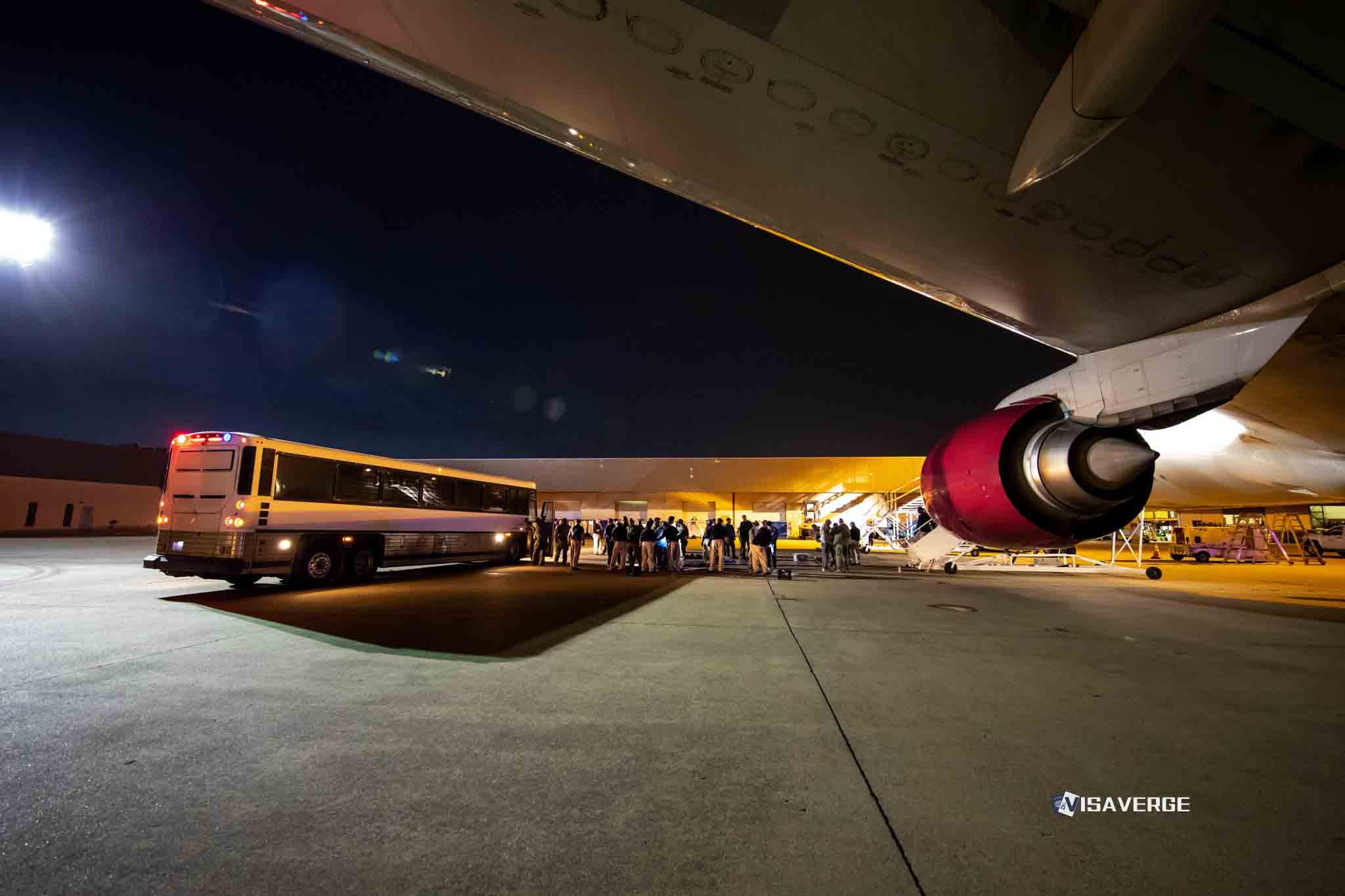
- Jamaica and the US are negotiating a transit framework for the removal of third-country migrants.
- The proposed MOU allows up to 25 people every fortnight to transit through the island temporarily.
- The United States will fund all costs including flights and support services for the operation.
(JAMAICA) — Jamaica and the United States are negotiating a migration framework that would allow Washington to transfer third-country migrants to Jamaica for transit before they are repatriated to their home countries, according to official communications confirmed on June 17, 2026.
A draft Memorandum of Understanding already exists, Jamaica’s government said, setting out a system under which non-Jamaican nationals removed by the United States could be sent to the island temporarily while onward travel is arranged.

Dr. Horace Chang, Jamaica’s Deputy Prime Minister and Minister of National Security, confirmed the draft deal in a formal statement issued on June 16, 2026. “This is an MOU and not a binding agreement. Jamaica is not opening its borders for an uncontrolled migration programme,” Chang said.
Free toolUSCIS Receipt Number DecoderChang said the arrangement would cover transit rather than settlement. “The individuals who may be transferred under this framework are not being brought to Jamaica as permanent migrants. These are nationals of countries other than Jamaica who are being facilitated through a structured process to transit through Jamaica to a third territory.”
He also framed the proposal as a managed process with safeguards. “Respect for human rights remains a central principle. Lessons were taken from similar arrangements in the region,” Chang said.
U.S. officials have not issued a separate announcement focused solely on Jamaica, but Department of Homeland Security policy statements place the talks within a wider push to expand removals. In a statement on June 12, 2026, Secretary Markwayne Mullin said: “DHS will not stand idly by. We will continue to use every lawful avenue to. remove aliens.”
The policy basis for those negotiations includes Presidential Proclamation 10998, effective January 1, 2026, and Executive Order 14161, which prioritize the removal of foreign nationals and the use of third-country arrangements as part of border enforcement.
Under the draft terms described by Jamaican officials, Jamaica would act as a transit hub, not a destination country. The temporary hosting limit would be no more than 10 at a time.
Washington could transfer up to 25 individuals every fortnight under the proposed system. Some reports suggested a total of 10,000 people over time, but Chang said that figure is not an agreed quota.
The exclusions are narrower and specific. Jamaican nationals would not fall under the arrangement, nor would unaccompanied minors or people with serious criminal records, excluding U.S. immigration law violations.
Jamaica would also retain discretion over each proposed transfer after health screenings and criminal record checks. Officials said Kingston could reject individuals on a case-by-case basis.
The United States has pledged to pay the full cost of the transit operation, including flights and support services handled by international organizations. That commitment removes the direct transportation and service burden from Jamaica’s budget, at least under the terms now being described by officials.
The talks place Jamaica inside a broader U.S. strategy to move migration processing and removal logistics beyond American territory. Similar arrangements have reportedly been pursued or signed with Belize, Rwanda, and Eswatini.
That regional approach has drawn attention because third-country transfers can leave people in prolonged legal and physical limbo while officials arrange another destination. The 2025 case of Orville Etoria, a Jamaican national mistakenly deported to Eswatini, remains a cautionary example cited in debate over these agreements.
Cases like that have sharpened scrutiny of how fast governments can verify identity, legal status, health needs and travel documents before removal. They also test whether temporary transit remains temporary once paperwork stalls, flights are delayed or another receiving country resists taking a person back.
Jamaica enters the negotiations under added diplomatic pressure. The island is among 39 countries subject to partial visa suspensions under Presidential Proclamation 10998, linking migration cooperation to wider U.S. visa policy.
That context gives the draft arrangement weight beyond the immediate number of people who might pass through Jamaica at any one time. With a cap of 10 in temporary hosting and transfers of 25 individuals every fortnight, the model appears designed as a controlled corridor rather than a large detention or settlement program.
Still, even a narrow corridor can reshape how removals work in practice. A system that sends third-country migrants to an intermediate state before final repatriation expands the chain of custody, the number of agencies involved and the distance between the initial U.S. removal order and the person’s eventual return home.
Chang’s insistence that the MOU is not binding also leaves room for further negotiation. The phrase matters because it signals that Jamaica has not accepted a final legal obligation and can still alter terms before any arrangement takes effect.
The government’s language also draws a line between cooperation and resettlement. Jamaican officials have repeatedly emphasized that the people covered would not enter as permanent migrants, and that the country would function as a stopover while travel to a home country or another territory is completed.
Nothing in the official statements released so far suggests that Jamaican nationals would be included, and the government has stressed the opposite. The draft framework, as described publicly, applies to non-Jamaicans transferred from the United States under removal procedures.
The negotiations also connect immigration enforcement to other parts of the U.S. system. DHS statements have tied third-country transfers to the administration’s broader removal drive, while the USCIS and State Department apparatus provide parallel public records that help explain the policy climate around border controls, removals and visa restrictions.
Public information on the talks is available through the [Jamaica Information Service](https://jis.gov.jm), which carried the Jamaican government’s position, and through the [DHS Newsroom](https://www.dhs.gov/news), where the department has published recent removal-policy statements. The [U.S. Department of State’s Jamaica profile](https://www.state.gov/countries-areas/jamaica/) provides country background, while the [USCIS Newsroom](https://www.uscis.gov/newsroom) tracks immigration policy announcements that sit alongside the administration’s broader enforcement agenda.
What emerges so far is a draft framework with tight numerical limits, explicit exclusions and U.S. financing, but one that would place Jamaica inside a widening network of countries used to process removals away from American soil. “This is an MOU and not a binding agreement,” Chang said, drawing the clearest line yet around how far Kingston says it is prepared to go.