- Respondents must make a prima facie showing of unlawful evidence collection under Matter of Barcenas before the burden shifts.
- Concerns rise as automated license plate readers in retail parking lots potentially feed data to immigration enforcement agencies.
- Home Depot and Flock Safety deny direct coordination with ICE, though data sharing via local police remains possible.
Holding and practical impact. In Matter of Barcenas, 19 I&N Dec. 609 (BIA 1988), the Board of Immigration Appeals (BIA) held that a person seeking to suppress evidence in removal proceedings must first make a prima facie showing—through specific, credible allegations—that the evidence was obtained unlawfully.
Only then does the burden shift to the government to justify how the evidence was obtained. That allocation of burdens matters in 2026 because many immigrants and advocates now worry that ICE may be identifying people through automated license plate reader (ALPR/LPR) networks operating in everyday locations—like retail parking lots—where day laborers congregate.
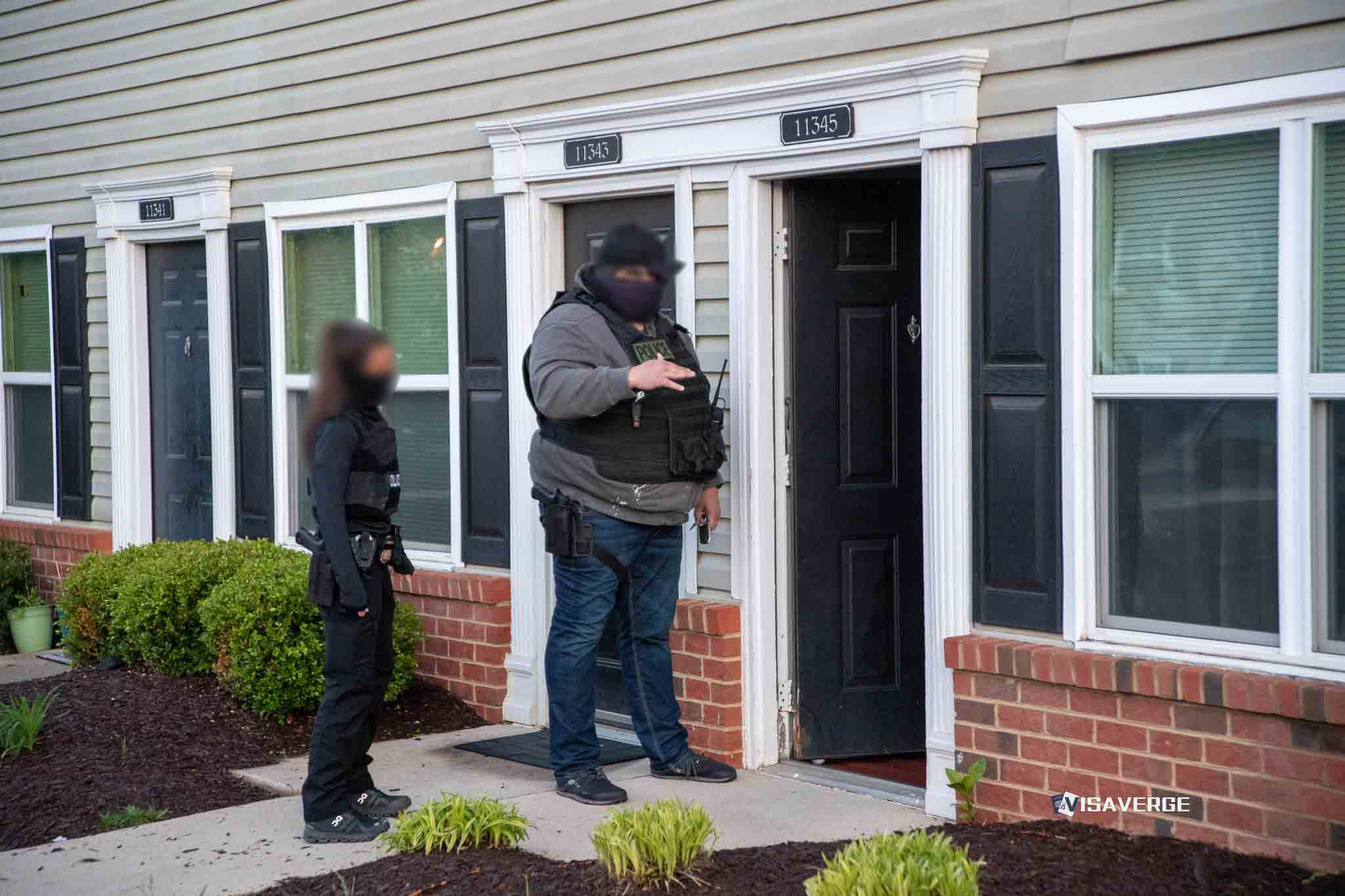
When a case begins with a “hit” from an ALPR platform (including systems marketed by Flock Safety), Barcenas is often the gateway issue: can the respondent show enough, early enough, to force disclosure about where the plate data came from and how it was used?
This article explains what is verified vs. alleged regarding ICE, Home Depot, and Flock Safety, and how Barcenas frames future litigation over surveillance-derived leads.
1) Overview and timeline: ICE, retail parking lots, and ALPR “data sharing” vs. “data access”
The current controversy sits at the intersection of (1) stepped-up ICE field operations, (2) the growing private and municipal market for ALPR systems, and (3) public claims that surveillance in or near retail lots may be feeding immigration enforcement.
Key terms, in plain language:
- ALPR/LPR: Cameras capture license plates, convert images into searchable text, and store results in a vendor platform. Searches may be done by time, location, or plate number.
- Vendor platform: The software environment where plate reads are stored, indexed, and queried. Access is controlled by accounts, roles, and audit logs.
- Data sharing vs. data access:
Sharing typically means one account grants another account permission to view certain data.
Access can also occur indirectly, such as when a local police department runs a search and relays results to another agency, or when a vendor provides services under contract terms.
In reporting and public debate, one recurring allegation is that ALPR systems around retail parking lots can function as a practical “dragnet.” What is often disputed is the pathway: whether a retailer directly provides information to ICE, whether a local law enforcement customer runs queries and communicates results, or whether other procurement routes are involved.
Similar questions have been raised in local ALPR programs where federal and local roles can blur.
2) Official government statements: what they show—and what they don’t
DHS and ICE communications in early 2026 have emphasized an assertive enforcement posture. These statements tend to appear as newsroom releases, press briefings, or operational summaries describing arrests, officer safety issues, and public messaging.
They are useful for understanding what the agency says it is doing, but they usually do not establish the precise investigative methods used in any single arrest.
A critical distinction in surveillance debates is between:
- Operational claims (e.g., arrests during an operation), and
- Legal authority and procurement (e.g., what data ICE can buy, request, or receive; what oversight applies).
Legislative proposals aimed at limiting certain mobile biometric tools reflect a broader privacy debate about accuracy, error rates, and due process. That debate also overlaps with concerns courts have expressed about new technologies, including accuracy concerns in AI-assisted contexts.
None of this, standing alone, proves that any particular retailer coordinated with ICE. It does, however, shape the environment in which respondents may need to challenge surveillance-derived evidence.
Public statements about an “operation” rarely identify the data source that initiated a stop. If the first lead was ALPR-driven, it may not be obvious from arrest paperwork.
3) Policy mechanics and why funding levels change risk calculations (without proving a retailer link)
Recent appropriations and staffing increases—widely reported by DHS and others—can expand enforcement in ways that affect communities even absent proof of coordination with a specific business.
In practical terms, larger budgets can support more field teams and analytic capacity, more detention space and transportation logistics, more contracts for data aggregation and investigative tools, and more cross-agency “task force” style collaboration.
Commercial data and analytics can enter investigations through multiple routes: direct procurement, local-federal coordination, or “lead development” shared from other law enforcement entities. Reporting on ICE funding changes has made many communities more focused on technology as an operational accelerant.
Still, statistics about arrests, appropriations, or contracts do not prove that Home Depot (or any particular retailer) is providing data to ICE. They describe the broader enforcement ecosystem in which surveillance leads may become more common—and more difficult to trace.
4) The Home Depot and Flock Safety connection: what investors allege, what’s denied, and what remains unknown
What investors are asking for. Shareholder proposals commonly seek risk assessment and governance reporting. Privacy and civil rights concerns can be framed as “material” business risks because they may affect brand reputation, customer trust, litigation exposure, and compliance costs.
What is alleged. Institutional investors have pointed to reports suggesting that local police may access or receive ALPR reads from cameras in or around Home Depot lots and that ICE could obtain resulting information, directly or indirectly.
What is denied. Home Depot has publicly denied direct coordination with ICE in connection with such activity. A denial of “coordination” is important, but it may not resolve several narrower technical questions, including whether law enforcement customers have independent access to ALPR data near store locations.
What Flock Safety has said (in essence). Flock has publicly emphasized that it does not have a direct contract with ICE in this context and that the customer controls the data and associated sharing settings.
That position is consistent with how many ALPR platforms operate: access permissions can be configured by the account holder, and sharing can be limited or expanded.
Key verification questions that determine the real pathway:
- Who owns and operates the cameras (retailer, landlord, business improvement district, or police)?
- Who is the end-user account holder in the vendor platform?
- What are the retention settings and search capabilities?
- Are there sharing permissions with law enforcement entities?
- Are audit logs available showing searches, users, and data exports?
“ICE didn’t contract with the vendor” does not necessarily answer whether ICE received results from a different agency that did have access.
5) Case analysis: how Matter of Barcenas shapes ALPR-based challenges in removal proceedings
Key facts in Barcenas (and why they matter now)
In Matter of Barcenas, the respondent sought suppression of evidence in deportation proceedings. The BIA emphasized that immigration proceedings are civil in nature and that suppression is not automatic.
The respondent must first come forward with specific facts showing illegality. That threshold requirement is the core practical barrier in ALPR disputes.
A respondent often knows only that ICE appeared at a location, asked questions, or made an arrest. The respondent may not know whether an ALPR “hit” triggered surveillance, whether a local officer queried a database, or whether information was obtained via a commercial source.
The legal framework respondents run into
- Suppression in immigration court is limited under INS v. Lopez-Mendoza, 468 U.S. 1032 (1984), though many circuits recognize suppression for egregious Fourth Amendment violations or other exceptional circumstances.
- The BIA’s Barcenas standard means you typically need declarations, records, or concrete inconsistencies before the Immigration Judge will require the government to explain its evidence chain.
Where ALPR changes the litigation posture
ALPR leads can create a “black box” problem: the initial identification may be invisible in the paperwork. In practice, counsel may look for inconsistencies between the I-213 narrative and officer testimony.
Counsel may also search for signs the stop lacked individualized suspicion, indications a plate was queried near a sensitive site, or patterns of repeated enforcement at a single location that suggest a targeting method.
Respondents may seek subpoenas, Freedom of Information Act (FOIA) requests, and protective orders, but success often turns on meeting Barcenas’s prima facie threshold first.
Circuit variation to watch: Standards for what counts as an “egregious” violation—and what proof is required—can vary by circuit. This means ALPR-based suppression arguments may play differently depending on where proceedings are venued.
6) Practical steps: verifying claims, reducing risk, and finding authoritative sources
If you are trying to evaluate whether ALPR data is involved in enforcement near a particular location, focus on a calm, document-driven workflow.
- Identify the precise location (address, parking lot boundaries, nearby intersections).
- Identify who controls the cameras (property owner, tenant, police department, or contractor).
- Request the governing documents: contracts, policies, retention schedules, sharing settings, and audit practices.
- Document what you can safely observe: camera placement, signage, and public meeting records.
- Get individualized legal advice before taking steps that could affect a pending case.
For official information about DHS and ICE activities and privacy controls, start with official DHS and ICE sources.
Broader debates about identity systems and surveillance are also part of this picture, including digital ID privacy and the privatized enforcement trend.
Deadline note: If you are in removal proceedings, evidence challenges and motions must usually be raised early. Talk to counsel immediately so deadlines are not missed.
Practical takeaways for immigrants, families, and advocates
- Don’t assume the data pathway. “Home Depot,” “Flock Safety,” and “ICE” may be connected in public debate, but any specific case may involve local police systems, separate vendors, or unrelated leads.
- Barcenas is the gatekeeper. Without specific facts supporting illegality, immigration judges often will not force the government to disclose how a lead was generated.
- Jurisdiction matters. Circuit law can affect suppression standards and what counts as “egregious.”
- Get counsel early. ALPR-related challenges are evidence-intensive and can involve FOIA strategy, subpoenas, and expert review of logs and policies.
If you or a family member has been arrested or placed in proceedings after an encounter near a retail location, consult a qualified immigration attorney. A lawyer can evaluate suppression, termination, bond, and relief options under the Immigration and Nationality Act, including asylum (INA § 208), withholding of removal (INA § 241(b)(3)), Convention Against Torture protection, or cancellation of removal (INA § 240A), where applicable.
AILA Lawyer Referral: https://www.aila.org/find-a-lawyer
⚖️ Legal Disclaimer: This article provides general information about immigration law and is not legal advice. Immigration cases are highly fact-specific, and laws vary by jurisdiction. Consult a qualified immigration attorney for advice about your specific situation.