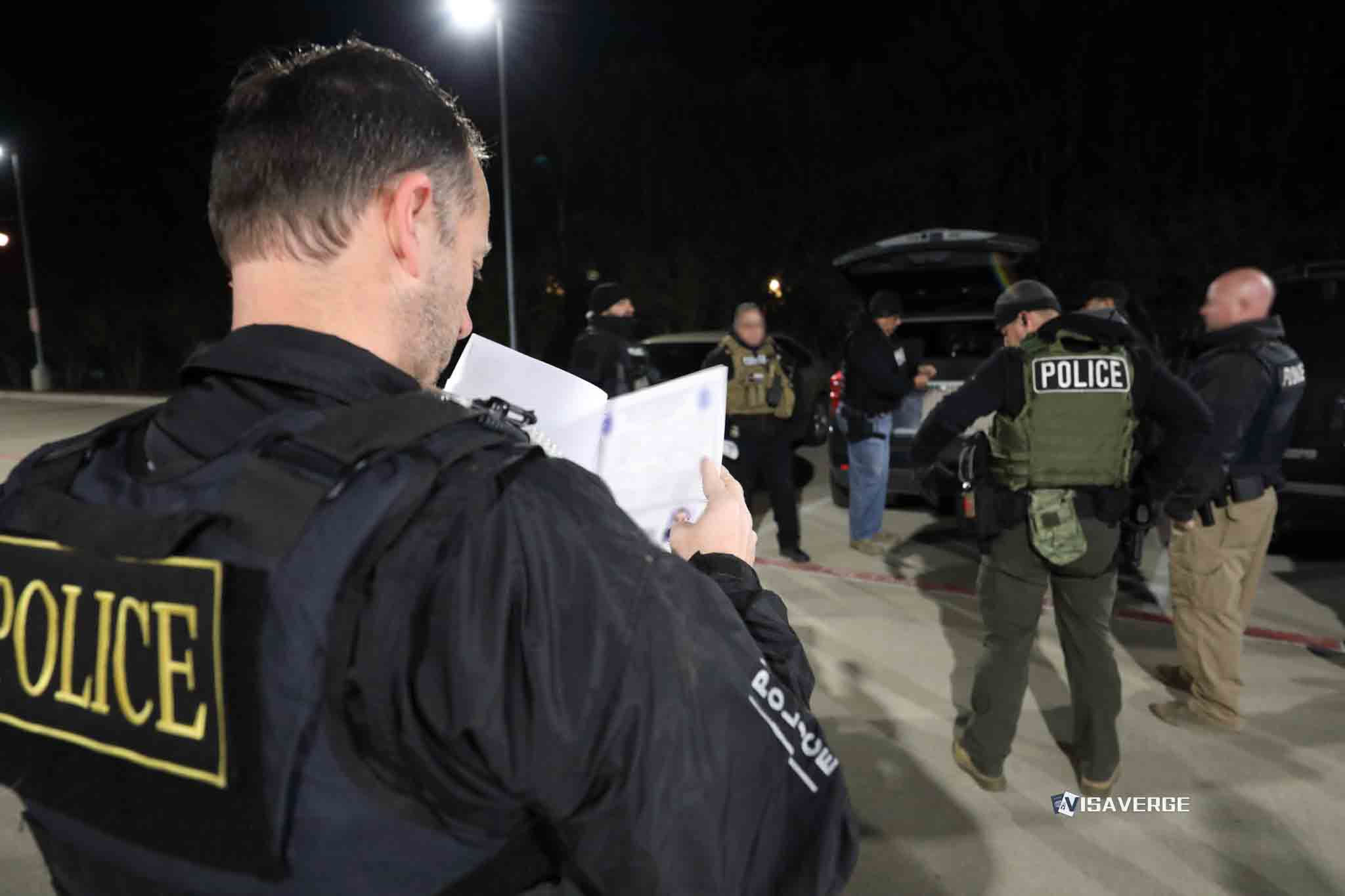
- Operation Catahoula Crunch has targeted construction logistics near Louisiana’s Meta Platforms data center project.
- Over 90% of those detained initially had no criminal record, emphasizing civil immigration enforcement.
- Legal defenses prioritize securing immigration bonds and challenging the validity of off-site traffic stops.
(RICHLAND PARISH, LOUISIANA) — For immigrants swept up in Operation Catahoula Crunch near the Meta Platforms data center construction corridor, the most immediate “defense strategy” is often a two-track plan: (1) seek release from custody through immigration bond (or parole/alternatives), and (2) build a merits defense that may include challenging the stop and evidence, contesting removability, and pursuing any available relief from removal.
What makes the Richland Parish reports unusual is not just the project scale, but the enforcement method. Local confirmation described targeted traffic stops of dump trucks headed toward the build area, with ICE arrests based on immigration status.
Even when enforcement never enters a private worksite, off-site logistics become a high-exposure point for drivers, subcontractors, and mixed-status families. This article explains what is confirmed versus alleged about the operation, then walks through practical immigration-court defenses that attorneys typically assess after traffic-stop based arrests.
1) Overview and context: why this matters around a major build
Operation Catahoula Crunch is described as a multi-week enforcement push in northeast Louisiana, including the Richland Parish area near a major Meta Platforms data center project. Public attention rose in the days leading up to mid-January 2026, after reports tied enforcement activity to traffic corridors serving construction logistics.
Large construction projects rely on layered contractors and steady transport of materials and labor. A surge in traffic-stop enforcement can ripple outward, affecting staffing, delivery schedules, and local services, and raising anxiety in immigrant households, even among lawful residents.
This local episode fits a national pattern in which routine encounters can trigger immigration consequences, similar to reporting on expanded ICE raids and enforcement actions near other public works, including a drainage project raid.
2) Incident details and targets: why traffic stops are a flashpoint
Local confirmation described federal agents stopping dump trucks traveling toward the construction area and arresting two drivers based on immigration status. A driver is visible, travels predictable routes, and is easy to stop, making logistics roles a common enforcement intersection point.
Immigration checks can arise during routine encounters in several ways, including identity checks after a traffic stop, database queries of names or fingerprints, or referrals to federal immigration officers. That exposure is highest for drivers, day labor transport, and subcontractor supervisors who move between sites and vendors.
- A traffic stop leads to an identity check
- Names or fingerprints are queried through databases
- A referral is made to federal immigration officers
Related reporting has emphasized how traffic stops fuel immigration arrests, including data suggesting arrests start with traffic encounters in some task-force models.
3) Official statements and government position: what’s confirmed vs. what isn’t
DHS has framed Louisiana enforcement as part of a broader national approach emphasizing arrests of “criminal” noncitizens and enforcement against fraud. Named DHS officials made public remarks tied to that framing.
Separately, the Richland Parish Sheriff’s Office stated that the specific incident involved traffic stops on trucks headed to the facility, and that ICE activity did not involve entering the Meta site itself. That site-access distinction affects how employers and prime contractors assess risk and what compliance records may be requested later, and by whom.
DHS has also emphasized public messaging and narrative control in other contexts, including debunking narratives and disputes about sensitive-location claims, such as school actions.
4) Arrest statistics and enforcement scale: what the numbers can and can’t prove
Public reporting has cited approximately 370 arrests as of December 18, 2025, under the operation. Internal planning documents reported by national media referenced an initial 5,000-arrest goal across Louisiana and Mississippi. Early-week reporting also indicated that over 90% of those detained in the first week had no prior criminal record.
- 01DHS Newsroom (official press releases and statements)
- 02ICE Newsroom (enforcement announcements and operational updates)
- 03WOW.DHS.GOV (enforcement transparency portal as referenced by DHS)
Those figures should be read carefully: a reported total is a snapshot in time, a “goal” signals intent but is not proof of outcomes, and “no criminal record” can still align with detention because many cases are civil under immigration law.
Civil vs. criminal status is central. Most immigration violations are civil matters under the Immigration and Nationality Act. Detention can be triggered by removability grounds, not criminal guilt. Some people will also face criminal charges, but many will not.
Warning: A civil immigration arrest can move fast. Deadlines for bond requests, FOIA, and case triage are time-sensitive. Consult counsel immediately if a loved one is detained.
A surge of civil arrests can still change workforce behavior, increasing absenteeism and contractor turnover, and shifting community routines, including travel patterns.
5) Impact on infrastructure and corporate risk: what delays look like without a worksite raid
Major data center builds are dependency-heavy, relying on trucking, specialized trades, concrete and aggregate supply, fuel, lodging, and food services. When enforcement focuses on roads serving a project, disruption can occur without any federal entry onto private property.
Common operational impacts include missed deliveries, subcontractor churn, scheduling slippage, and increased compliance costs. Vendors and local officials may fill public-information gaps when companies decline to comment, which can amplify contractual and reputational risk.
- Missed deliveries when drivers avoid routes
- Subcontractor churn when workers leave a jobsite region
- Scheduling slippage from reduced crew availability
- Increased compliance costs and document audits
Meta reportedly declined to comment on the arrests. From a risk standpoint, a “no comment” can leave gaps that industry actors may address by tightening onboarding, I-9 protocols, and subcontractor indemnity language.
For immigrants, proximity to a worksite does not determine removability. The government’s evidence and the person’s immigration history usually drive the case.
6) Operational shifts and strategic pivot: what redeployment does—and doesn’t—mean
Reports indicated federal personnel were being shifted from Louisiana to Minneapolis for what DHS described as a major enforcement operation. A redeployment may reduce local intensity but can also be temporary.
Readers should not assume a pivot means the Louisiana activity is “over.” Enforcement often comes in waves and varies by staffing, local partnerships, and political priorities.
For workers and travelers, planning should focus on lawful preparedness, not rumor. That includes keeping identification consistent, maintaining valid licenses when eligible, and speaking to counsel about risks tied to travel.
7) Impact on individuals: what “deportation proceedings” typically means
After an ICE arrest, many people enter removal proceedings before EOIR immigration courts. The process often includes custody determination, service of a Notice to Appear (NTA) under INA § 239, master calendar hearings, and later individual hearings.
Timelines vary widely depending on detention location, court backlogs, and legal complexity. Common immediate concerns include bond eligibility, evidence preservation, and meeting court deadlines.
Core defense strategy after a traffic-stop arrest
An attorney will usually analyze several buckets at once, including release strategy, suppression or termination arguments, contesting removability, and applying for relief if eligible. These assessments happen quickly and often in parallel.
A. Release strategy (bond or parole)
Bond authority depends on the statute and the charge. Some people face mandatory detention under INA § 236(c); others may request bond under INA § 236(a). Immigration judges consider flight risk and danger, guided by Matter of Guerra, 24 I&N Dec. 37 (BIA 2006).
B. Suppression or termination arguments (when warranted)
Immigration proceedings have narrower suppression remedies than criminal courts, but attorneys may seek suppression or termination in cases involving egregious violations or unreliable proof. Key BIA frameworks include Matter of Barcenas, 19 I&N Dec. 609 (BIA 1988) and Matter of Garcia-Flores, 17 I&N Dec. 325 (BIA 1980).
Circuit law can differ, so local precedent is important when evaluating suppression strategies and potential remedies.
C. Contest removability
The government must often prove alienage and removability by clear and convincing evidence. Respondents can challenge identity documents, alleged admissions, and record reliability as part of that contest.
D. Apply for relief if eligible
Relief options depend on facts and may include asylum (INA § 208), withholding (INA § 241(b)(3)), CAT protection, cancellation of removal (INA § 240A), adjustment through a petitioning relative, or other remedies. Eligibility turns on entry and status history, criminal issues, and prior orders.
Deadline alert: Missing a court date can result in an in absentia removal order. That can create long bars to reopening. Keep EOIR address updates current under INA § 239(a).
Families often experience secondary harms such as skipping healthcare or children missing school. Employers may see sudden staffing gaps. The safest immediate steps are organizational, not evasive.
- Identify an emergency contact and caregiver plan
- Gather immigration papers, ID copies, and bond money plans
- Ask counsel how to locate a detainee and request records
8) Official government sources and transparency: how to verify claims
When rumors spread, rely on primary sources with dates and named officials. DHS and ICE publish updates through their official newsrooms, and DHS has promoted a transparency portal that may highlight selected arrests and narratives.
Readers should expect framing and incomplete context from official dashboards. To evaluate credibility, check date stamps, whether a release names an office, and compare multiple official releases for consistency.
Separate “policy messaging” from confirmed operational facts. For official statements, start with the DHS Newsroom and the ICE Newsroom. For court process information, EOIR’s site at EOIR is a reliable reference point.
Warning: Notarios and unlicensed “consultants” often appear after high-profile sweeps. Unauthorized practice can destroy defenses and cause missed deadlines.
Realistic outcome expectations
Outcomes vary by jurisdiction, detention status, and individual history. In many traffic-stop based cases, the most realistic early goal is release from custody while the case is litigated. Some people will have strong relief claims; others will have limited options.
Because circuit law differs on suppression and detention issues, local counsel matters. Representation is not optional in practice; it is often the difference between a controlled process and a cascading crisis.
Resources (official and legal help)
- DHS Press Releases
- ICE Newsroom
- EOIR Immigration Court Information
- AILA Lawyer Referral
⚖️ Legal Disclaimer: This article provides general information about immigration law and is not legal advice. Immigration cases are highly fact-specific, and laws vary by jurisdiction. Consult a qualified immigration attorney for advice about your specific situation.
Related Coverage