- A multi-agency operation in West Virginia led to 660 arrests involving ICE and local partners.
- The surge utilized 287(g) partnerships to expand enforcement capabilities through jail screenings and shared data.
- Officials emphasized that arrests begin legal processes but do not automatically result in immediate final deportations.
(WEST VIRGINIA) — A large, multi-agency operation across West Virginia—driven by U.S. Immigration and Customs Enforcement (ICE) in collaboration with state and local law enforcement—led to 660 arrests and shows how 287(g) partnerships can widen the reach of immigration enforcement and speed up processing that may lead to removal.
The operation was described as a surge-style effort combining federal officers with state and local coordination. Hundreds of people were arrested during the operation, and public announcements included key dates, partner counts, and the announcement date of January 30, 2026.
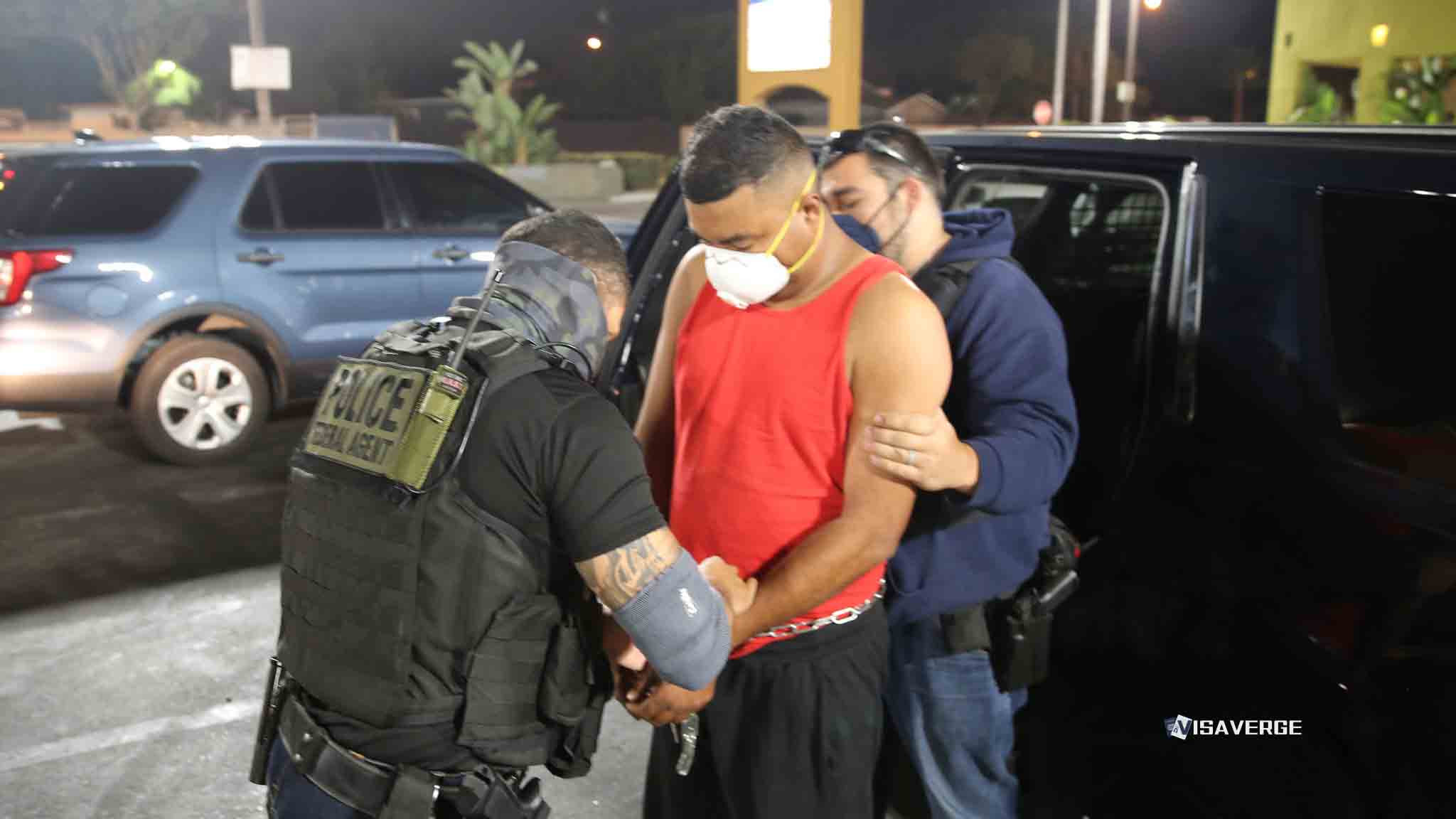
1) Executive summary of the operation
A statewide ICE enforcement operation is a coordinated set of immigration enforcement actions run over a fixed period, often with extra personnel and help from partner agencies. In West Virginia, the effort was described as a surge-style operation that combined federal officers with state and local coordination.
“processing for removal” generally means the federal government begins the steps that may lead to deportation. Those steps often include identification checks, a decision about custody, and serving a formal charging document that starts an immigration court case.
Some cases end quickly. Others take months. Key dates and figures were publicly reported in the operation’s announcement, including the total arrest count, the start and end dates, the number of 287(g) partners involved, and the announcement date of January 30, 2026.
2) Operation timeline and locations
The operation ran over a defined period in early January 2026 and spread across multiple West Virginia cities. Geography matters in these surges because immigration enforcement is often shaped by where people are stopped, booked, or interviewed.
A multi-city footprint can increase encounters simply because more agencies and more contact points are active at once. Surge teams are temporary deployments of federal personnel who reinforce an area for a set mission.
When those teams come from an out-of-state ERO field office, the practical effect can be more interviews, more custody decisions, and more arrests completed in a short window. ERO is ICE’s unit that focuses on arrests, detention, and removals.
Multi-location operations can also increase encounters through several pathways. Jail screening after local arrests is one pathway. Traffic stops can be another, when local officers make a stop for a non-immigration reason and then check identity information.
Interagency referrals also play a role, such as tips or case leads shared between agencies. None of these guarantee an immigration arrest. They do increase opportunities for identification.
3) Arrests and notable cases
ICE operations can produce arrests in more than one way. Some are targeted arrests, where officers go looking for a specific person. Others are “encounter” arrests, where immigration issues are identified during a separate interaction, such as a jail booking or a traffic stop.
Enforcement announcements often highlight a few individuals to support a public-safety message. That does not mean every arrested person has the same background. It is more accurate to read the examples as reported cases used to explain why an operation was prioritized.
- Sagar Singh, described as an Indian citizen arrested under “Operation ICE Wall,” after failing to stop for a mandatory brake check involving a commercial vehicle context
- Ling Yan (aka Yang Ning), described as a Chinese national convicted of two counts of endangering the welfare of children
Those examples sit inside a broader set of arrests that can include people with criminal convictions, people with pending charges, and people whose primary issue is an administrative immigration violation. “Administrative” can mean overstaying a visa or lacking legal status. It is not the same thing as a criminal conviction.
After an ICE arrest, the next steps are usually process-heavy. Officers confirm identity and immigration history during intake. ICE then makes a custody decision, which can include continued detention or release under conditions.
A charging document is typically issued to start removal proceedings, and a case may be scheduled in immigration court. Some cases are resolved quickly; others proceed through multiple hearings over time.
4) Partnerships and enforcement framework
West Virginia’s operation also drew attention because it relied on the 287(g) program, a federal partnership framework that allows trained state or local officers to perform certain immigration-related functions under ICE direction. In plain language, 287(g) partnerships can let local agencies help identify and refer people who may be removable, using defined procedures and federal oversight.
Common touchpoints in 287(g)-connected enforcement include jail intake screening, detainer requests, and information-sharing between agencies. These practices provide multiple paths for immigration issues to be identified.
- Jail intake screening, where identity and database checks may flag an immigration issue
- Detainers or requests, where ICE may ask a jail to hold someone for a limited period so ICE can assume custody, when legally appropriate
- Information-sharing, where local agencies and federal officers exchange records that help confirm identity and status
Partnerships can expand referrals beyond pre-identified targets. A person may come to attention after a local arrest unrelated to immigration. The immigration issue may only be identified later. That is why these operations can capture a wider set of cases than a list of named targets.
Immigration enforcement actions also can involve people who have not been convicted of crimes. A civil immigration violation can still trigger removal proceedings. The legal track is separate from state criminal court, even if the same person is involved in both systems.
| Metric | Value | Context |
|---|---|---|
| Total arrests reported | 660 | Arrests announced after the statewide enforcement operation concluded. |
| Operation window | January 5, 2026 – January 19, 2026 | Defined surge period in early January 2026. |
| 287(g) participation | 14 of ICE’s 287(g) partners | West Virginia partners worked with ICE as part of the surge. |
| Key operational model | Multi-agency surge | Federal ERO-led effort supported by state and local coordination. |
5) Officials’ statements and how to read them
Michael Rose, Acting Field Office Director for ERO Philadelphia, framed the operation as an example of how ICE partnerships can “enhance public safety” and support the “integrity” of the immigration system. His remarks also emphasized training and professional standards for 287(g) partners.
Patrick Morrisey, West Virginia’s governor, thanked ICE and referenced collaboration with state entities, including the State Police. He framed the results in public-safety and deterrence terms and linked the operation to national politics.
Matthew L. Harvey, U.S. Attorney for the District of West Virginia, described the operation as a collaboration among local, state, and federal partners and pointed to enforcement of federal laws. U.S. attorneys sometimes highlight coordination when a surge includes both immigration arrests and criminal case development.
Readers should separate three terms that are often blended in public debate: arrest, detention, and removal. An arrest is the start. Removal may happen later, after legal steps.
⚠️ Arrest announcements do not equal final deportations; readers should monitor official updates for actual disposition and court outcomes
6) Impact on individuals and broader context
Post-arrest processing usually follows a predictable path, even when individual facts differ. Intake comes first, which can include fingerprints, interviews, and database checks. Next comes a custody review.
ICE may keep someone detained, release them on bond if eligible, or use an alternative to detention in some cases. Eligibility can vary widely based on history and legal posture.
A charging document is then typically issued. In many cases, that document is a Notice to Appear, which begins immigration court proceedings. The person may be transferred to a detention facility, sometimes out of the local area, depending on bed space and case handling.
Court scheduling can follow, with hearings that address removability and possible relief claims. Outcomes are case-specific, and no public announcement can determine the end result by itself.
Basic rights concepts come up early. People in immigration proceedings may hire an attorney, but the government generally does not provide one at public expense. Interpreters are commonly available in immigration court for people who need language help.
Accurate identity information matters, because mistakes in names or dates of birth can slow down bond decisions and court scheduling. Enforcement encounters often begin during a local law enforcement interaction.
A person may be booked into a county jail for a local charge, then screened for immigration issues. In areas with active partnerships or strong information-sharing, the referral path can be faster. That is a major reason 287(g) partnerships draw both support and criticism.
7) Official sources and references
Official verification matters with enforcement news, especially when numbers and timelines move quickly. The most direct public reference points are the ICE Newsroom and the DHS portal used for enforcement updates and releases. Check postings carefully for dates, jurisdiction, and the responsible ICE office.
Document organization also matters for families and employers caught in the confusion. Keep copies of any paperwork received, including any charging document, custody notices, and hearing information. Small details can matter later.
✅ Verify updates directly with the ICE Newsroom or DHS portal and keep copies of any official documents received
This article discusses law enforcement actions and enforcement framework. It is informational and not legal advice. Readers should verify updates with official sources (ICE Newsroom, DHS Portal) for the most current information.