- Applicants must disclose all legal encounters, including arrests, citations, or detentions, even if no charges were filed.
- Requirement applies to sealed or expunged records and incidents occurring outside the United States.
- Documentation is required for most criminal history disclosures, except for minor traffic violations under $500.
Applicants should answer “Yes” to the question “Have you EVER been arrested, cited, or detained?” when any law-enforcement or official detention encounter falls within its scope. The requirement applies even when authorities filed no charges, a court cleared the record, or the incident happened outside the United States.
The question appears in Form N-400 and Form I-485, according to the Instructions for Form N-400 updated Jan 20, 2025. It can cover police contact, immigration custody and inspection by U.S. Customs and Border Protection.

A traffic citation can count. So can a summons to appear in court.
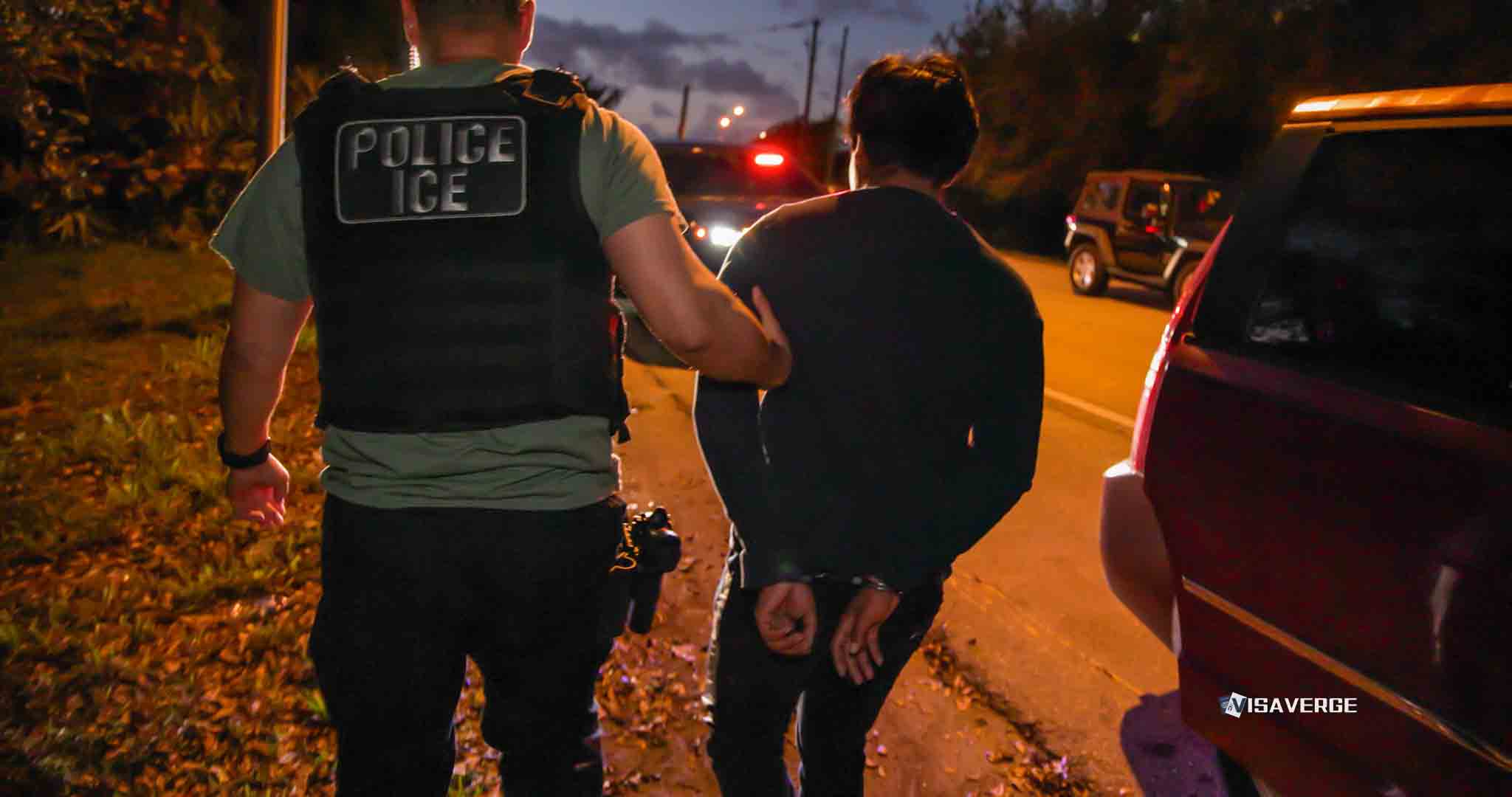
Applicants should disclose encounters involving police, the Department of Homeland Security, CBP, Immigration and Customs Enforcement or the military. A person held by an official without a formal arrest or criminal charge also falls within the question’s reach.
That includes a traveler held at a port of entry or sent to “secondary inspection” by CBP. The form’s wording reaches conduct “anywhere in the world,” including foreign arrests and other qualifying encounters.
The phrase can therefore affect people completing Immigration forms even when they do not view themselves as having a criminal record. USCIS expects the answer to describe the event accurately and to include supporting records where the instructions require them.
The answer stays “Yes” after an expungement or a dropped case
A sealed, expunged or otherwise cleared record does not change the answer. USCIS guidance states: “You must answer 'Yes'. even if your records were sealed or otherwise cleared.”
The supporting paperwork depends on what happened next. Applicants should distinguish between the disclosure itself and the documents needed to prove the outcome.
| Situation | What the applicant must do |
|---|---|
| Minor traffic violation | Disclose it, but documentation generally is not required unless it involved alcohol or drugs, an arrest, or a fine of $500 or more |
| Arrest with no charges | Disclose the arrest and provide an official statement from the arresting agency or court confirming that prosecutors filed no charges |
| Expunged record | Disclose the matter and provide a certified expungement order plus the original court disposition |
| Foreign arrest | Disclose the incident and provide certified English translations of all foreign criminal records |
| Juvenile delinquency | Disclose the matter and provide the relevant court or other public record |
Minor traffic matters receive a limited documentation exception. The disclosure requirement remains when the incident qualifies under the question, but applicants generally do not submit records for minor traffic violations unless one of the listed conditions applies.
An arrest that ended without charges still requires a response and documentation. The arresting agency or court statement should establish that no charges were filed.
Juvenile cases still need a paper trail
Juvenile delinquency may not count as a conviction for many legal purposes, but applicants must still disclose it. USCIS policy calls for records that allow an officer to evaluate the disposition.
The USCIS Policy Manual says: “An adjustment applicant must disclose all arrests and charges. If any arrest or charge was disposed of as a matter of juvenile delinquency, the alien must include the court or other public record that establishes this disposition.” The instruction appears in 7 USCIS-PM A.4(A)(7).
Foreign incidents require the same basic disclosure approach. Applicants must provide certified English translations of all foreign criminal records connected to a reportable arrest.
Arrest history can affect naturalization review
For naturalization applicants, an arrest can become part of the good moral character review. USCIS examines conduct during the applicable 3-to-5-year statutory period, according to the agency’s policy manual.
Conduct outside that period can also enter the review if it suggests a lack of reformation. The relevant guidance appears in USCIS Policy Manual Volume 12, Part F.
The agency also updated its screening process on March 30, 2026. USCIS implemented “Operation PARRIS” and enhanced biometric matching designed to notify officers about new criminal information or matches with older arrest records.
That screening makes consistency between an applicant’s answer and available records especially important. A person who remembers an encounter only as a brief detention should still examine the form’s broad language before choosing “No.”
Officials have tied false answers to immigration consequences
The Department of Homeland Security has warned that false statements in immigration proceedings can carry consequences after a person receives a benefit. Secretary of Homeland Security Markwayne Mullin said June 12, 2026:
“American citizenship is a privilege, and it must be earned honestly. If you come here, break our laws, and lie in your immigration proceedings, you forfeit that privilege. DHS will not stand idly by while Americans are harmed by criminals. who have exploited our generosity and gamed our immigration system.”
USCIS says failure to disclose a qualifying encounter can contribute to denial of an immigration benefit, removal proceedings or denaturalization after citizenship. The agency’s enforcement record includes the September 2025 arrest of Muhammad Chaudhry, a Pakistani national placed in removal proceedings after USCIS discovered that he had lied about a criminal history in Australia on multiple citizenship applications over a 17-year period.
Applicants should gather arrest reports, court dispositions, expungement orders and certified translations before submitting a form. The agency’s Adjustment of Status Policy Manual, Good Moral Character guidance, Form N-400 instructions and USCIS Newsroom provide the cited government guidance and resources.