- Local agencies perform limited federal immigration functions under U.S. Immigration and Customs Enforcement supervision through 287(g) agreements.
- Participation is currently voluntary for South Carolina agencies, involving jail enforcement or task force operational models.
- A 2026 legislative proposal seeks to mandate 287(g) participation for all sheriffs operating local correctional facilities.
(SOUTH CAROLINA) — Local 287(g) agreements are the formal process that allows certain South Carolina police departments and sheriff’s offices to perform limited federal immigration functions under U.S. Immigration and Customs Enforcement (ICE) supervision, a development that matters most to noncitizens who may be booked into local jails or stopped during certain enforcement operations in the Grand Strand and the Pee Dee region.
Section 287(g) of the Immigration and Nationality Act—added by the Illegal Immigration Reform and Immigrant Responsibility Act of 1996 (IIRIRA)—authorizes DHS to enter written memoranda of agreement (MOAs) with state and local agencies. See INA § 287(g). These MOAs set out which officers may be trained and certified, what they may do, and what ICE retains as federal oversight.

Participation is typically voluntary at the local level, unless a state law requires it.
Models of 287(g) participation
- Task force model: Trained local officers may perform certain immigration screening and enforcement functions during field operations, consistent with the MOA’s scope and ICE direction. Day-to-day impact can include immigration checks tied to local law enforcement activity.
- Jail enforcement model: Trained officers work in a detention setting. Screening often occurs after booking, which can affect whether ICE issues a detainer request or begins removal processing.
1) The 287(g) process, step by step: from MOA to day-to-day enforcement
- Local agency decides whether to participate.
- Who is involved: Sheriff, police chief, county or municipal leadership, and legal counsel.
- Key documents: Draft MOA terms (from ICE), internal policies on stops, arrests, and detention operations.
- Decision point: Some agencies choose task force authority, some choose jail authority, and others decline due to staffing or liability concerns.
- Negotiate and sign an ICE MOA.
- What this accomplishes: The MOA is the legal instrument that defines what local officers may do and what ICE supervises.
- Key documents: Signed MOA; any agency-specific standard operating procedures that align with the MOA.
- Where to verify: MOAs are commonly posted by ICE or referenced by the agency in public records.
- Select and train designated officers.
- What this accomplishes: Only trained, certified officers may exercise delegated functions under the MOA.
- Typical documentation: Training completion records; designation letters; supervision structure.
- Possible delays: Training schedules, staffing shortages, and turnover can slow implementation.
- Implement operational workflows.
- Jail model workflow (typical sequence): booking → records checks → 287(g) screening by trained staff → possible ICE involvement.
- Task force workflow (typical sequence): enforcement activity → encounter → limited immigration function under MOA authority → referral to ICE as appropriate.
- Common documents: Booking records, arrest reports, identity documents, criminal history records, and any ICE-related paperwork generated after screening.
- Coordinate with ICE and maintain compliance.
- What this accomplishes: The MOA usually requires supervision, recordkeeping, and periodic reporting.
- Decision point: If an individual is identified as potentially removable, ICE may decide whether to take custody or initiate proceedings.
Warning: A 287(g) agreement does not give local officers unlimited immigration authority. The MOA’s scope and ICE supervision generally control what is permitted. If you or a family member is questioned about immigration status, request legal counsel before signing statements.
2) Confirmed participating agencies in the Pee Dee region and Grand Strand (late 2025)
By late 2025, multiple South Carolina agencies in the Pee Dee region and Grand Strand/adjacent areas had confirmed participation through 287(g) agreements.
This section is intended to lead into an interactive tool listing confirmed participants; the tool will provide the visual and structured presentation of agencies and models.
Pee Dee region (Florence, Marion, Marlboro areas)
- Scranton Police Department (task force model)
- Olanta Police Department (task force model)
- Coward Police Department (task force model)
- Marlboro County Sheriff’s Office (participates in the program)
Grand Strand/adjacent
- Georgetown County Sheriff’s Office (task force model)
- Horry County Sheriff’s Office (jail enforcement model at the J. Reuben Long Detention Center)
In practice, residents may see differences by model. A jail model often concentrates immigration screening inside the detention center. A task force model may be noticed through coordinated operations, traffic stops tied to criminal investigations, or post-arrest screening steps that are more visible in the field.
Statewide, South Carolina’s participation has been described in the reporting as significant, with multiple counties and police departments involved. Nationally, ICE has entered many MOAs across numerous states, and those counts can change.
MOAs may be newly signed, renewed, modified, or terminated. Staffing changes and political leadership also affect participation.
3) How agencies frame 287(g)—and how to read those statements
Local agencies often describe 287(g) agreements as a form of cooperation with federal partners. In Horry County, officials have emphasized cooperation while also stating that immigration enforcement is not the agency’s core mission.
ICE, by contrast, typically frames 287(g) as a public safety and homeland security tool, focusing on identification and removal of individuals it alleges are unlawfully present, especially those with criminal records.
Readers should separate official messaging from operational impact. Operationally, the most important day-to-day effects tend to arise from:
- Booking workflows (who is screened, when, and what databases are checked)
- Information sharing between local agencies and ICE
- Detainer requests and custody transfer decisions
- How quickly a person can contact counsel after an arrest
4) Recent enforcement activity: what a discrete operation can signal
Reported enforcement operations can offer a snapshot of how 287(g) coordination may look in the field, though they rarely answer every legal question about individual cases.
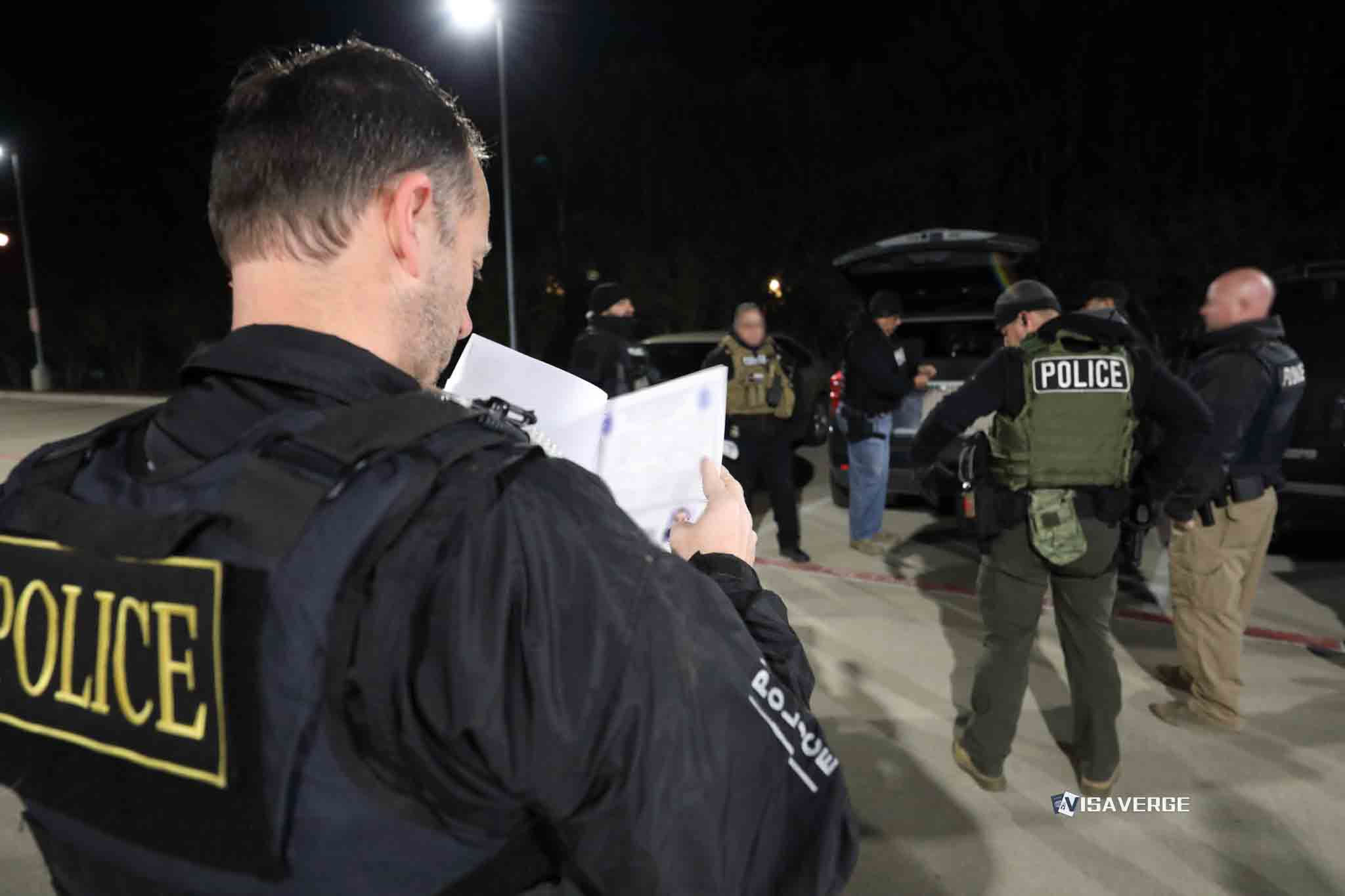
In November 2025, ICE reported an operation in lower Florence County, including Coward, Scranton, Lake City, and Olanta. The reporting described coordination details such as use of a special radio channel, and stated that 23 individuals were taken into custody.
It is important not to assume anyone’s immigration status from a headline. In many cases, removability turns on complex facts. Those facts can include manner of entry, prior orders, criminal history, and eligibility for relief. See, e.g., INA § 240 (removal proceedings); 8 C.F.R. § 1240.10 (advisals in removal proceedings).
Community reactions to these operations may differ sharply from enforcement narratives. Family members may describe those arrested as long-time residents and workers. Agencies may emphasize public safety goals. Both perspectives can coexist, and neither substitutes for case-by-case legal analysis.
Warning: If ICE is involved after a local arrest, deadlines move fast. A noncitizen may be placed into removal proceedings or transferred far from family support. Contact an immigration attorney immediately.
5) Community concerns and how jurisdictions weigh tradeoffs
In the Pee Dee region and Grand Strand, common concerns include fear of racial profiling, reduced trust in police, and the sense that ICE is “closer to home.” Those concerns often intensify in smaller towns where enforcement actions are highly visible.
Agencies that hesitate to join 287(g) often cite capacity limits. Staffing shortages and jail overcrowding can make training, supervision, and paperwork burdens harder to absorb. That is not universal, but it is a recurring argument in public discussions.
To distinguish anecdote from documented policy, look for:
- The public MOA and its stated model (task force vs. jail)
- Local written policies on stops, arrests, and jail screening
- Public meeting minutes where participation was debated
- Data shared through public records requests, where available
6) Early-2026 proposal: a shift from voluntary MOAs to a mandate
A bill introduced in early 2026 would require sheriffs who operate correctional facilities to enter 287(g) agreements. If enacted, that would change the basic posture from local choice to state mandate.
Mandates typically operate through compliance mechanisms such as oversight, reporting requirements, funding leverage, and required training. In plain terms, the state can try to ensure participation by tying it to audits, grant eligibility, or required operational steps.
The proposal described in reporting also included several specific enforcement triggers and penalties aimed at noncompliant jurisdictions, framed as accountability measures rather than optional guidance.
Supporters argue statewide participation promotes consistent enforcement and supports public safety. Opponents characterize the proposal as a state-level overreach that undercuts local control. Existing participation in other regions, including Midlands counties, is often cited by supporters as evidence that 287(g) can be implemented.
This section is intended to lead into an interactive tool that will show bill status, committee actions, and affected jurisdictions; the tool will provide dynamic updates and timelines.
Deadline Watch: If the bill advances, the most consequential moments are committee votes, floor amendments, and any “effective immediately” clause. Implementation guidance may follow, and local MOAs may be updated quickly.
7) Federal backdrop: what is known, and what remains uncertain for 2026
Reporting has linked state and local interest in 287(g) agreements to broader federal political support and funding discussions. Still, readers should treat predictions cautiously.
As of early 2026, there is no definitive public update confirming additional Pee Dee region or Grand Strand expansion beyond the known voluntary participation and the pending state mandate proposal.
To track credible changes, rely on primary sources:
- EOIR immigration court information: U.S. Department of Justice EOIR
- USCIS explanations of immigration processes (helpful for collateral issues): USCIS
Common mistakes to avoid if a family member is arrested
- Consenting to searches or interviews without counsel.
- Signing documents not fully understood.
- Missing court dates or check-ins after release.
- Assuming a criminal case outcome automatically resolves immigration consequences.
If immigration consequences are possible, consult both a criminal defense attorney and an immigration attorney. The intersection is complex, and strategy choices can affect removability and eligibility for relief. See, e.g., Padilla v. Kentucky, 559 U.S. 356 (2010).
Resources
This article provides general information about immigration law and is not legal advice. Immigration cases are highly fact-specific, and laws vary by jurisdiction. Consult a qualified immigration attorney for advice about your specific situation.
This report examines the 287(g) program in South Carolina, detailing how local police collaborate with ICE. It covers operational models, specific participating agencies in the Grand Strand and Pee Dee regions, and the significant shift toward a potential state-level mandate in 2026. The content highlights the procedural steps for agency participation and addresses the resulting legal and community impacts.