- ICE policy now allows forcible home entries using administrative warrants instead of judicial warrants for individuals with removal orders.
- Defense strategies prioritize challenging the reasonableness of entries and preserving evidence like doorbell camera footage and witness statements.
- Fourth Amendment protections remain a central legal battleground despite the increased use of administrative Form I-205 documents.
(UNITED STATES) — A May 2025 ICE policy shift on home entries has put one defense strategy at the center of many removal cases: challenging residential arrests and any resulting evidence when officers rely on administrative warrants rather than a judge-signed judicial warrant.
For families, advocates, and counsel, the practical question is immediate. When agents say they can forcibly enter residences based on immigration paperwork alone, what defenses still exist in immigration court, and what documentation will matter most?
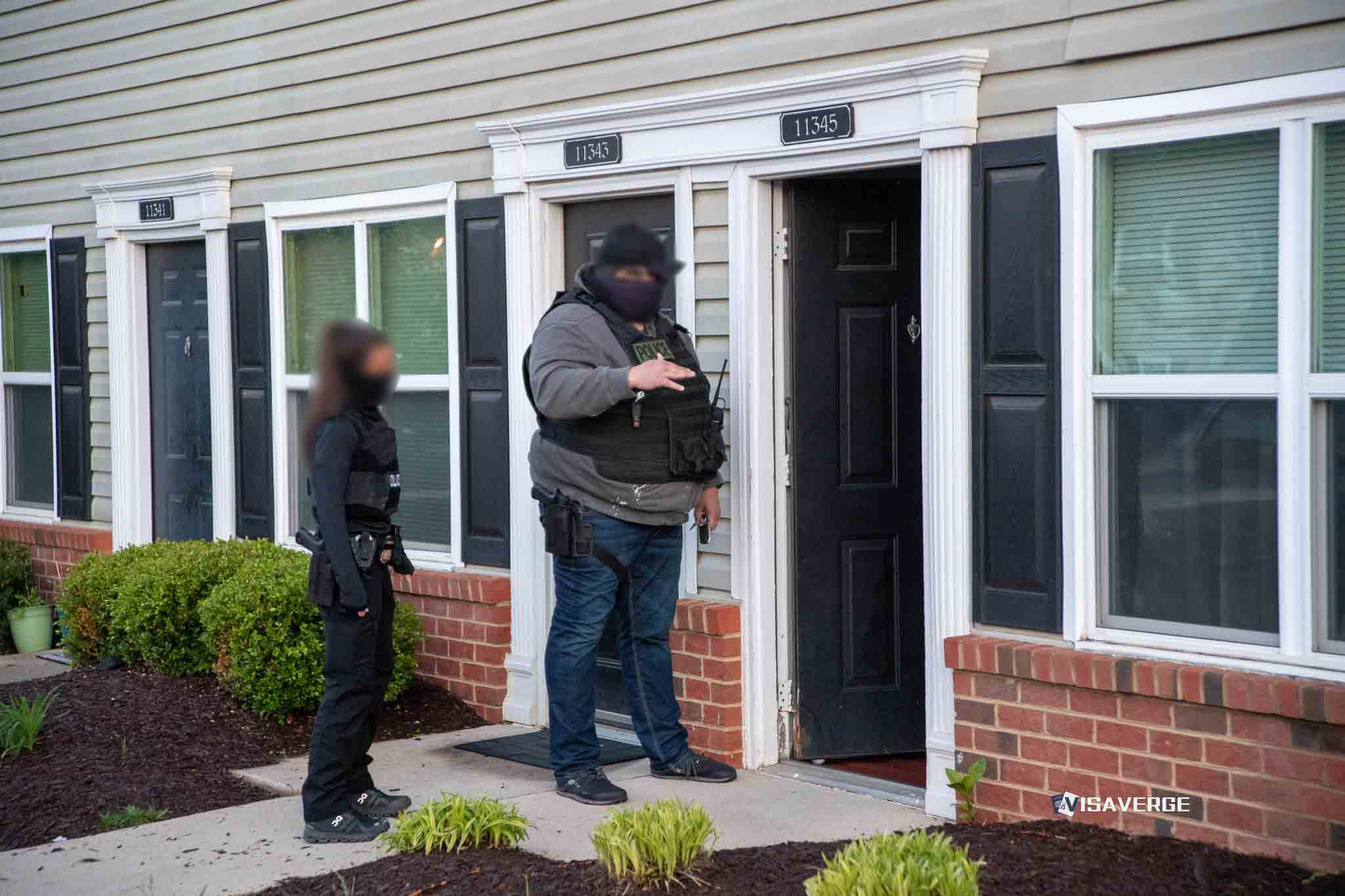
This article summarizes what DHS and ICE have said publicly and internally, then turns to concrete litigation approaches and risk-management steps. It is general information, not legal advice.
1) Policy shift: Forcible entry without judicial warrants
The reported change stems from an internal memorandum issued in mid-May 2025 and later defended by DHS in January 2026. The memo’s core claim is that ICE may enter a home to arrest a person with a final order of removal using administrative warrants, even without a judge’s warrant, and may use limited force if refused entry.
Administrative vs. judicial warrants (plain language).
An administrative immigration warrant is typically signed by a DHS official, not a judge. In home-arrest contexts, ICE commonly references forms like Form I-205 (Warrant of Removal) or other DHS warrant documents. A judicial warrant is signed by a judge or magistrate and is the type most people associate with police entry into a home.
Why the distinction matters.
Under long-standing Fourth Amendment doctrine, a home is highly protected space. A judicial warrant is the clearest path for lawful, nonconsensual entry in many contexts. If ICE relies on administrative paperwork instead, defense counsel may scrutinize whether the entry and arrest were “reasonable” and whether consent was valid.
What “forcible entry” means operationally here.
As described in the policy and subsequent statements, “forcible entry” refers to officers entering when occupants refuse, using force claimed to be “necessary and reasonable.” That can change how home encounters unfold. It can also change the factual record counsel must build.
How it differs from prior expectations.
For years, community guidance often emphasized not opening the door unless officers showed a judge-signed warrant. The memo is framed as a departure from training norms that treated administrative warrants as insufficient for nonconsensual home entry.
2) Key dates, official statements, and official framing
The paper trail matters because it separates (1) internal authorization from (2) public messaging.
Timeline narrative.
First came the May 2025 internal memo from ICE leadership. Later, in January 2026, the policy became widely discussed after a whistleblower disclosure to the U.S. Senate and subsequent DHS media responses. DHS statements framed the policy as directed at people with final orders of removal and as consistent with due process already afforded in immigration proceedings.
What officials say it is intended to accomplish.
Public framing emphasizes efficient execution of final orders and removal operations. That rationale is often paired with broad enforcement posture statements and metrics. Metrics may provide context for pace and scale, but they do not resolve Fourth Amendment questions.
Why counsel tracks both internal and public versions.
In contested cases, the difference between an internal directive and a later public explanation may matter. It can shape cross-examination, credibility disputes, and record development on training and authorization.
Warning (rights and safety): Do not physically resist officers. Resistance can trigger criminal exposure and safety risks. Legal challenges are typically made later through counsel in court.
3) Operational parameters and safeguards
The memo, as described, includes guardrails that are likely to become key fact issues in litigation.
“Necessary and reasonable” force.
This phrasing is consequential. It invites disputes about proportionality and alternatives. “Reasonable” is a constitutional term of art. It depends on the totality of facts, including perceived threats and the availability of less intrusive options.
Knock-and-announce.
The guidance reportedly requires officers to knock and announce identity and presence. If officers did not do so, or did so in a confusing way, counsel may argue the entry was unreasonable. Counsel may also probe language access and whether occupants understood what was said.
Time-of-day norms.
The policy describes a daytime-to-evening window for residential actions, with limits implied. Time can matter for credibility and reasonableness, especially if occupants were asleep, children were present, or confusion was foreseeable.
The role of Form I-205.
The policy ties authority to individuals issued Form I-205 (Warrant of Removal). For defense purposes, it is critical to determine whether the targeted person actually had a final order, whether the form existed, and whether it was properly issued and served.
Defense strategy takeaway.
In many cases, the first litigation battle is factual. What was announced, shown, understood, refused, and recorded often determines what legal arguments are viable.
4) Context: policy reversal, enforcement scope, and relevant metrics
This shift is widely characterized as a reversal from training that treated home entry as a Fourth Amendment “red line” absent consent or a judge’s warrant. Home entries are uniquely sensitive because the Constitution historically treats the home as the core protected area against unreasonable searches.
Why Fourth Amendment questions are central.
Even in civil removal proceedings, unlawful searches can matter. The Supreme Court has limited suppression in immigration court, but not eliminated it. INS v. Lopez-Mendoza, 468 U.S. 1032 (1984), left room for suppression in egregious cases or where violations undermine reliability.
How scale claims fit in.
DHS has cited large removal and “self-deportation” totals as context for enforcement intensity. Those numbers can explain why more home encounters occur. They do not, by themselves, validate a particular entry method.
Why counsel tracks both internal and public versions.
In contested cases, the difference between an internal directive and a later public explanation may matter. It can shape cross-examination, credibility disputes, and record development on training and authorization.
Warning (do not sign blindly): If presented documents during a home encounter, do not sign statements you cannot read or understand. Ask for a lawyer. Ask for an interpreter.
5) Recent enforcement examples and incidents
Two reported episodes illustrate how the policy debate becomes fact-specific.
Minneapolis reported entry tactic.
Reports described agents using a ram to enter a residence. What drew attention was the method of entry and whether officers relied on administrative documents rather than a judge’s warrant. For defense counsel, the key is corroboration: dispatch logs, body-worn camera policies, neighbor video, and photographs of damage.
Chicago operation at a residential complex.
A multi-unit operation presents distinct issues. Officers may encounter common areas, locked exterior doors, or building management. Consent questions become layered. Who could consent, and to what areas? How were units selected?
How to evaluate incident reports.
Treat initial accounts as unverified until checked. Look for agency confirmation, court filings, sworn declarations, and contemporaneous video. Differences between early narratives and later documentation can be central to motions.
Defense strategy: build the record early.
If the person is detained, counsel may seek a prompt bond strategy and preservation letters. If released, counsel may still pursue FOIA and declarations quickly.
Deadline note (act fast on evidence): Many videos overwrite within days or weeks. Preserve doorbell footage, phone videos, and building camera recordings immediately.
6) Legal challenges, whistleblowing, and community impact
Core legal fault lines.
Challenges tend to focus on (1) whether an administrative warrant can justify nonconsensual home entry, (2) whether any consent was voluntary, and (3) whether the manner of entry was reasonable. These are Fourth Amendment concepts that can arise indirectly in removal proceedings through motions to suppress or terminate.
Suppression and termination in immigration court.
Suppression is harder in immigration court than in criminal court, but it can succeed in limited scenarios. The BIA framework often requires a showing that evidence was obtained unlawfully and that the violation was egregious or fundamentally unfair. See Matter of Barcenas, 19 I&N Dec. 609 (BIA 1988) (burdens in suppression motions) and Matter of Garcia-Flores, 17 I&N Dec. 325 (BIA 1980) (prejudice analysis for regulatory violations).
Regulatory angles.
Counsel may examine arrest and interrogation compliance under DHS rules. Key provisions can include INA § 287 and implementing regulations such as 8 C.F.R. § 287.8 (standards for enforcement activities), depending on the facts and jurisdiction.
Whistleblower allegations and training consistency.
Reported whistleblower claims highlight an internal tension: new guidance versus older training materials. Training consistency matters because it can affect officer credibility, knowledge of limits, and whether conduct was reckless.
Community impact, cautiously stated.
Reports describe increased fear and reduced willingness to engage with institutions. The legal relevance is indirect but real. It can affect witness availability, reporting, and the ability to document what happened.
Why attorney representation is critical.
These cases require fast evidence preservation, careful declarations, and jurisdiction-specific Fourth Amendment analysis. Outcomes can vary by circuit.
7) Official sources and documentation
When policies are disputed, primary-source verification matters for safety planning and legal decisions.
How to verify a document.
Check whether it is hosted on an official domain and whether it bears clear issuing-office indicators and dates. For agency positions, compare statements on official pages with what was provided to Congress or filed in court. Start with EOIR guidance at https://www.justice.gov/eoir for court procedures.
Why reading the primary document matters.
Secondary summaries can miss conditions, scope limits, or triggering requirements. A single sentence about “force” or “consent” can change a defense theory.
How to track updates without rumor.
Use official pages and docketed filings. For background constitutional doctrine, see Fourth Amendment materials via https://www.law.cornell.edu.
Sources summarized in this article (as displayed in the source box):
- DHS enforcement achievements statement (Jan. 20, 2026)
- ICE enforcement updates (undated webpage, accessed Jan. 2026)
- U.S. Senate correspondence to the DHS Secretary regarding whistleblower disclosure (dated Jan. 21, 2026) (as referenced in reporting)
Practical defense checklist (what evidence is typically needed)
- Photos of any damage and a written timeline of events.
- Names, badge numbers, and agencies if known.
- Copies or descriptions of documents shown at the door.
- Doorbell, phone, or building video, preserved immediately.
- Witness statements from occupants and neighbors.
- Detention paperwork, NTA, and any Form I-205 references.
- Prior immigration history, including proof of any pending motions or stays.
Factors that tend to strengthen or weaken cases
May strengthen: credible lack of consent, unclear announcements, nighttime confusion, children present, language barriers, body-camera gaps, or unusually aggressive tactics.
May weaken: clear voluntary consent, signed statements, strong corroboration of lawful procedure, or independent evidence establishing removability.
Disqualifiers or limits to relief
Even strong Fourth Amendment arguments may not end a case if DHS can prove removability using independent evidence. Criminal convictions, prior orders, and missed deadlines can also limit relief options under INA § 240A (cancellation), INA § 208 (asylum), or other protections.
Realistic expectations
Some respondents may obtain suppression, termination, or bond under the right facts. Many will not. Immigration court practice varies by circuit and judge. The most consistent predictor of improved outcomes is early, skilled representation and rapid evidence preservation.
Legal resources
- AILA Lawyer Referral: https://www.aila.org/find-a-lawyer
- EOIR Immigration Court info: https://www.justice.gov/eoir
Legal Disclaimer: This article provides general information about immigration law and is not legal advice. Immigration cases are highly fact-specific, and laws vary by jurisdiction. Consult a qualified immigration attorney for advice about your specific situation.