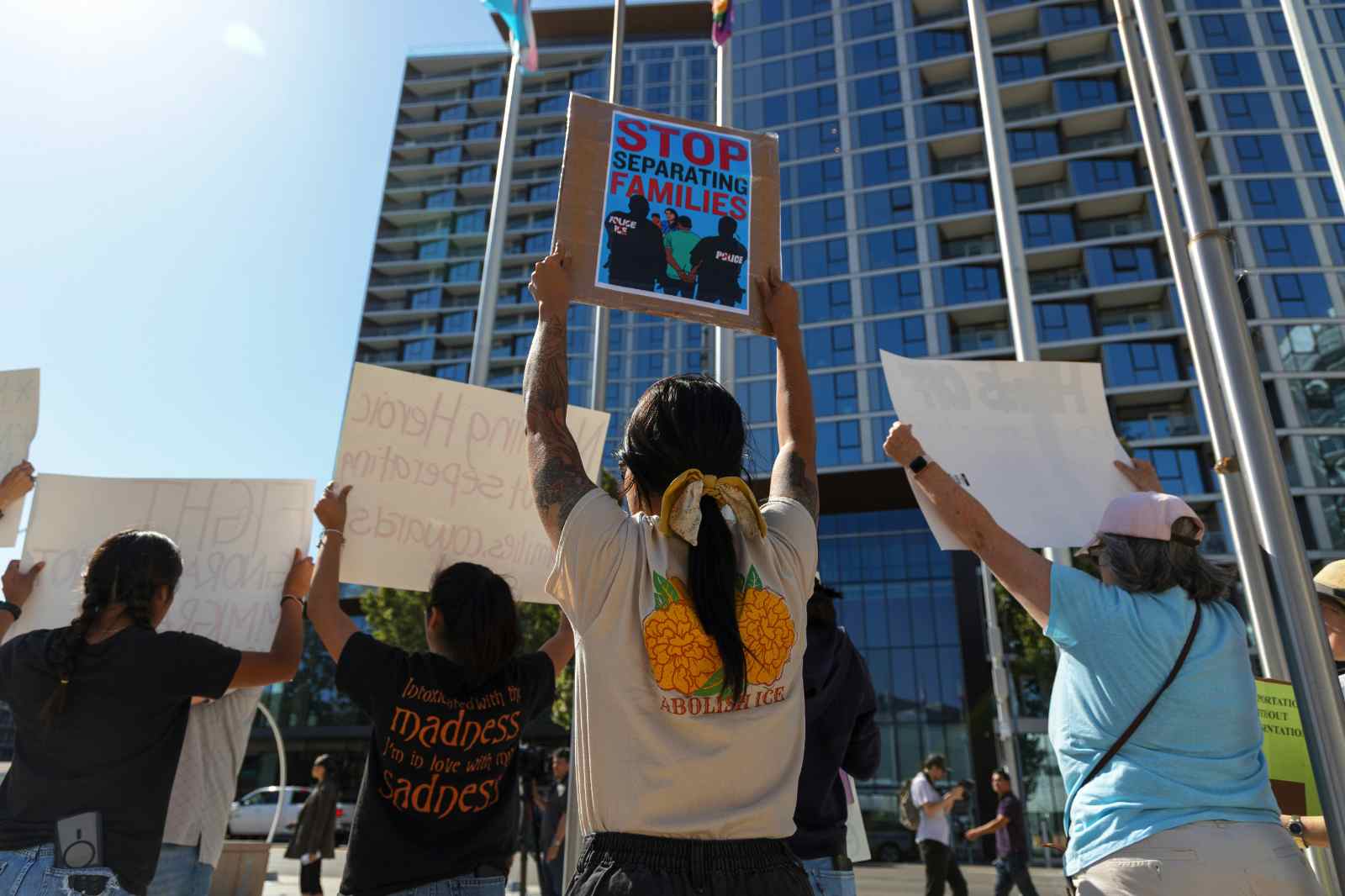
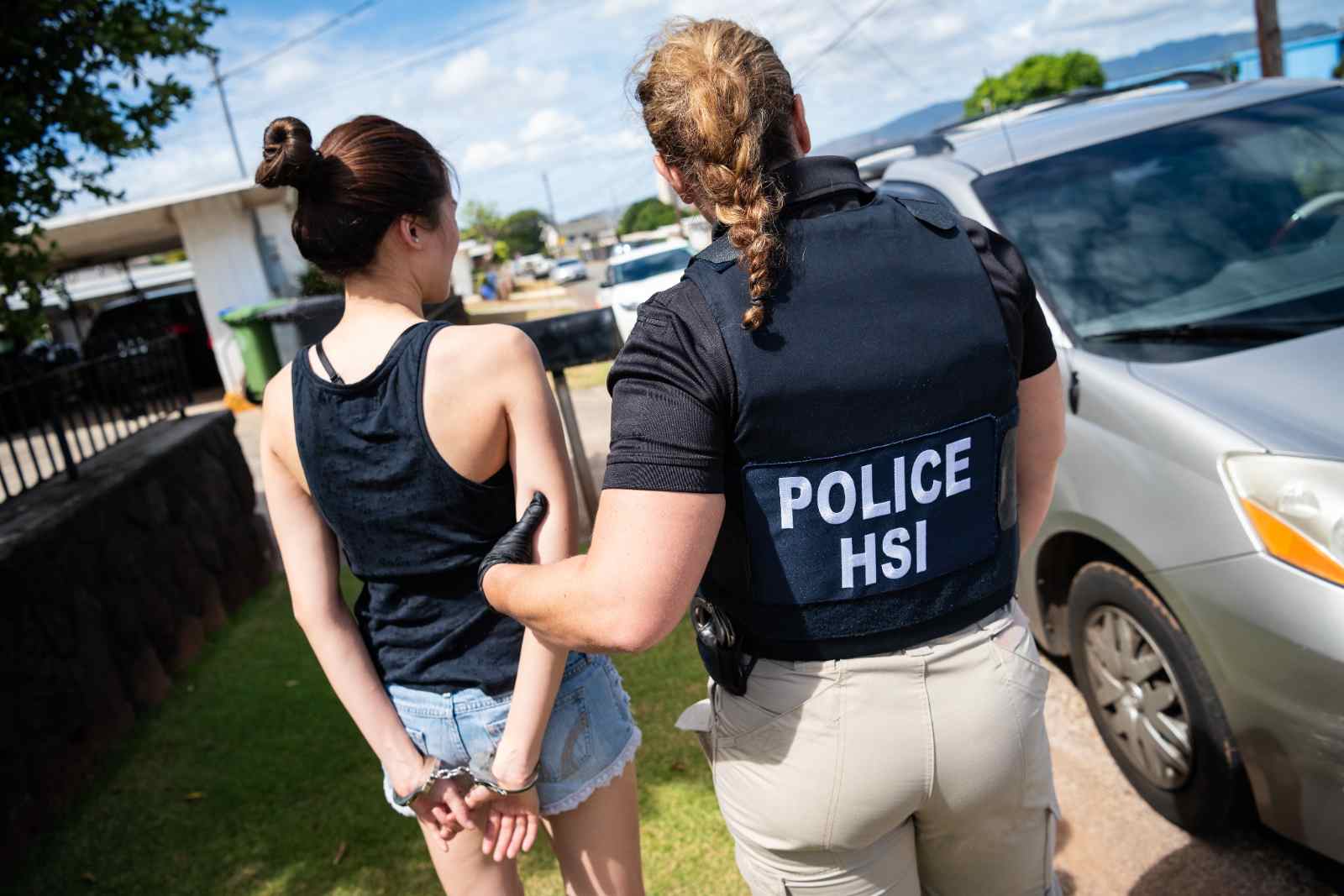
- The VISIBLE Act would require immigration officers to display legible identifying information during public operations.
- The proposed legislation prohibits non-medical face coverings that obscure an officer’s identity to the public.
- Supporters view the bill as an anti-impersonation safeguard to prevent criminals from posing as federal agents.
The Visible Identification Standards for Immigration-Based Law Enforcement (VISIBLE) Act would require immigration law enforcement officers to display visible, legible identifying information during public-facing immigration enforcement operations. It is proposed federal legislation, not automatically in effect.
As introduced, the VISIBLE Act (S. 2212 / H.R. 4667) targets officers conducting immigration enforcement under federal authority, including ICE and CBP officers, and it also reaches deputized local officers operating under federal immigration authority.
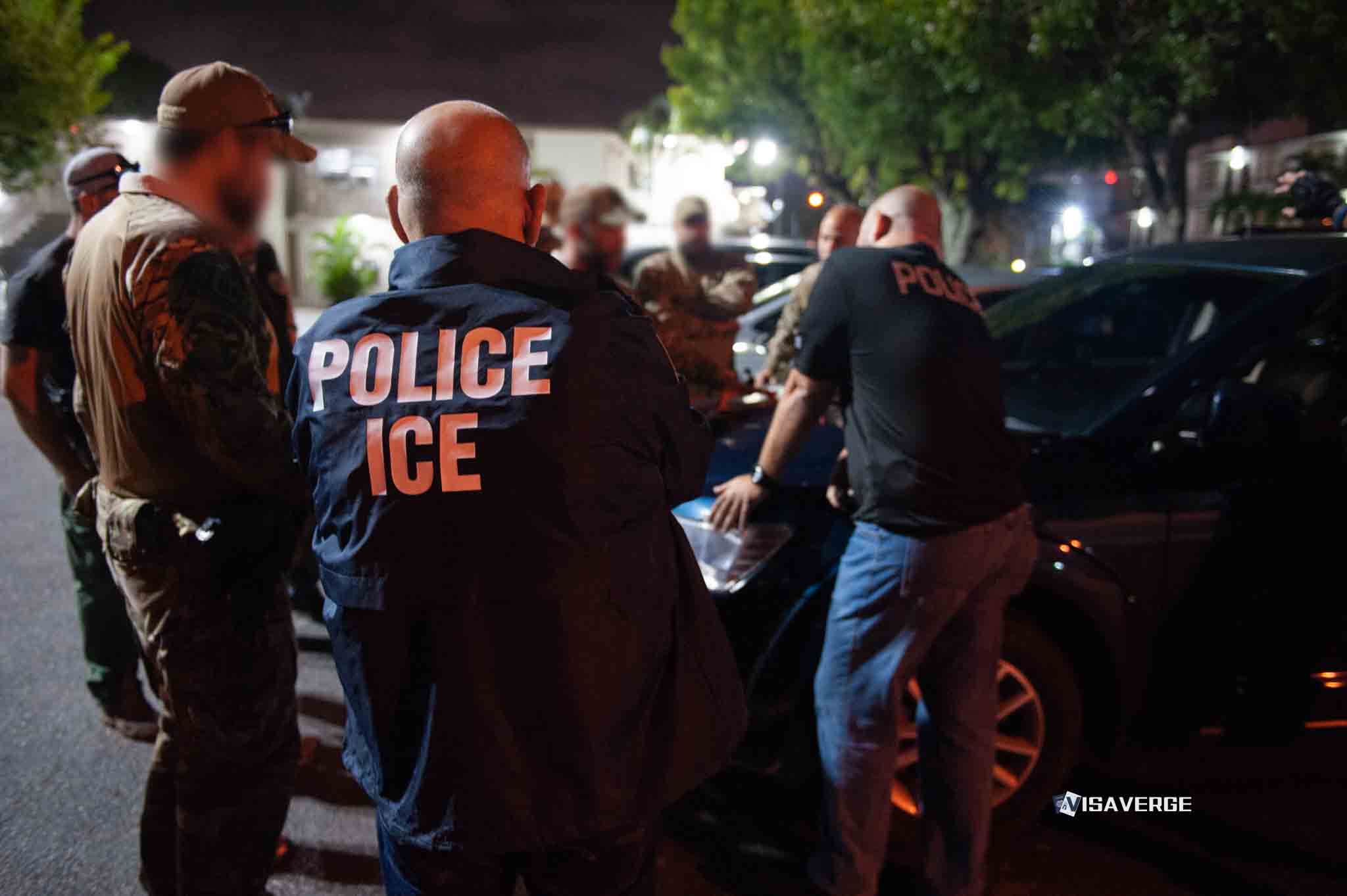
In practical terms, compliance would generally mean officers wearing identification that clearly shows a name or badge number and agency affiliation in a way that a member of the public can read.
It would also require following limits on non-medical face coverings that obscure an officer’s identity, with narrow exceptions described as medical-related.
The Act is framed by supporters as an accountability and public trust measure, and as a deterrent to impersonation by non-officers. Opponents and some DHS leadership have emphasized officer safety concerns.
Legal authority context: how this fits alongside existing INA and CFR powers
The VISIBLE Act would not replace core immigration enforcement authority. ICE and CBP enforcement powers generally trace to statutes and regulations such as:
- INA § 287 (immigration officer powers, including questioning and arrests)
- INA § 235 (inspection authority at or near ports of entry)
- 8 C.F.R. Part 287 (federal regulations governing certain immigration enforcement activities)
Those authorities address what officers may do. The VISIBLE Act focuses on how officers must identify themselves during public-facing enforcement activity.
If enacted, its requirements would operate like a federal compliance layer on top of existing operational rules and agency policies.
Warning: The VISIBLE Act is a bill, not a finalized federal rule. Day-to-day practices may still change through DHS policy updates while legislation is pending.
Legislative sponsorship and status (as of Thursday, January 22, 2026)
The VISIBLE Act was introduced by Sen. Alex Padilla (D-CA) and Sen. Cory Booker (D-NJ) as S. 2212, with a companion bill H.R. 4667.
A bill typically becomes binding law only after several steps. These usually include introduction, committee review, passage by each chamber, reconciliation, and presidential signature.
- Introduction in the House or Senate.
- Committee review and possible amendments.
- Passage by each chamber.
- Reconciliation of differences between House and Senate versions.
- Presidential signature (or veto override).
As of January 22, 2026, readers tracking “status” should distinguish between (1) what is in the text of S. 2212 / H.R. 4667, and (2) what is already happening operationally through DHS guidance and enforcement planning.
Even without a new statute, DHS can shift enforcement tactics and public messaging.
Recent DHS and congressional statements about enforcement and safety
In January 2026, DHS and ICE leadership made public statements emphasizing officer safety and the targeting of serious offenders. These statements can shape congressional evaluation of proposals like the VISIBLE Act.
Secretary Kristi Noem made a statement dated January 8, 2026 that tied masking and enforcement posture to reported safety threats. Assistant DHS Secretary Tricia McLaughlin made a statement dated January 21, 2026 regarding an operation in Maine.
Acting ICE Director Todd M. Lyons made a statement dated January 14, 2026 regarding arrests and alleged gang involvement. These public claims are part of the evidentiary record that oversight bodies may review.
For compliance readers, the key point is evidentiary: official statements are claims and rationales and are not the same as documented outcomes from audits, court findings, or sworn testimony.
When assessing risk, confirm details in primary releases and filings.
Departmental policy changes and public-facing enforcement operations
Supporters and critics of the VISIBLE Act often cite a broader operational backdrop affecting staffing and deployment decisions.
One reported flashpoint is an August 2025 announcement describing recruitment and training changes for ICE personnel, including lowering minimum age eligibility and shortening training duration.
Supporters of the VISIBLE Act cite these shifts as reasons to require clearer field identification. Opponents may argue staffing and safety demand flexibility.
In January 2026, DHS described large, public-facing deployments, including Operation Metro Surge in Minnesota and an operation in Maine described as Operation Catch of the Day. These events are cited as examples where officers may interact with the public in fast-moving conditions.
If the VISIBLE Act were enacted, visibility rules could change these encounters in several ways, such as improving field accountability and enabling community verification of lawful authority.
- Field accountability: Clear identifiers can support complaint intake and internal review.
- Community verification: Residents may more easily confirm lawful authority.
- De-escalation: Some proponents argue visibility reduces fear-driven resistance.
None of those outcomes is guaranteed. They are arguments advanced in a live policy debate.
ICE imitators and public safety concerns
A central rationale offered by supporters is the risk of ICE impersonators. A coalition that includes the ACLU and immigrant rights organizations has described identification standards as a way to reduce crimes committed by people posing as federal officers.
Reporting described crimes attributed to impersonators, including robberies, kidnappings, and assaults. The compliance logic is straightforward: when legitimate officers are masked or not readily identifiable, the “look” of enforcement can be replicated by criminals.
Visible identification standards can function as an anti-impersonation safeguard, but they are not a complete solution. Criminals may still forge credentials, use deceptive clothing, or exploit fear.
Impersonation is also a public safety issue affecting citizens and noncitizens. It can also affect healthcare access when patients avoid clinics due to fear of raids or impostors.
Significance and catalysts driving urgency
Several high-profile events have increased attention on identification and masking rules. These incidents often accelerate legislative attention, regardless of eventual legal findings.
- The fatal shooting of Renee Good on January 7, 2026 in Minneapolis, attributed to an ICE agent, drew public scrutiny and protests.
- Minnesota v. Noem has been referenced as a legal flashpoint; litigation can clarify enforcement limits and remedies but outcomes are uncertain.
- An impeachment effort reported on January 15, 2026, led by Rep. Judy Chu with 70+ House Democrats, increased oversight pressure; impeachment articles do not themselves change agency rules.
- DOJ v. California, related to SB 627, raises preemption questions about state regulation of federal operations; outcomes are fact-specific.
The Supremacy Clause can limit state regulation of federal operations, but case outcomes are specific to the facts and legal claims presented.
Impact on individuals, communities, and healthcare settings
Reports of “ICE sightings” and masked raids have been associated with reduced attendance at churches and schools in some districts. When community members withdraw, local institutions may see fewer reports of crime and less participation in public services.
Critics argue masked enforcement can feel “paramilitary,” and can heighten Fourth Amendment tensions during stops and home encounters. The Fourth Amendment analysis depends on the facts, including consent, warrants, and the setting.
In immigration proceedings, suppression of evidence is limited, but it can arise in narrow circumstances. See Matter of Barcenas, 19 I&N Dec. 609 (BIA 1988). Courts have also addressed limits on suppression in removal cases. See INS v. Lopez-Mendoza, 468 U.S. 1032 (1984).
Healthcare providers should remember that the VISIBLE Act is about officer identification, not medical privacy. Clinics and hospitals should still review protocols for law enforcement presence, warrants, and patient safety.
Policies must be coordinated with counsel and local risk teams.
Deadline Watch: There is no universal “compliance deadline” unless and until the VISIBLE Act becomes law or DHS issues binding implementing guidance. Track effective dates in the final statute or DHS directives.
Consequences of non-compliance (if the VISIBLE Act becomes binding)
If enacted, consequences would likely be administrative and operational rather than criminal in most cases. These could include internal discipline and corrective action for officers and supervisors.
- Increased civil rights complaints and oversight inquiries
- Litigation risk over stops, entries, or arrests, especially where identity was disputed
- Evidentiary disputes in criminal court, and more limited disputes in immigration court
The Act would not, by itself, change grounds of removability or eligibility for relief under the INA.
Warning: Do not assume that an officer’s failure to display identification automatically invalidates an arrest. Remedies vary by forum and jurisdiction. Speak with counsel promptly.
Practical compliance tips (for agencies, local partners, and institutions)
If you are a local agency operating under federal deputation, or an institution that regularly encounters immigration enforcement activity, consider documenting identification and uniform standards in written SOPs with refresher training.
- Document identification and uniform standards in written SOPs, with refresher training
- Set a clear escalation channel when an officer’s identity is disputed on scene
- Train staff on verifying agency affiliation without obstructing lawful activity
- Keep incident logs for public-facing encounters, especially at schools and healthcare facilities
Official sources for primary documents
For readers who want to verify bill text, actions, and official statements, start with DHS press releases and public agency sources. The following links and sources can be entry points for primary documents and updates:
- USCIS updates (distinct from ICE enforcement)
- Congress.gov bill text and actions for S. 2212
- Senate offices and committee statements, when posted publicly
Sections titled “Recent DHS and congressional statements about enforcement and safety” and “Official government sources and where to read more” will include interactive tools. The prose above leads into those tools; the tools provide visual and structured data.
Legal disclaimer and resources
⚖️ Legal Disclaimer: This article provides general information about immigration law and is not legal advice. Immigration cases are highly fact-specific, and laws vary by jurisdiction.
Consult a qualified immigration attorney for advice about your specific situation.
Resources: AILA lawyer search