- A U.S. official issued a rare diplomatic warning to Australia regarding the risks of high migration levels.
- Proposed U.S. travel changes include collecting social media history from Australian citizens using the ESTA system.
- Australian public concern has doubled, with One Nation surging in polls as voters favor migration cuts.
(AUSTRALIA) — A senior U.S. State Department official issued a public “friendly warning” to Australia in January 2026 over high migration levels, an unusually direct intervention that has placed Australian immigration levels in the frame of U.S. diplomacy, travel security and domestic politics.
“We love the Australian people. We love Australia. As a country, it’s a great ally. We want to caution the Australians. If you import a rapid number of individuals of any background, particularly of a culture that’s radically different from Australia’s. that can lead to political unrest, that can lead to economic instability.” the official said.

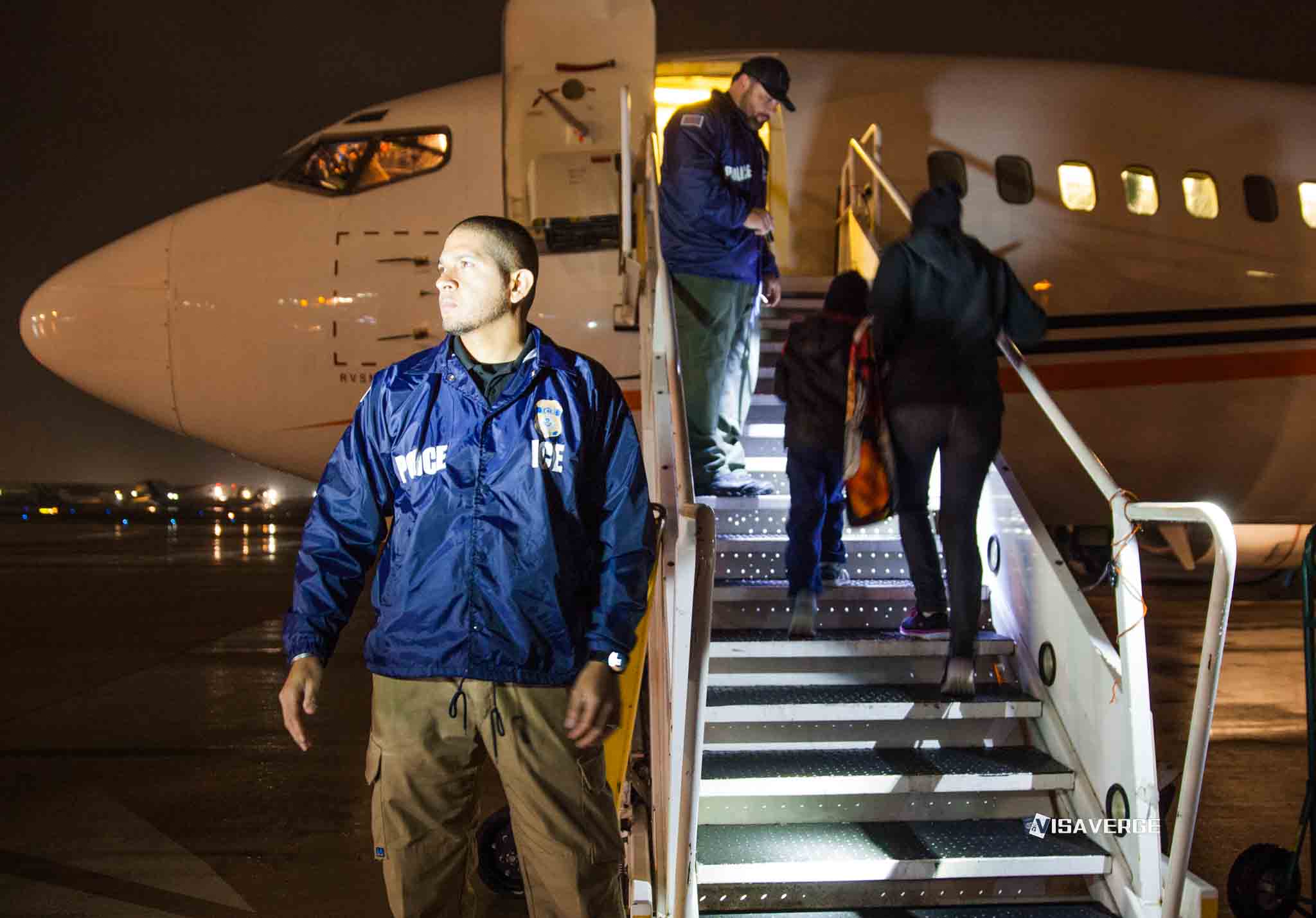
The remarks came as the Trump administration instructed the U.S. Embassy in Canberra to begin collecting and reporting on “migrant-related crimes and human rights abuses facilitated by people of a migration background,” a directive officials described as part of a global drive to combat mass migration that the administration characterizes as an “existential threat.”
The embassy tasking, alongside the State Department comments, drew attention because it tied Australia’s internal migration debate to a U.S. posture more commonly associated with monitoring security conditions and human rights issues overseas, rather than publicly cautioning a close ally on social cohesion and stability.
Travel vetting and proposed screening changes
Travel vetting also entered the conversation. In a letter dated January 6, 2026, U.S. lawmakers addressed DHS Secretary Kristi Noem about a proposal to require travelers from 42 countries, including Australia, to submit five years of social media history and ten years of email addresses for travel authorization under ESTA, the Electronic System for Travel Authorization used by eligible visitors.
| India | China | ROW | |
|---|---|---|---|
| EB-1 | Apr 01, 2023 ▲31d | Apr 01, 2023 ▲31d | Current |
| EB-2 | Jul 15, 2014 ▲303d | Sep 01, 2021 | Current |
| EB-3 | Nov 15, 2013 | Jun 15, 2021 ▲45d | Jun 01, 2024 ▲244d |
| F-1 | May 01, 2017 ▲174d | May 01, 2017 ▲174d | May 01, 2017 ▲174d |
| F-2A | Feb 01, 2024 | Feb 01, 2024 | Feb 01, 2024 |
The proposal described in the January 6 letter did not represent an announced implementation, but it sharpened the sense of bilateral signaling because it could increase documentation demands on Australians who have long treated U.S. short-term travel as routine.
The DHS travel-vetting proposal would touch a different set of people: Australian tourists, business travelers and some short-term visitors who rely on ESTA rather than applying for a U.S. visa. If implemented, expanded data-history requirements could increase the preparation burden, raise the stakes for consistency across applications and records, and trigger delays if information does not match other government-held data.
For travelers, the practical effect of more intensive vetting can include longer lead times before departure and a greater need to keep documentation organized and consistent across forms and prior travel histories. Even when a traveler expects approval, added data fields can increase the risk that discrepancies lead to additional checks or refusal.
Domestic political response in Australia
Inside Australia, public concern about immigration and asylum has moved sharply up the agenda. A series of polls, including a Newspoll and a Freshwater Strategy poll, found immigration and asylum surged into the top five concerns for Australians, with 22% of respondents citing the issue, a 100% increase from 20 months prior.
Political consequences followed quickly in the same polling. One Nation, led by Pauline Hanson, surged in primary support to 23%, overtaking the Coalition in some polls, as analysts attributed the rise to “fed up” voters gravitating toward a consistent anti-mass-migration platform.
At the center of the domestic argument sits the government’s program settings and the pace of population change. Australia plans a permanent migration intake each year, while net overseas migration (NOM) measures the net change in residents arriving and leaving over a period and often swings with students, temporary workers and broader economic conditions.
The Australian government set the permanent migration intake at 185,000 for the 2025–2026 period. NOM, which surged during post-pandemic reopening, is projected to fall to 260,000 this calendar year, down from a record high of 518,000 in 2023.
Opposition Leader Peter Dutton confirmed a plan on January 24, 2026, to slash the permanent migration program further to 140,000 places in the first year of a potential Coalition government, adding an operational edge to the debate for employers, universities and state governments that make plans around expected inflows.
Those settings matter differently across the economy. A permanent intake signals longer-term workforce and settlement capacity, while NOM reflects the faster-moving pressures of temporary arrivals, including demand for rental housing and services in suburbs and university precincts, even when those entrants do not stay permanently.
Housing, planning and public debate
The U.S. intervention framing also landed in a debate increasingly linked to housing affordability and supply constraints. Urban planning experts cited by Sky News on January 20, 2026, argued housing affordability will not improve unless immigration is “cut sharply,” pointing to house prices rising over 9% in the last year while building rates lagged.
That statistic has become a shorthand for the pressure many voters feel, but it does not on its own assign cause. The argument in public debate rests on mechanisms that include demand rising faster than new construction, infrastructure lagging behind new arrivals, and bottlenecks in the construction pipeline that limit how quickly supply responds.
The State Department’s language, and the embassy’s directive to gather data about “migrant-related crimes and human rights abuses,” amplified the domestic political resonance by suggesting the U.S. sees migration-linked outcomes as relevant to stability and governance, even among allies with close security ties.
Australian commentators responded in mixed ways. Some described the U.S. request for migrant crime data as an intervention into domestic affairs, while others treated it as a warning they consider necessary given pressures on housing, services and social cohesion.
Diplomatic routines and what stood out
The embassy instruction, as described, sits within typical diplomatic functions in one sense: embassies routinely monitor developments in host countries and report on issues that might affect bilateral relations, citizen safety or broader policy.
What stood out in this instance was the explicit focus on “migrant-related crimes” and “human rights abuses facilitated by people of a migration background,” language that intersects directly with domestic political messaging.
Impacts on business, universities and migrants
Businesses and universities are watching the domestic side closely because policy uncertainty can reshape recruitment cycles. Business groups warned that a 25% cut to migration, as proposed by the Opposition, could worsen labor shortages in sectors like healthcare, aged care, and hospitality, industries that already rely on steady inflows of workers and students transitioning into the workforce.
For skilled workers and employers, a sharp change in the permanent program can affect planning horizons. Employers seeking to sponsor candidates often work around multi-year hiring needs, while candidates make life decisions—jobs, housing, schooling—based on expectations of processing and settlement pathways that become less predictable when political plans shift.
International students also sit at the intersection of NOM swings, housing pressure and policy tightening. New “Genuine Student” tests and English-language thresholds have already begun making entry harder for lower-quality applicants, contributing to the projected decline in migration numbers, as described in the same January 2026 snapshot.
The “Genuine Student” approach increases emphasis on whether an applicant’s primary purpose aligns with study rather than work or settlement motives, while higher English thresholds can change who qualifies and how much documentation a student must prepare. In that environment, compliance, record-keeping and consistency across documents become more important because small inconsistencies can attract scrutiny.
Australia–U.S. ties, messaging and where to watch for updates
For Australia-U.S. travel and people-to-people ties, the combination of tighter screening signals and a heightened political debate over inflows adds friction even without a formal policy change. Australians traveling to the U.S. were described as facing more “invasive” screening processes under new DHS guidelines, and it was said the shift could deter travel and weaken the “innovation hub” status of both nations.
The implications differ depending on what is confirmed versus what remains consultative. The State Department warning was delivered publicly and in explicit terms. The embassy directive to collect and report on migration-linked issues was described as an official instruction.
The DHS-related item appeared as a proposal raised with Kristi Noem in a January 6, 2026 letter from lawmakers, rather than a published rule or implementation notice. Readers tracking the U.S. side of developments typically look to the DHS newsroom for formal announcements, including press releases, proposed rulemaking references and implementation notices.
The U.S. diplomatic posture and any public messaging from the mission in Canberra often appears through the U.S. Embassy in Australia, where alerts and statements can reflect bilateral messaging and practical guidance for travelers and residents.
On the Australian side, program planning levels, student rules and skilled migration settings generally sit with the Australian Department of Home Affairs, which publishes information that shapes how permanent intake settings interact with temporary programs and compliance requirements.
For U.S. immigration process updates that are not about ESTA or border entry, readers often consult USCIS. The USCIS Newsroom can be relevant for benefits and procedural updates, but the travel-vetting measures discussed in the January 6 letter relate to DHS-administered screening and travel authorization rather than the USCIS benefits system.
Why this matters
The convergence of these threads—polling that shows immigration and asylum rising as voter concerns, a surge by One Nation as voters turn to an anti-mass-migration platform, government and opposition plans for the permanent program, and rare U.S. government attention via the U.S. State Department and DHS—has made Australia’s migration debate harder to keep contained as a purely domestic question.
The concrete policy levers remain in Canberra, but the public messaging, potential travel-vetting changes and diplomatic attention have broadened the stakes for travelers, employers, universities, migrants and policymakers in both countries.