(UNITED STATES) In 2025, many immigrants in the United States 🇺🇸 are living with whiplash: new executive actions, faster enforcement, and court fights that can change daily life overnight. Yet some of the strongest legal guardrails For immigrants are not new at all. They come from Supreme Court Decisions—some more than a century old—that still bind lower courts and still shape what the government can and can’t do to immigrants, including people on H-1B visas and families waiting years for a Green Card.
This matters because when federal policy tightens, the first question many workers and families ask is simple: do we still have real protection in the law? Based on the provided material, the answer is yes, but with limits. These protections don’t promise “easy wins.” They often work as speed bumps, forcing the government to follow the Constitution, follow statutes exactly, and explain itself when actions look arbitrary or discriminatory. That can mean the difference between keeping a job, keeping a family together, or having enough time to fight a case.
The 2025 picture: protections are real, but remedies can be narrower
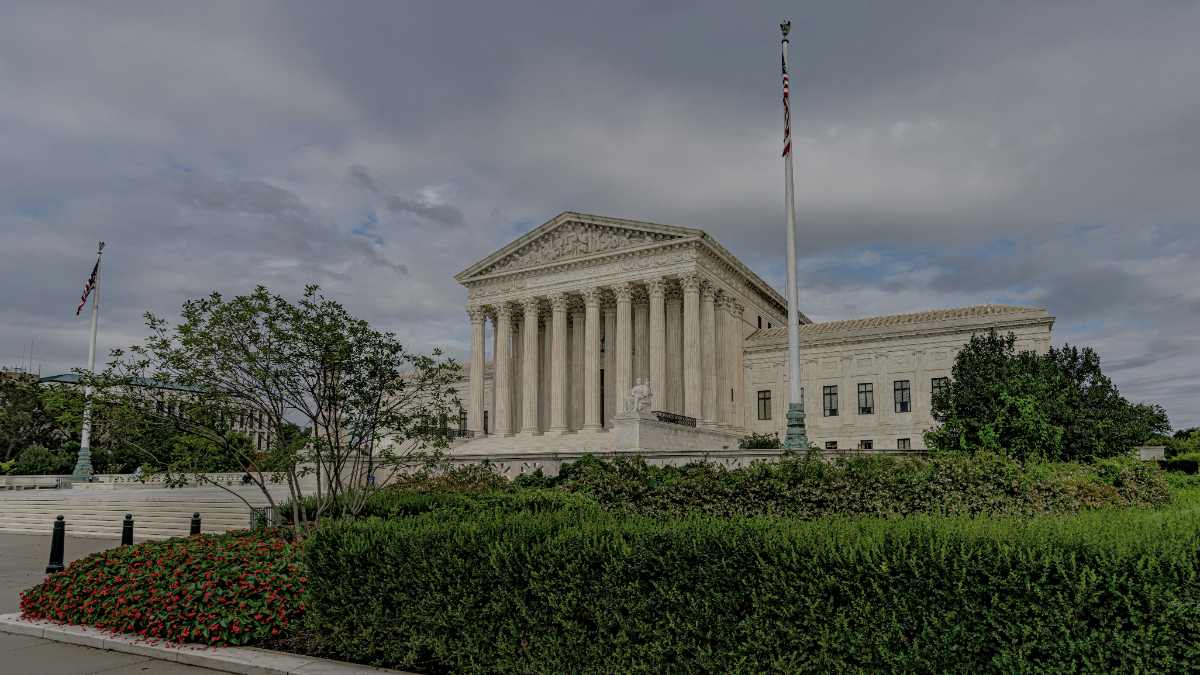
The source material describes a mixed Supreme Court landscape in 2024–2025 (term ending June 2025) and beyond. Some rulings and emergency orders helped the executive branch act faster, including limits on broad court blocks and stays that allowed large enforcement moves to proceed. At the same time, older constitutional cases remain “constitutional cornerstones” and are still actively used in modern litigation.
Two ideas sit side by side in the 2025 reality described here:
| India | China | ROW | |
|---|---|---|---|
| EB-1 | Apr 01, 2023 ▲31d | Apr 01, 2023 ▲31d | Current |
| EB-2 | Jul 15, 2014 ▲303d | Sep 01, 2021 | Current |
| EB-3 | Nov 15, 2013 | Jun 15, 2021 ▲45d | Jun 01, 2024 ▲244d |
| F-1 | May 01, 2017 ▲174d | May 01, 2017 ▲174d | May 01, 2017 ▲174d |
| F-2A | Feb 01, 2024 | Feb 01, 2024 | Feb 01, 2024 |
- Some rights are deeply rooted because they flow from the Constitution and long-standing Supreme Court precedent.
- Some remedies are getting harder to obtain, especially when courts limit nationwide (universal) injunctions or allow enforcement to move forward while lawsuits continue.
For immigrants, that often means you may still have a strong legal argument, but you may have to fight longer to get a judge’s order that stops a policy everywhere, right away.
United States v. Wong Kim Ark (1898): birthright citizenship remains the anchor
One case keeps coming up whenever birthright citizenship becomes a political target: United States v. Wong Kim Ark (1898). The source material calls it a “constitutional anchor,” and it is easy to see why. The core holding is that the 14th Amendment grants U.S. citizenship to people born in the United States 🇺🇸, with narrow historical exceptions.
Practical impact for families:
- The citizenship of children born in the United States 🇺🇸 is governed by Wong Kim Ark, including children born to:
- H-1B and L-1 holders
- F-1 students
- Green Card applicants
- Courts evaluating birthright citizenship challenges consistently return to the 14th Amendment and Wong Kim Ark’s interpretation.
- Disputes often focus on procedure—standing, timing, and injunction scope—rather than the underlying precedent.
The material points to Trump v. CASA, Inc. in 2025, where the Court stayed lower court injunctions against a January 20, 2025 executive order ending birthright citizenship. The stay did not overturn Wong Kim Ark. Instead, it reflects how courts can decide how quickly and how broadly a policy can be blocked.
For an H-1B family planning a birth in the United States 🇺🇸, this creates a tense but clearer takeaway: political debate may be loud, but Wong Kim Ark remains the controlling rule described in the material. Policy uncertainty often shows up as litigation battles, not an instant loss of rights.
Yick Wo v. Hopkins (1886): equal protection applies to “persons,” not just citizens
Another foundational case highlighted is Yick Wo v. Hopkins (1886). It stands for a basic but powerful point: the Constitution protects all “persons,” not only citizens. A law can look neutral on its face, but if it is enforced in a discriminatory way, it can violate equal protection.
Why this matters in immigration:
- Enforcement decisions—who gets stopped, who gets questioned, who gets referred to immigration authorities—often involve discretion.
- Yick Wo is frequently cited to support challenges against:
- Arbitrary enforcement
- Discriminatory application of laws
Important limitation:
- Yick Wo does not erase immigration discretion. It is a shield against pure arbitrariness or discrimination, not a guarantee that enforcement won’t happen.
Post-2019 circuit court decisions still cite Yick Wo for two connected ideas:
- Non-citizens are constitutionally protected persons.
- Discriminatory enforcement can be challenged.
For H-1B workers and Green Card applicants, the practical takeaway is that if someone believes they were singled out because of race, ethnicity, or another protected trait, Yick Wo is a core precedent lawyers use to argue that a “neutral” rule is being used unlawfully.
Plyler v. Doe (1982): states still face limits when they target immigrants
The third major cornerstone is Plyler v. Doe (1982). Its holding is narrow but has broad meaning: states cannot deny public K-12 education to children based on immigration status.
Why it still matters in 2025:
- It reinforces constitutional limits on how far states can go when enacting aggressive immigration measures.
- Courts often cite Plyler when reviewing state-level policies that could punish children or build parallel immigration systems.
For immigrant families—even those waiting in long Green Card backlogs—Plyler signals that states do not have free rein to use local policies to sidestep constitutional protections.
Old precedents don’t sit in a museum—modern courts “activate” them
A key theme is that older Supreme Court Decisions do not operate in isolation. They are “activated” by modern litigation, especially in federal appellate courts, where judges apply old rules to new fights.
Examples from the material:
- Birthright citizenship litigation repeatedly invokes Wong Kim Ark.
- Equal protection fights continue to rely on Yick Wo.
- Courts continue enforcing constitutional limits even during restrictive policy cycles.
The material stresses: constitutional precedents are harder to overturn than statutes or regulations, and courts continue to enforce constitutional limits.
“Constitutional precedents are harder to overturn than statutes or regulations.”
Courts continue to apply long-standing decisions to new immigration disputes.
Pereira and Niz-Chavez: procedural rules that can change outcomes in removal cases
The material highlights important procedural cases—Pereira v. Sessions (2018) and Niz-Chavez v. Garland (2021)—that protect people through strict application of statutory rules.
Modern courts have:
- Required strict statutory compliance
- Rejected agency shortcuts
- Clarified where procedural defects matter—and where they do not
Who benefits most:
- Green Card holders
- Long-term residents
- Individuals in removal proceedings
Important caution:
- These rulings are procedural protections, not automatic relief. A procedural win may force the government to redo steps, reissue notices, or follow statute precisely, but it may not end a case.
Practical significance:
- Process can buy time and improve chances to defend oneself. Time and procedure can be the difference between staying with family during a case and being removed while appeals proceed.
October 14, 2025: Supreme Court leaves H-4 work authorization in place
A concrete 2025 point: on October 14, 2025, the Supreme Court denied certiorari in Save Jobs USA v. Department of Homeland Security (No. 24-923). That denial preserved DHS authority for H-4 spousal work authorization tied to H-1B holders.
Plain terms:
- The Court did not take the case, so the existing authority stayed in place.
- For families facing Green Card backlogs, this affects whether a spouse can keep a career, employer-sponsored health coverage, or household stability.
Small docket actions can matter:
- Sometimes a cert denied entry changes real life for thousands of families, even without a full opinion.
For official agency information on the H-1B category (including eligibility and process descriptions), see the U.S. Citizenship and Immigration Services page on H-1B Specialty Occupations: U.S. Citizenship and Immigration Services page on H-1B Specialty Occupations.
2025 limits on universal injunctions: Trump v. CASA, Inc.
Trump v. CASA, Inc. is described as a major sign of a shifting remedies landscape. The material says the Court held that universal injunctions exceed courts’ equitable powers, and it partially stayed blocks on the January 20, 2025 executive order ending birthright citizenship.
Consequences:
- Even without overturning Wong Kim Ark, limiting universal injunctions changes how quickly policies are blocked.
- Families and employers may see a regional patchwork of rules while appeals proceed.
Why timing matters to immigrants:
- For an H-1B worker or a family waiting on a status extension, timing can determine:
- Whether someone keeps work authorization
- Whether children can remain in school without interruption
- Whether travel or employment plans are feasible
Enforcement stays and profiling claims: Noem v. Vasquez Perdomo
The material includes examples where the Court allowed enforcement to proceed. It describes Noem v. Vasquez Perdomo (September 8, 2025) as granting a stay of a district court injunction, allowing immigration stops in Los Angeles despite claims of race/ethnicity-based profiling.
Key points:
- The Court found the government likely succeeds on Fourth Amendment grounds.
- The Court declined to narrow enforcement precedents.
Practical effect:
- The promise of Yick Wo can feel limited in practice. Equal protection is still a legal backstop, but in fast-moving enforcement settings, people and lawyers may need to gather evidence and keep fighting through appeals while enforcement continues.
- Behavioral consequences for communities include:
- Driving less
- Avoiding contact with authorities
- Hesitating to report crimes or cooperate as witnesses
Parole revocations and large-scale effects: Noem v. Doe
The source material says the Court’s stays also enabled revocations of parole for 532,000 non-citizens from Cuba, Haiti, Nicaragua, and Venezuela in Noem v. Doe (May 30, 2025). It also notes stays enabling use of the Alien Enemies Act.
System-wide impact:
- While not directly targeting H-1B workers, these moves:
- Put more people into removal pipelines
- Increase pressure on courts
- Raise fear in mixed-status communities
Employer and institutional effects:
- Employers and universities may alter hiring and enrollment decisions, since immigrants make long-term plans based on perceived system stability.
The $100,000 supplemental fee proclamation and new H-1B uncertainty
The material describes a policy shock more directly aimed at work visas: a September 19, 2025 proclamation creating a $100,000 supplemental fee (Proclamation 10,973).
Legal response and status:
- States such as California and Washington sued under the Administrative Procedure Act (APA), alleging an ultra vires action that usurps Congress’s authority (Art. I, §8).
- The suit was filed December 12, 2025, identified as Case 1:25-cv-13829.
- There was no final ruling as of late 2025, and USCIS clarified implementation with exceptions.
Practical consequences for H-1B workers and Green Card applicants:
- Employers may reconsider filing H-1B petitions if the fee is imposed.
- Green Card sponsorship and extensions may be paused or delayed.
- This dispute illustrates how lower-court fights under statutes like the APA interact with broader doctrines about executive power and remedies.
VisaVerge.com analysis note:
- Court protections often work best when families and employers keep records, meet deadlines, and avoid gaps that give the government easy procedural wins.
What H-1B workers and Green Card applicants can realistically take from these cases
The material closes with “key realities” that translate into day-to-day guidance. In plain language, here is what those realities mean when making decisions in 2025:
- Old Supreme Court Decisions can be the hardest shields to break. That is why Wong Kim Ark, Yick Wo, and Plyler still matter.
- Courts still enforce limits, even in restrictive cycles. But timing can be rough, and obtaining broad nationwide blocks may be harder.
- Rights exist, but they are not unlimited. Discretion remains a feature of immigration law, yet the Constitution prohibits pure arbitrariness and discrimination.
- Process can matter as much as merit. Cases like Pereira and Niz-Chavez show that insisting on statutory compliance can be a powerful strategy—especially in removal proceedings.
Practical checklist for H-1B families and Green Card applicants:
- Keep documents consistent (employment records, pay stubs, immigration filings).
- Track notices and deadlines carefully; respond promptly to all government communications.
- Preserve evidence that could show discriminatory or arbitrary enforcement (dates, witnesses, communications).
- Avoid gaps in status or work authorization whenever possible.
- Consult counsel early when an adverse notice or enforcement action appears.
Final takeaway:
In 2025, the law still contains protections with real bite, but immigrants often feel that bite only when they can show the facts clearly and stay the course through litigation. Courts remain a key arena—sometimes granting robust relief, sometimes allowing enforcement to proceed—but longstanding Supreme Court precedents continue to shape what the government may and may not do.