(CALIFORNIA) Foreign nationals in the 🇺🇸 often do not realize how fast a small problem with a Visa, status, or an arrest can grow into a life-changing immigration crisis. The full journey from the first shock—an RFE notice, a SEVIS warning, a traffic arrest, or ICE custody—to a safe solution almost always follows a series of clear steps. Knowing what happens at each stage, who to call first, and what to expect from immigration and criminal authorities can protect both your status and your future.
This guide walks through that journey step by step, using real-life Case Studies of students, workers, visitors, and family members. It shows how they moved from emergency to resolution, which helpers were most effective at each point, and how long different parts of the process can take.
Mapping the Journey: From First Problem to Final Outcome
Most real cases tend to follow this pattern:
- A triggering event
- Visa denial, RFE, or status problem
- SEVIS or school enrollment issue
- Consular delay or administrative processing
- Arrest or traffic stop that exposes an overstay
- Criminal charge that may affect a Green Card
- Urgent decision: who to contact first
- Immigration attorney
- Accredited non-profit
- University DSO
- U.S. embassy or consulate
- Criminal defense lawyer (often together with an immigration lawyer)
- Building a response file
- Collecting documents and proof
- Writing legal explanations
- Meeting official deadlines
- Dealing with courts and agencies
- USCIS case review
- SEVP/SEVIS corrections
- Consular administrative processing
- Criminal court process and bail
- ICE custody and bond hearings
- Long-term repair of immigration status
- Keeping or regaining status
- Avoiding harsh penalties like bars or deportation
- Protecting future Green Card or citizenship plans
At each stage, your decisions in the first days matter far more than most people think.
Step 1: Recognize What Kind of Problem You Have
Before you act, you need to know which track you’re on. The right track leads to the right helper.
Common tracks for immigration and Visa problems
- USCIS case or status risk
Example: Ravi’s H‑1B RFE in California about whether his job was a “specialty occupation.” The main issue was the H‑1B petition and his ongoing lawful status. -
Family-based or low-income problem
Example: Maria in Florida, whose husband’s family-based Green Card stalled after an RFE she could not answer alone. -
Student status and SEVIS
Example: Liang, who took only 8 credits instead of 9, and suddenly saw a SEVIS compliance problem. -
Consular or embassy delay
Example: Sara, whose F‑1 Visa went into section 221(g) administrative processing and was stuck for weeks. -
Arrest with possible immigration effect
Example: Akira, wrongly accused of shoplifting, and Sandeep, whose traffic incident in New Jersey turned into a misdemeanor charge. -
Overstay and ICE custody
Example: Carlos from Brazil, who overstayed a B‑2 Visa due to illness and ended up facing ICE after a traffic stop. -
Criminal issue during Green Card process
Example: Nisha, who was arrested for DUI while her employment-based Green Card case was moving toward the interview.
Once you place yourself in one of these groups, you can move to the next step: choosing the right first helper.
Step 2: Choose the Correct First Point of Contact
Choosing the right initial contact is crucial. Below are guidelines and examples showing who to call first.
When to call an immigration attorney
You should speak to a licensed immigration attorney when:
- You receive an RFE, NOID, or denial from USCIS
- Your status may end if the problem is not fixed
- There is any arrest, charge, or ICE involvement
- Your long-term plan includes a Green Card or citizenship
Example — Ravi’s H‑1B:
– Attorney reviewed the job description and employer details
– Matched facts to USCIS rules for specialty occupation
– Collected industry data, expert letters, and work records
– Filed a strong RFE response on time
Result: USCIS approved the petition, and Ravi stayed in lawful status. This shows how technical legal work can change the outcome completely.
When a non-profit may be better
If money is tight, especially in family, asylum, or humanitarian cases, a DOJ-accredited non-profit can be a lifeline.
Example — Maria:
– Could not afford private fees after her husband’s RFE
– Went to a local accredited non-profit
– The representative helped collect financial documents, prepare affidavits of support, and organize proof of marriage and family life
Result: Problems were fixed and her husband’s case moved forward. For many low-income families, accredited non-profits are the only realistic option.
When your DSO is the best first call
For F‑1 and J‑1 students, the Designated School Official (DSO) or international office should almost always be the first contact.
Example — Liang:
– Spoke to his DSO immediately
– DSO sent a correction request to SEVP
– He enrolled in an extra course as advised by the school
Result: SEVIS fixed his record within days. DSOs can’t give full legal advice but often can fix data and status problems that seem terrifying at first.
When to deal with consulates and embassies
If your problem happens outside the United States, the U.S. embassy or consulate is your main point of contact.
Example — Sara:
– Followed the consulate’s email instructions
– Sent extra documents on her studies and finances
– Asked a U.S. immigration lawyer how long such checks often take
Result: Her Visa cleared in eight weeks, and she made it to her program. Consulates won’t change the law, but they will tell you what documents they need. A lawyer can help interpret those signals.
Step 3: Build a Strong File and Track the Timeline
Once you have the right helper, the next stage is document gathering and time control.
Typical documents you may need
- Passports, I‑94 records, and prior Visas
- Approval notices, RFEs, and denial letters
- Job offers, pay stubs, and work descriptions
- Academic records, transcripts, and enrollment proof
- Marriage certificates, birth certificates, and family photos
- Police reports, court records, and plea agreements
- Medical records, if illness affected an overstay
Authorities like USCIS, ICE, and criminal courts run on strict deadlines. Missing a response date on an RFE, ignoring a court hearing, or failing to appear for an ICE bond hearing can turn a fixable issue into removal or a multi-year bar.
To check agency rules and normal processing steps, many lawyers and accredited reps point clients to the official USCIS site: https://www.uscis.gov.
According to analysis by VisaVerge.com, people who respond fast with clear, well-organized packages—often through a lawyer or accredited rep—see much better immigration outcomes than those who wait or send incomplete files.
Step 4: When Police or Criminal Courts Get Involved
An arrest in the 🇺🇸 triggers two parallel tracks:
- The criminal case in local or state court
- The immigration impact, which may show up months or years later
Arrest and your right to a lawyer
Example — Akira:
– Stayed calm, used the right to remain silent, and asked for a lawyer
– Court appointed a public defender for his criminal case
– His DSO explained how an arrest could affect his F‑1 status
– An immigration attorney worked with the public defender to avoid a plea that would harm his Visa
Result: Charges were dismissed, and his F‑1 status remained safe.
Important: A “small” plea deal can later destroy a Green Card or citizenship plan. That is why criminal and immigration lawyers must coordinate before any plea is entered.
Bail and the risk of long detention
Example — Sandeep (New Jersey):
– Judge set bail at $2,500
– Licensed bail bondsman posted bail so he could leave jail
– He hired both a criminal defense lawyer and an immigration lawyer
Result: The criminal case ended through a diversion program, and he kept his H‑1B work status. Fast bail posting matters: long local jail stays can lead to ICE involvement, especially if there is an immigration record or overstay.
Step 5: ICE Custody, Bond Hearings, and Voluntary Departure
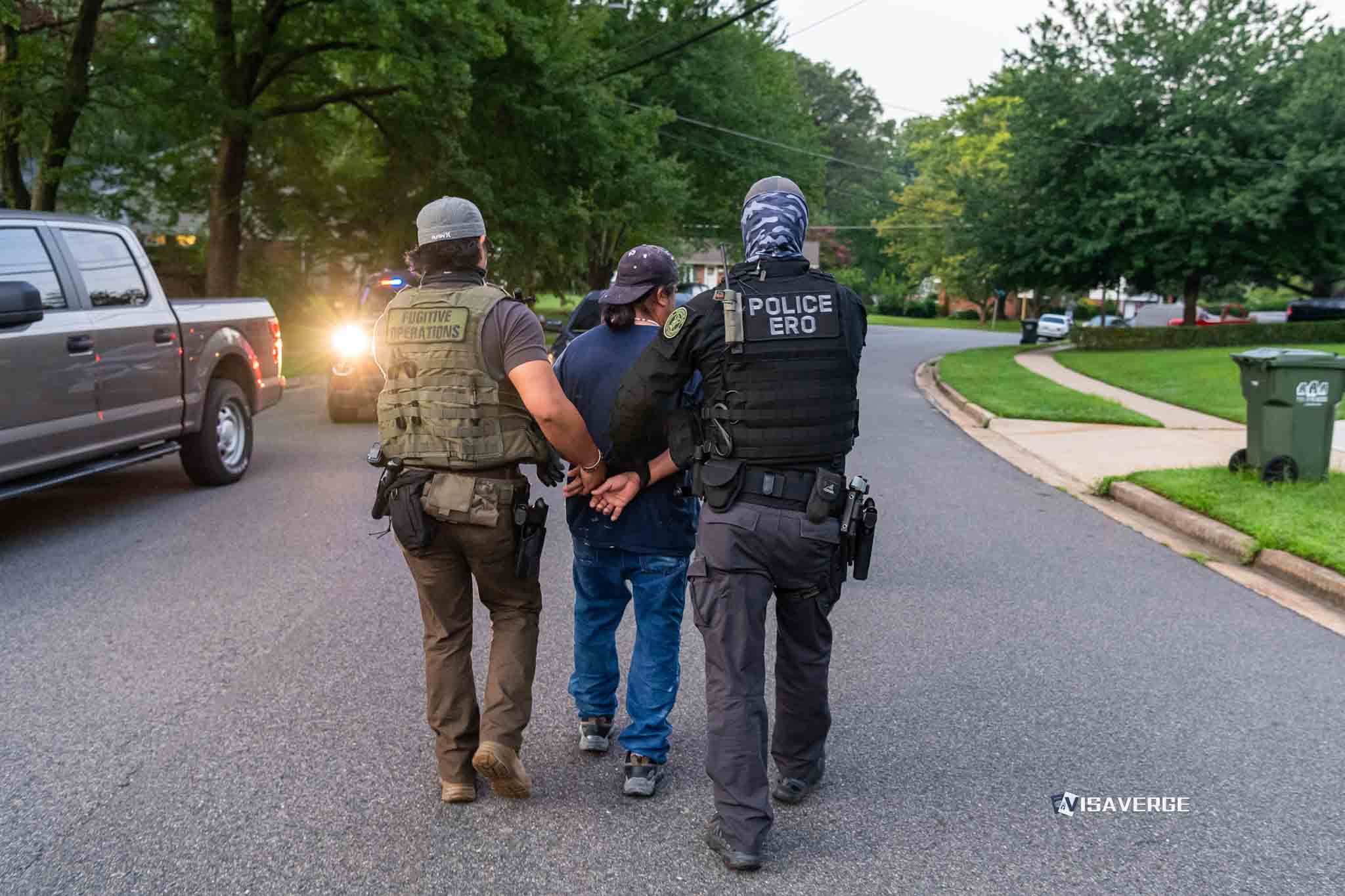
When overstay or status loss is exposed—often at traffic stops—people may go straight from local custody to ICE.
Example — Carlos (B‑2 tourist from Brazil):
– ICE took him into custody after a traffic stop revealed his overstay
– His family hired an immigration attorney
– The lawyer requested a bond hearing
– At the hearing, the attorney showed strong family ties and no criminal record
Result: Immigration judge set bond at $5,000; Carlos was released. The lawyer also requested voluntary departure, which—when granted and complied with—can reduce future penalties compared to a formal removal order.
Warning: ICE bond hearings are technical; the wrong move can mean months in detention or harsher penalties later. That is why specialized immigration counsel is usually needed at this stage.
Step 6: Criminal Records During Green Card Processing
Sometimes the biggest danger appears late in the journey, just before a Green Card is approved.
Example — Nisha (H‑4 spouse applying for Green Card):
– Charged with DUI before her final interview
– Criminal attorney worked to reduce the charge
– Immigration lawyer prepared a packet demonstrating good moral character, community ties, and a clean history
– She completed alcohol education classes before USCIS asked
Result: USCIS approved her Green Card after reviewing the materials. This shows that early, honest action and proof of change can often carry more weight than the offense itself, especially for first-time issues.
Practical Timelines and What to Expect From Authorities
Every case is different, but the Case Studies above reveal some common time patterns and expectations.
- USCIS RFEs (like Ravi’s H‑1B)
- Response time is usually short and firm (for example, 30–90 days).
- After a complete response, decisions can still take weeks or months.
- SEVIS corrections (Liang)
- If the school acts quickly, fixes can come within days or a few weeks.
- Delays grow if the student waits or doesn’t follow the DSO’s course-load plan.
- Consular 221(g) checks (Sara)
- Her case took eight weeks, common for security or background checks.
- Students should build backup plans with their schools in case of late start.
- Criminal cases and diversion programs (Sandeep and Akira)
- First hearings often happen within days after arrest.
- Full resolution can take months; early coordination between criminal and immigration counsel is key.
- ICE bond hearings (Carlos)
- If a lawyer files fast, bond can be set relatively quickly.
- After release, voluntary departure or other relief must be planned and filed on time.
- Green Card review with a new arrest (Nisha)
- Interview scheduling may slow while USCIS reviews extra records.
- Completed classes, letters, and proof of change help officers see the whole picture.
The earlier you get the right helper, the more choices you keep. Whether your issue starts with a Visa, SEVIS, arrest, or ICE, the journey from crisis to solution is a series of steps—and each one gives you a new chance to protect your life in the United States.
Quick Practical Checklist
- Act immediately after a triggering event.
- Identify your track (USCIS, SEVIS, consulate, arrest, overstay, or criminal).
- Contact the right first helper:
- Immigration attorney for RFEs, arrests, ICE, or Green Card/citizenship plans.
- Accredited non-profit if you cannot afford private counsel.
- DSO for F‑1/J‑1 student SEVIS issues.
- Embassy/consulate for problems outside the U.S.
- Build a complete document file and meet every deadline.
- Coordinate criminal and immigration counsel before any plea.
- Consider voluntary departure if appropriate and timely.
If you follow these steps and get prompt, specialized help, you greatly improve the odds of moving from emergency to resolution.
This guide outlines steps from an initial immigration trigger—RFE, SEVIS warning, arrest, or ICE contact—to resolution. Using case studies, it explains choosing the right first contact (attorney, accredited nonprofit, DSO, or consulate), building strong documentation, coordinating criminal and immigration counsel, and meeting deadlines. Timelines vary: SEVIS fixes can take days, consular checks weeks, and criminal or Green Card complications months. Early action and specialized help significantly improve outcomes.