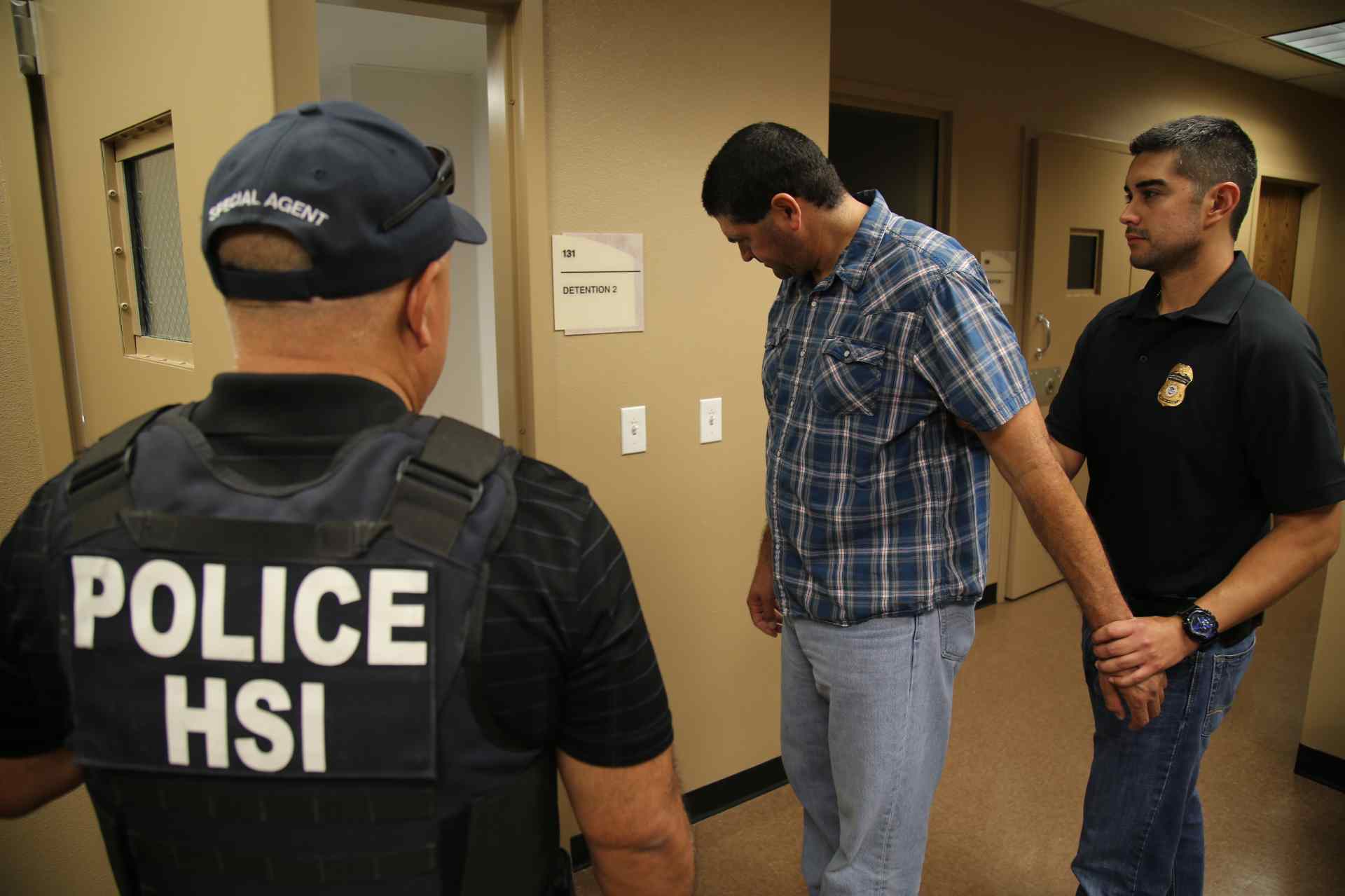
(UNITED STATES) Immigration enforcement tied to routine driving has changed sharply since President Trump’s approach reshaped federal priorities, and many immigrants now worry that simple traffic violations might lead straight to deportation. Under U.S. immigration law, though, ordinary civil traffic tickets by themselves do not make a person deportable. The real danger comes from what a traffic stop uncovers: missing immigration status, outstanding warrants, or criminal charges that move a case into Immigration and Customs Enforcement (ICE) hands.
Civil traffic tickets: what they mean for immigration status

Under current law, basic traffic tickets are treated as civil infractions, not crimes. Common examples include:
- Speeding
- Broken tail light
- Failure to signal
- Parking violations
- Expired registration
- Minor stop‑sign or red‑light violations
For immigrants with status — such as H‑1B or H‑4 workers, F‑1 students, B‑1/B‑2 visitors, and L‑1 workers — these tickets do not create a ground of removal. A speeding ticket alone does not give the government a legal reason to start deportation proceedings.
The same legal rule also applies to green card holders and even to undocumented immigrants, provided nothing else arises during the stop. A parking ticket or broken tail light is not enough, by itself, to send someone to immigration court.
In short: a civil traffic ticket alone does not cause deportation. There is no section of immigration law that mandates removal for simple speeding or an expired registration.
Key takeaway: The ticket is usually harmless from an immigration-law perspective; the traffic stop can be dangerous if it leads officers to discover other problems.
When a traffic stop turns into an immigration case
The risk lies in the stop, not the citation. Under a tougher enforcement climate, police contact can open a person’s records to ICE. During a stop, officers can:
- Check identity,
- Run warrants,
- Share fingerprints with federal databases in many jurisdictions.
Several common situations can convert a routine stop into a serious immigration problem.
1. Driving without a license or with a suspended license
In many states, driving without a valid license — or while a license is suspended — is a misdemeanor, not a mere civil ticket.
Consequences that raise immigration risk:
- Arrest and booking at a local jail
- Fingerprint checks that enter federal systems
- Potential ICE interest, especially for undocumented people or those with prior issues
For an undocumented driver, this can be the first step toward detention and removal, even if the original stop was for something minor.
2. DUI and DWI: viewed as public‑safety threats
DUI/DWI are among the most dangerous traffic-related charges for immigrants.
Important points:
- A single DUI does not automatically cause deportation, but enforcement policies have treated DUIs as public safety threats.
- A DUI arrest is more likely to attract ICE attention.
- Multiple DUIs, or a DUI causing injury, can damage future green card or visa applications.
- Consular officers and immigration judges may view DUI records as evidence of being a danger on the road.
These public‑safety labels matter because enforcement leaders have wide discretion to decide whom to target.
3. Outstanding warrants discovered during the stop
When police run a driver’s name and birthdate, they may find old warrants unrelated to driving — missed court dates, unpaid fines, or past criminal cases.
Why warrants amplify risk:
- Arrest on a warrant often means extended custody
- Longer custody increases the chance that ICE will become involved
The stop is the opening event; the warrant and arrest become the real drivers of immigration trouble.
4. No valid immigration status exposed
For people who overstayed a visa or entered without inspection, a traffic stop can reveal the lack of lawful status.
Typical federal responses when status is lacking:
- Issue a detainer asking local jails to hold the person
- Take custody after the criminal case resolves
- Start removal proceedings in immigration court
Thus, a burned‑out headlight or expired tag can be the moment an undocumented driver first meets the immigration system.
5. Criminal traffic offenses beyond simple tickets
Some traffic‑related conduct is treated as crime, not just a civil violation. Examples include:
- Driving without insurance (criminal in some states)
- Reckless driving (often a misdemeanor or even a felony)
- Hit‑and‑run (can be deportable in some situations)
Whether these offenses lead to deportation depends on state criminal labels and the person’s immigration category. For some non‑citizens, certain hit‑and‑run or reckless driving convictions may be used as grounds to remove them from the country.
How the Trump‑era enforcement climate shifted outcomes
The legal definitions of removable offenses did not change under President Trump; what changed was how ICE used its discretion.
The Trump administration pushed a “Zero Tolerance” style of enforcement. Instead of focusing mainly on people with serious criminal records, ICE was encouraged to act on almost anyone encountered through other law‑enforcement contact — even those with only minor issues.
Reported impacts (source reporting summarized from The Marshall Project by May 2025):
- Deportations of people whose most serious conviction was a traffic offense more than tripled.
- Data showed nearly 600 people per month being deported where a traffic violation like driving without a license was the top conviction.
- That amounted to more than 1,800 people in a year removed primarily based on traffic violations.
Why this happened (policy and practice shifts):
- Changed priorities: ICE officers were less likely to exercise leniency for minor offenses.
- Broader public‑safety framing: Offenses like DUI were treated as clear threats.
- Closer local‑federal ties: In many counties, police sent fingerprints to DHS; once in those databases, even low‑level arrests could flag someone for ICE follow‑up.
Analysis by VisaVerge.com noted that many immigrants with no history of violence faced deportations that would have been unlikely under earlier enforcement patterns.
Groups at higher risk from traffic‑related encounters
Some immigrant groups face particular harms when minor traffic violations escalate.
Temporary workers and their families
H‑1B professionals and H‑4 dependents may face:
- Jeopardized future visa stamping at consulates
- Questions about “public safety” at ports of entry
- Delays or blocks to later green card plans
Even a single serious traffic‑related arrest can change how officers view a person’s record.
International students
F‑1 students live under strict rules. An arrest — even without conviction — can:
- Draw SEVIS attention
- Create questions about continued student status
- Harm future work or study plans in the U.S.
Green card applicants with pending cases
Applicants with pending Form I-485 must show “good moral character” and admissibility.
Potential impacts of traffic‑related offenses:
- Trigger extra background checks
- Raise questions at interviews
- In some cases, lead to denial of adjustment of status
Readers can view the official instructions for Form I‑485 on the U.S. Citizenship and Immigration Services site at USCIS Form I‑485.
Undocumented immigrants and DACA holders
- For undocumented immigrants, any police contact is risky. A ticket that becomes an arrest can lead to detention and deportation proceedings, even after long residence in the U.S.
- DACA recipients face particular risks: the program has limits on tolerated misdemeanors, and certain traffic‑related misdemeanors — especially DUI — can result in termination of DACA protection, reopening the door to removal.
Role of local police and federal databases
Local policing practices significantly affect immigration outcomes. In many jurisdictions, once someone is booked:
- Fingerprints are submitted to FBI and Department of Homeland Security systems
- Any prior immigration contact or removal order can surface
- ICE can lodge a detainer asking the jail to hold the person longer
The Department of Homeland Security explains enforcement and removal functions on its ICE page at ICE ERO.
Civil‑rights groups cited in the source material, such as Americans for Immigrant Justice, have raised racial profiling concerns, noting police sometimes stop Latino and Black drivers at higher rates and then refer them to ICE after minor offenses.
Practical steps to reduce driving‑related immigration risk
While individual situations vary and this is not legal advice, the source material suggests these general risk‑reduction steps:
- Keep documents current: Maintain up‑to‑date registration, inspection, and plates to avoid preventable stops.
- Know license rules in your state: In states where undocumented immigrants can obtain a license, doing so may reduce misdemeanor charges for driving without one.
- Avoid driving after drinking: For non‑citizens, a DUI poses serious immigration consequences and draws ICE attention.
- Respond to court dates and tickets: Unpaid tickets can lead to warrants; warrants can result in arrests during routine stops.
- Learn your rights during police contact: Advocacy groups provide guidance about the right to remain silent and the right to an attorney (the source material does not list those rights in detail).
Final perspective
While ordinary traffic violations alone do not create a legal ground for deportation, the moment of a traffic stop has become far more dangerous under shifted enforcement priorities. For many immigrants the pressing question is no longer, “Can a speeding ticket deport me?” but rather, “What else might a simple stop expose to the immigration system?”
Civil traffic tickets themselves are not grounds for deportation, but traffic stops can expose immigration status, warrants, or criminal charges that lead to ICE involvement. Driving without a license, DUI, outstanding warrants, and certain criminal traffic offenses increase removal risk. Trump-era enforcement prioritized broader targets, producing a sharp rise in deportations tied to traffic offenses. Immigrants should keep documents current, respond to tickets, avoid risky conduct like drunk driving, and seek legal counsel when arrested.