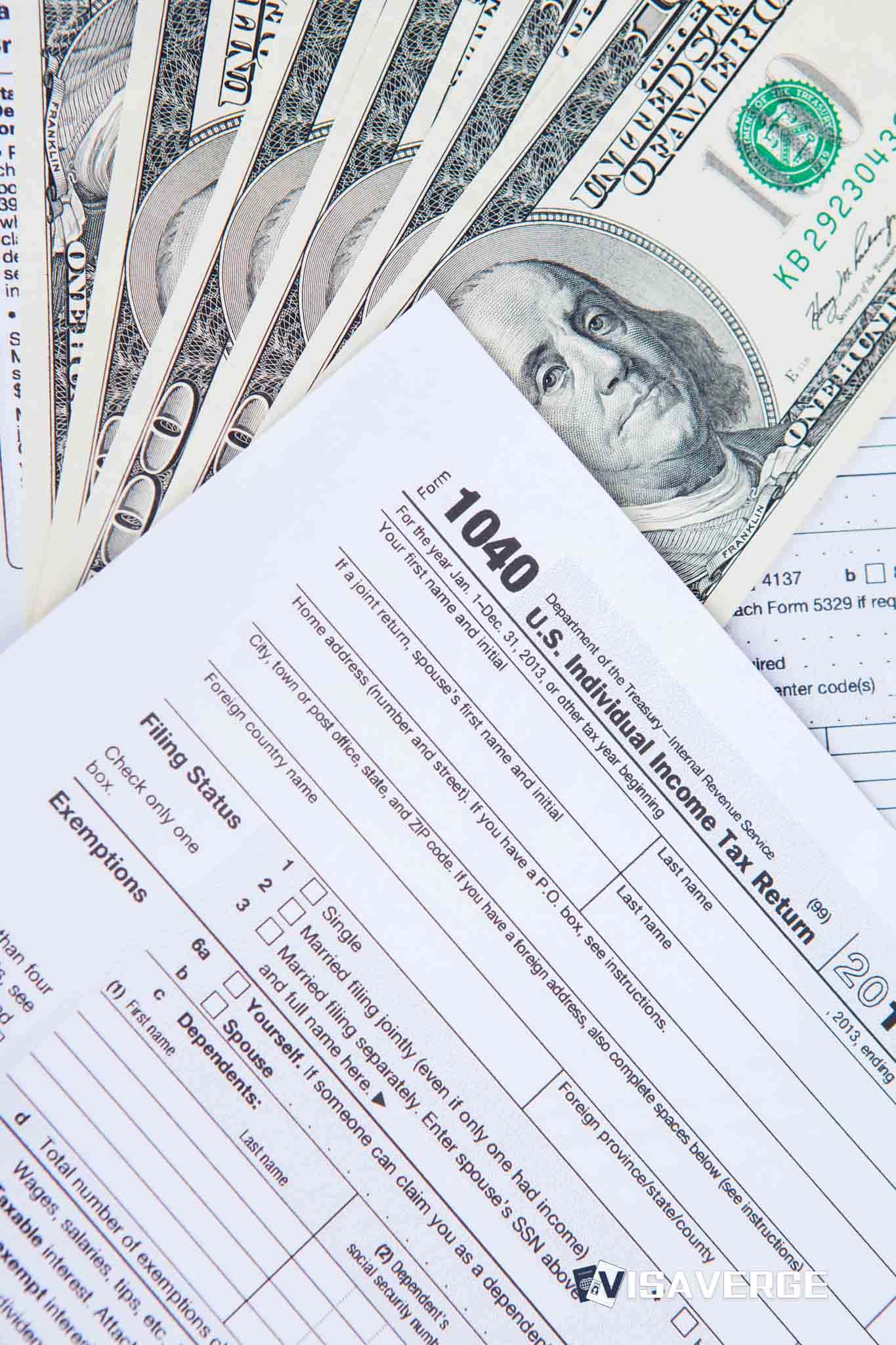
Key Takeaways
• H-1B visa holders filing jointly can deduct up to $2,500 in student loan interest as of July 2025.
• The One Big Beautiful Bill Act did not change key eligibility rules for this deduction.
• The proposed H.R.3285 bill would allow each spouse to claim $2,500, doubling the deduction for couples.
As of July 2025, H-1B visa holders who are married and file their taxes jointly in the United States 🇺🇸 can still claim the student loan interest deduction. However, recent changes in tax law and new bills in Congress have brought both clarity and new questions for immigrant families, especially those with student debt. Here’s what H-1B visa holders and their spouses need to know about the student loan interest deduction, the effects of the One Big Beautiful Bill Act, and what could change if new legislation passes.
H-1B Visa Holders and the Student Loan Interest Deduction: What’s Allowed Now?

The student loan interest deduction is a tax benefit that lets people reduce their taxable income by up to $2,500 each year for interest paid on qualified student loans. This deduction is especially important for H-1B visa holders, many of whom have taken out loans for their own or their spouse’s education in the United States 🇺🇸.
Key facts about the deduction as of July 2025:
- Maximum deduction: $2,500 per year for interest paid on qualified student loans.
- Who can claim it: Taxpayers who are legally required to pay the interest and who file as “single,” “head of household,” or “married filing jointly.” Those who file as “married filing separately” cannot claim the deduction.
- Income limits: For married couples filing jointly, the deduction begins to phase out if their modified adjusted gross income (MAGI) is above $155,000 and disappears completely at $185,000.
- Social Security Number (SSN) requirement: Both spouses must have valid, work-eligible SSNs to file jointly and claim the deduction.
This means that H-1B visa holders, who usually have valid SSNs, can claim the deduction if they meet the income and filing requirements. If both spouses are on H-1B visas or one is a U.S. citizen or permanent resident, as long as they file jointly and their income is within the allowed range, they can benefit from this tax break.
The One Big Beautiful Bill Act: What Changed and What Stayed the Same
The One Big Beautiful Bill Act, passed in early 2025, made several changes to U.S. tax law. Many immigrant families wondered if this new law would affect their ability to claim the student loan interest deduction, especially for those on H-1B visas.
Here’s what the Act did and did not do:
- No change to basic eligibility: The Act did not change the main rules for the student loan interest deduction. Married couples filing jointly can still claim up to $2,500 in student loan interest paid, as long as they meet the income and SSN requirements.
- No deduction for married filing separately: The rule that prevents couples who file separately from claiming the deduction remains in place.
- SSN requirement: The Act confirmed that both spouses must have work-eligible SSNs to file jointly and claim the deduction. This is important for H-1B visa holders, as they typically have valid SSNs.
- Other student loan changes: While the Act made some changes to student loan repayment plans and eligibility, these do not directly affect the student loan interest deduction for couples filing jointly.
So, for H-1B visa holders and their spouses, the main takeaway is that the student loan interest deduction remains available under the same rules as before, even after the passage of the One Big Beautiful Bill Act.
The Student Loan Marriage Penalty: Why It Matters for H-1B Couples
One of the biggest complaints about the current student loan interest deduction is the so-called “marriage penalty.” Here’s how it works:
- Single filers: A single person can deduct up to $2,500 in student loan interest each year.
- Married couples filing jointly: The couple can deduct a total of $2,500, not $2,500 each. This means that if both spouses have student loans and pay interest, they must share the $2,500 limit.
- Married filing separately: Neither spouse can claim the deduction.
For H-1B visa holders, this penalty can feel especially unfair. Many H-1B couples are both working professionals, often with high student debt from U.S. universities. Sharing a single $2,500 deduction can seem like a small benefit compared to the amount of interest they pay.
Proposed Change: The Student Loan Marriage Penalty Elimination Act (H.R.3285)
Recognizing the unfairness of the marriage penalty, lawmakers introduced the Student Loan Marriage Penalty Elimination Act (H.R.3285) in May 2025. This bill aims to fix the problem by allowing each spouse to claim up to $2,500 in student loan interest deduction, even when filing jointly.
Key points about H.R.3285:
- Separate deduction for each spouse: If passed, the bill would let each spouse claim up to $2,500 in student loan interest deduction, for a total of $5,000 per couple.
- Same income limits: The phase-out range for MAGI ($155,000 to $185,000 for joint filers) would still apply.
- Same filing status: Couples would still need to file jointly to claim the deduction.
- Effective date: The bill proposes to apply these changes to tax years starting after December 31, 2024.
- Current status: As of July 2025, the bill is still being considered by the House Ways and Means Committee and has not yet become law.
If this bill passes, it would be a major win for H-1B visa holders and other immigrant couples with student debt, doubling the possible tax benefit for those who qualify.
How the Rules Work in Practice: Scenarios for H-1B Couples
To make these rules clearer, let’s look at some common situations H-1B visa holders might face.
Scenario 1: Both Spouses Have Student Loans
- Current law: The couple can deduct a total of $2,500 in student loan interest, even if both paid more than that combined.
- If H.R.3285 passes: Each spouse could deduct up to $2,500, for a total of $5,000.
Scenario 2: Only One Spouse Has Student Loans
- Current law: The couple can deduct up to $2,500 in student loan interest paid by the spouse who is legally required to pay the loan.
- If H.R.3285 passes: Only the spouse with the loan can claim the deduction, up to $2,500.
Scenario 3: Income Above the Phase-Out Range
- Current law: If the couple’s MAGI is above $185,000, they cannot claim any deduction.
- If H.R.3285 passes: The same income limits would apply.
Scenario 4: Filing Separately
- Current law: Neither spouse can claim the deduction if they file separately.
- If H.R.3285 passes: This rule would not change; only joint filers can claim the deduction.
What H-1B Visa Holders Should Watch For
With these rules and possible changes, H-1B visa holders and their spouses should pay close attention to a few key points:
- Check your income: If your combined MAGI is close to or above $155,000, your deduction may be reduced or eliminated.
- File jointly: To claim the deduction, you must file as “married filing jointly.” Filing separately means you cannot claim it.
- Track your student loan interest: Keep records of how much interest you pay each year. Your loan servicer should send you Form 1098-E, which shows the amount of interest paid. You can find more about this form on the IRS official website.
- Watch for new laws: If the Student Loan Marriage Penalty Elimination Act passes, you may be able to claim a larger deduction in future years.
Why the Student Loan Interest Deduction Matters for Immigrant Families
For many H-1B visa holders, the student loan interest deduction is more than just a tax break. It’s a way to make the high cost of U.S. education a little more manageable. Many H-1B workers came to the United States 🇺🇸 for graduate school or professional degrees, taking on large student loans in the process. The deduction helps reduce their tax bill and frees up money for other needs, like saving for a home or supporting family members.
But the current $2,500 limit can feel small, especially for couples who both have student debt. That’s why the proposed changes in H.R.3285 are so important to immigrant families. As reported by VisaVerge.com, advocacy groups for student borrowers and immigrant communities have strongly supported the bill, saying it would provide fairer tax relief for married couples.
What Tax Experts Say
Tax professionals point out that the marriage penalty in the student loan interest deduction has been a problem for years, especially for dual-income couples. H-1B visa holders, who often have high combined incomes and large student loans, are among those most affected.
Experts recommend that H-1B couples:
- Plan ahead: Estimate your combined income to see if you’ll qualify for the deduction.
- Consider repayment plans: Some income-driven repayment plans for student loans also take your tax filing status into account. Filing jointly may affect your monthly payments.
- Get professional advice: U.S. tax law can be complicated, especially for immigrants. A tax professional who understands the needs of H-1B visa holders can help you make the best choices.
Official Resources for More Information
For the most up-to-date information on the student loan interest deduction, visit the IRS Topic No. 456 page. This page explains who can claim the deduction, how much you can deduct, and what counts as a qualified student loan.
You can also check the status of the One Big Beautiful Bill Act (H.R.1) and the Student Loan Marriage Penalty Elimination Act (H.R.3285) on Congress.gov, which provides the latest updates on federal legislation.
Summary Table: Student Loan Interest Deduction for H-1B Spouses Filing Jointly (2025)
| Aspect | Current Law (Post One Big Beautiful Bill) | Proposed Change (H.R.3285) |
|---|---|---|
| Deduction limit per couple | $2,500 combined | $2,500 per spouse (total $5,000) |
| Filing status required | Married filing jointly (not separately) | Same |
| Income phase-out (MAGI) | $155,000 – $185,000 for joint filers | Same |
| Eligibility for H-1B spouses | Eligible if filing jointly and meet income limits | Same, with potential increased deduction if bill passes |
| Effective date | Already in effect | Tax years after Dec 31, 2024, if enacted |
What Should H-1B Visa Holders Do Now?
If you’re an H-1B visa holder or married to one, here are some steps you can take:
- Review your student loan interest payments: Gather your Form 1098-E and check how much interest you paid last year.
- Check your income: Make sure your combined MAGI is below $185,000 to qualify for the deduction.
- File jointly: Remember, only couples who file jointly can claim the deduction.
- Stay informed: Watch for updates on H.R.3285 and other tax changes that could affect your benefits.
- Consult a tax professional: Especially if you have questions about your specific situation or how new laws might affect you.
Looking Ahead: Possible Changes and What They Mean
The student loan interest deduction remains an important benefit for H-1B visa holders and their families. While the One Big Beautiful Bill Act did not change the main rules, the proposed Student Loan Marriage Penalty Elimination Act could double the deduction for married couples if it becomes law. This would be a big help for immigrant families with student debt.
Until then, H-1B visa holders should make sure they meet the current requirements and take advantage of the deduction if they qualify. Keeping good records, filing jointly, and staying up to date on new laws will help you get the most from this tax benefit.
For more information and official guidance, visit the IRS Topic No. 456 page. If you have questions about your own situation, talking to a tax professional who understands the needs of immigrants and H-1B visa holders can help you make the best decisions for your family’s future.
Learn Today
H-1B Visa → A U.S. visa for skilled foreign workers allowing employment for up to six years.
Student Loan Interest Deduction → Tax benefit reducing taxable income by up to $2,500 for qualified student loan interest.
MAGI → Modified Adjusted Gross Income; income metric used to determine eligibility for tax benefits.
One Big Beautiful Bill Act → 2025 U.S. tax legislation that maintained student loan interest deduction rules.
Student Loan Marriage Penalty → When married couples filing jointly share a $2,500 deduction limit, limiting tax benefits.
This Article in a Nutshell
H-1B visa holders can currently deduct $2,500 in student loan interest annually if filing jointly. The One Big Beautiful Bill maintained this. Pending legislation, H.R.3285, aims to double this benefit for married couples by allowing separate deductions for each spouse, offering potential new relief for immigrant families.
— By VisaVerge.com