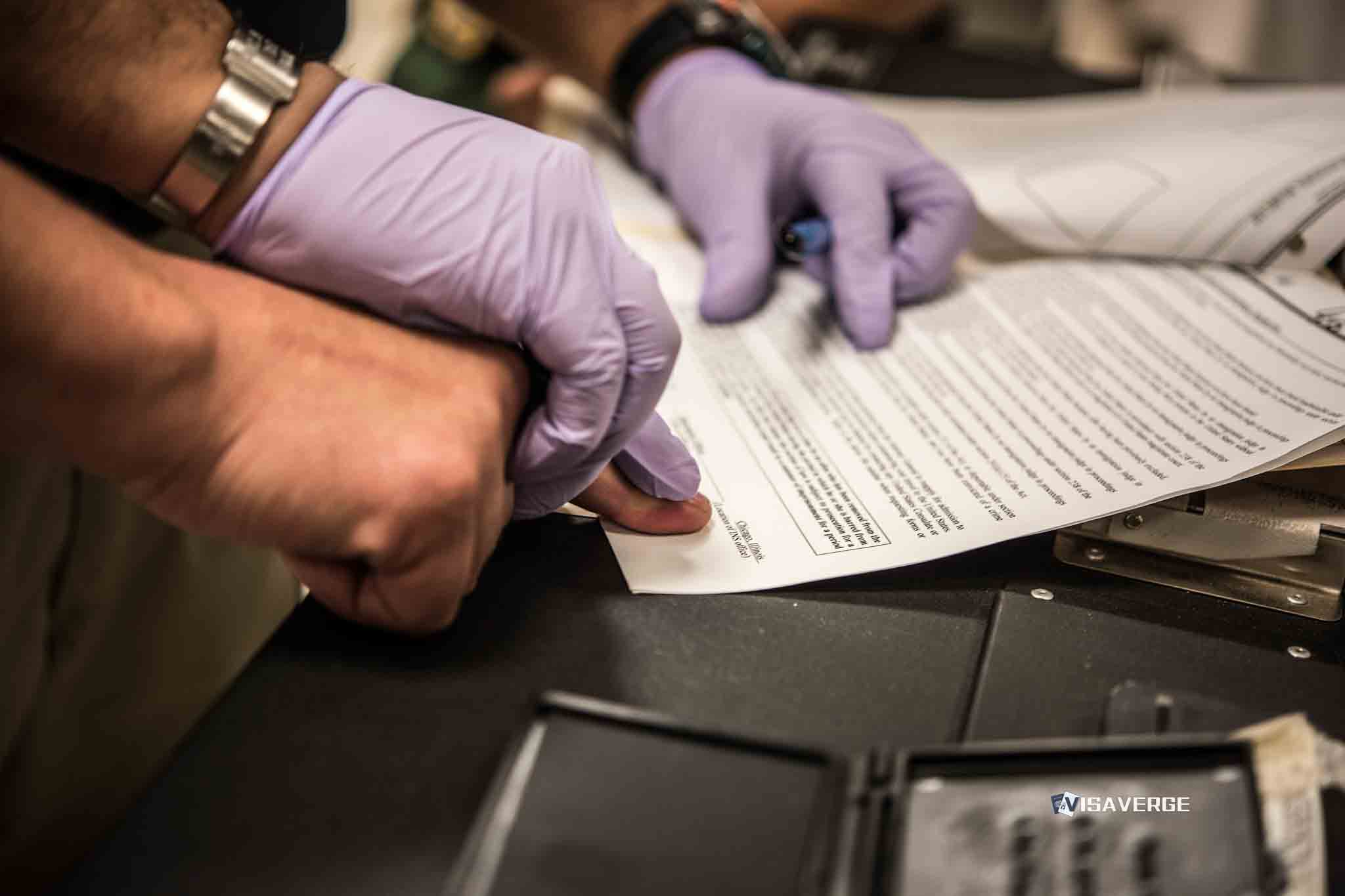
(UNITED STATES) A new federal-branded platform, TrumpCard.gov, presents two high-dollar immigration-style products – the Trump Gold Card and the Trump Platinum Card – framed as a way to “unlock life in America” and accelerate access to the United States 🇺🇸. The site describes large required payments, references to a DHS processing fee, and links to familiar federal resources such as USA.gov, a DHS Privacy Notice, and a FOIA Requests page, giving it the look and feel of an official government program.
While the source material does not include underlying legislation, regulations, or standard immigration forms such as Form I-485 or Form I-130, it lays out a detailed, payment‑driven pathway promising U.S. residency and extended tax‑favored stays. Below is a structured explanation of how the process is presented, step by step, based only on the text provided on the TrumpCard.gov-style page.

Overview: transactional structure and promise
The Trump Gold Card is marketed as a way to obtain U.S. residency “in record time” for qualifying foreign nationals. The offer is framed very clearly as transactional:
- $15,000 nonrefundable DHS processing fee, paid at the time of application.
- $1 million contribution, due after background approval.
In return, once an applicant is approved, the site states that a Trump Gold Card will be available for use throughout all 50 states and territories. The marketing language suggests the card is directly linked to lawful residence in the United States, although the provided text does not specify the exact immigration status or visa category.
The journey is presented in three primary phases:
| India | China | ROW | |
|---|---|---|---|
| EB-1 | Apr 01, 2023 ▲31d | Apr 01, 2023 ▲31d | Current |
| EB-2 | Jul 15, 2014 ▲303d | Sep 01, 2021 | Current |
| EB-3 | Nov 15, 2013 | Jun 15, 2021 ▲45d | Jun 01, 2024 ▲244d |
| F-1 | May 01, 2017 ▲174d | May 01, 2017 ▲174d | May 01, 2017 ▲174d |
| F-2A | Feb 01, 2024 | Feb 01, 2024 | Feb 01, 2024 |
- Submit Your Application
- Careful Consideration (Background Vetting)
- Approval and Card Issuance
Within each stage, applicants are asked to pay significant fees, wait for background checks, and then, if approved, use the card as proof of their new status.
The program explicitly states that USCIS “facilitates an in-depth background check and process to vet the potential card holder.” This mirrors the application → vetting → adjudication structure used in many existing immigration benefits.
Step 1: Submitting the Trump Gold Card Application
The first step is labeled 01 Submit Your Application with language that “Your opportunity begins here, with your application and a nonrefundable processing fee.”
What applicants are told to do
- Complete an application on TheTrumpGoldCard platform, reached through repeated “Apply Now” prompts.
- Pay a nonrefundable $15,000 DHS processing fee at the time of submission.
The nonrefundable nature of this fee is heavily emphasized. If an application is denied at the background vetting stage, there is no indication in the provided text that any portion would be returned. While nonrefundable application fees are common in genuine immigration filings, the scale here is far higher than standard USCIS fees listed on the official USCIS Fees page.
Implied required information and documentation
Although exact documents are not spelled out, the reference to a USCIS‑facilitated background check implies typical requirements:
- Personal identification details (full name, date of birth, nationality, passport information).
- Biographic and possibly biometric information for vetting.
- Background history necessary for security, criminal, and immigration checks.
The site includes a section titled “What is myUSCIS.gov?” which signals that applicants might be directed to official platforms like myUSCIS to view or manage parts of their case, even though the source text does not include full content for that section.
Step 2: DHS‑Facilitated Background Vetting
The second step is 02 Careful Consideration, described as an “in-depth background check and process to vet the potential card holder” conducted with the involvement of USCIS.
What happens during vetting
The page states:
- United States Citizenship and Immigration Services facilitates an extensive background process.
- Vetting is intended to ensure potential card holders pass required security, admissibility, and suitability checks.
While standards are not specified, typical immigration vetting includes checks for:
- Criminal history and security watchlists.
- Past visa overstays or immigration violations.
- Grounds of inadmissibility under the Immigration and Nationality Act.
The site poses the question “How long does the process take?” but does not provide an answer, leaving timelines unspecified. The marketing phrase “record time” implies faster processing than many existing pathways, but no specific timeframe is given.
Applicant responsibilities during vetting
Applicants are responsible for:
- Responding to any requests for additional information or documents, if made.
- Monitoring application status via whatever case‑status portal the site provides (the text references “How do applicants review their application status?”).
The materials do not enumerate standard procedural obligations (for example, how quickly to respond to requests), beyond suggesting that a case‑status portal exists.
Step 3: Approval and the $1 Million Contribution
The third step, 03 Approval, is reached after passing background vetting.
- The site states that the Trump Gold Card will be available for use throughout all 50 states and territories.
- The applicant must provide a $1 million contribution after background approval.
This contribution is framed as a gift or contribution, not as an investment expected to be repaid. The source text does not specify the recipient of the funds (e.g., government account, private entity) or any contractual protections.
Unanswered legal and practical questions
The site lists prompts such as “What legal classification does a successful applicant receive as part of the Trump Gold Card Program?”, but the answers are not provided.
Implied promises include:
- Recipients “receive U.S. residency in record time,” suggesting a promised lawful residence status.
- The Trump Gold Card is presented as proof or symbol of that status.
Important uncertainties left unanswered in the provided material:
- Can spouses and children apply as derivatives?
- Under what conditions can status be revoked (e.g., criminal activity, security concerns, non‑payment)?
- What are the tax consequences—will card holders be treated as U.S. tax residents?
The text raises tax and revocation questions but does not supply policies. Analysis by VisaVerge.com is cited to note that large contribution‑based residency programs typically include strict anti‑abuse and tax guidance; here, such details are absent from the visible copy.
Corporate Use: Trump Corporate Gold Card
The platform also offers a Trump Corporate Gold Card for employers wanting to sponsor foreign employees.
How the corporate version is described
- Issued to a corporate sponsor for one or more of the sponsor’s employees.
- Requires a nonrefundable $15,000 DHS processing fee per employee.
- Corporate sponsors may apply for multiple employees at once.
Once employees pass vetting:
- The employer must provide a $2 million per employee gift, described as evidence that the employee will substantially benefit the United States.
Reuse of contributions and ongoing fees
- Corporate sponsors may cease sponsoring one employee and use the gift contribution tied to that prior application to sponsor a new employee, without paying a new $2 million gift, provided they pay a transfer fee.
- The program states a 1% annual maintenance fee (calculation basis unspecified).
- A 5% transfer fee is charged and “includes the cost of a new DHS background check.”
- There are “small additional fees to the U.S. Department of State” that “may also apply depending on each employee’s circumstances.”
This mirrors real-world visa practice where consular and issuance fees vary by nationality and circumstance; the source points users to the Department of State’s country pages for standard fee amounts via Travel.State.gov.
The Trump Platinum Card: tax‑favored, high‑value stays
The Trump Platinum Card is advertised as “Coming Soon” with a waiting list already open.
Basic offer structure
- Interested foreign nationals can sign up now to secure a place on the waiting list.
- Once launched, upon receipt of a $15,000 DHS processing fee and a $5 million contribution, card holders will:
- Be allowed to spend up to 270 days in the United States.
- Not be subject to U.S. taxes on non‑U.S. income for that period.
Eligibility notes emphasized in the text:
- Those who have ever been subject to U.S. tax on non‑U.S. income are not eligible.
- This explicitly excludes U.S. citizens and resident aliens, who are normally taxed on worldwide income.
The target audience appears to be wealthy non‑U.S. individuals who have never been within the U.S. worldwide tax net but seek extended physical presence in the U.S. with tax advantages.
Waiting list and fees
The site asks “Why is there a waiting list for the Trump Platinum Card and why should applicants apply now?” but does not provide the rationale. The text implies limited slots or staged rollout; no further detail is provided.
As with the Gold Card, “small additional fees to the U.S. Department of State may apply depending on the applicant.”
Fee summary and financial commitments
The DHS processing fee is central across programs:
- $15,000 DHS processing fee for the Trump Gold Card (per individual).
- $15,000 DHS processing fee per employee for the Trump Corporate Gold Card.
- $15,000 DHS processing fee anticipated for the Trump Platinum Card.
These fees are:
- Nonrefundable.
- In addition to the multi‑million‑dollar contributions:
- $1,000,000 — Gold (individual)
- $2,000,000 — Corporate Gold (per employee)
- $5,000,000 — Platinum (individual)
Other costs referenced:
- 1% annual maintenance fee (Corporate Gold — basis unspecified).
- 5% transfer fee (Corporate Gold — includes new DHS background check).
- Small additional Department of State fees that vary by applicant/nationality.
Table: Fee overview (as described in the source text)
| Program | DHS Processing Fee | Contribution | Other fees mentioned |
|---|---|---|---|
| Trump Gold Card (individual) | $15,000 (nonrefundable) | $1,000,000 | Possible Department of State fees |
| Trump Corporate Gold Card (per employee) | $15,000 (nonrefundable) | $2,000,000 per employee | 1% annual maintenance, 5% transfer fee, Dept. of State fees |
| Trump Platinum Card (individual, coming soon) | $15,000 (anticipated, nonrefundable) | $5,000,000 | Possible Dept. of State fees |
Applicants must plan for a very large upfront cost (DHS processing fee + contribution) and potential ongoing or transfer costs.
Tracking applications and referenced official resources
The page presents itself as an “Official website of the United States government” and uses standard elements intended to convey legitimacy:
- American flag iconography.
- Links or references to:
- DHS Privacy Notice
- USA.gov
- FOIA Requests
- Plain Language Statement
- Section 508 Accessibility Statement
These are typical elements found on genuine federal sites and are intended to reassure users about privacy, accessibility, and record‑request rights.
The TrumpCard.gov text also references official portals and forms that applicants might expect to use or consult:
- myUSCIS.gov for case status and correspondence.
- USCIS forms and instructions (e.g., investor forms like
Form I-526or adjustment forms likeForm I-485). - Department of State consular pages via Travel.State.gov.
- The government portal USA.gov as the main directory for verified federal services.
Although the site lists sections such as “What is myUSCIS.gov?” and “How do applicants review their application status?”, the provided text does not include detailed answers or step‑by‑step instructions for using those portals.
Practical considerations and warnings for potential applicants
From the presented material, anyone considering these programs should note the following:
- Financial commitment:
- Large, nonrefundable fees and contributions are required up front.
- Rejection or denial may leave applicants without refunds of the DHS processing fee.
- Unclear legal status:
- The exact immigration classification provided by the program is not stated.
- Key questions about family inclusion, revocation, and tax treatment are raised on the site but not answered in the provided text.
- Tax and family impact:
- Applicants should seek clear, written policies on derivative eligibility, permanence or conditionality of status, revocation rules, and tax consequences.
- Use of official portals:
- The references to myUSCIS.gov, USA.gov, and DHS/FOIA/privacy pages indicate reliance on standard government infrastructure for identity verification and records.
- The official USA.gov portal at USA.gov remains the government’s central directory for verified federal services.
Given the sums involved and the incomplete policy details visible in the source text, applicants would be expected to review all terms on the full TrumpCard.gov site, confirm legal authority, and cross‑check with established federal resources before taking irreversible steps. This is especially important where the DHS processing fee and multi‑million‑dollar contributions are nonrefundable and linked to immigration‑style benefits.
TrumpCard.gov promotes costly, payment‑driven pathways to U.S. residency via the Trump Gold Card and a forthcoming Platinum Card. Applicants pay a nonrefundable $15,000 DHS processing fee, undergo USCIS‑facilitated background vetting, and must make multi‑million‑dollar contributions after approval ($1 million for Gold, $5 million for Platinum). Corporate sponsorships require $2 million per employee plus maintenance and transfer fees. The site mimics federal styling and references official portals, but it omits key legal classifications, family‑derivative rules, tax treatment specifics, and the recipient of contributions.