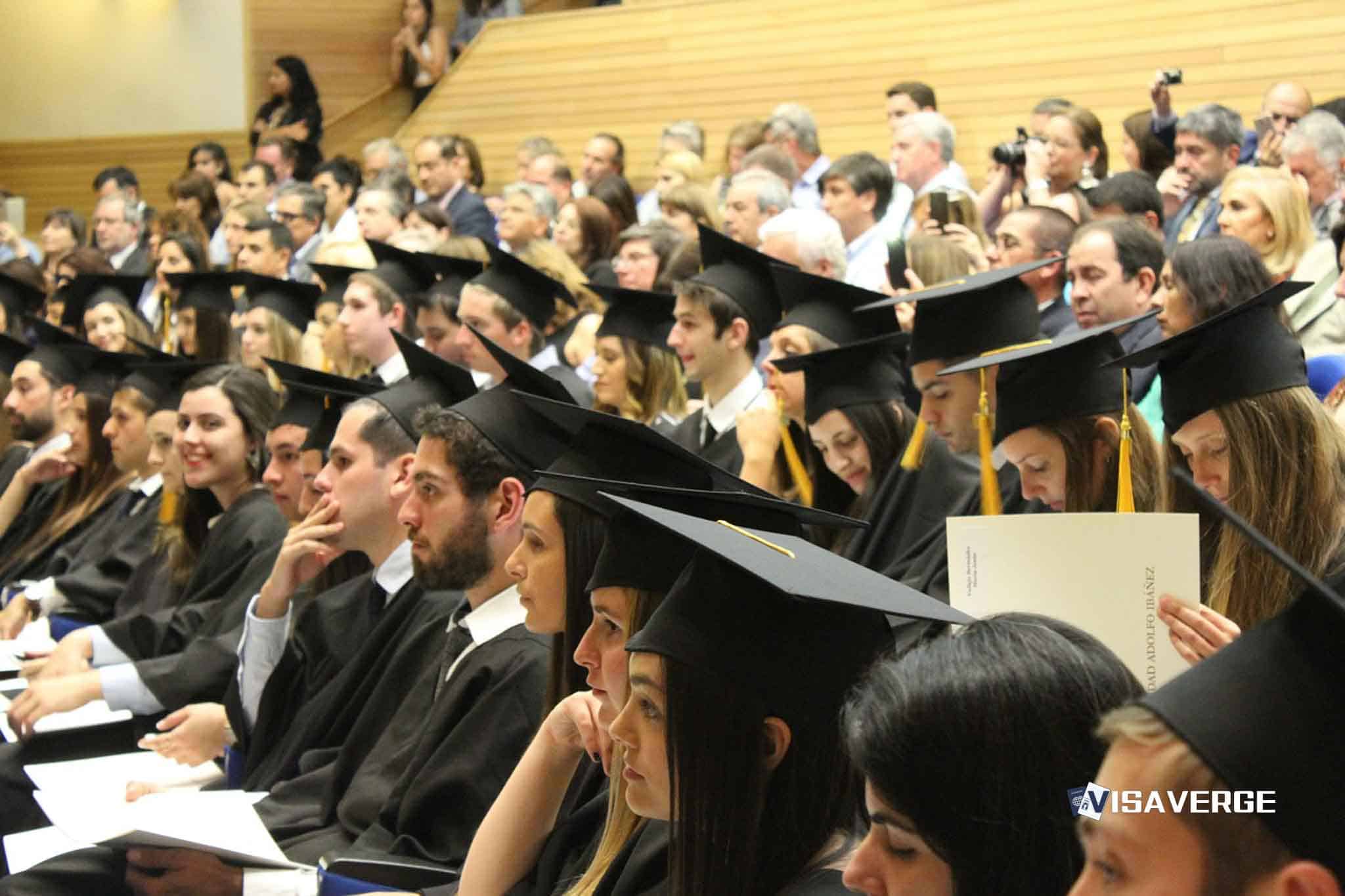
- Universities tightened Curricular Practical Training approvals after federal guidance on Aug. 24, 2026.
- Harvard now authorizes CPT only for degree-required internships with employer-school cooperative agreements.
- Students losing CPT access may use OPT, which offers up to 12 months and STEM extensions to 36.
Universities are narrowing Curricular Practical Training for F-1 students after federal guidance on Aug. 24, 2026, with Berkeley, the University of Pennsylvania, New York University and other campuses changing internship approvals within days. Student visas now face tighter internship limits. Berkeley had already paused some reviews on Aug. 13.
CPT is the work authorization international students use for internships and other off-campus work tied to study. The policy language says it must be "an integral part of an established curriculum," and new campus guidance also asks for a school-employer partnership and a requirement that applies to every student in the course of study. The bar has moved.
Free toolOPT Timeline Calculator Online
That reading cuts off internships that once sat outside required coursework. Schools are now reviewing degree programs, internship requirements and approval procedures to decide who still qualifies, especially in cases approved through elective or optional courses. Those approvals are vanishing.
Princeton told students in a Sept. 1, 2026 email that CPT would likely no longer be approved for all undergraduates and most graduate students unless the internship is required for the degree. The University of Miami said its international office would process CPT only when off-campus practical training is required for program completion as specified in the Academic Bulletin, and it halted non-required CPT applications until further notice. UW-Madison said effective Aug. 24, 2026, CPT would be approved only if the internship is mandatory for all students in the degree program to graduate.
Harvard clarified its rule on Sept. 3, 2026. Harvard International Office wrote:
"Harvard will authorize CPT for F-1 students only where the opportunity is a formal requirement of the student’s degree program, successful completion of the degree is contingent on CPT, and the required internship or practicum is offered by sponsoring employers through cooperative agreements with the school."
Some programs still qualify. CPT remains available in some offerings at Harvard Business School, Harvard Kennedy School, Harvard Graduate School of Education, Harvard Divinity School and the Harvard School of Public Health. Harvard College, Harvard Law School, Harvard Medical School, the Graduate School of Design and the Graduate School of Arts and Sciences do not currently have CPT available under the updated policy.
| School | Date | Move |
|---|---|---|
| University of California, Berkeley | August 13, 2026 | Suspended review of some CPT applications under the new interpretation. |
| University of Pennsylvania | August 29, 2026 | Paused new and pending CPT applications. |
| New York University | August 31, 2026 | Announced a stricter interpretation for internship approvals. |
| University of Southern California | Late August 2026 | Changed or tightened CPT practices. |
| University of Washington | Late August 2026 | Changed or tightened CPT practices. |
| University of Rochester | Late August 2026 | Changed or tightened CPT practices. |
The Department of Homeland Security warned institutions that do not comply could lose authorization to enroll international students. Berkeley moved before the federal guidance landed, and Penn and NYU followed at the end of August as the reading tightened. USC, the University of Washington and the University of Rochester also changed or tightened CPT practices in late August. The shift is immediate.
Schools are also checking degree programs, internship requirements and approval procedures to figure out which students still qualify. The review reaches the curriculum itself, not just the paperwork at the end of a term. Internships that sit outside the academic structure are not enough. That is why some campuses are slowing or pausing new applications while they sort through the rules.
Optional Practical Training remains the fallback for students who lose CPT access. OPT still offers up to 12 months of work authorization, and eligible STEM programs can reach 36 months. That route does not depend on the same internship requirement, which is why students and international offices are treating it as the next best option.
The University of California, Davis International Center said it would be "carefully reviewing new CPT requests to ensure that each request meets the requirements set forth in the guidance." Schools are still checking degree programs, internship requirements and approval procedures. The review is ongoing.