- USCIS citizenship document processing currently ranges between 5 to 14 months depending on form type.
- The SAVE America Act proposes documentary proof of citizenship for all new voter registrations nationwide.
- Naturalized citizens and new registrants face the highest administrative friction under new verification proposals.
As of February 2026, USCIS document-related cases tied to citizenship verification are generally moving at about 5–14 months, depending on the form and local office workload. Naturalization (Form N-400) remains the longest step for many applicants, while replacement-document requests often move faster. Processing speed can look “slower” when local field offices face higher interview demand.
This matters because proposals tied to the SAVE America Act and other efforts associated with Trump place more attention on documentary proof and database checks ahead of the 2026 midterms. Even when election rules are set by states, many voters rely on USCIS-issued evidence of lawful status or U.S. citizenship.
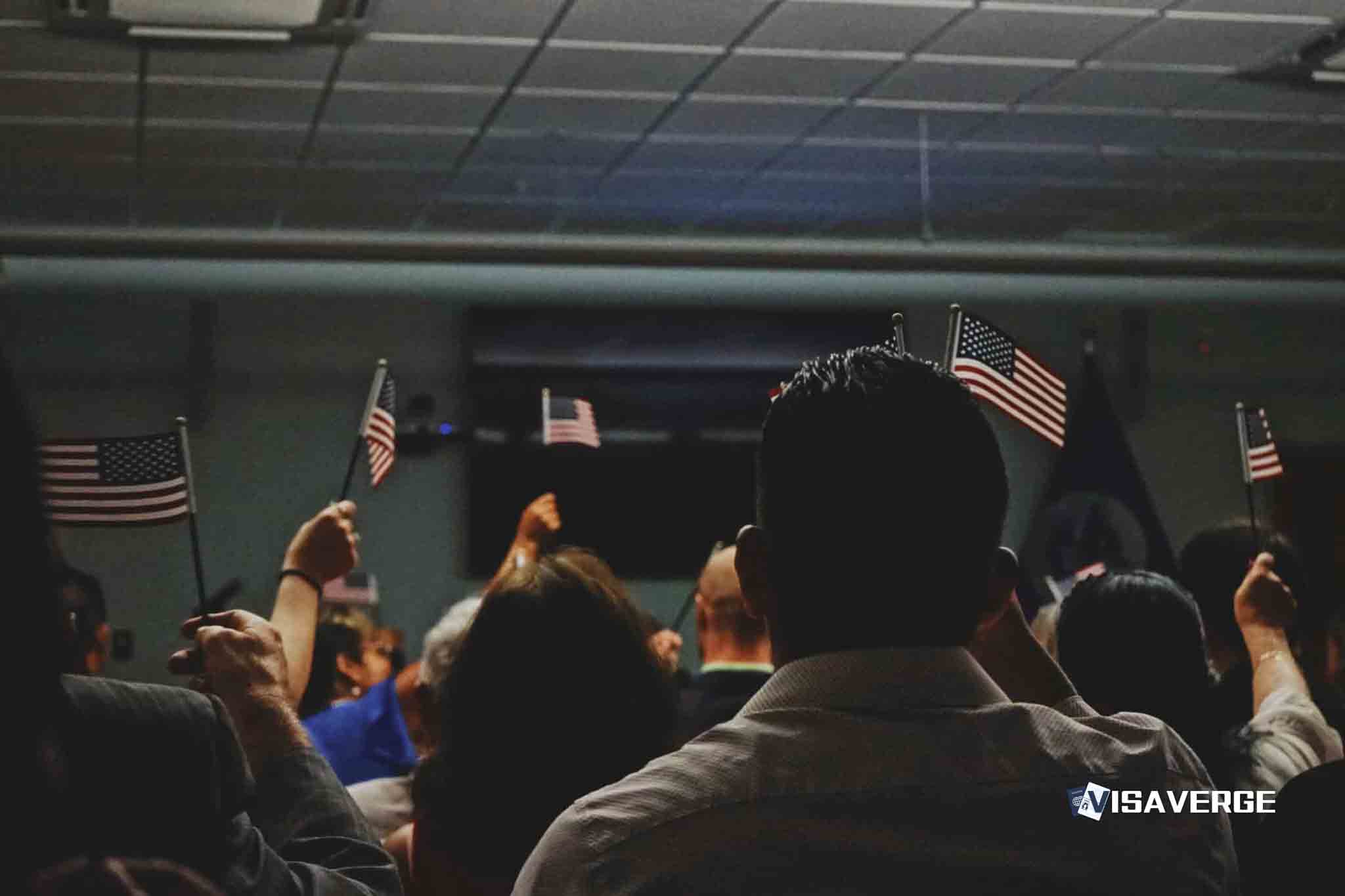
Overview: Trump’s push for citizenship verification in midterms
In the election context, “citizenship verification” usually means one or more of these steps:
- Proof at registration, such as showing documents that establish U.S. citizenship.
- ID checks at voting, such as a photo ID requirement at polling places.
- Database verification, such as checking information against government data systems.
There are two main tracks to watch. First, Congressional legislation, which can create nationwide rules if enacted. Second, executive or administrative actions, which can direct federal agencies and influence forms or data sharing.
People most likely to feel friction include naturalized U.S. citizens, new registrants, people who moved across states, and mail voters. Many U.S. citizens also lack “ready-to-use” documents at home.
Legislative action: SAVE America Act
The House passed the Safeguard American Voter Eligibility (SAVE America Act) this week. “Passed the House” means the bill cleared one chamber of Congress. It does not mean it is law. The Senate must pass it, and the President must sign it.
In broad terms, the SAVE America Act proposal would:
- Require documentary proof of citizenship at voter registration.
- Require photo identification at polling places.
- Tighten mail voting availability, with limited exceptions described in the bill.
- Require states to take additional steps on voter roll maintenance, including programs to identify ineligible registrations.
- Increase verification workflows, including data sharing concepts with federal agencies.
For immigrants and naturalized citizens, the practical question is documentation. If a state or federal process expects documentary proof, voters may lean on items like naturalization certificates or other government records. That can increase demand for USCIS replacement documents.
Executive action already in place (March 2025 order)
A March 2025 executive order titled “Preserving and Protecting the Integrity of American Elections” directed the Election Assistance Commission to move toward documentary proof of citizenship for the national mail voter registration form within a short timeframe.
An executive order can direct federal agency actions, timelines, and guidance. It cannot, by itself, rewrite state election codes. Implementation often depends on state adoption, form updates, and court review.
If documentary proof standards change for a national mail form, the biggest effects often hit:
- First-time registrants
- People who recently moved
- Voters using mail registration pathways
Uniform rules are difficult. Election administration varies by state. Verification systems also vary.
Trump’s unilateral push (February 13, 2026 statement)
On February 13, 2026, Trump wrote that there would be voter ID for the midterms “whether approved by Congress or not.” He also said he would present legal reasoning soon. No specific authority or operational details were provided in that statement.
For real-world impact, watch for concrete steps. Those steps include agency guidance, published rules, state compliance plans, and court timelines. Public statements alone do not change USCIS processing rules. They can still affect demand for documents.
Senate outlook and what to watch
The SAVE America Act faces uncertain odds in the Senate. Timing matters because states need lead time to update procedures and train staff.
Signals that action is moving include:
- A Senate committee taking up the bill.
- A scheduled floor vote.
- Amendments that change compliance timelines.
- A House–Senate process to reconcile different bill text.
If debate extends into mid-2026, many changes may miss practical implementation windows for November.
USCIS processing times and fees that affect citizenship documentation
Many voters seeking documentation will touch USCIS through naturalization or replacement records.
⏱️ Processing Time: USCIS times are estimates as of February 2026. Check the official tool at https://www.visaverge.com/uncategorized/processing-times/. Times vary by office and case type.
Processing time comparison (by form type)
| Form | Purpose | Typical Processing (as of Feb 2026) | Notes |
|---|---|---|---|
| Form N-400, Application for Naturalization | Become a U.S. citizen | 8–14 months | Usually includes biometrics and an interview at a local field office. |
| Form N-565, Application for Replacement Naturalization/Citizenship Document | Replace naturalization or citizenship certificate | 5–10 months | Often used after loss, damage, or errors. |
| Form I-90, Application to Replace Permanent Resident Card | Replace green card | 8–20 months | Helpful for lawful status proof, not proof of U.S. citizenship. |
💰 Current Fee: Fees change. Verify amounts at uscis.gov/fees before filing. Wrong fees can cause rejection. Some applicants may request a fee waiver using Form I-912, Request for Fee Waiver, when eligible.
What can slow a USCIS decision
- Requests for Evidence (RFEs) for missing proof or unclear copies
- Interview backlogs at local field offices
- Security and background checks that require more review
- Name or date-of-birth mismatches across records
⚠️ Common Mistake: Submitting unreadable scans or missing translations. USCIS requires full translations with a translator certification for non-English documents.
Expedite requests (when they may help)
USCIS may consider expedite requests in limited situations. Approval is discretionary. Strong reasons can include urgent humanitarian needs or clear, documented emergencies.
Practical tips:
- Gather proof, like deadlines, sworn statements, and supporting records.
- Call USCIS at 1-800-375-5283 or use your my.uscis.gov account.
- Keep the request focused on facts and time sensitivity.
How to check case status and protect your record
- Create or sign in to your account at my.uscis.gov.
- Use “Case Status Online” with your receipt number.
- Confirm your mailing address is current. File Form AR-11, Alien’s Change of Address if you moved.
For citizenship-related voting questions, keep your documents consistent across agencies. If your name changed, update records where needed.
Download Form N-400 and Form N-565 only from uscis.gov/forms. Pay fees exactly as listed on uscis.gov/fees. Track your case at my.uscis.gov and confirm processing times at https://www.visaverge.com/uncategorized/processing-times/ before making plans.
📋 Official Resources: Download forms at uscis.gov/forms. Check processing times at egov.uscis.gov/processing-times. Fees and processing times are subject to change—always verify current information at uscis.gov.