- India has fully digitized its entry system by mandating the e-Arrival Card for all foreign visitors.
- The digital form replaces paper disembarkation cards entirely starting April 1, 2026, for all travelers.
- Submissions must be completed within 72 hours before arrival via official government portals or apps.
(INDIA) India has completed its shift to a fully digital entry system, and foreign travelers now need the e-Arrival Card before boarding. From April 1, 2026, the old paper disembarkation card ends, and the E-Arrival form online becomes mandatory for all foreign nationals and Overseas Citizen of India cardholders.
The change matters because the arrival step is no longer a paper form handed out at the airport. Travelers must finish it in advance, save the confirmation, and show it when asked by airlines or immigration officers. According to analysis by VisaVerge.com, this move brings India closer to the faster, pre-screened border systems now used in several major travel markets.
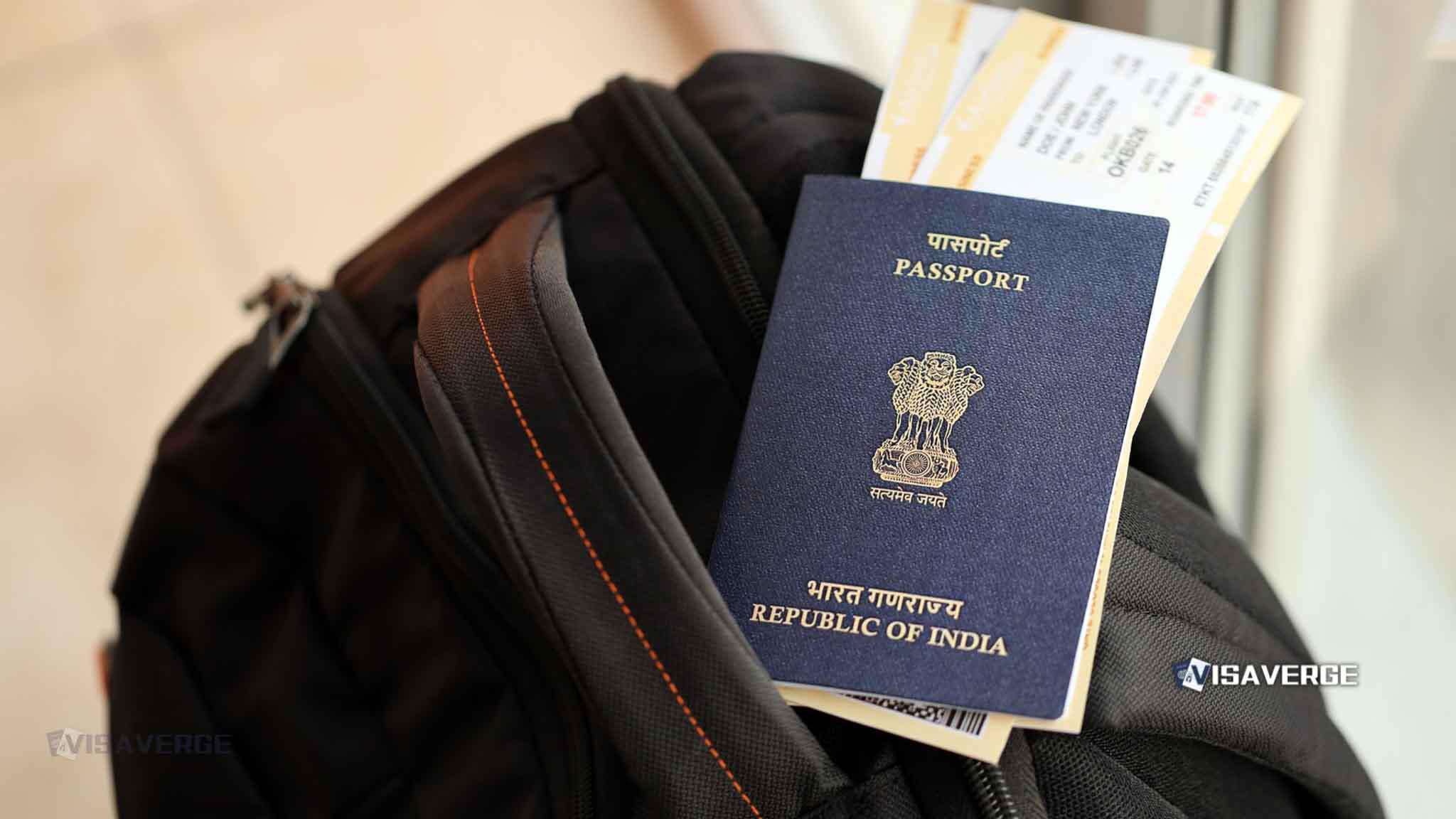
India’s shift to a fully digital arrival process
The transition began on October 1, 2025 and runs through March 31, 2026. During that six-month bridge, travelers could still use the paper form while the digital channel expanded. By late March 2026, the paper route was ending, and the e-Arrival Card became the standard entry record.
The Government of India’s move covers tourists, business visitors, students, and medical travelers. OCI cardholders were added to the requirement in the October 2025 update. Indian passport holders remain exempt. The timing is important for families, students, and short-term visitors who often book travel close to departure and need one more document before they fly.
What official notices said about the switch
The U.S. Embassy and Consulates in India said on October 14, 2025 that India had introduced a new digital arrival system for entry into the country. The notice said foreign travelers would have the option to submit an electronic arrival form instead of the traditional paper form, with paper still accepted for six months.
The U.S. Department of State later updated its India travel guidance and said travelers could enter India with a valid e-visa or physical visa and a valid e-arrival form. That guidance tracked the same transition period and signaled that the electronic process was becoming part of standard travel preparation.
India’s Bureau of Immigration and the Foreigners Regional Registration Office in March 2026 confirmed that the traditional DE Card would stop on March 31, 2026. Officials said the digital move is designed to cut immigration wait times by about 40% and reduce congestion at busy arrival halls.
Dates, eligibility, and where the form must be filed
The key rule is simple: the E-Arrival Card must be submitted online no earlier than 72 hours before scheduled arrival in India. Submitting too early does not work, and missing the window creates problems before departure. The requirement applies to all foreign passport holders, including tourists, business travelers, students, and medical visitors.
OCI cardholders also need to complete it under the updated rules. Indian passport holders do not. Travelers should use only official channels: the Indian Visa Online Portal, the Bureau of Immigration website, or the official Indian Visa Su-Swagatam mobile app.
How the E-Arrival form online process works
The filing process is short, but every field needs to match the passport and itinerary.
- Open the official portal or app. Use the e-Arrival portal or the Su-Swagatam app.
- Enter personal details. Type your full name, nationality, and passport number exactly as shown in the passport.
- Add travel details. Include flight number, arrival date, and the airport where you will enter India.
- Enter stay information. Provide your hotel name or residential address in India, plus a contact number and email.
- Submit and save proof. After submission, keep the digital confirmation or QR code.
- Print or screenshot the confirmation. Airlines may scan it at check-in, and immigration officers may scan it on arrival.
Travelers should save the confirmation in more than one place. A phone battery dies. Screenshots disappear. A paper copy in a bag is still useful.
Why the digital entry system changes the airport experience
India introduced the digital entry system to move passenger data earlier in the travel chain. That helps officials check information before the traveler reaches the airport counter. It also reduces manual paperwork at arrival, which matters at crowded hubs such as Delhi and Bengaluru.
Pilot runs at those airports showed lighter congestion and faster movement through immigration. The same system gives authorities real-time data, better record integration, and stronger risk screening. For travelers, that means less time filling forms after a long flight and fewer delays in the arrival hall.
The downside is strict compliance. If the form is not filed within the 72-hour window, airlines may deny boarding. Travelers may also face delays at Indian immigration counters. The safest approach is to treat the e-Arrival Card as part of the visa checklist, not as an optional extra.
Official places to check before travel
Travelers should rely on official government pages for the latest rules and submission access:
- e-Arrival portal
- Bureau of Immigration
- U.S. Embassy in India notices
- U.S. State Department India travel advisory
Those pages are the most direct route to current instructions, especially when airline staff or travel agents give conflicting advice. The official portal remains the place to complete the E-Arrival form online, and the Bureau of Immigration site is the main government reference for entry rules in India.
For many travelers, this is now just one more step before departure. Still, it is a mandatory one, and the consequences of skipping it are immediate. The shift to the e-Arrival Card turns India’s arrival process into a cleaner, faster, and more controlled digital system, but only for travelers who file on time and carry proof with them.